US Firm Dares Tinubu: Let FBI Release Drug Records ‘If You’re Not Guilty’
Alleged drug trafficking: Allow FBI release records if you’re not guilty – US firm dares Tinubu
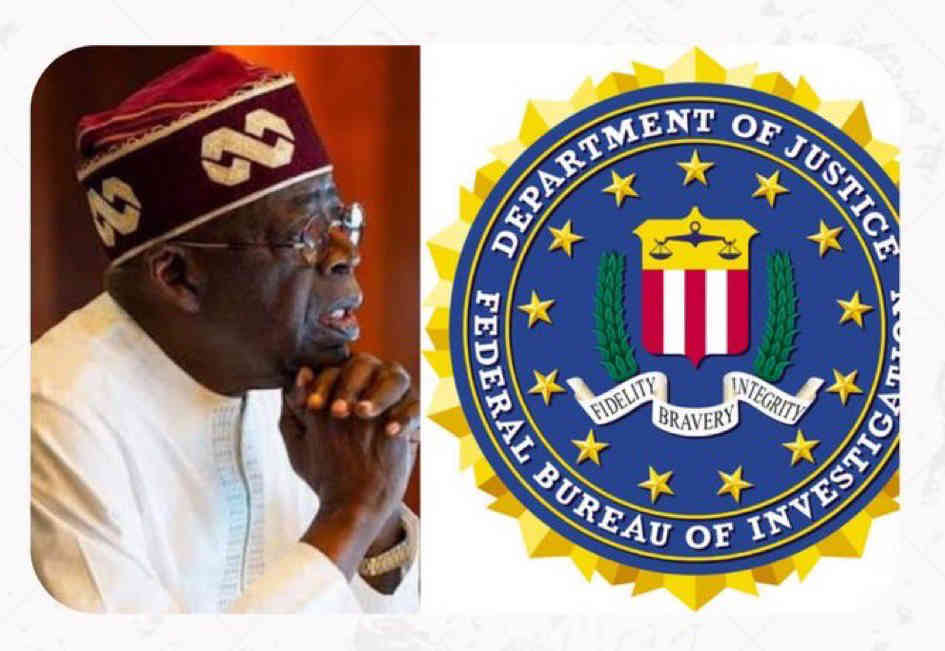
A United States-based policy advisory and lobbying firm has challenged President Bola Tinubu to publicly back the release of Federal Bureau of Investigation records tied to long-standing allegations of heroin trafficking reportedly linked to him — and to drop his effort in a US court to keep those records sealed.
Von Batten-Montague-York issued the challenge in a statement posted on its verified X account on Thursday, accusing the President of trying to rebrand himself as an anti-drug campaigner while simultaneously fighting to block disclosure of the records.
Also Read : US Journalist explains hidden questions behind Tinubu’s $460,000 US drug forfeiture case
The firm described Tinubu’s recent anti-drug advocacy as a “desperate stunt” unless he supports the release of the documents.
“If President Tinubu is committed to fighting drug trafficking, we challenge him to publicly call for the FBI to release all records concerning alleged heroin trafficking reportedly connected to him,” the statement read.
“We also challenge him to withdraw his petition before the US court opposing their disclosure.”
The firm said its principal, Dr Von Batten, met Republican and Democratic congressional staffers on Wednesday to discuss several issues, including the allegations concerning Tinubu. It did not say which committees or offices the staffers represent, and there has been no independent confirmation from Congress of the meetings.
The legal fight behind the statement
The challenge is the latest round in a long-running civil dispute over access to US government records — a case that is not, in itself, a criminal prosecution of the Nigerian president.
American transparency activist Aaron Greenspan filed Freedom of Information Act (FOIA) requests with several US agencies, including the FBI and the Drug Enforcement Administration, seeking records relating to historical investigations involving Tinubu. His requests include the FBI’s entire file on Tinubu and FBI Form 302 interview records covering 1992 and 1993.
The litigation, Greenspan v. Executive Office for U.S. Attorneys et al., Case No. 1:23-cv-01816-BAH, is before US District Judge Beryl Howell in the District of Columbia.
In April 2025, Judge Howell ruled that the FBI and DEA could no longer rely on a blanket refusal to confirm or deny the existence of records concerning Tinubu, and ordered the agencies to search for and process material that is not legally exempt from disclosure.
According to a sworn FBI declaration filed on August 28, 2026, the records at issue were “compiled in furtherance of the FBI’s investigation of multiple individuals for drug trafficking crimes.” The declaration followed the court’s earlier finding that a criminal investigation involving Tinubu had been officially acknowledged in public Justice Department filings.
The 2025 ruling did not find that Tinubu committed a drug-trafficking offence, and it did not amount to a criminal charge or conviction against him.
The FBI and DEA have continued to withhold or redact portions of the records, citing FOIA exemptions covering personal privacy, confidential sources, law-enforcement methods and information whose disclosure could endanger individuals. The bureau has submitted additional material to Judge Howell for private, in-camera review.
Tinubu’s legal team pushes back
Tinubu has intervened in the proceedings. In a 16-page filing submitted in August, his legal team — Christopher W. Carmichael, Victor P. Henderson and Oluwole O. Afolabi — argued that the President retains privacy interests over the investigative files, and that scattered prior disclosures, including in a 1993 civil forfeiture matter, do not eliminate those interests.
The filing contended that the public’s interest in Tinubu’s background or fitness for office does not, by itself, create a right under FOIA to obtain withheld law-enforcement records, and that FOIA is not a tool for mining information about private individuals from government files. It asked the court to deny the plaintiff’s motion for summary judgment and to let the FBI’s and DEA’s redactions stand.
Wole Afolabi, SAN, a legal counsel to the President, has said the legal challenge is within Tinubu’s rights under US law, describing the allegations against him as speculative. “Freedom of Information Act is primarily directed at government agencies, is not a tool to pull information about opposition or candidate,” he told Channels Television.
The Presidency has also pushed back on the lobbying firm’s public campaign. Special Adviser to the President on Media and Public Communications, Sunday Dare, has rejected the firm’s claims, saying its statements are public relations material passed off as the view of the US government.
Context and counterclaims.
The dispute has become increasingly political in Nigeria as parties position ahead of the 2027 presidential election. Von Batten-Montague-York has been retained by former Vice President Atiku Abubakar, a fact the Presidency has cited in disputing the firm’s motives.
The firm has itself claimed it was offered $3 million to abandon its campaign over the records — an allegation it said it would refer to the US Department of Justice and the FBI — and has said its founder has faced a smear campaign. Those claims have not been independently verified.
The firm has also claimed that an FBI court filing referred to wiretap material within the records. That characterisation is the firm’s own reading, not a finding by the FBI or a US court.
Separately, the allegations trace back to a broader US investigation into a Chicago-based heroin trafficking and money-laundering operation in the early 1990s. A 1993 civil forfeiture proceeding resulted in about $460,000 being forfeited to the US government from an account linked to Tinubu. That proceeding was civil, not criminal, and produced no conviction.
Tinubu has consistently denied involvement in drug trafficking.
What happens next
The court-ordered deadline for final briefings in the FOIA case has passed. Judge Howell is now expected to review the parties’ arguments and rule. Von Batten-Montague-York has said it expects the court to order the release of portions of the records while protecting sensitive law-enforcement methods — a prediction, not a decision.
Until the court rules, the status of the records remains the subject of litigation, and the allegations at the centre of the dispute remain unproven.
You May Also Like


Trending Now