
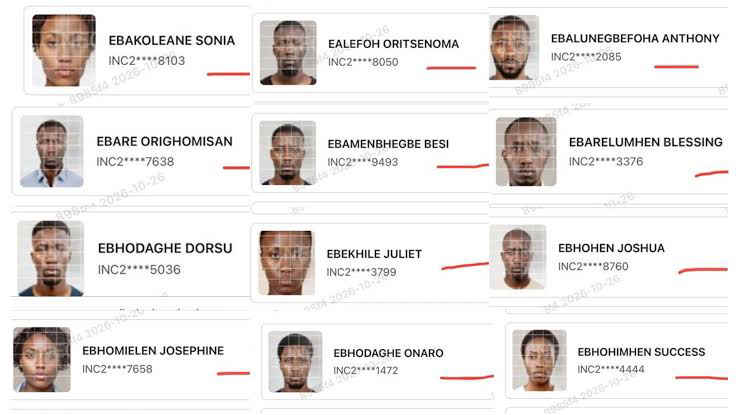
BREAKING: INEC Admits Officers Were Compromised, Introduced AI Images Into Voters’ Register
The Independent National Electoral Commission (INEC) has admitted that some of its registration officers across the country were compromised and allegedly used their official access to introduce irregularities, including suspected artificial intelligence-generated photographs, into the preliminary voters’ register.
The commission’s Director of Information and Communication Technology (ICT), Dr Lawrence Bayode, made the disclosure on Friday, October 30, 2026, while appearing on Arise Television’s Morning Show.
Bayode’s admission followed questions from journalist Rufai Oseni, who sought an explanation for how suspected AI-generated photographs found their way into INEC’s voter registration database.
Responding, the INEC official acknowledged that the irregularities were not restricted to a particular state, revealing that some registration officers in different parts of the country had been involved.
According to him, the officers allegedly exploited their official login credentials, which gave them access to the voter registration system, to introduce questionable entries.
He said, “What we have found out was that some of these registration officers are not only in the place that we are seeing, even on social media, some of them, not all of them now, some of them across the states, nationwide. They’ve done different things to bring these irregularities onto the register.”
INEC Explains How AI Images Entered Voters’ Register
Providing further details, Bayode explained that registration officers have access to the commission’s registration platform through individual login credentials, which allow them to capture and upload the details and photographs of eligible voters.
However, investigations by the commission reportedly revealed that some officers abused the access entrusted to them, resulting in questionable photographs and other irregularities appearing in the preliminary register.
He clarified that while some of the photographs were suspected to have been generated using artificial intelligence, others were simply products of poor registration practices.
“Some of these pictures are AI-generated. Some of them are not AI-generated, but very bad registration, and this thing got into the register by the registration officers, and because they have access to register people,” he explained.
INEC’s Automated System Detected Irregularities
The ICT director further disclosed that the commission’s Automated Biometric Identification System (ABIS) detected several questionable entries during its examination of the registration database.
According to Bayode, the automated checks enabled INEC to identify suspicious records and establish how some of the irregularities were introduced into the system before the preliminary voters’ register was made public.
“When the ABS was run on the system, we saw these people, we know what they did. We know how they did it, but honestly, I don’t know why,” he stated.
He added that the commission had been working to address the identified problems and clean up the database to ensure the integrity of the final voters’ register.
INEC Clarifies Status of Preliminary Voters’ Register
The development comes amid growing concerns over the credibility of the preliminary voters’ register released by INEC, particularly following the circulation of photographs and identities suspected to be artificial intelligence-generated.
In a clarification issued on October 27, 2026, the commission explained that the online preliminary register reflected the physical display exercise conducted between October 9 and October 15.
The statement, signed by Mohammed Kudu Haruna, Chairman of INEC’s Information and Voter Education Committee, maintained that the commission was still conducting data cleaning and adjudication to address identified discrepancies.
INEC also indicated that the process would continue ahead of the final certification of the voters’ register scheduled for December 15, 2026.
Concerns Grow Ahead of 2027 General Elections
Bayode’s disclosure is likely to intensify scrutiny of INEC’s voter registration process as political parties and other stakeholders prepare for the 2027 general elections.
The admission that some registration officers allegedly compromised the system raises fresh questions about internal safeguards, the monitoring of officials with access to sensitive electoral databases and the commission’s ability to prevent the manipulation of voter information.
Although INEC has indicated that its automated verification system detected the questionable entries, attention is now likely to shift towards accountability for the officers involved and the measures being taken to prevent similar incidents.
The credibility of the voters’ register remains a critical part of the electoral process, as inaccuracies or deliberate manipulation could undermine public confidence in the conduct of the 2027 elections.
Ejes Gist News stands for truth, responsible journalism, editorial integrity and fearless accountability.
You May Also Like



Trending Now