
Enugu Assembly Bans Landlords from Increasing Rent, Stops Caution Fee Collection
The Enugu State House of Assembly has passed a landmark amendment to the state’s Landlord and Tenant Law, introducing strict caps on rent increases and stripping property owners of the right to collect caution and management fees directly from tenants.
Passed on Tuesday following its third reading, the legislation, officially titled the Landlord and Tenant Second Amendment Bill, Cap. 101, Revised Laws of Enugu State 2024, aims to rein in arbitrary charges and bring relief to residents grappling with a severe housing crisis. The bill now heads to Governor Peter Mbah for assent.
Once signed into law, the legislation will overhaul how rental transactions are conducted across the state:
- Rent Increase Caps: Landlords will be barred from raising rent for at least four years. After the four-year window, any upward review is capped at a maximum of 2 per cent, though property owners who carry out major renovations may increase rent by up to 10 per cent.
- Caution Fee Overhaul: Landlords can no longer collect caution fees directly. Instead, tenants will pay the deposit into a dedicated account managed by the state Ministry of Justice, which will refund the money in full at the end of the tenancy provided no property damage occurred.
- Ban on Management Fees: Management fees have been completely outlawed, with the law prescribing jail time for any landlord caught collecting them.
- Regulation of Agents and Lawyers: Estate agents must register with the Enugu State Housing Corporation before practising, and agency fees are now capped at 5 per cent. Legal fees are capped at 10 per cent and may only be collected by qualified legal practitioners; anyone else demanding legal fees risks prosecution for fraud and impersonation.
Addressing a Growing Housing Crisis
The legislative intervention follows months of public outcry and street protests by Enugu residents over soaring accommodation costs and multiple ancillary charges. In recent years, the annual rent for a standard two-bedroom apartment in the state capital has jumped from roughly ₦300,000 to between ₦700,000 and ₦1.8 million.
In certain neighborhoods affected by the state government’s land verification and recertification exercises, rents reportedly spiked by over 500 per cent as property owners sought to pass government levies onto tenants. The steep costs have forced many civil servants, low-income earners, and young families out of the metropolis into surrounding rural communities.
Legislative Backing
The passage of the bill followed the adoption of a joint report by the House Committees on Housing and Investment, Public Petition, Ethics and Privileges, and Judiciary. The report was laid before the House by the committee chairman, Hon. Okey Mbah (Nkanu East), on a motion moved by Hon. Iloabuchi Abugu (Nkanu West) and seconded by Hon. Jane Eneh (Awgu North).
Speaking on the impact of the legislation, Hon. Okey Mbah noted that the provisions were shaped by broad stakeholder consultations and would cut the upfront cost of securing accommodation by more than 60 per cent.
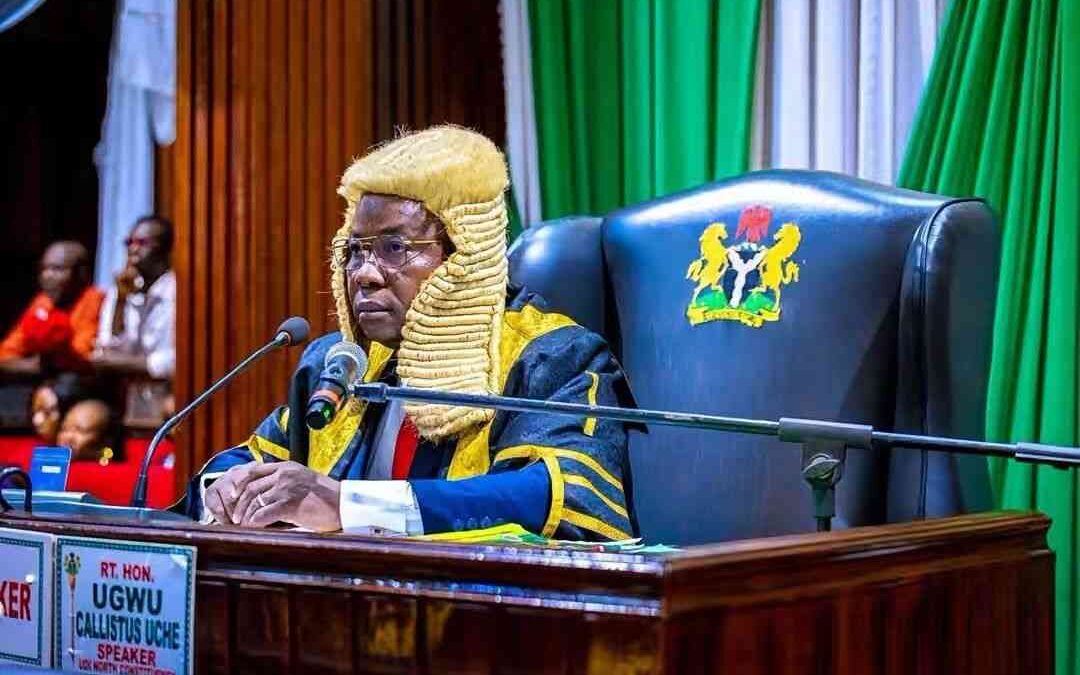
The Speaker of the Assembly, Rt. Hon. Uche Ugwu, hailed the passage of the bill as a major step toward good governance, adding that the new framework would give tenants in Enugu State “a new lease of life.” The bill previously scaled its second reading on March 11, 2026, before undergoing a public hearing on March 26.
Ejes Gist News ( EGN) stands for truth, responsible journalism, editorial integrity and fearless accountability.
You May Also Like



Trending Now