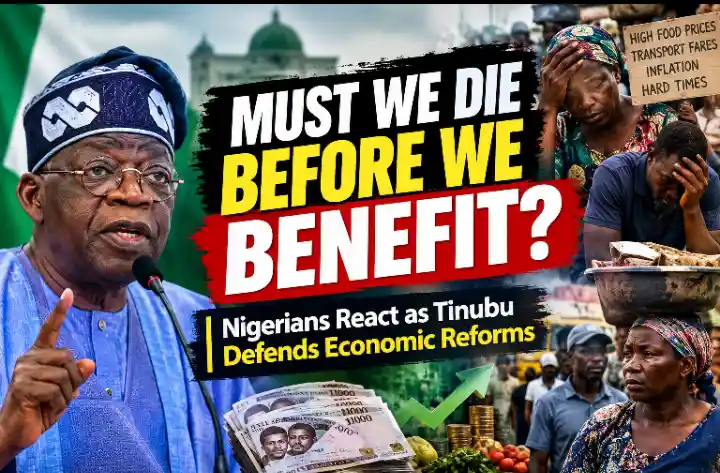
Must We Die Before We Benefit?” Nigerians React as Tinubu Defends Economic Reforms
President Bola Tinubu’s defence of his administration’s economic reforms has sparked a fresh wave of reactions from Nigerians, with many questioning how long citizens must endure hardship before experiencing the benefits repeatedly promised by the government.
In his Independence Day broadcast, Tinubu urged Nigerians to remain patient, insisting that the economic reforms introduced by his administration were necessary to rescue the economy from long-standing structural problems and place the country on a path to sustainable growth.
Also Read : Oborevwori Warns Against Political Arming as Delta Gets New Police Chief.
Ejes Gist News reports that the President maintained that difficult decisions, including the removal of fuel subsidies and reforms in the foreign exchange market, were unavoidable to prevent a deeper economic crisis and restore confidence in the nation’s economy.
While acknowledging the challenges faced by citizens, Tinubu argued that the reforms were beginning to produce positive outcomes and would eventually deliver greater prosperity, job creation and economic stability.

However, the President’s appeal for patience was met with widespread criticism across social media platforms, radio programmes and public discussions, where many Nigerians expressed frustration over the rising cost of living.
For numerous citizens, one question appeared repeatedly in reactions to the address: “Must we die before we benefit?”
The phrase quickly became a rallying point for Nigerians who said they have yet to feel any positive impact from the administration’s economic policies despite months of assurances that the reforms would yield results.
Many respondents argued that while government officials continue to speak about long-term gains, households are struggling with soaring food prices, transportation costs, rent, school fees and medical expenses.
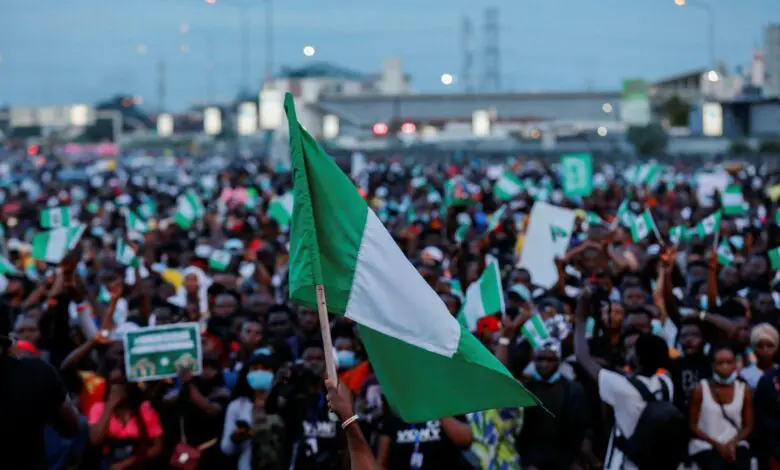
Some Nigerians questioned how citizens earning fixed salaries are expected to cope with inflation that has significantly reduced purchasing power.
Others expressed concern that small businesses are facing mounting operational costs, leading to reduced profits, layoffs and, in some cases, outright closure due to the Economic Reforms.
Across social media platforms, reactions reflected a common theme: citizens are not necessarily opposed to reforms but want evidence that the sacrifices demanded of them are producing tangible improvements in their daily lives.
Among the concerns repeatedly raised by Nigerians were:
- Persistent increases in food prices across markets.
- Rising transportation costs linked to fuel subsidy removal.
- Higher electricity and utility bills.
- Reduced purchasing power of workers and pensioners.
- Growing pressure on small and medium-sized enterprises.
- Increasing difficulty in accessing affordable healthcare and education.
Several contributors to the public debate argued that economic statistics cited by government officials do not reflect the realities experienced by ordinary Nigerians.
Others said the President’s speech focused heavily on future expectations while offering limited reassurance about immediate measures to reduce hardship.
Some citizens also questioned the pace at which the benefits of the reforms are expected to materialise, arguing that many families are already struggling to meet basic needs.
Tinubu Defends Economic Reforms
Government officials have consistently defended the policy direction of the administration.
According to the presidency, the removal of fuel subsidies was necessary to stop unsustainable spending that drained public resources and limited investment in critical sectors.
Officials have also argued that foreign exchange reforms are designed to improve transparency, attract investment and strengthen economic competitiveness.
The federal government has further pointed to interventions intended to cushion the impact of the reforms, including student loan programmes, agricultural support initiatives, compressed natural gas transportation projects and other social investment measures.
Economic analysts remain divided on the issue.
While some experts maintain that the reforms were necessary to address structural weaknesses in the economy, others argue that stronger social protection measures should have accompanied the policies to shield vulnerable households from their immediate effects.
Labour unions and civil society groups have similarly called for expanded welfare programmes, affordable transportation initiatives and additional measures aimed at reducing the burden on workers and low-income families.
Despite government assurances that the reforms are beginning to yield results, public discussion continues to be dominated by concerns over inflation, living costs and household survival.
Must We Die Before We Benefit?
For many Nigerians reacting to Tinubu’s address, the central issue is no longer whether reforms are necessary, but how long citizens must wait before the promised benefits become visible in their everyday lives.
As debate over the administration’s economic agenda continues, the question raised by many Nigerians — “Must we die before we benefit?” — has become a powerful expression of public frustration over the gap between promised economic gains and present-day hardship.
Ejes Gist News stands for truth, responsible journalism, editorial integrity and fearless accountability.
You May Also Like



Trending Now