
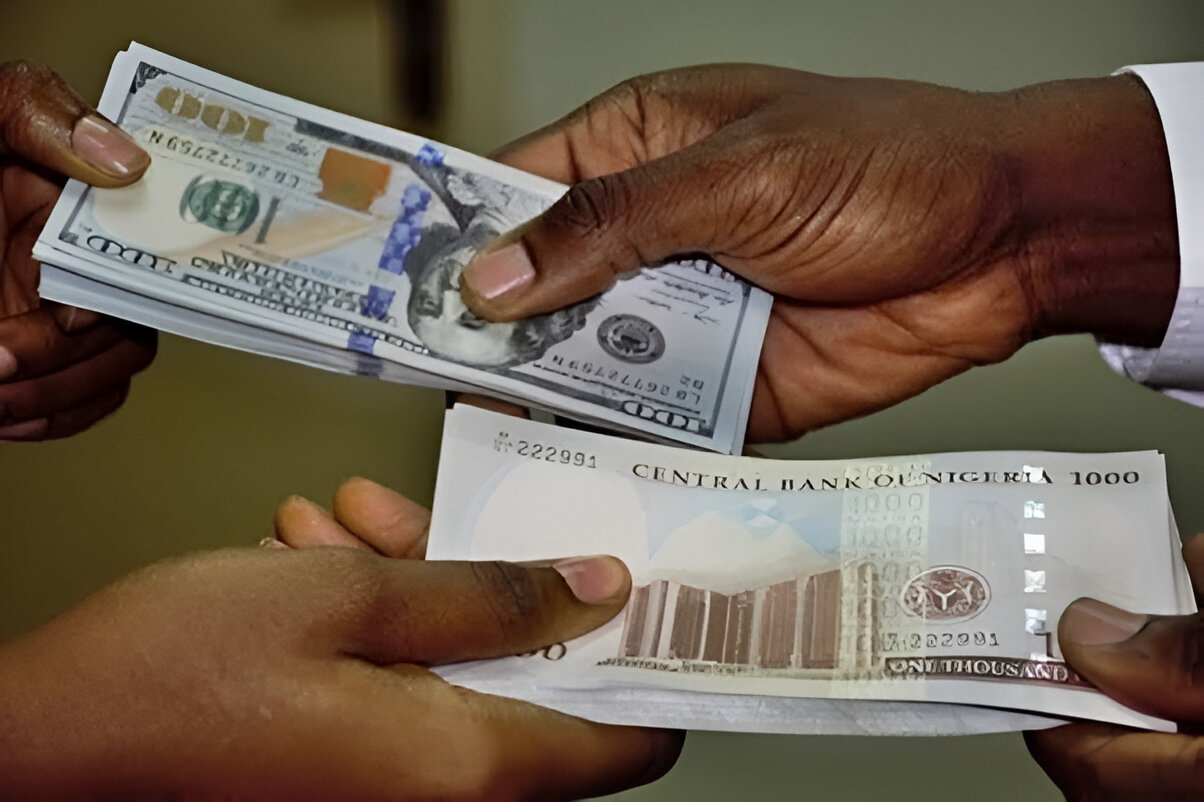
Dollar to Naira Exchange Rate Today Nov 9 2026 as FX Reserves Stay Above $55bn
LAGOS, November 9, 2026 — The dollar to naira exchange rate held close to N1,347 in the first week of November 2026, with the most recent confirmed official print at N1,346.79 per dollar on November 6, 2026, according to data reported by Punch Newspapers.
The closing official rate for November 9, 2026 had not been published in the market reports reviewed. Spot quotations carried by the market data platform Ava showed the dollar at N1,343.03 against the naira, a level described as 6.8 per cent weaker for the dollar over a one-year period, meaning the naira has strengthened.
The figures sit within a narrow band that has defined the currency since late October, when the naira recovered from a mid-month slide to between N1,362 and N1,370 per dollar.
Dollar to Naira Exchange Rate Key facts at a glance
| Indicator | Level | Date / period | Source |
|---|---|---|---|
| Official rate (closing) | N1,346.79/$ | November 6, 2026 | Punch Newspapers |
| Official rate (end-October) | N1,346.86/$ | October 30, 2026 | Naija247news |
| Official rate (end-September) | N1,329.50/$ | September 30, 2026 | Naija247news |
| Official rate (end-June) | N1,379.68/$ | June 30, 2026 | Naija247news |
| Parallel market rate | About N1,385/$ | End-October 2026 | Naija247news |
| Official-parallel gap | N38.14 (2.83%) | End-October 2026 | Naija247news |
| Gross external reserves | $55.133bn | November 5, 2026 | Punch Newspapers |
| Gross external reserves | About $55.26bn | October 28, 2026 | Naija247news |
| Year-on-year change | +6.26% for naira | November 2025 to November 2026 | Punch Newspapers |
| Brent crude | $113.43/bbl | October 30, 2026 | Naija247news |
Why the naira moved in October
The naira ended a three-month appreciation streak in October 2026, weakening 1.31 per cent at the Nigerian Foreign Exchange Market to close the month at N1,346.86 per dollar, Naija247news reported.
That depreciation reversed only part of the earlier rally. The currency remained 2.38 per cent stronger than its end-June level of N1,379.68.
On a 12-month view, the naira has gained ground. Punch reported that the currency appreciated to N1,346.79 per dollar on November 6, 2026, from N1,436.74 on the same date in 2025 — a gain of N89.95, or 6.26 per cent.
Reserves and oil are not moving the rate in lockstep
Gross external reserves rose from $54.93bn on September 30 to about $55.26bn by October 28, an increase of roughly $330m, or 0.60 per cent, according to Naija247news.
Central Bank of Nigeria Governor Olayemi Cardoso has put net reserves at approximately $46bn. Gross reserves also remain above the CBN’s $51.04bn full-year target.
Rising reserves did not stop the October slippage. Analysts draw a distinction between the country’s overall foreign exchange buffer and the dollars actually available to meet demand on any given trading day.
Crude prices added support to the external account. Brent settled at $113.43 per barrel on October 30, a 13.6 per cent monthly increase, while Nigeria’s Bonny Light traded at about $115 — roughly $40 above the 2026 federal budget benchmark of $75 per barrel.
Nigerian crude production was reported above 1.53 million barrels per day, and OPEC+ left its December production targets unchanged for a third consecutive month, Naija247news reported.
What the CBN says about the exchange rate
Cardoso said in July 2026 in Abuja that the central bank remained committed to a transparent, liquid market driven by willing buyers and willing sellers.
“Our view is one of continuing on the path that we have embarked on, and that is to ensure that we have a market that is transparent, that is liquid, and one that has willing buyer, willing seller,” Cardoso said.
“At the present level, the country does need a competitive currency. The naira’s value has to be determined by economic fundamentals, including stronger oil and non-oil exports, increased foreign direct investment, improved domestic productivity and lower import dependence.”
The governor added that daily turnover in the market sometimes exceeds $1bn.
What a stronger naira means for households and businesses
A firmer naira lowers the local-currency cost of imports priced in dollars, including raw materials, machinery and pharmaceuticals. It can also reduce the naira burden of servicing dollar-denominated loans held by manufacturers and other firms.
The pass-through to shop prices is not automatic. Punch reported that whether exchange-rate gains reach consumers depends on how quickly importers adjust prices and whether the currency holds its gains.
The gap between the official and parallel markets narrowed to N38.14, or 2.83 per cent, at the end of October, from N52.50, or 3.95 per cent, at the end of September. A smaller spread typically reduces the premium paid by individuals and small businesses that source dollars outside the official window.
Political dispute over the recovery narrative
The exchange rate has become a campaign issue ahead of the 2027 general election.
The Makinde-Daura Presidential Campaign Organisation said in a statement issued on Sunday, November 8, 2026, and signed by its Director of Strategic Communications, Richard Nnanna Ihediwa, that President Bola Tinubu was claiming credit for naira recovery while ignoring cost-of-living hardship.
The campaign organisation, which supports the Allied Peoples Movement presidential candidate, Seyi Makinde, said Tinubu inherited an official rate of about N461 to the dollar on May 29, 2023, and that the naira later traded close to N2,000 to the dollar at its weakest point. Those are the organisation’s allegations, not independently verified figures in the reports reviewed.
“The real test of economic recovery is whether Nigerians can afford to live better, not simply whether the naira can exchange for more dollars now than when he plunged it into the abyss,” the statement said.
Separately, a Punch opinion column by Adamu Rabiu, published in November 2026, cited the World Bank’s Country Partnership Framework for Nigeria (2026–2032) as estimating that about 139 million Nigerians live below the national poverty line. The column also put total public debt at N166.79 trillion as of mid-2026, equivalent to roughly N702,185 per Nigerian. Those figures appear in a signed opinion article and should be read as the author’s cited estimates.
Nigerian equities have also drawn attention. Bloomberg data cited by Ava showed the Nigerian benchmark index returning 67 per cent in dollar terms in 2026, the highest among 92 exchanges tracked, with the naira up about 4 per cent since January. S&P Dow Jones Indices is reported to be considering a frontier-market upgrade for Nigeria.
Risk warning
Currency markets can reverse quickly. The October move showed that reserve accumulation and high oil prices do not guarantee a stronger naira on any given day. Businesses with dollar payables, importers buying forward, and savers holding a single currency all carry exchange-rate risk. Anyone weighing naira or dollar-denominated investments should confirm current rates with their bank or licensed dealer before transacting, and should treat any single day’s print as a snapshot rather than a trend.
What to watch
- The next official NFEM closing rate published after November 9, 2026, and whether it holds below N1,350 per dollar.
- Weekly gross reserve prints from the CBN, and whether they stay above $55bn.
- The official-parallel spread, which narrowed to 2.83 per cent in October.
- Brent crude and Bonny Light prices relative to the $75 per barrel budget benchmark.
- CBN commentary on market liquidity and turnover at forthcoming policy engagements.
Ejes Gist News stands for truth, responsible journalism, editorial integrity and fearless accountability.
You May Also Like
Trending Now