
Lagos sinking faster than expected amid rapid climate change: Report
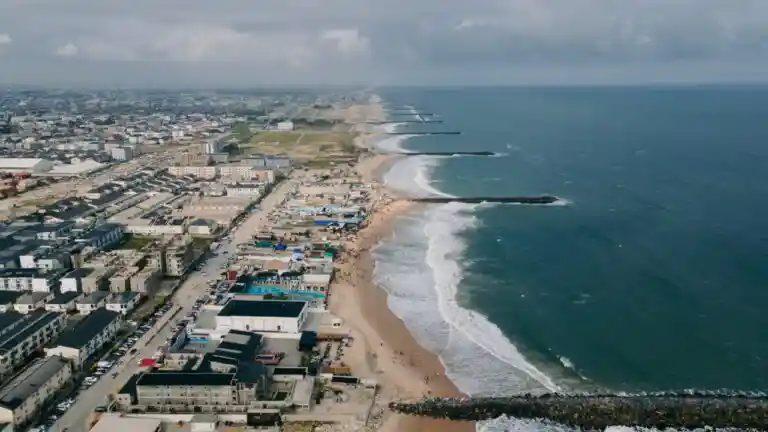
Lagos is subsiding at about five millimetres a year, a rate that heightens the city’s exposure to coastal flooding, according to findings by researchers at Virginia Tech.
The work places Lagos and Alexandria in Egypt among 20 major African coastal cities undergoing significant land subsidence. For Lagos, the median sinking rate came to roughly 5.2 millimetres annually.
Titled “Sinking Cities: Latent Flood Risk in Africa’s Coastal Megacities”, the study drew on more than 4,000 satellite radar observations from the European Space Agency’s Sentinel-1 missions to chart shifts in land elevation across the cities.
Also Read: APC Senator Idiat Adebule dies in Lagos hospital
It also flagged the scarcity of environmental monitoring data across Africa, noting that limited ground-based observations have made changes in land elevation hard to track in coastal cities.
According to the study, the Intergovernmental Panel on Climate Change’s Sixth Assessment Report underestimated the sinking rate in Lagos by approximately 5.2 millimetres per year, a gap the authors link to global projections that do not fully capture local land movement.
Subsidence also varies widely within the city. Central districts of Lagos are comparatively stable, while rapidly urbanising areas in the east and west are sinking faster. The researchers traced that pattern to local conditions, including groundwater extraction, construction on soft alluvial sediments and the settlement of reclaimed land.
“These changes are often invisible in everyday life, but over decades they can substantially increase flood exposure,” said the study’s lead author, Dasho Oluwaseyi, a researcher at Virginia Tech.
Mr Oluwaseyi said the research could help close the information gap, giving scientists, urban planners and policymakers improved tools to protect vulnerable communities.
“Many African coastal cities are growing rapidly, yet the measurements needed to understand their changing flood risk remain limited,” he said.
Manoochehr Shirzaei, a professor of geosciences at Virginia Tech and the study’s senior author, said land subsidence was not simply another consequence of climate change.
“Land subsidence is not simply another consequence of climate change. In many places, it is influenced by local processes, including groundwater withdrawal, sediment compaction and urban development,” he said.
“That means we may have opportunities to reduce part of the risk through better management of land and water resources.”
The study rated Lagos highest among the cities examined for population exposure.
“Lagos emerges as the most vulnerable city in terms of population exposure, with its 7.2 million low-lying residents exposed to 2.59 million in 2020, increasing to 4.07 million by 2100
“Lagos also recorded the highest projected building exposure among the cities examined, with 528,079 buildings potentially exposed to coastal flooding in 2020, rising to 848,203 by 2100.”
The financial stakes are significant as well, with the city facing exposure of more than $75 billion in assets by 2100, according to the research.
Across the 20 African coastal cities studied, the researchers estimated that an extreme sea-level event could expose more than seven million people, over one million buildings and approximately $180 billion in assets to flooding by 2050.
Alexandria, Douala in Cameroon and Monrovia in Liberia were also identified as highly vulnerable.
The researchers cautioned that global climate models could underestimate coastal flood risks when they fail to account for local land movement. Their flood projections assumed no existing or planned coastal defences, which the authors said makes them estimates of potential physical exposure rather than predictions of how many people would actually experience flooding.
Today
-
Premier League UPCOMING📍 Hill Dickinson Stadium
-
Premier League UPCOMING📍 The American Express Community Stadium, Falmer
-
Premier League UPCOMING📍 Selhurst Park, London
-
Premier League UPCOMING📍 Craven Cottage, London
-
Premier League UPCOMING📍 Stadium of Light, Sunderland


Stay informed and ahead of the curve! Follow our channel on WhatsApp for real-time updates, breaking news, and exclusive content.
Join Our WhatsApp ChannelEjes Gist News ( EGN) stands for truth, responsible journalism, editorial integrity and fearless accountability.
You May Also Like



Trending Now