Latest Dollar to Naira Exchange Rate Today November 25, 2026
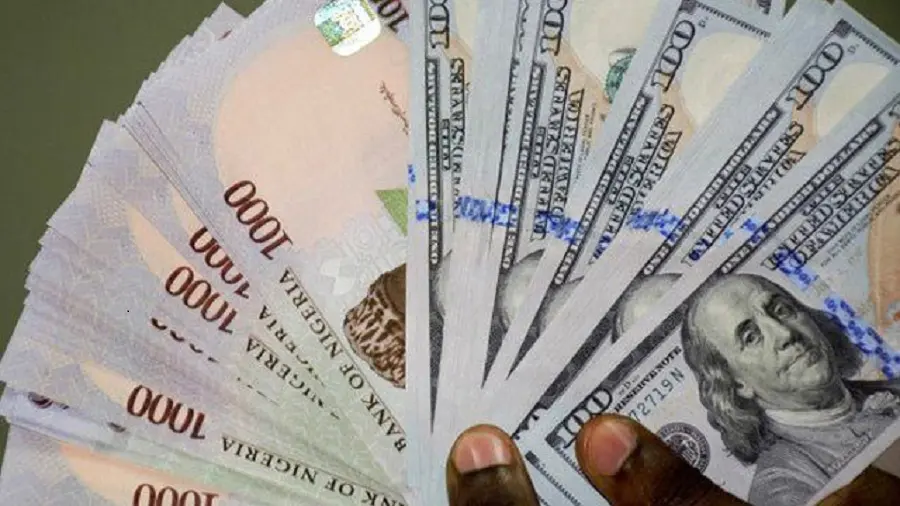
The naira traded at about ₦1,394 to the dollar in the official foreign exchange market on Wednesday, November 25, 2026, while dealers in the parallel market quoted the greenback at between ₦1,455 and ₦1,460, according to rates published by the Central Bank of Nigeria and parallel-market data reported by Nigerian financial outlets.
The official figure is the CBN reference rate published for Tuesday, November 24, which showed a buying rate of ₦1,393.12, a central rate of ₦1,393.62 and a selling rate of ₦1,394.12 per dollar. Market data also put the Nigerian Foreign Exchange Market closing rate at approximately ₦1,396.50 on the same day. The CBN identifies the NFEM weighted-average rate as the official exchange rate for the day.
The rates at a glance
| Market | Buying | Selling |
|---|---|---|
| Official (CBN reference) | ₦1,393.12 | ₦1,394.12 |
| Parallel market | ₦1,443.50 – ₦1,445 | ₦1,455 – ₦1,460 |
Parallel-market quotations are not uniform. Some dealers were reported selling at about ₦1,460 and buying at ₦1,445, while other market readings put buying at ₦1,443.50 and selling at ₦1,455. Rates vary by city, dealer and transaction size, and move through the trading day.
Based on a parallel-market selling rate of ₦1,460, the gap against the CBN selling rate of ₦1,394.12 comes to roughly ₦65.88 per dollar, or about 4.7 per cent. In practical terms, buying $100 on the street costs about ₦6,588 more than at the official reference selling rate.
A bruising week for the official market
The naira closed at ₦1,394.01 on Monday, November 23, down ₦4.28 from the ₦1,389.73 weighted average recorded on Friday, November 20, according to CBN data reported by BusinessDay. That was its weakest level in about eight months, and well below the ₦1,346 it held at the end of October.
The currency had already lost ground the previous week, sliding from about ₦1,360 on Monday, November 16 to ₦1,394 by the end of that week — a fall of ₦34, or roughly 2.5 per cent. At one point on Friday, November 20, it touched ₦1,400.
The decline came despite heavy trading. FMDQ data analysed by New Telegraph showed foreign exchange turnover rose 36.59 per cent week-on-week to $4.67 billion in the week ended November 20, up from $3.42 billion the week before. The CBN sold an estimated $1.30 billion to meet demand, but the intervention was not enough to halt the slide.
Why the naira is under pressure
Analysts quoted by Reuters and reported by New Telegraph had forecast the pressure, citing profit-taking by foreign portfolio investors and rising dollar demand from importers stocking up for the Christmas season. When bond and equity investors convert naira holdings back into dollars, the demand lands on the official window quickly.
Reserves have also thinned. Gross external reserves stood at $54.65 billion as of November 19, down $211.92 million in a single reading, and fell to $54.58 billion by November 20 — a loss of about $680 million over two weeks. The reserves had peaked at an 18-year high of $55.26 billion on October 26.
The Monetary Policy Committee met on Monday and Tuesday and left interest rates unchanged.
What buyers should know
Using the official selling rate of ₦1,394.12, $100 converts to about ₦139,412 and $1,000 to about ₦1,394,120. At the parallel-market selling rate of ₦1,460, $100 is about ₦146,000, $500 about ₦730,000 and $1,000 about ₦1,460,000.
Neither set of figures is a national price. Official rates are published each business day, and parallel-market quotes shift through the day. Anyone buying or selling foreign currency should confirm the prevailing rate with their bank or an authorised dealer before transacting. This report does not set or determine exchange rates; the official figures come from CBN data and the parallel-market quotes from dealer sources reported by Nigerian financial media.
Stay informed and ahead of the curve! Follow our channel on WhatsApp for real-time updates, breaking news, and exclusive content.
Join Our WhatsApp ChannelEjes Gist News ( EGN) stands for truth, responsible journalism, editorial integrity and fearless accountability.
You May Also Like



Trending Now