Tinubu Government Unveils 10 Measures to Tackle Rising Petrol Prices
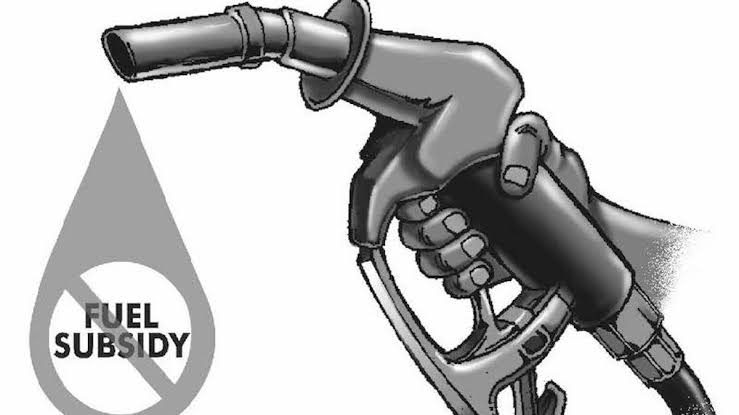
The Federal Government has unveiled a package of measures aimed at easing the pressure of rising petrol prices, while insisting it will not return to a blanket fuel subsidy. The Minister of Finance and Coordinating Minister of the Economy, Taiwo Oyedele, announced the plan at a press conference in Abuja on Thursday.
Oyedele delivered a briefing titled “Fuel Prices and the Subsidy Question”, in which he said the government had acted to keep fuel available across the country and was prepared to do more to reduce the burden on households.
Pressure from a global shock
According to the minister, the pressure on fuel prices began far from Nigeria’s shores, in the Gulf, where a conflict is now in its eighth month. By mid-September, shipping through the Strait of Hormuz was running at roughly 13 percent of its pre-war level, Brent crude was trading above $100 a barrel, almost 50 percent higher than before the war, and diesel exports from the Middle East and Russia had fallen 75 percent from a year earlier.
Crude tanker rates from West Africa reached record highs in September, Oyedele said, as the world scrambled for supply outside the Gulf. The International Energy Agency, he added, expects the pressure on refined products to last for months.
No country has been spared, he said. Diesel in the United States has reached a record $6.50 a gallon, about 73 percent above its pre-war price; diesel in the Philippines has nearly doubled; and Bangladesh is paying close to three times the pre-war price for spot cargoes of gas. Zambia, he noted, suspended fuel duties to hold prices down, but when that relief expired this month, pump prices rose by about 24 percent in a single adjustment.
“Relief that cannot be sustained does not remove the pain,” he said.
Turning to Nigeria, Oyedele said that before the conflict, with crude near $70 a barrel, petrol sold for about 830 naira a litre, compared with an average of about 1,400 naira today. That increase, he said, was caused by a global conflict in which Nigeria had no say, and without the removal of the subsidy the impact would have been far greater.
He described the effect of higher crude prices on Nigeria as mixed. It supports the budget and Federation revenue, but production is below forecast and legacy crude commitments from the subsidy era absorb much of the gain. Households and businesses, meanwhile, face higher fuel, transport and logistics costs, with the burden falling hardest on the most vulnerable.
One thing Nigerians have not faced during these months, he said, is queues, noting that fuel has remained available in every state. “In a crisis of this kind, availability is the first form of affordability,” he said.
Why Oyedele says a subsidy would raise prices
Oyedele offered four reasons for caution over proposals to bring back fuel subsidies in one form or another. He said the government does not question the motives of those who propose them and accepts that a problem exists, but that it differs on the remedy.
First, he said, the pump price follows the exchange rate, because crude, freight and refining inputs are all priced in dollars. Forcing the naira price down would mean the government subsidising foreign exchange — the multiple exchange rate system that, in his account, brought the economy close to collapse before the Tinubu administration’s 2023 reforms.
He argued that what is being proposed is not a production subsidy, which he said supports a producer that cannot compete at market prices, but a discount on crude passed through to the pump. He described that as a consumption subsidy by another route, carrying the same bill.
Also Read : Nollywood Actor Uzor Arukwe Shares CCTV Footage of Alleged Phone Theft at Lagos Funeral
Second, a subsidy hides volatility rather than removing it. If the pump price is fixed while crude, freight and the exchange rate all move, the risk does not disappear but shifts onto the public balance sheet — and with crude above $100, that commitment would be large and open-ended.
On the arithmetic, he said Nigeria consumes roughly 50 million litres of petrol a day. Returning petrol to its pre-reform price would cost more than 20 trillion naira a year, before any allowance for inflated consumption and smuggling, while even the 500 naira a litre some have promised would cost over 16 trillion naira a year. Amounts of that size, he said, are nearly everything the Federation Account shared among all three tiers of government in 2025, and the consequences for salaries, pensions, schools, hospitals and security are not hard to imagine.
Third, discounted fuel creates leakages. Nigerian petrol is already far cheaper than in most neighbouring countries, and widening that gap would mean Nigerian taxpayers subsidising motorists across the borders, as happened for years. Cheaper fuel would also raise consumption at home at a time when global supply is tight, and excess consumption anywhere means higher prices everywhere, returning to Nigeria as imported inflation.
Fourth, he traced where the savings from subsidy removal have gone. Between June 2023 and December 2025, 15.8 trillion naira was released to the Federation Account, of which 10.4 trillion naira went to states and local governments. In May 2023, 27 states could not reliably pay salaries; today, he said, none is in that position.
At the federal level, about two-thirds of the savings, combined with additional independent revenue and borrowing, was used on spending that went directly to average Nigerians through higher wages, infrastructure, electricity subsidy and social transfers. The balance went to stabilising the economy, mainly through higher debt-servicing costs as interest rates were raised to tame rising inflation.
Returning to subsidy, he warned, would set off a familiar sequence: weaker revenue would invite a sovereign credit downgrade, as rating agencies have already signalled, putting at risk the upgrades Nigeria has recently earned, including its first from S&P in fourteen years. Borrowing would become costlier, capital would leave, reserves would fall and the naira would weaken, while progress on inflation — which has allowed the Central Bank to begin lowering interest rates — would be put at risk.
The government estimates that the exchange rate could approach 3,000 naira to the dollar within months, in which case so-called subsidised petrol would cost at least 2,000 naira a litre, well above what Nigerians pay today.
“A subsidy does not lower the cost of fuel. It only changes how it is paid, and when,” Oyedele said.
He said the government remains open to ideas, but that any credible proposal should answer three questions: what it will cost, how it will be funded sustainably, and what pump price it will deliver. It would engage in good faith with any proposal that shows its arithmetic, he added.
What the government says it has already done
Oyedele said removing the subsidy had never meant doing nothing, and listed steps taken over the past three years to moderate prices in sustainable ways.
- Local refining: deregulation made domestic refining viable, which he said is why supply has held while other countries scramble for scarce cargoes.
- Tax and duty waivers on petroleum products: measured against African and global averages, these save Nigerian consumers between 400 and 600 naira a litre, equivalent to over 5 trillion naira in potential tax revenue. Petrol in Nigeria is 20 to 30 percent cheaper than in Benin, Togo and Cameroon, and 30 to 40 percent cheaper than in Ghana, Kenya and South Africa — roughly 35 percent below the world average and among the 25 lowest-priced in the world.
- Naira-for-crude: local refiners buy Nigerian crude in naira, which eases demand for dollars and keeps the transaction transparent and less exposed to volatility, and will improve as domestic crude supply rises.
- A stable currency: Oyedele clarified that the naira was not devalued but depreciated, because the country ran out of reserves to defend an artificial exchange rate that was accessible only to the highly connected while manufacturers and average Nigerians paid a huge premium for foreign exchange in the parallel market. The gap between the official and parallel rates has narrowed from over 60 percent to under 5 percent, and reserves stand at about $55 billion, the highest level in eighteen years — which he called the single biggest lever on pump prices.
- Stronger oversight: the Nigerian Midstream and Downstream Petroleum Regulatory Authority (NMDPRA) is guarding against hoarding, diversion and unjustified margins, while ensuring product quality and preventing under-dispensing at the pump.
- Cheaper alternatives: more than 120,000 vehicles now run on CNG, served by over 400 conversion centres, 96 refuelling stations and 18 liquefied-to-compressed natural gas (L-CNG) stations, and over 550 CNG buses have been deployed. Where they run, fares have fallen by 30 to 50 percent. Taxes on electric vehicles and solar equipment have been removed and import duties on all vehicles cut; customs data show imports of CNG-powered vehicles, including tricycles, electric vehicles and renewable energy equipment, have more than doubled since May 2023, with duty waivers of over 100 billion naira. Some states plan to introduce CNG buses and electric tricycles at scale.
- Support where it matters most: the government continues to subsidise electricity for vulnerable consumers, and feed gas and fertiliser for producers, to protect households and moderate energy and food prices.
Oyedele also placed Nigeria’s response in an international context. By the International Energy Agency’s count, more than 50 countries have adjusted energy taxes; Nigeria, he said, has done more by granting a full waiver of taxes and duties on petrol, worth over 3.3 trillion naira for the year up to 30 September 2026. Vietnam has relied on tax relief, Brazil renews its diesel support thirty days at a time, and 25 countries have turned to renewable electrification to reduce their exposure to imported fuel.
The IEA itself advises, he added, that measures to save fuel consumption and secure supply are more effective, and more fiscally sustainable, than broad subsidies, and that the common thread among governments is relief that is targeted, temporary and affordable through fuel tax adjustments.
The 10 measures
Oyedele acknowledged that existing steps do not fully relieve the pressure households feel today, and set out further actions.
- A margin discount on petrol dispensed by NNPC Limited for the next 30 days, with priority for public transporters nationwide.
- Forward sales of crude to domestic refineries, which as production rises and previously committed crude is freed up would shield pump prices from volatility in the global market.
- Price modulation: the government is negotiating a ceiling of 1,350 naira a litre on the ex-gantry or landing cost of petrol to keep pump prices stable. Where costs rise above the ceiling, refiners and importers will carry the shortfall and recover it later, when crude prices or the exchange rate allow, without breaching the ceiling. Oyedele said the arrangement is neither a subsidy nor a price control, but a way of smoothing prices over time rather than suppressing them, arguing that 1,400 naira a litre today and 1,400 tomorrow is better than 1,500 naira today and 1,300 naira tomorrow because volatility itself adds to uncertainty and cost, and because fares rarely come down as fast as they rise. The ceiling will be reviewed every month, reset where costs require, and the figures published for transparency.
- Removal of illegal levies: working with the states under the 2025 tax reform laws, the government is reining in the road taxes and levies that inflate fares and logistics costs.
- More direct support: increased funding for cash transfers to the most vulnerable households, and for subsidised credit to small businesses and consumers.
- A faster CNG rollout, with the federal government scaling deployment together with the states; transporters are encouraged to pass the savings on to passengers through lower fares.
- An excess profit tax, to be considered for operators who take undue advantage of consumers anywhere along the energy value chain. The proceeds would be used exclusively to cushion the impact of fuel prices through transport support or vouchers for urban minimum wage earners. The government will also work with the National Assembly to consider enhanced tax relief for low-income earners under the 2027 Finance Bill.
- Less red tape: cutting regulatory costs that feed into the cost of doing business and, indirectly, into higher prices of goods and services.
- A National Strategic Fuel Reserve: the Federal Government is investing in a reserve from which refined products would be released under clear, published rules whenever a global disruption or hoarding threatens supply and price stability. Oyedele said this is not a subsidy and does not fix prices, but secures supply, reduces volatility, prevents artificial scarcity, deters market manipulation and anchors long-term energy security.
- Better traffic and logistics management: traffic agencies will improve the flow of traffic, especially in major urban centres, to reduce fuel consumption, while NIPOST’s newly launched address codes are expected to make logistics more efficient and cheaper.
Oyedele said none of the measures restores a blanket subsidy, arguing that doing so would amount to creating longer-term harm for a short-term cure. Each measure, he said, is designed to reach the people who need help without putting the wider economy at risk.
In closing, he said the cost of fuel is real and is not being dismissed, and that removing the subsidy came at a price many households are still bearing. The alternative, he said, has been tried: Nigeria has already lived through scarcity, smuggling, a collapsing currency and a fiscal crisis, and cannot afford to do so again, least of all in response to a temporary disruption and at the moment the results of reform are gathering pace.
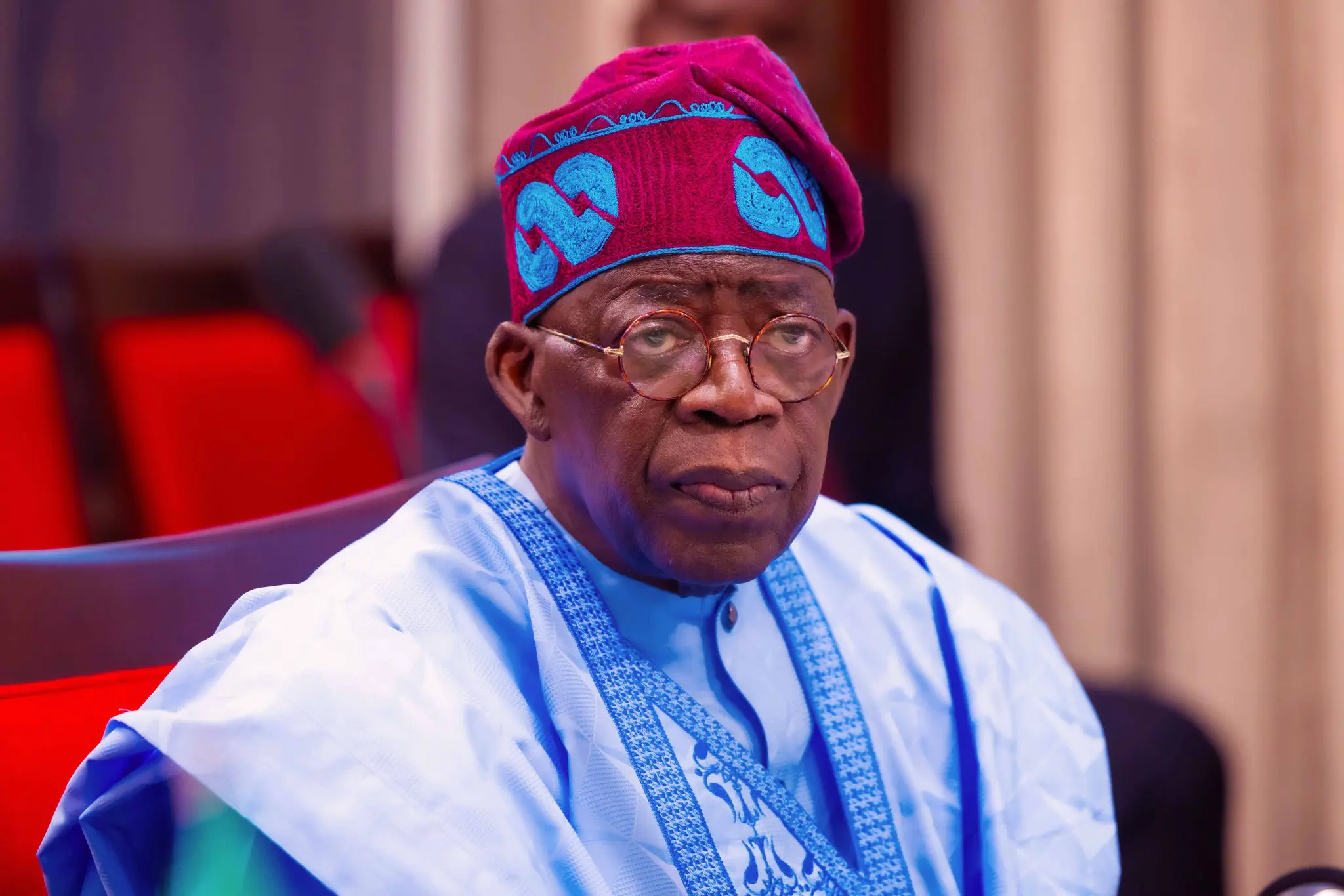
He said the task is not to reverse a reform designed to set the country on the path towards sustained prosperity, but to make sure its gains reach more Nigerians, more quickly and in more tangible ways, under the leadership of President Bola Ahmed Tinubu.
Oyedele added that the Federal Government is working on a comprehensive package of fiscal measures to bring inflation down to single digits, sustainably, in the near term, with further details to be shared in the coming months.
You May Also Like
Trending Now