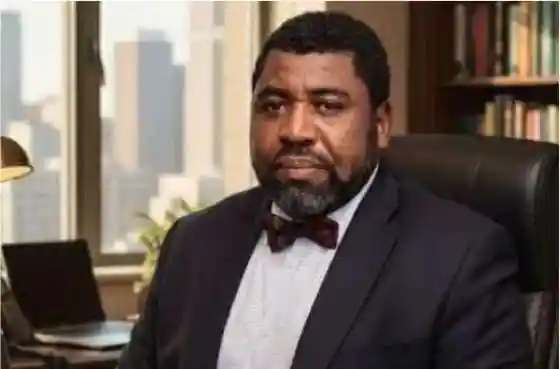

Lawyer: Ex-Dangote Security Chief Dies in Crash After Alleged Arrest
A Portuguese security professional who served as Strategic Security Lead at Dangote Industries Limited has died in a road accident in Portugal, months after he was arrested and detained by the Nigeria Police Force over his resignation, according to his lawyer.
The lawyer, Fidel Albert, said he was a close friend of the deceased, José Miguel Gaspar Mateus, and alleged that police took Miguel into custody in May 2026, shortly after he left his post at the conglomerate for a better-paid job in Abuja.
Writing in a lengthy personal account given to SaharaReporters, Albert accused Nigerian businessman Aliko Dangote and his associates of being behind the police action.
Also Read : Delta court jails five for spraying naira notes
He alleged that Miguel was detained, made to sign an indemnity in favour of the company and had his home searched over claims of sabotage.
Albert said the police later found no evidence implicating Miguel, and that the complainants did not back up their allegations.
According to the lawyer, the former security executive was eventually able to travel back to Portugal once the investigation ended, by which time he had endured severe emotional and psychological distress from what had happened in Nigeria.
Reflecting on his friend’s death, Albert wrote, “But tough though he was, Nigeria, this unique country of ours, found a way to break Miguel in ways he never imagined.”
According to the lawyer, Miguel was riding his sports motorcycle in Portugal when the fatal crash occurred. Albert said the deceased’s wife told him that her husband had gone out to take his mind off his difficulties when oncoming traffic struck him.
Contract lapsed in 2025, lawyer says
Albert said Miguel had been brought to Nigeria to lead security operations for Dangote’s business group, which operates across several sectors.
His friend, the lawyer said, was engaged on a three-year contract that came to an end in May 2025. Albert portrayed him as a very capable security professional whose work throughout that period was satisfactory.
Albert said he had seen Miguel’s appraisal records himself, as well as proof of the yearly bonuses the contract provided.
He alleged, however, that the company kept Miguel on after the contract lapsed without any formal renewal, so that he received only his basic salary and lost the extra benefits and performance-related bonuses the agreement had guaranteed.
Albert wrote, “And one year passed. Only salaries. No contract. No bonuses. No perks.”
According to the lawyer, Miguel asked repeatedly for the contract to be formally renewed and was told each time that the issue would be resolved.
The lawyer said the arrangement in the end became impossible for Miguel to accept, given that his wife and three children were in Portugal and he needed a steady income to keep supporting them.
Miguel’s wife, Albert said, was seriously ill, and two of the couple’s three children were at the far end of the autism spectrum, needing care at all hours.
The lawyer said his friend was the only earner and the main carer in the household, with duties that went well beyond his own financial comfort.
“Thus, staying alive was not an obligation. Making money was not an option. These were bounden obligations,” Albert wrote.
Miguel, he said, ultimately chose to leave the company when a more rewarding and better-paid job came up in Abuja.
In May 2026, the lawyer said, Miguel formally tendered his resignation, named the company he was joining and attended handover meetings so that his duties could be passed on smoothly.
The human resources department, he said, acknowledged the resignation and wished him well.
The situation changed, he alleged, after Dangote asked to meet Miguel.
Arrest at company offices and an indemnity signed in custody
After the resignation, Albert said, Miguel was summoned to a meeting at Dangote’s offices on May 5, 2026.
The lawyer said Miguel turned up early and was kept waiting for roughly five hours, only to be told that Dangote could not see him and that he should come back the following day.
Miguel did as instructed and went back on May 6, Albert alleged, and was again left waiting.
According to his account, police officers later turned up at the building and, after identifying Miguel, arrested him and drove him to the Zone 2 Zonal Command headquarters of the Nigeria Police Force at Onikan in Lagos.
At first, the lawyer said, no reason was given to Miguel for the arrest.
Describing the incident, Albert wrote that “several gun-totting, and battle-ready detachment of policemen stormed the building.”
Albert alleged that his friend was pointed out to the officers as the man they had come for, after which they drove him off in a vehicle that was waiting outside.
Albert said Miguel was later shown a petition from Dangote and associates that accused him of sabotage.
The lawyer challenged the foundation of that accusation, contending that quitting a job did not by itself amount to criminal wrongdoing.
He further questioned why the police had been drawn into what he described as a dispute rooted in an employment relationship.
“Sabotage Allegation, arrest and detention by police. Simply for resigning an employment,” Albert wrote, describing what he considered the central injustice in his friend’s treatment.
Albert went on to allege that Miguel was made to sign an indemnity in favour of Dangote’s company before he would be released from custody.
The document, the lawyer said, made Miguel accept liability should any security incident occur at the company once he had left.
Miguel put his name to the undertaking only after several hours in police custody, according to Albert.
The next day, May 7, he alleged, officers took Miguel to his home at Lakowe Golf Estate in Lagos and searched the property for evidence linked to the alleged sabotage.
Nothing incriminating was found in the search, the lawyer said.
The arrest and detention, Albert said, quickly affected the job Miguel was to take up in Abuja.
He alleged that the would-be employer got wind of the police investigation and pulled the offer before Miguel could begin.
According to the lawyer, that left his friend with neither the job he had accepted nor the financial security he had counted on for his family.
Albert also claimed that Miguel had to report to the police every week while the investigation was ongoing, which limited his movements and kept him from travelling to Portugal to look after his family.
Miguel later approached his former employers, Albert said, offering to take back his resignation and return to the job.
That offer, he alleged, was turned down.
Recounting the response, Albert wrote, “HR responded. Don’t come back. We have moved on.”
He described the outcome as especially damaging, since Miguel had lost the new job and was still obliged to report to the police.
Police report found no evidence, lawyer says
Albert said a police report dated June 3, 2026, roughly a month after the arrest, stated that no incriminating evidence had been found against Miguel.
As the lawyer recounted the report, the complainants’ representatives were invited to substantiate the allegations but none of them showed up.
The report, Albert added, also found no prima facie case of breach of trust, or of conduct likely to cause a breach of the peace, against his friend.
He called the outcome a vindication of his friend in the end, though he argued it arrived too late to undo what the investigation had caused.
Albert wrote, “For the first time, I commend the Nigeria Police for doing the right thing in this case.”
He immediately added, however, that the police action had taken too long.
“But then, even the exculpation came rather too late. It took too long coming. It met a dying man,” he wrote.
The lawyer alleged that Miguel had by then suffered severe depression and had become physically and emotionally withdrawn.
“Yes, by this time, Miguel was far gone. Completely crumbled under the weight of acute depression,” Albert wrote.
He said Miguel’s condition worsened as he struggled with the loss of his job, the uncertainty about his future and his inability to provide the level of support his family required.
Return to Portugal, failing mental health and a fatal crash
With the investigation over, Albert said, Miguel was finally allowed to leave Nigeria and fly back to Portugal.
The two stayed in touch, the lawyer said, and Miguel wanted to take legal action over what he saw as wrongful treatment by his former employer and the police.
Albert said his friend’s mental health kept getting worse after he got back to Portugal, and that he began seeing a psychiatrist in an effort to steady himself.
In his account, Albert described the fallout from the alleged treatment in Nigeria as devastating for Miguel’s family, who relied on him both for money and for the care of his wife and children.
The events, he wrote, left his friend unable to look after them properly.
“It shattered his family. He couldn’t properly care for his wife and kids,” Albert stated.
News of the death shocked the lawyer, he said, because the two had spoken on the very morning he heard about it.
Albert said he had been drafting court papers to challenge the alleged violations of Miguel’s fundamental rights.
The case was due to be filed on August 31, 2026, he said, and he had spoken to Miguel on the Saturday morning before that to tie up the final details.
He spent the rest of that day at a beach house with friends, he said, where a lack of mobile network meant calls did not come through.
He later saw missed calls from a Scottish friend who was close to Miguel and his family. The man had also sent an urgent message asking him to call back, Albert said.
He returned the call and the friend told him Miguel was dead.
Albert recounted his reaction in the account, writing, “All he said to me was: ‘Fidel, I’m sorry to inform you that Miguel is dead.'”
Albert said he was stunned, having spoken to Miguel earlier the same day.
Miguel’s wife told him, Albert said, that her husband had ridden out on his sports motorcycle to take his mind off his situation, and that an oncoming vehicle struck and killed him.
Albert conceded that he could not know exactly what was going through Miguel’s mind at the moment of the crash.
“Maybe he did not concentrate. Maybe he could no longer focus,” he wrote.
Even so, he insisted that what happened in his friend’s final months called for accountability.
He said Miguel leaves behind a seriously ill wife and three children, two of whom need round-the-clock care.
He accused Dangote of carrying on with his business while Miguel’s family grappled with the aftermath of his death.
He also alleged that letters he wrote seeking compensation for the family had been ignored.
“I have written letters to demand compensation for his family. All have been ignored,” he wrote.
The lawyer said he remained determined to pursue the matter on behalf of Miguel’s family.
“But I do know this won’t go away, something will be done. At some curve, Miguel will find justice,” Albert stated.
IPO questions and a planned suit to be amended
Beyond the allegations about the arrest and detention, Albert used the account to raise a wider question: whether employee welfare should weigh in the considerations for companies seeking to list on the Nigerian Exchange.
Dangote Petroleum Refinery’s initial public offering is currently open, with 4.1 billion ordinary shares on offer at ₦525 each, the largest IPO in African history.
Subscription opened on September 14, 2026, and the closing date has been extended to October 27, 2026, with listing expected on the Nigerian Exchange (NGX) in December 2026.
Albert said he had studied the listing requirements of the Nigerian Exchange and the Securities and Exchange Commission after thinking about the circumstances of his friend’s death.
Albert said the requirements he found dealt with shareholders’ equity, pre-tax profits, operating track records and financial performance, and he questioned why he could find nothing he considered adequate on employee welfare.
He argued that workers are central to corporate profitability and should not be left out when performance and governance are assessed.
Albert wrote, “So what about the geese that lay the golden egg? The employees? These do not matter at all?”
He further asked whether a company should enjoy the rewards of strong financial results without close scrutiny of how it treats its workforce.
The lawyer said he meant to look into the matter further, saying Miguel’s case had raised wider questions about corporate accountability and the protection of employees.
The suit Albert said he had prepared for Miguel has not been filed as originally drafted, and the documents will now have to be amended because of his death.
The draft, provided exclusively to SaharaReporters, envisaged a fundamental-rights enforcement action at the High Court of Lagos State against Dangote, Dangote Industries Limited, a senior official of the company and the police authorities.
After Miguel’s death, Albert indicated that the papers would need to be amended so his wife could take his place as the claimant.
“As for today, Miguel, a tribute to you, dear friend,” Albert said, paying tribute to his late friend. “But your matter will not die. It will survive you bro. For your children’s sake!”
SaharaReporters could not reach Tony Chiejina, Dangote Industries Limited’s Group Chief Branding and Communications Officer, for comment on the allegations; he neither answered calls nor replied to a message.
Nigeria Police Force spokesperson Anietie Iniedu likewise did not answer calls or respond to a message.
You May Also Like



Trending Now