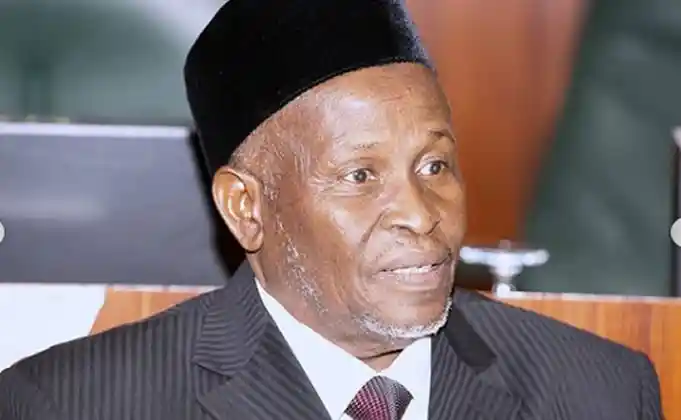
BREAKING: Former Chief Justice of Nigeria, Justice Ibrahim Tanko Muhammad, Dies in Saudi Arabia
Abuja, Nigeria – Former Chief Justice of Nigeria (CJN), Justice Ibrahim Tanko Muhammad (retd.), has passed away at a hospital in Saudi Arabia, a close source confirmed on Tuesday, December 16, 2025. The retired jurist, who led Nigeria’s judiciary with distinction, is mourned nationwide for his contribution to the legal profession and the administration of justice.
Ejes Gist News reports that the news of his death was also confirmed by the Nigerian Association of Muslim Law Students (NAMLAS), National Headquarters, Abuja, which described his passing as a monumental loss to the judiciary, legal profession, Muslim community, and the nation at large.
NAMLAS Condolence Statement on the Demise of Justice Muhammad
In a statement titled “NAMLAS Condolence Message on the Passing of Hon. Justice Ibrahim Tanko Muhammad, GCON, Former Chief Justice of Nigeria,” the association expressed profound sorrow over the loss.
The statement read:
“Indeed, to Allah we belong and to Him we shall return. The news of the passing of Honourable Justice Ibrahim Tanko Muhammad, GCON, former Chief Justice of Nigeria, is a monumental loss to the Nigerian judiciary, the legal profession, the Muslim Ummah, and the nation at large.”
NAMLAS lauded the former CJN as a figure of integrity, humility, and unwavering commitment to justice. The association highlighted his mentorship of young Muslim law students across Nigeria, describing him as a “fatherly pillar” who encouraged aspiring legal practitioners to uphold the values of fairness and professionalism.
The association further stated:
“His support, moral guidance, and openness to the aspirations of young Muslim legal minds reflected his deep belief in mentorship, continuity, and the nurturing of future custodians of justice.”
Justice Ibrahim Tanko Muhammad: A Career of Service and Integrity
Justice Muhammad’s career spanned several decades, during which he rose through the ranks of the Nigerian judiciary to become Chief Justice of Nigeria, the highest judicial office in the country. His career was characterized by:
1. Commitment to Judicial Independence
Throughout his tenure, Justice Muhammad consistently upheld the independence of the judiciary. He was known for ensuring that judicial decisions were free from political influence, reflecting adherence to the rule of law and the principles of fairness and equity.
2. Landmark Decisions
As Chief Justice, he presided over several critical cases that shaped Nigeria’s legal landscape. His rulings often emphasized constitutional adherence, protection of citizens’ rights, and upholding democratic principles. Legal analysts credit his judgments with reinforcing the judiciary’s role as a check on executive and legislative powers.
3. Mentorship and Legal Education
Beyond his judicial responsibilities, Justice Muhammad invested significant effort in mentoring young lawyers and law students, particularly within the Muslim community. Through lectures, workshops, and personal guidance, he inspired a generation of legal professionals to pursue careers marked by integrity and public service.
4. Professional Ethics and Humility
Justice Muhammad was widely respected for his humility, accessibility, and ethical conduct. Colleagues and legal practitioners often cited his ability to balance professional responsibility with personal integrity as a model for judicial leadership.
National Reactions and Tributes
The announcement of Justice Muhammad’s death has elicited widespread reactions across Nigeria. Members of the legal community, civil society, and political leaders have expressed condolences and highlighted his impact on Nigeria’s judiciary.
- NAMLAS offered heartfelt condolences to his family, the Nigerian judiciary, the government, and the Muslim Ummah, praying for the repose of his soul and asking Allah to forgive his shortcomings and grant him the highest place in Jannatul Firdaus.
- Legal professionals across the country remembered him as a mentor and guide, emphasizing his commitment to fairness, justice, and professional mentorship.
- Citizens and social media users have shared tributes recalling his pivotal role in shaping a transparent and accountable judicial system.
Legacy in the Nigerian Judiciary
Justice Muhammad’s influence extended far beyond his tenure as Chief Justice. His legacy can be observed in several areas:
Strengthening Judicial Processes
He introduced reforms aimed at enhancing transparency, efficiency, and fairness within the judiciary. These reforms included streamlining case management systems and promoting access to justice for all citizens.
Advocacy for Rule of Law
Justice Muhammad consistently advocated for strict adherence to constitutional provisions, emphasizing that no individual or institution is above the law. His approach strengthened public confidence in the judiciary.
Role Model for Future Judges
His dedication to mentorship has produced a cohort of young judges and lawyers who continue to uphold the values he championed. By nurturing future custodians of justice, he ensured that his principles of integrity and professionalism would endure beyond his tenure.
Personal Life and Character
Known for his humility, Justice Muhammad lived a life guided by ethical principles and service to the nation. His colleagues describe him as approachable, patient, and deeply committed to fostering legal knowledge and professionalism.
Beyond the courtroom, he was actively involved in educational and community initiatives, particularly those benefiting young Muslim law students. His guidance extended to practical legal advice, career mentoring, and moral encouragement.
Key Takeaways for Nigerians
- Passing Confirmed: Justice Ibrahim Tanko Muhammad died on December 16, 2025, in Saudi Arabia.
- National Loss: His death is widely regarded as a significant loss to the judiciary, legal profession, and Muslim community.
- Legacy of Mentorship: He was instrumental in guiding young legal minds, promoting ethical practice, and strengthening Nigeria’s judicial system.
- Enduring Impact: His judgments and reforms continue to influence the administration of justice in Nigeria.
Reflection on His Judicial Philosophy
Justice Muhammad consistently demonstrated a judicial philosophy grounded in fairness, independence, and service. He believed that the judiciary exists to safeguard citizens’ rights, resolve disputes impartially, and maintain societal order. His career reflected a balance between strict legal interpretation and practical considerations aimed at delivering justice.
Legal scholars highlight that his tenure reinforced public trust in the judiciary, demonstrating that leadership in the legal system requires both intellectual rigor and moral fortitude.
Condolences from National and International Observers
Tributes have poured in not only from Nigerian legal institutions but also from international law associations and human rights organizations. Observers noted his contributions to:
- Legal education and mentorship
- Judicial reforms and case management improvements
- Promotion of constitutional governance and citizen rights
These acknowledgments reflect the wide-ranging impact of his career, both within Nigeria and beyond.
What you should know.
Justice Ibrahim Tanko Muhammad leaves behind a lasting legacy of professionalism, mentorship, and judicial excellence. His contributions to Nigeria’s legal system and the mentorship of future generations of lawyers and judges ensure that his influence will endure.
The Nigerian judiciary, legal community, and citizens mourn the loss of a jurist whose career epitomized integrity, humility, and dedication to justice. As the nation reflects on his contributions, his life serves as a benchmark for ethical conduct, legal scholarship, and public service in the judiciary.
You May Also Like



Trending Now