
Month: March 2026

  • Viral Video: Igbinedion School Bullies Arrested, to Face Juvenile Court

    Viral Video: Igbinedion School Bullies Arrested, to Face Juvenile Court

    Arrests Confirmed After Circulation of Assault Footage

    Police authorities in Edo State have arrested students involved in a bullying incident at Igbinedion Education Centre, following widespread public outrage triggered by a viral video showing the assault of a fellow student.


    Ejes Gist News reports that the Edo State Police Command confirmed the arrests and disclosed that the suspects would be prosecuted in a family court in accordance with laws governing juvenile justice and child protection. The confirmation was made in a statement issued by the command’s spokesperson, Eno Ikoedem.


    According to the police, all students directly linked to the incident have been identified and taken into custody after what was described as a comprehensive investigation.


    “Following a thorough and painstaking investigation, the command confirms that all the students directly connected to the incident have been identified, while those implicated have been apprehended and are being charged to the family court in accordance with extant laws guiding juvenile justice and child protection,” the statement said.


    Also Read: Outrage as Three Brothers Die After Being Trapped for Seven Days in Lagos Building Fire Amid Government Inaction

    Viral Video Sparks Nationwide Reaction

    Ejes Gist News gathered that the arrests followed the circulation of a video showing two students physically attacking a fellow student within the school premises.

    The footage, which spread rapidly across social media platforms, prompted strong reactions from the public, with calls for accountability and immediate intervention by authorities.

    Government officials in Edo State subsequently directed security agencies to ensure that those involved were apprehended and prosecuted, warning that acts of violence in schools would attract legal consequences.


    In response to the incident, the Commissioner of Police ordered the expansion of the Operation Safe Schools initiative across secondary schools in Edo State.

    The police outlined key objectives of the initiative, including:

    • Identification of gaps in school supervision
    • Strengthening of preventive safety measures
    • Implementation of lessons from the incident to avoid recurrence

    The command also confirmed the activation of the Police Campaign Against Cultism and Other Vices to engage students and school authorities through sensitisation and behavioural reorientation programmes.


    The Edo State Police Command stated that it remains committed to maintaining law and order while safeguarding students and other residents.

    Authorities assured the public that measures have been put in place to ensure accountability and prevent similar incidents in the future, while urging calm as the legal process proceeds.


    The management of Igbinedion Education Centre had earlier expelled the students involved in the incident following the public backlash.

    The escalation of the matter to law enforcement indicates that the case is being treated as a criminal issue beyond internal disciplinary measures.

    Juvenile Court Proceedings Expected

    Police confirmed that the suspects would be charged in a family court, which handles cases involving minors under Nigeria’s juvenile justice framework.

    The Child Rights Act and related state laws provide for procedures that balance accountability with rehabilitation for young offenders, with proceedings conducted in a manner that protects their welfare.


    The incident has renewed attention on bullying and student safety in Nigerian schools, raising concerns about supervision, discipline, and enforcement of existing policies.

    Key issues highlighted include:

    • Strengthening anti-bullying frameworks in schools
    • Enhancing monitoring of student behaviour
    • Increasing parental and institutional responsibility
    • Addressing the psychological impact of school violence
    • Reinforcing legal consequences for serious misconduct

    Timeline of Events

    • Week prior: Video of bullying incident emerges online
    • Following days: Public outrage escalates; school expels involved students
    • March 21, 2026: Police confirm arrests and announce prosecution in family court

    Ejes Gist News Nigeria continues to track developments, including the commencement of family court proceedings and further actions by education and law enforcement authorities.

  • BREAKING: Nine Senators Defect to ADC as PDP, LP, APGA Lose Key Lawmakers

    BREAKING: Nine Senators Defect to ADC as PDP, LP, APGA Lose Key Lawmakers

    ABUJA – Nine members of the Nigerian Senate have formally defected from their respective political parties to the African Democratic Congress in a significant political development that could reshape alignments within the upper chamber of the National Assembly.

    The lawmakers moved from the Peoples Democratic Party, Labour Party (Nigeria), and All Progressives Grand Alliance, according to notifications submitted to the Senate leadership. Ejes Gist News reports that the mass defection represents one of the most notable political shifts in the current legislative session.


    BREAKING: 12 House of Representatives Members Defect in Major Political Realignment, Six Join ADC

    List of Senators Who Defected to ADC

    The following senators were listed among those who formally notified the chamber of their decision to join the African Democratic Congress:

    S/N Senator Former Party New Party
    1 Dauda Yaroe PDP ADC
    2 Lawal Usman PDP ADC
    3 Ogochukwu Onawe PDP ADC
    4 Aminu Tambuwal PDP ADC
    5 Austin Akobundu PDP ADC
    6 Ireti Kingibe LP ADC
    7 Victor Umeh LP ADC
    8 Tony Nwoye LP ADC
    9 Enyinnaya Abaribe APGA ADC

    Reasons Behind the Defections

    Several senators who left the PDP and Labour Party cited internal disputes and leadership crises within their former parties as the primary factors influencing their decisions.

    In the case of Senator Enyinnaya Abaribe, the lawmaker explained that his decision to join the African Democratic Congress followed his removal from APGA in September 2025, leaving him without a political platform.

    Legislators who spoke during the announcement said the move reflected ongoing political restructuring within Nigeria’s opposition landscape.

    Political Significance in the Senate

    The entry of nine sitting senators into the African Democratic Congress significantly increases the party’s representation in the Senate.

    Among the defectors are prominent political figures including former Sokoto State governor Aminu Tambuwal, former Senate Minority Leader Enyinnaya Abaribe, and Federal Capital Territory senator Ireti Kingibe.

    Political analysts note that the development strengthens the ADC’s presence in the National Assembly and could influence future legislative alignments and coalition-building within the Senate.

    Impact on Former Parties

    The defections carry implications for several political parties:

    Peoples Democratic Party (PDP)
    The departure of five senators adds to ongoing internal tensions within the party, which has experienced several high-profile exits in recent years.

    Labour Party (LP)
    The exit of three senators, including Victor Umeh and Ireti Kingibe, reduces the party’s representation in the Senate and raises questions about internal stability within the caucus.

    All Progressives Grand Alliance (APGA)
    The loss of Enyinnaya Abaribe removes one of the party’s most prominent legislative voices from its Senate ranks.

    Next Steps in the Senate

    The defecting senators are expected to be formally integrated into the African Democratic Congress caucus in the Senate in the coming days.

    Their arrival may affect committee structures, legislative negotiations, and the broader balance of power within the chamber as lawmakers continue to reposition within Nigeria’s evolving political landscape.

  • BREAKING: 12 House of Representatives Members Defect in Major Political Realignment, Six Join ADC

    BREAKING: 12 House of Representatives Members Defect in Major Political Realignment, Six Join ADC

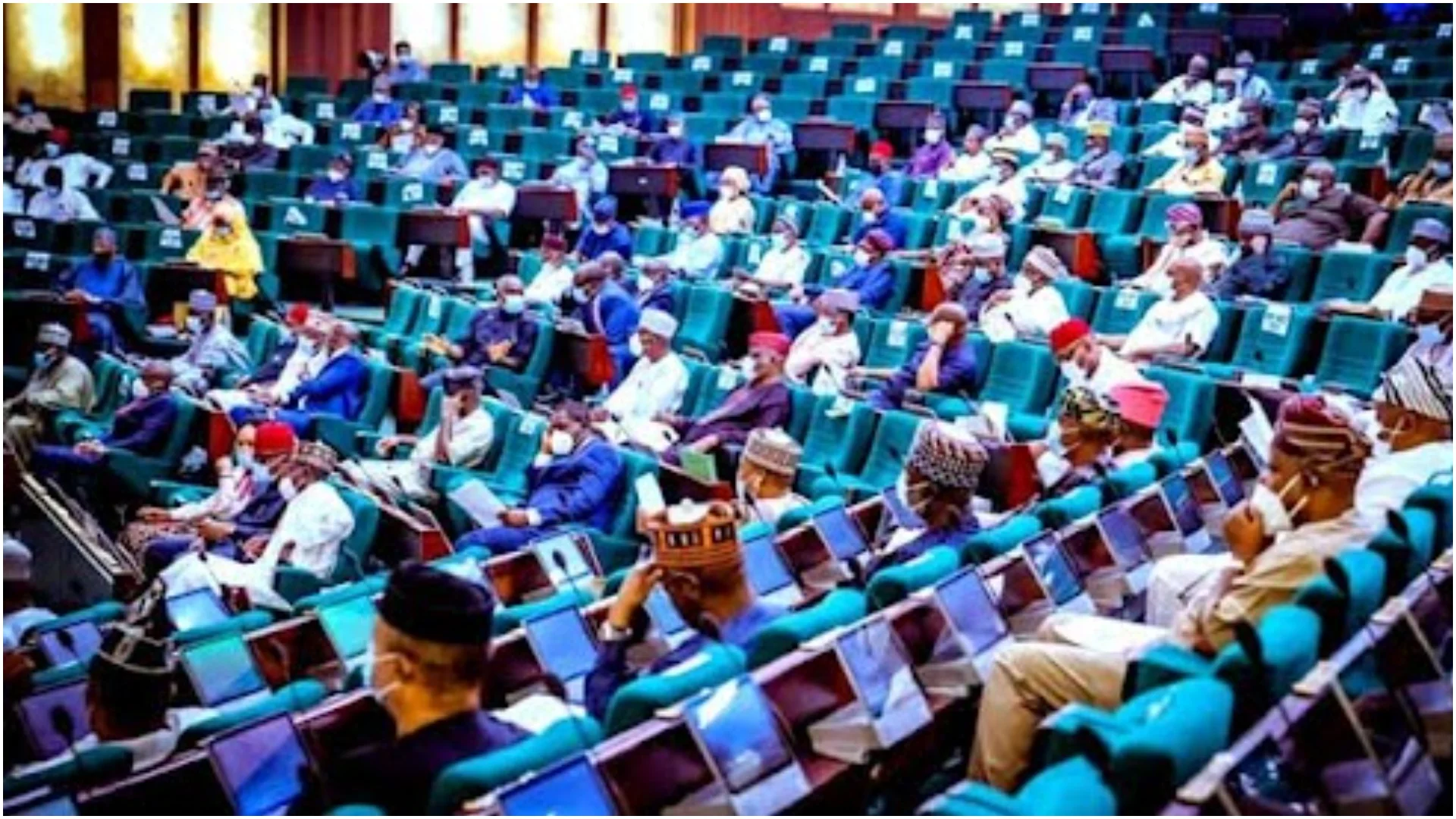
    ABUJA, NIGERIA – Twelve members of the House of Representatives (Nigeria) announced their defection from their respective political parties during plenary, marking a significant political shift within the National Assembly.

    The announcement was made by Deputy Speaker Benjamin Kalu, who informed lawmakers that six members moved from the Peoples Democratic Party to the ruling All Progressives Congress, while another six lawmakers from the Young Progressives Party and Labour Party (Nigeria) joined the African Democratic Congress. Ejes Gist News reports that the defections represent one of the most notable legislative realignments in the current parliamentary session.

    PDP Lawmakers Move to APC

    During the plenary session, Kalu formally welcomed the first group of defectors from the PDP to the APC, beginning with Hon. Bamisele Komolufe Beatrice Lowery.

    Announcing the defection, the Deputy Speaker stated that the lawmaker had submitted a notice of political realignment and was now a member of the ruling party.

    Other PDP lawmakers identified among those defecting to the APC include Hon. Muktar Aliyu Betara and Hon. Zakari Dauda Nyampa. Addressing Betara’s move, Kalu described the decision as a public and courageous step to join the governing party.

    The Deputy Speaker added that additional PDP members also submitted formal notices of defection, bringing the total number of lawmakers moving from the opposition party to the APC to six.


    Also Read: Hot Weather in Nigeria: Best Foods to Eat to Stay Cool and Healthy

    Opposition Lawmakers Join ADC

    In a parallel development, six lawmakers from opposition platforms announced their decision to join the African Democratic Congress.

    Among them was Hon. Peter Ifeanyi Uzokwe, who moved from the Young Progressives Party to the ADC. Kalu formally notified the chamber of the development, confirming that the lawmaker had submitted a written notice of defection.

    Several lawmakers elected under the Labour Party banner also joined the ADC, including Hon. Bright Iyamu Jesse Oke Onakpasa. Another lawmaker, Hon. Shuaib Abiola Sowunmi, was listed among those moving to the ADC but was not present in the chamber at the time of the announcement.

    List of Lawmakers Who Submitted Defection Notices

    The Deputy Speaker acknowledged the following lawmakers whose letters of defection were received by the House:

    From PDP to APC

    • Hon. Bamisele Komolufe Beatrice Lowery
    • Hon. Muktar Aliyu Betara
    • Hon. Zakari Dauda Nyampa
    • Three additional lawmakers listed in the notification

    From YPP and Labour Party to ADC

    • Hon. Peter Ifeanyi Uzokwe
    • Hon. Shuaib Abiola Sowunmi
    • Hon. Bright Iyamu Jesse Oke Onakpasa
    • Hon. Mohammed Inuwa Bassi
    • Hon. Murphy Osaro Omoruyi
    • Hon. Jafaru Yakubu

    Additional lawmakers whose notices were acknowledged during the session include Prince Sadiq Abbas Tafida, Victor Afam Ogene, Kafilat Ogbara, Peter Udo Udofia, Professor Obi Lilian Orogbu, Barrister Mohammed Bello Shehu, Dankawu Idris, Hassan Shehu Hussaini, Muhammad Ghali Tijjani, and Jimbo Ibrahim.

    House Procedure on Defections

    Kalu clarified that the House would not read resignation letters in the absence of the lawmakers concerned, noting that parliamentary procedure requires members to be present before such announcements are ceremonially confirmed.

    According to the Deputy Speaker, letters submitted in advance are treated as received but formal recognition is made when the lawmaker appears in the chamber.

    Political Implications

    The defections are expected to influence the balance of power within the House and could reshape party alignments ahead of future electoral cycles. Analysts say the movement of several lawmakers to the African Democratic Congress also reflects increasing competition among opposition parties for legislative influence.

    The Deputy Speaker described the development as evidence of an evolving political landscape within the country’s parliamentary system, noting that the House would formally recognise the defecting lawmakers once all procedural requirements are completed.

  • Hot Weather in Nigeria: Best Foods to Eat to Stay Cool and Healthy

    Hot Weather in Nigeria: Best Foods to Eat to Stay Cool and Healthy

    Nigeria’s hot season often brings prolonged periods of extreme temperatures, with several regions recording heat levels exceeding 40°C between February and May, according to data from the Nigerian Meteorological Agency. Health experts warn that sustained exposure to such conditions can lead to dehydration, fatigue, and heat-related illnesses if adequate precautions are not taken.


    Also Read : Just In: Sokoto Ex-Governor Aminu Tambuwal Resigns from PDP, Defects to ADC

    Ejes Gist News reports that medical professionals and nutrition specialists increasingly emphasize the role of diet in helping the body regulate temperature during periods of intense heat. Foods with high water content, light proteins, and natural electrolytes can assist the body in maintaining hydration and supporting normal metabolic functions.

    Water-Rich Fruits and Vegetables Support Hydration

    Nutritionists recommend increasing the intake of fruits and vegetables with high water content during hot weather. These foods contribute to hydration while supplying vitamins and essential minerals.

    Key examples include:

    • Watermelon: Contains more than 90 percent water and supplies vitamins A and C.
    • Cucumber: A vegetable composed largely of water, commonly consumed raw in salads or blended into smoothies.
    • Leafy greens: Vegetables such as lettuce and spinach provide hydration and micronutrients without placing heavy metabolic demand on digestion.
    • Citrus fruits: Oranges and lemons supply fluids and vitamin C, supporting immune function and hydration.

    These foods can be eaten raw, blended into juices, or incorporated into light meals to help offset fluid loss caused by excessive sweating.

    Coconut Water and Natural Electrolytes

    Natural electrolyte drinks are widely recommended during periods of intense heat. Coconut water, extracted from young coconuts, contains potassium, magnesium, and sodium—minerals that help replenish electrolytes lost through perspiration.

    Dietitians note that coconut water provides hydration comparable to some commercial sports drinks but without added sugar or artificial additives.

    Dairy Products and Fermented Foods

    Cooling dairy products can help maintain body comfort during heat waves. Chilled yoghurt and fermented milk drinks are frequently recommended because they combine hydration with digestive benefits.

    Examples commonly consumed include:

    • Plain yoghurt or Greek yoghurt served with fruit
    • Buttermilk often prepared with mild spices
    • Cold milk drinks or fruit smoothies

    Fermented dairy products also contain beneficial bacteria that support digestive health, which can be disrupted during extreme weather conditions.

    Spices That Encourage Natural Cooling

    Although spicy food may appear counterintuitive during hot weather, nutrition specialists explain that certain spices can stimulate sweating, a process that allows the body to cool naturally as perspiration evaporates.

    Examples include:

    • Chilli peppers, which contain capsaicin that promotes perspiration
    • Fresh mint, known for its cooling sensation due to menthol compounds
    • Lightly spiced foods, which may stimulate circulation without increasing metabolic heat significantly

    Mint is widely used in beverages, salads, and teas because of its refreshing effect.

    Refreshing Beverages for Heat Management

    Maintaining adequate fluid intake remains essential during extreme temperatures. In addition to plain water, several beverages can provide hydration and mild nutritional benefits.

    Common options include:

    • Lemon water, which adds flavor and encourages increased water consumption
    • Mint-infused water, prepared with cucumber slices or citrus fruits
    • Iced herbal teas, including peppermint or chamomile, served chilled

    These beverages can help individuals increase daily fluid intake while avoiding sugary soft drinks.

    Light Protein Sources During Hot Weather

    Health professionals often recommend lighter protein sources during hot periods, as heavy meals may increase metabolic heat production.

    Suitable options include seafood and lean proteins such as:

    • Fish, including mackerel and salmon, which provide omega-3 fatty acids
    • Shrimp and other shellfish, typically served chilled in salads
    • Plant-based proteins, including beans and legumes prepared in light dishes

    These foods deliver essential nutrients without placing excessive strain on the digestive system.

    Cooling Snacks and Light Meals

    For individuals seeking quick refreshment during intense heat, certain snacks can help provide hydration and energy without increasing body temperature.

    Examples include:

    • Frozen fruit such as grapes, berries, or mango slices
    • Chilled vegetable soups such as gazpacho
    • Homemade fruit popsicles prepared from natural juice or yoghurt

    These snacks combine hydration with vitamins and natural sugars that support energy levels during hot weather.

    Health Risks Associated With Extreme Heat

    Medical authorities warn that prolonged exposure to high temperatures may increase the risk of several heat-related conditions, including:

    • Heat exhaustion, marked by heavy sweating, weakness, and dizziness
    • Dehydration, resulting from inadequate fluid replacement
    • Heat stroke, a severe medical emergency requiring immediate attention

    The World Health Organization advises populations in hot climates to maintain regular fluid intake, avoid excessive alcohol consumption, and adjust diet to include hydrating foods during periods of extreme heat.

    Public health specialists note that combining hydration, balanced nutrition, and environmental cooling strategies can significantly reduce the health risks associated with Nigeria’s annual hot season.

  • Just In: Sokoto Ex-Governor Aminu Tambuwal Resigns from PDP, Defects to ADC

    Just In: Sokoto Ex-Governor Aminu Tambuwal Resigns from PDP, Defects to ADC

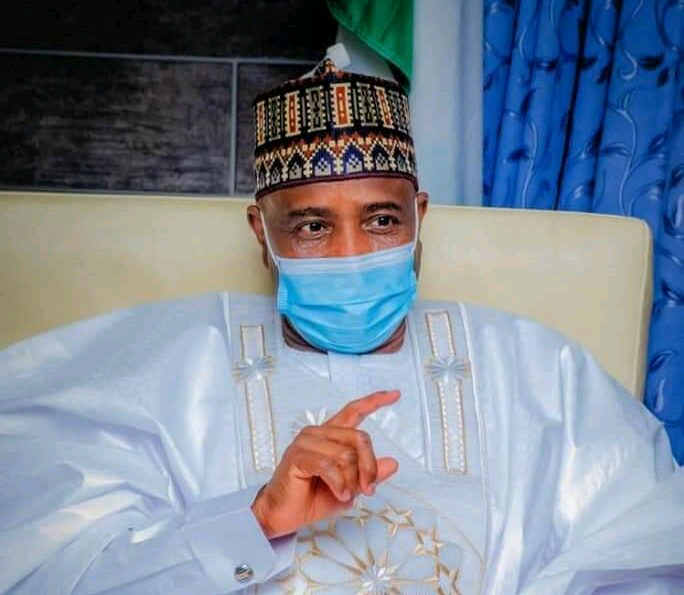
    SOKOTO  – Former Speaker of the House of Representatives and immediate past Governor of Sokoto State, Aminu Waziri Tambuwal, has formally resigned his membership from the Peoples Democratic Party (PDP) and defected to the African Democratic Congress (ADC).

    In a personally signed statement released to journalists on Thursday, Tambuwal confirmed that he has communicated his resignation in writing to his ward chairman, bringing an end to his long-standing association with the main opposition party.


    Tambuwal, who served as Governor of Sokoto State for two terms and previously as Speaker of the House of Representatives, cited persistent internal crisis, leadership disagreements, and growing divisions within the PDP as the primary reasons for his exit.

    Ejes Gist News reports that the former governor’s departure represents one of the highest-profile exits from the PDP in recent months, raising questions about the opposition party’s cohesion ahead of future electoral contests.

    “The PDP has been a significant part of my political journey, and I remain grateful for the opportunities it gave me to serve our nation, including as Speaker of the House of Representatives and as Governor of Sokoto State during my second term in office,” Tambuwal stated.

    “However, the persistent internal crisis, leadership disagreements, and growing divisions within the PDP have made it increasingly difficult to continue my membership of the party. These developments have unfortunately weakened the unity and direction that once defined the party and have necessitated this decision.”

    New Political Home

    The former governor announced that he has officially joined the African Democratic Congress (ADC) along with his associates and supporters, signaling a potential realignment of political forces in Sokoto State and beyond.

    Tambuwal framed his decision within a broader vision for national development, stating that his new political platform aligns with his commitment to integrity, accountability, and inclusiveness.

    “I am convinced that this decision is guided by my belief that Nigeria needs a stronger political platform built on integrity, accountability, inclusiveness, and a clear commitment to national development,” he said.

    Tambuwal’s defection carries substantial political weight given his extensive legislative and executive experience. He presided over the House of Representatives from 2011 to 2015 and governed Sokoto State from 2015 to 2023, establishing a broad political network across the North-West and nationally.

    The former governor was a prominent contender for the PDP presidential ticket ahead of the 2023 general elections, eventually stepping down for Atiku Abubakar during the party’s primary. His departure from the PDP removes a significant figure from the party’s ranks in the North-West, a critical electoral region.


    For the African Democratic Congress, Tambuwal’s arrival represents a major boost. The ADC, while not among Nigeria’s dominant political parties, has maintained a presence across several states and now gains a figure with national name recognition and substantial political capital.

    Political analysts note that Tambuwal’s ability to bring associates and supporters with him could reshape political calculations in Sokoto State and potentially position the ADC as a more significant player in the region.


    While Tambuwal did not explicitly declare his political ambitions in the resignation statement, his reference to Nigeria needing “a stronger political platform built on integrity, accountability, inclusiveness, and a clear commitment to national development” suggests he intends to remain actively engaged in shaping the country’s political future.

    “I remain fully committed to the service of our country and to the ideals of democracy, justice, and national unity,” Tambuwal affirmed in his statement.


    Tambuwal’s exit adds to the PDP’s ongoing challenges with internal cohesion. The party has grappled with factional disputes, leadership tussles, and a series of high-profile defections since the 2023 general elections.

    The former governor’s reference to “persistent internal crisis” and “leadership disagreements” echoes concerns raised by other departing members and reflects broader tensions within a party struggling to maintain unity while serving as the primary opposition to the ruling All Progressives Congress (APC).


    The African Democratic Congress is expected to formally welcome Tambuwal and his supporters in the coming days, with party leaders likely to highlight the former governor’s experience and political network as assets for the party’s growth strategy.

    Details of Tambuwal’s role within the ADC structure and any potential plans for future electoral contests are anticipated to emerge following consultations with party leadership.

  • Give Us Light: Lagos Youths Protest Persistent Blackouts as Tinubu Fails to Deliver on 24-Hour Power Promise

    Give Us Light: Lagos Youths Protest Persistent Blackouts as Tinubu Fails to Deliver on 24-Hour Power Promise

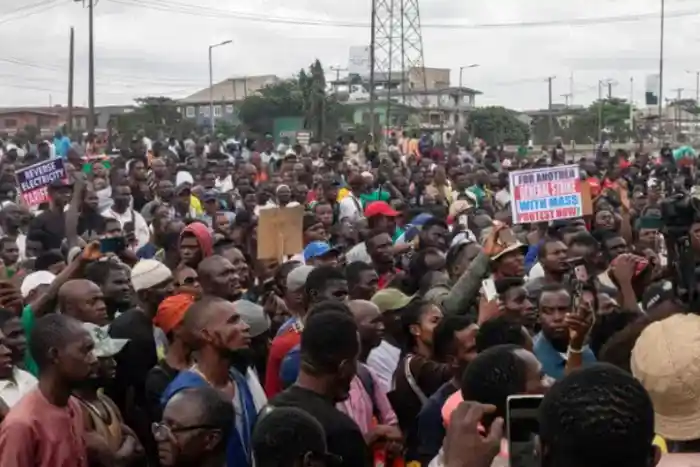
    LAGOS – In the early hours of March 12, youths took to the streets of Lagos to protest what residents and business owners have described as a persistent and worsening electricity crisis. Chanting “we are not asking for too much, give us light,” the demonstrators voiced frustrations that have been building across the state for months as power outages disrupt daily life and economic activity.

    For most residents, the situation has significantly worsened living conditions, while for business owners, the erratic power supply has driven up operating costs and disrupted daily activities. Small-scale traders, barbers, welders, and restaurant operators who rely on stable electricity to power their equipment have been particularly hard hit, with many forced to rely on expensive generators to remain operational.

    Ikeja Electric Cites Gas Constraints

    The protest follows a public notice issued by Ikeja Electric on March 11, in which the distribution company acknowledged widespread disruptions and attributed them to gas supply constraints affecting power generation on the national grid.


    Also Read : Diplomatic Snub: India, Other Nations Reject Nigeria’s Ambassadorial Nominees Over Tenure Concerns

    “The current situation is due to gas supply constraints affecting the national grid. This has resulted in a significant energy shortfall, necessitating increased load shedding across all our feeders,” the company stated, adding that it was maintaining communication with stakeholders to help restore normal generation levels.

    Ejes Gist News reports that the explanation points to a structural problem deeply embedded in Nigeria’s electricity value chain. The country’s power system relies heavily on gas-fired thermal plants connected to the national grid, which is managed by the Transmission Company of Nigeria.

    Although Nigeria’s installed generation capacity technically exceeds 13,000 megawatts, available capacity frequently fluctuates between 3,000 and 5,000 megawatts due to a combination of factors:

    • Gas supply shortages affecting thermal plants

    • Transmission bottlenecks limiting power evacuation

    • Plant maintenance issues reducing available capacity

    • Grid instability leading to system collapses

    Gas-fired plants account for more than 70 per cent of Nigeria’s electricity generation, meaning any disruption in gas supply triggers near-immediate nationwide shortages that cascade down to distribution companies and ultimately to consumers.


    Campaign Promise Under Scrutiny

    As the protests unfolded, residents were quick to resurrect a campaign promise made by President Bola Tinubu during his election campaign. In a widely circulated video from that period, Tinubu had declared to Nigerians:

    “Whichever way, by all means necessary, you must have electricity, and you will not pay for estimated billing anymore. A promise made will be a promise kept. If I don’t keep the promise and I come back for second term, don’t vote for me.”

    That promise has become a recurring reference point for Nigerians navigating daily life without reliable power. Wednesday’s protest made clear that patience with the current administration on this issue is wearing thin, with demonstrators demanding tangible results rather than policy announcements.

    Government Launches New Power Sector Initiative

    On March 6, President Tinubu inaugurated an 11-member committee to drive the establishment of the Grid Asset Management Company Limited (GAMCO), a new initiative aimed at addressing Nigeria’s persistent power sector challenges. The Federal Executive Council had previously approved the company’s establishment as part of efforts to tackle stranded power generation, transmission bottlenecks, and grid management inefficiencies.

    The committee, chaired by the President’s Chief of Staff, includes the Attorney General Lateef Fagbemi, the Ministers of Power, Works, Finance, Communications, Science and Technology, Aviation, and the Minister of State for Petroleum, among others.

    According to a statement from the Presidency, the committee is tasked with:

    • Reviewing existing laws and regulatory frameworks governing the electricity value chain

    • Identifying conflicts or gaps that may hinder GAMCO’s implementation

    • Recommending legal and administrative reforms to facilitate the company’s operations

    • Developing a roadmap for the commercialisation of grid management functions

    Whether the committee’s work will translate into tangible relief for Lagos residents and the country at large remains to be determined by its outcomes and subsequent implementation.

    Structural Challenges Remain

    Industry analysts note that while initiatives like GAMCO address transmission and grid management issues, they do not directly resolve the fundamental gas supply constraints currently causing the blackouts. The interdependence between gas production, power generation, and distribution means that solving Nigeria’s electricity crisis requires coordinated action across multiple sectors.

    For Lagos residents who took to the streets on March 12, the immediate concern is restoration of power to their homes and businesses. Until the structural issues are addressed, the gap between policy announcements and lived reality is likely to persist, with citizens continuing to bear the burden of the nation’s electricity challenges.

  • Just Five Left: Meet the Governors Still Outside APC as Party Secures 31 States

    Just Five Left: Meet the Governors Still Outside APC as Party Secures 31 States

    ABUJA – The All Progressives Congress (APC) has cemented its dominance across Nigeria’s political landscape, now claiming control of 31 out of the country’s 36 states following a historic wave of defections by governors from opposition parties. As the ruling party celebrates its expanded influence, attention has shifted to the five governors who remain outside its fold.

    The APC recently highlighted its dominance in a post on its official X (formerly Twitter) page with the inscription “31/36”, signaling that only a handful of states are currently governed by politicians from other parties. The declaration follows months of political realignments that saw nine governors cross over to the ruling party.


    Ejes Gist News presents the five governors yet to join the APC and the parties they currently represent.

    The Five Opposition Governors


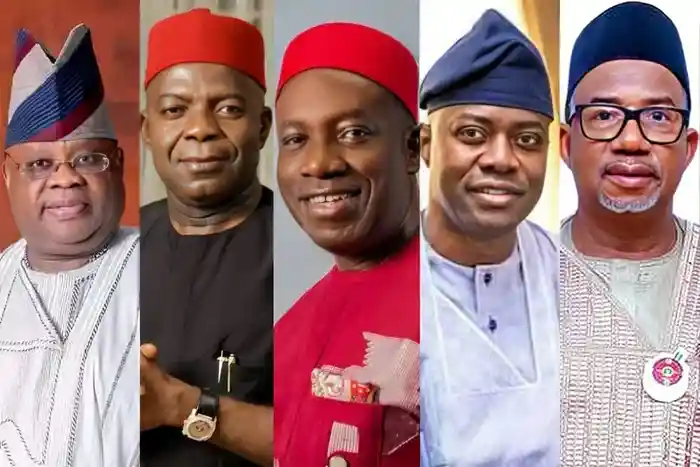
    1. Governor Bala Mohammed – Bauchi State

    Party: Peoples Democratic Party (PDP)
    State: North-East

    Governor Bala Mohammed remains a steadfast member of the Peoples Democratic Party and stands as one of the most prominent opposition figures in the country. He currently serves as the chairman of the PDP Governors’ Forum, a position that places him at the center of efforts to sustain the party’s relevance despite the wave of defections to the APC.


    Meet the Nine Governors who Defected to APC as Party Claims Control of 31 States (Full List)

    Mohammed has been vocal in defending the PDP’s position in Nigeria’s political landscape, frequently criticizing APC policies while advocating for a stronger opposition coalition ahead of 2027. His continued presence in the PDP makes Bauchi a critical opposition stronghold in the North-East region.


    2. Governor Seyi Makinde – Oyo State

    Party: Peoples Democratic Party (PDP)
    State: South-West

    Oyo State Governor Seyi Makinde remains in the PDP, positioning himself as a leading opposition voice in the South-West region. Despite the APC’s dominance in the South-West—where the ruling party controls Lagos, Ogun, Ondo, Ekiti, and Osun—Makinde has successfully held Oyo for the opposition.

    Makinde has been vocal about strengthening the PDP’s internal structures and has positioned himself as a key player in any opposition coalition seeking to challenge the APC in 2027. His performance in Oyo, a state with significant political weight in the South-West, keeps the region from being a complete APC sweep.


    3. Governor Alex Otti – Abia State

    Party: Labour Party (LP)
    State: South-East

    Governor Alex Otti represents a unique political force as the only Labour Party governor in Nigeria. His victory in the 2023 governorship election was part of the Labour Party’s surge in popularity during the last general election cycle, driven by the presidential candidacy of Peter Obi.

    Otti has remained with the Labour Party despite the wave of defections sweeping other regions. His position in Abia makes him a key figure in the South-East, where the APC recently gained a foothold through Governor Peter Mbah’s defection but has not yet achieved full regional dominance.

    4. Governor Charles Soludo – Anambra State

    Party: All Progressives Grand Alliance (APGA)
    State: South-East

    Governor Charles Soludo governs Anambra State under the All Progressives Grand Alliance (APGA), a regional party with deep roots in the South-East. Soludo, a former Central Bank of Nigeria governor, won the 2021 governorship election under the APGA banner and has maintained his party affiliation despite the realignment wave.

    APGA has traditionally held Anambra as its stronghold, and Soludo’s continued presence in the party preserves one of Nigeria’s few remaining regional party structures. His position also keeps the South-East politically diverse, with Anambra under APGA, Abia under Labour Party, and Enugu now under APC following Governor Mbah’s defection.


    5. Governor Ademola Adeleke – Osun State

    Party: Peoples Democratic Party (PDP)
    State: South-West

    Governor Ademola Adeleke completes the list of opposition governors, governing Osun State under the PDP banner. Adeleke famously defeated the APC in the 2022 Osun governorship election, pulling off an upset in a state that had leaned toward the ruling party.

    His continued presence in the PDP keeps Osun among the five states not controlled by the APC and provides the opposition with a foothold in the South-West. Adeleke’s popularity in Osun, driven by his grassroots appeal, makes him a significant figure in any opposition calculations for 2027.


    Complete List of Opposition Governors

    No. Governor State Region Party
    1 Bala Mohammed Bauchi North-East PDP
    2 Seyi Makinde Oyo South-West PDP
    3 Alex Otti Abia South-East Labour Party
    4 Charles Soludo Anambra South-East APGA
    5 Ademola Adeleke Osun South-West PDP

    Regional Breakdown of Opposition States

    Region Opposition States APC States
    North-East Bauchi (1) 5
    North-West 0 7
    North-Central 0 6
    South-West Oyo, Osun (2) 4
    South-East Abia, Anambra (2) 1 (Enugu)
    South-South 0 6

    The Shrinking Opposition

    The five opposition governors represent a dramatic reduction in opposition-held states compared to the 2023 election outcome. Several factors explain their continued presence outside the APC:

    1. Regional Party Loyalty
    Governors like Soludo (APGA) and Otti (Labour Party) lead regional or issue-based parties with dedicated followings that resist absorption into the APC structure.

    2. Personal Political Calculations
    Governors such as Makinde and Mohammed have positioned themselves as national opposition figures, with ambitions that may extend beyond their states.

    3. State-Level Popularity
    Adeleke’s victory in Osun was built on personal popularity that transcends party labels, giving him flexibility to remain outside the ruling party.

    4. Opposition Coalition Dynamics
    Some governors may be waiting to see how opposition parties structure themselves for 2027 before making final alignment decisions.


    Political Implications for 2027

    The five remaining opposition governors carry significance beyond their individual states:

    Opposition Leadership

    Bala Mohammed, as PDP Governors’ Forum chairman, serves as a rallying point for opposition forces. His continued presence in Bauchi provides the PDP with a northern anchor.


    South-West Resistance

    Makinde and Adeleke together hold two South-West states against the APC’s four. Their ability to coordinate opposition strategy in the region could influence one of Nigeria’s most politically significant zones.

    South-East Diversity
    The South-East now features three parties across its five states: APC (Enugu), Labour Party (Abia), and APGA (Anambra). This diversity could make the region a battleground for coalition building.

    Potential for Further Defections
    Political observers note that with more than a year before the 2027 election cycle gathers full momentum, further realignments may still occur. The five governors face continued pressure to align with the ruling party, particularly as APC’s dominance grows.


    What the Governors Are Saying

    Governor Bala Mohammed (Bauchi): Has repeatedly stated that the PDP remains strong and that defections will not weaken the party’s resolve to contest and win in 2027.

    Governor Seyi Makinde (Oyo): Has positioned himself as a defender of opposition unity, frequently hosting meetings with other non-APC governors.

    Governor Alex Otti (Abia): Emphasizes his Labour Party mandate as distinct from both APC and PDP, suggesting he may chart an independent course.

    Governor Charles Soludo (Anambra): Has maintained that APGA remains the authentic voice of the South-East and that regional interests are best served by maintaining the party’s identity.

    Governor Ademola Adeleke (Osun): Focuses on governance in Osun while maintaining PDP affiliation, with his dance-filled campaigns and people-centric approach keeping him popular despite national trends.


    The Road to 2027

    As the APC celebrates its 31-state dominance, the five opposition governors represent both resistance and uncertainty. Their decisions in the coming months—whether to stand firm, form a united opposition coalition, or eventually join the ruling party—will significantly shape the political landscape ahead of the 2027 elections.

    For now, they remain the faces of opposition governance in Nigeria, governing islands of resistance in a sea of APC dominance.

    Whether they can hold the line or eventually join the ruling party wave will be one of the defining political stories between now and the next national polls.

  • Meet the Nine Governors who Defected to APC as Party Claims Control of 31 States (Full List)

    Meet the Nine Governors who Defected to APC as Party Claims Control of 31 States (Full List)

    ABUJA – Nigeria’s political landscape has witnessed a historic realignment ahead of the 2027 general elections, with nine state governors officially crossing over to the ruling All Progressives Congress (APC) over the past year. Their defections have bolstered the party’s dominance, enabling it to claim control of 31 out of Nigeria’s 36 states.

    The APC recently celebrated its expanding influence by posting “31/36” on its official X (formerly Twitter) handle, signaling a sweeping realignment that has dramatically reduced the opposition’s foothold across the federation.

    Ejes Gist News presents all nine governors who have led this political realignment, their former parties, and their confirmed defection dates.


    Complete List: Nine Governors Who Defected to APC

    No. Governor State Former Party Defection Date
    1 Umo Eno Akwa Ibom PDP June 6, 2025
    2 Douye Diri Bayelsa PDP October 15, 2025 (resignation) / November 3, 2025 (formal reception)
    3 Siminalayi Fubara Rivers PDP December 9, 2025
    4 Caleb Mutfwang Plateau PDP December 18, 2025
    5 Abba Kabir Yusuf Kano NNPP January 25, 2026 (effective resignation date)
    6 Ahmadu Fintiri Adamawa PDP February 27, 2026
    7 Dauda Lawal Zamfara PDP March 9, 2026
    8 Peter Mbah Enugu PDP March 2026 (confirmed by March 11, 2026)
    9 Sheriff Oborevwori Delta PDP April 23, 2025

    Detailed Profiles of the Nine Defectors


    1. Governor Umo Eno – Akwa Ibom State

    Former Party: Peoples Democratic Party (PDP)
    Defection Date: June 6, 2025

    Governor Umo Eno officially defected from the PDP to the APC on June 6, 2025, at the Government House in Uyo. He stated the decision followed three months of wide consultation with critical stakeholders across the state and cited admiration for President Bola Tinubu’s leadership as a key motivating factor.

    Eno’s defection marked the first major breakthrough for the APC in the South-South region and signaled the beginning of the political realignment that would reshape Nigeria’s electoral map. Akwa Ibom had been a PDP stronghold since 1999, making his move historically significant.

    2. Governor Douye Diri – Bayelsa State

    Former Party: Peoples Democratic Party (PDP)
    Defection Date: October 15, 2025 (resignation) / November 3, 2025 (formal reception)

    Governor Douye Diri announced his resignation from the PDP on October 15, 2025, sending shockwaves through the South-South political establishment. He was formally received into the APC by party leaders, including Vice President Kashim Shettima, in Yenagoa on November 3, 2025.

    Bayelsa State, the heart of Ijaw political consciousness, had been a PDP fortress since the return of democracy. Diri’s defection marked a significant realignment within Ijaw politics and extended the APC’s reach deeper into the oil-rich South-South region.


    3. Governor Siminalayi Fubara – Rivers State

    Former Party: Peoples Democratic Party (PDP)
    Defection Date: December 9, 2025

    Governor Siminalayi Fubara formally defected from the PDP to the APC on Tuesday, December 9, 2025, describing the move as “one of the easiest things” he had done in his political life and a way to express gratitude to President Tinubu.

    His defection followed months of intense political tensions in oil-rich Rivers State that had paralysed governance. Rivers State is one of Nigeria’s most economically significant states due to its oil and gas resources. Fubara’s alignment with the APC gave the ruling party a critical foothold in a region traditionally dominated by the PDP.


    4. Governor Caleb Mutfwang – Plateau State

    Former Party: Peoples Democratic Party (PDP)
    Defection Date: December 18, 2025

    Governor Caleb Mutfwang’s defection was formally confirmed on Thursday night, December 18, 2025, by APC National Chairman, Professor Nentawe Yilwatda, during the party’s 14th National Caucus meeting at the State House Conference Centre, Abuja.

    His move marked a key recovery for the ruling party in Plateau State, where the APC had suffered a heavy loss in the 2023 elections. Plateau State occupies a central position in Nigeria’s Middle Belt, a region with complex ethnic and religious dynamics, making Mutfwang’s defection strategically significant.

    5. Governor Abba Kabir Yusuf – Kano State

    Former Party: New Nigeria Peoples Party (NNPP)
    Defection Date: January 25, 2026 (effective resignation date)

    Governor Abba Kabir Yusuf resigned from the NNPP effective Sunday, January 25, 2026, citing deepening internal crises within the party. His resignation letter was dated and submitted with that effective date.

    His defection sent shockwaves through Kano State’s political establishment. Kano is Nigeria’s most populous state and a critical battleground in any national election. The move delivered a devastating blow to the NNPP, which had considered Kano its stronghold. The defection also carried symbolic weight, as Yusuf is widely regarded as a political associate of Senator Rabiu Musa Kwankwaso, the NNPP’s 2023 presidential candidate.


    6. Governor Ahmadu Fintiri – Adamawa State

    Former Party: Peoples Democratic Party (PDP)
    Defection Date: February 27, 2026

    Governor Ahmadu Fintiri dumped the PDP and defected to the APC on Friday, February 27, 2026, alongside 22 of his 24 commissioners. He personally picked up his APC membership card at K/Wuro Ngayandi Ward in Madagali Local Government Area.

    Fintiri’s defection stands as perhaps the most significant political realignment in the entire wave. Adamawa State holds particular strategic importance as the home state of former Vice President Atiku Abubakar, the PDP’s presidential candidate in 2023 and a prominent opposition figure. Fintiri’s move dramatically weakened the PDP’s structure in the North-East and delivered a psychological blow to the opposition ahead of 2027.


    7. Governor Dauda Lawal – Zamfara State

    Former Party: Peoples Democratic Party (PDP)
    Defection Date: March 9, 2026

    Governor Dauda Lawal’s defection was confirmed on Monday, March 9, 2026, following an Appeal Court judgment that upheld a ruling restraining the PDP from conducting its national convention. Hours after the ruling, the PDP flag was pulled down at Zamfara Government House.

    His defection consolidated the APC’s grip on the North-West, the region with the highest voter concentration in the country. Lawal’s move was particularly significant given Zamfara’s position as a state grappling with security challenges. His alignment with the federal government enhanced coordination between state and national security apparatus in addressing banditry and other threats plaguing the region.

    8. Governor Peter Mbah – Enugu State

    Former Party: Peoples Democratic Party (PDP)
    Defection Date: March 2026 (confirmed by March 11, 2026)

    Governor Peter Mbah’s defection was confirmed by March 11, 2026, with multiple sources listing him among the nine PDP governors who had crossed over to the APC.

    Mbah’s move marked a historic breakthrough for the ruling party in the South-East region. His defection represented the first time the APC had gained control of a South-East state since the region became a PDP stronghold. Mbah, a businessman-turned-politician, had maintained a working relationship with the federal government despite his PDP affiliation. His move opened the floodgates for other South-East politicians to realign with the ruling party ahead of 2027.


    9. Governor Sheriff Oborevwori – Delta State

    Former Party: Peoples Democratic Party (PDP)
    Defection Date: April 23, 2025

    Governor Sheriff Oborevwori’s defection on April 23, 2025, marks him as the earliest among the nine governors to join the APC. Delta State, one of Nigeria’s largest oil producers, had been a PDP stronghold for decades.

    Oborevwori’s move delivered a crushing blow to the PDP’s South-South structure and gave the APC control over yet another oil-rich state. His decision reflected both national political calculations and local dynamics within Delta’s complex ethnic and political landscape. As the first South-South governor to defect, Oborevwori’s move paved the way for the wave of defections that would follow from Eno, Diri, Fubara, and others.


    Chronological Summary of Defections

    Year Number of Defections Governors
    2025 5 Oborevwori (April 23), Eno (June 6), Diri (Oct/Nov), Fubara (Dec 9), Mutfwang (Dec 18)
    2026 4 Yusuf (Jan 25), Fintiri (Feb 27), Lawal (Mar 9), Mbah (Mar 2026)

    Political Implications for 2027

    The nine defections carry enormous implications for the 2027 presidential and general elections.

    Governors are widely regarded as powerful political actors in Nigeria due to their control over state structures, grassroots mobilisation networks, and substantial financial resources. With nine governors now aligned with the APC, the party gains an overwhelming organisational advantage in campaign coordination and voter mobilisation across multiple states.

    The trend has devastated opposition parties, particularly the PDP, which has lost eight governors to the APC. The NNPP has lost its only governor, effectively collapsing the party’s state-level structure.


    Regional Breakdown

    The defections have reshaped Nigeria’s political geography:

    • South-South: APC gains Delta (Oborevwori), Akwa Ibom (Eno), Bayelsa (Diri), Rivers (Fubara) – 4 states

    • North-East: APC gains Adamawa (Fintiri) – 1 state

    • North-West: APC gains Zamfara (Lawal) – 1 state

    • North-Central: APC gains Plateau (Mutfwang) – 1 state

    • South-East: APC achieves historic breakthrough with Enugu (Mbah) – 1 state

    • North-West: APC gains Kano (Yusuf) – 1 state


    What Lies Ahead

    With nearly a year remaining before the 2027 elections, analysts suggest the current wave of defections may only be the beginning, as more political actors reposition themselves in what is expected to be another fiercely contested national poll.

    Diplomatic Snub: India, Other Nations Reject Nigeria’s Ambassadorial Nominees Over Tenure Concerns

    The opposition parties now face the monumental challenge of rebuilding their structures from the ground up. Whether they can stem further defections and remain competitive may determine just how balanced 2027 ultimately proves to be.

    For now, the APC’s claim of controlling 31 states stands as a testament to the effectiveness of its political realignment strategy—and a warning to opposition parties that the ground continues to shift beneath their feet.

  • Diplomatic Snub: India, Other Nations Reject Nigeria’s Ambassadorial Nominees Over Tenure Concerns

    Diplomatic Snub: India, Other Nations Reject Nigeria’s Ambassadorial Nominees Over Tenure Concerns

    ABUJA – Multiple countries, including India, have signaled their refusal to accept several ambassadorial nominees recently approved by President Bola Ahmed Tinubu, citing concerns over the limited time remaining in his current tenure, authoritative presidency sources have confirmed.

    The rejections stem from a diplomatic convention observed by some nations that discourages accepting ambassadors from governments with fewer than two years left in their term. This policy is designed to ensure diplomatic stability and avoid the costly and administrative burden of receiving envoys who may be replaced shortly after assuming post.


    Ejes Gist News reports that India has formally communicated hesitation regarding the approval of Nigeria’s envoy-designate to New Delhi, Ambassador Muhammad Dahiru. Under established diplomatic protocol, host countries must grant formal agreement, known as agrément, before an ambassador can assume duties.


    A senior official from the Nigerian Presidency, speaking on condition of anonymity, confirmed the development to journalists, explaining: “They won’t accept an ambassador from an administration that has less than two years still in office.”

    The official further revealed that multiple countries are indicating potential refusal of some nominees. Importantly, sources emphasize these rejections are not a reflection on the professional qualifications or personal integrity of the individuals selected, but rather a procedural response to the anticipated short duration of their service.

    Timing and Electoral Calendar

    President Tinuju recently approved the posting of 65 ambassadors and high commissioners to various countries and international organizations. The list includes a mix of career diplomats and political appointees destined for key posts in Germany, China, Mexico, India, and the United Nations.

    However, the confirmation process has encountered significant delays. Reports indicate that only a handful of nations, including the United Kingdom and France, have so far granted agrément, leaving the fate of numerous other nominees uncertain.

    Full List of 68 Nigerians Nominated as Ambassadors by President Tinubu and Their States

    The next Nigerian presidential election is scheduled for January 2027, with President Tinubu’s current term concluding in May 2027. This timeline means that if ambassadorial approvals continue to lag, some envoys could potentially serve for less than one year before a new administration potentially replaces them.

    Diplomatic Vacancies and Ongoing Efforts

    The current situation follows the Nigerian government’s September 2023 recall of ambassadors from over 100 foreign missions. This left numerous diplomatic posts vacant for more than two years before a replacement list was finally submitted to the Nigerian Senate for confirmation.

    Officials at the Ministry of Foreign Affairs are now relying on established bilateral relationships with concerned nations, expressing hope that diplomatic engagements might persuade some countries to make exceptions to their standard tenure-based policies.

    The development presents a significant diplomatic challenge for the administration as it seeks to fill critical foreign missions with substantive heads of mission after an extended period of vacancies.

  • Details Emerge as Reps Amend Electoral Act, Prescribe N10m Fine, Jail Term for Dual Party Membership

    Details Emerge as Reps Amend Electoral Act, Prescribe N10m Fine, Jail Term for Dual Party Membership

    The House of Representatives has passed an amendment to the Electoral Act 2026, criminalizing simultaneous membership in more than one political party, with offenders facing a fine of N10 million or a two-year prison term.

    The amendment, introduced during Wednesday’s plenary, adds three new subsections to Section 77 of the Electoral Act 2026, which governs political party membership. If signed into law, individuals found guilty of dual registration will have their membership in all parties declared void and face stringent penalties.

    Key Provisions of the Amendment

    The amended section explicitly prohibits multiple party registrations and establishes clear consequences for violators:

    • Prohibition: “A person shall not be registered as a member of more than one political party at the same time.”

    • Void Membership: Where dual membership is established, “such dual membership shall be void, and the person shall cease to be recognised as a valid member of any political party pending regularisation.”

    • Criminal Penalty: “A person who knowingly registers or maintains membership in more than one political party at the same time commits an offence and is liable on conviction to a fine of N10,000,000 or to imprisonment for a term of two years, or both.”

    Floor Debate: Constitutional Concerns vs. Moral Imperative

    The amendment generated robust debate among lawmakers, revealing sharp divisions over its constitutional validity and practical application.

    Hassan Fulata, an All Progressives Congress (APC) member from Jigawa State, raised constitutional objections, arguing that the provision may contravene Section 40 of the 1999 Constitution, which guarantees freedom of association. He proposed an alternative framework that would limit individuals to one party at a time without automatically invalidating membership in both upon discovery.

    However, Jonathan Gaza, a Social Democratic Party (SDP) member from Nasarawa State, strongly defended the amendment, characterizing dual party membership as fundamentally dishonest.

    “It would amount to mischief for an adult to register in two political parties simultaneously,” Gaza argued. “Individuals should identify with one political platform at a time. While people are free to switch parties, they should first leave one before joining another.”


    Ejes Gist News reports that the debate highlighted tensions between individual rights and the need for political integrity, with lawmakers grappling with how to balance constitutional freedoms against the imperative to sanitize the electoral process.

    Clarifying the Target

    Lawan Ali, a lawmaker from Yobe State, sought to clarify that the amendment specifically targets individuals who deliberately maintain active membership in multiple parties simultaneously, rather than those who properly resign from one before joining another.

    “Nigerians typically resign from their political party before joining another,” Ali explained. “This provision seeks to address cases where people retain membership in two parties at the same time.”

    Proposed Safeguards and Clarifications

    Sada Soli, an APC legislator from Katsina State, supported the amendment’s objective but raised concerns about its drafting clarity. He proposed that the Independent National Electoral Commission (INEC) should notify affected political parties upon discovering dual registration and grant the individual 14 days to choose which party to retain.

    Under Soli’s proposed framework, failure to make a timely choice would render the person ineligible to participate in primary elections for that electoral cycle.

    Deputy Speaker’s Firm Stance

    Presiding over plenary, Deputy Speaker Benjamin Kalu dismissed concerns about constitutional conflicts, taking a firm position against dual membership.

    “It is fraudulent misrepresentation,” Kalu stated emphatically. “Individuals should clearly identify with a political ideology instead of deliberately registering in multiple political parties.”

    The deputy speaker’s remarks signaled strong leadership support for the amendment, potentially smoothing its path through the legislative process.

    Implications for Political Landscape

    If signed into law, the amendment would significantly alter Nigeria’s political landscape by:

    • Deterring Opportunism: Discouraging politicians from maintaining multiple party affiliations to hedge against primary election losses.

    • Strengthening Party Systems: Encouraging genuine ideological commitment rather than transactional political maneuvering.

    • Clarifying Voter Choice: Ensuring that candidates stand on specific party platforms rather than maintaining ambiguous affiliations.

    Next Steps

    The amended Electoral Act 2026 now awaits concurrence by the Senate before transmission to the President for assent. Legal observers note that if challenged in court, the provision’s compatibility with constitutional freedom of association guarantees will likely face judicial scrutiny.

    Political analysts suggest that the amendment, if upheld, could fundamentally reshape party politics ahead of future electoral cycles, forcing politicians to make definitive choices about their political identities.

  • Petrol Prices Hit ₦1,500 as Markets Hail Dangote for Saving Nigerians Amid Iran War Crisis

    Petrol Prices Hit ₦1,500 as Markets Hail Dangote for Saving Nigerians Amid Iran War Crisis

    The pump price of Premium Motor Spirit (PMS), commonly known as petrol, has crossed the ₦1,500 per litre threshold in several filling stations across Nigeria, as the ripple effects of the ongoing Iran-Israel conflict continue to reshape global energy economics. However, despite the historic high, industry operators are hailing the Dangote Petroleum Refinery as a strategic buffer that has shielded the nation from what could have been a catastrophic fuel scarcity.

    PETROAN Confirms New Price Reality

    The National President of the Petroleum Products Retail Outlets Owners Association of Nigeria (PETROAN), Dr. Billy Gillis-Harry, confirmed the new price regime in an interview on Tuesday, explaining that the figure, while painful for consumers, represents the new reality of a deregulated market exposed to global volatility.

    “The pricing we predicted has risen above ₦1,000 per litre, the other time, to ₦1,175 at the gantry. By the time we add the charges, logistics, and others, the price will get higher and higher. So, yes, ₦1,500 per litre is not far-fetched,” Dr. Gillis-Harry stated.

    Also Read : Fresh Crisis Rocks Rivers as House of Assembly Rejects Fubara’s Four Commissioner Nominees

    His remarks followed a sharp rally in international crude benchmarks on Monday, triggered by escalating hostilities between US-Israeli forces and Iran. Brent crude hit $102.8 per barrel, marking a 10.91% increase, while West Texas Intermediate (WTI) surged to $101.0 per barrel, an 11.08% rise.

    Dangote Refinery: A Critical Buffer

    Despite the financial strain on households and businesses, stakeholders in the downstream sector are emphasizing a paradigm shift in Nigeria’s energy security architecture. Ejes Gist News reports that the Dangote Refinery’s consistent output has prevented the kind of prolonged scarcity that historically accompanied global oil price shocks.

    Dr. Gillis-Harry described the 650,000-barrel-per-day facility as the nation’s “salvation” in the current crisis, prioritizing availability over affordability in a time of global supply uncertainty.

    “The reality is that if you look at the volatility in the price from what we are seeing today, the Dangote Refinery is the salvation for us, due to the consistent source of product, which is much more important at this time than anything,” he said.

    This sentiment was echoed across the downstream value chain, with marketers noting that in previous decades, such a severe spike in global crude prices would have resulted in empty filling stations and paralyzing queues nationwide.

    The Mechanics of the Price Hike

    The Dangote Refinery revised its ex-depot price for petrol to ₦1,175 per litre on Monday, marking the fourth consecutive price adjustment in less than two weeks. Diesel (Automotive Gas Oil) was also increased to ₦1,620 per litre.

    Speaking at a press conference, the Managing Director and Chief Executive Officer of Dangote Petroleum, David Bird, clarified that despite the federal government’s crude-for-naira arrangement, the refinery remains fully exposed to international pricing mechanisms. He explained that the facility purchases Nigerian crude at global market rates, meaning its output prices are inextricably linked to the volatility of Brent and WTI benchmarks.

    Energy Security vs. Affordability

    The core argument presented by marketers to Nigerian consumers is one of trade-offs: the current high prices are preferable to the economic paralysis of fuel scarcity.

    Dr. Gillis-Harry urged the public to view the situation through the lens of energy security, noting that business continuity, even at higher costs, prevents a more devastating economic shutdown.

    “It should not make us panic. It is better for us to have the product available, be able to do our business, and get some level of energy security than not having it,” he added.

    Global Context and Market Response

    The conflict in the Middle East has upended global transport and energy sectors, with particular concern focused on the Strait of Hormuz, through which approximately 20% of the world’s oil passes. Fears of supply disruptions have sent shivers through commodity markets worldwide.

    In response to the crisis, former US President Donald Trump announced a temporary waiver of certain oil sanctions to boost global supply and stabilize prices. “We’re also waiving certain oil-related sanctions to reduce prices,” Trump told reporters, adding that the measures would remain in place “till this straightens out.”

    Market sentiment showed signs of stabilization on Tuesday following de-escalation signals from Washington. Trump told CBS News that the active phase of the conflict was “pretty much” complete, contributing to a partial pullback in oil prices and offering temporary relief to global markets.

  • No Mercy for Wife Beaters: Police Detain Cross River Lawmaker Over Assault of Spouse

    No Mercy for Wife Beaters: Police Detain Cross River Lawmaker Over Assault of Spouse

    The Cross River State Police Command has arrested and detained a suspended member of the State House of Assembly over allegations of brutally assaulting his wife. Mr. Ovat Dickson Agbor, who represents the Obubra 1 State Constituency, is currently in custody at the State Criminal Investigation Department (SCID) in Calabar following his pickup on Monday morning.

    Police Public Relations Officer, ASP Eitokpah Sunday Akata, confirmed the development to journalists on Tuesday, stating that the lawmaker is being held for questioning regarding the domestic violence allegations that have sparked widespread public outrage.

    Assembly Suspension and Government Condemnation

    The arrest follows the lawmaker’s indefinite suspension by the Cross River State House of Assembly last week. The legislative action came after reports emerged detailing repeated physical assaults on his wife, which sources described as having left her injured.

    Ejes Gist News reports that the incident drew immediate condemnation from the highest levels of the state government. Governor Bassey Otu and his wife publicly denounced the act, characterizing it as “irresponsible and unbecoming of a public office holder.”

    The Speaker of the House, Elvert Anyanbem, personally visited the lawmaker’s residence to ensure the safety and well-being of the victim. Speaker Anyanbem described the incident as “a public disgrace,” emphasizing that the conduct of any legislator reflects on the integrity of the entire assembly.

    Conflicting Statements and Victim’s Response

    In a statement following the public exposure of the assault, the lawmaker’s wife described the matter as a “family issue,” while simultaneously accusing the Speaker’s wife of misleading her into making the violence public. She has since renounced her membership in the Legislators’ Wives Association (LEWA).

    This conflicting response has drawn concern from legal experts and women’s rights advocates, who note that victims of domestic violence often face immense pressure to recant or minimize their experiences due to family, social, or economic considerations.

    Public Outcry and Official Apology

    Women’s rights groups and legal practitioners have strongly condemned the violence, calling for stricter accountability measures for public officials accused of domestic abuse. Advocates argue that holding elected representatives to higher standards of conduct is essential for maintaining public trust in governance.

    Following the widespread condemnation, Agbor has issued an official apology, expressing remorse for his actions and pledging to seek reconciliation with his family. However, legal observers note that an apology does not preclude criminal liability under Nigerian law.

    Ongoing Investigations

    The case remains under parallel investigation by both the Cross River State House of Assembly and the State Police Command. Sources at the SCID indicate that detectives are gathering statements from witnesses and medical personnel who attended to the victim.

    Further legal action is anticipated as the investigation progresses, with the police expected to forward their findings to the office of the Attorney-General for potential prosecution. The assembly’s internal disciplinary process is also ongoing, which could result in permanent sanctions against the embattled lawmaker.

  • Dollar to Naira Exchange Rate Today – March 10, 2026

    Dollar to Naira Exchange Rate Today – March 10, 2026

    The Dollar to Naira exchange rate today, March 10, 2026, shows continued fluctuations across Nigeria’s official and parallel foreign-exchange markets as the local currency responds to supply conditions, external demand pressures, and Central Bank interventions.

    Data from the Nigerian Foreign Exchange Market (NFEM) indicates that the naira traded around ₦1,398 per United States dollar in the official market during early trading. Ejes Gist News reports that the currency opened at ₦1,398.24/$, briefly touching ₦1,398.82/$ before strengthening slightly to about ₦1,396.24/$ as supply from the Central Bank of Nigeria (CBN) and authorised dealers met prevailing demand.

    Market data analysts note that movements in the official exchange window remain closely tied to liquidity injections and corporate demand for foreign currency.

    Dollar to Naira Exchange Rate in Official Market

    According to foreign-exchange market data, the naira maintained a relatively stable position in the official window.

    Key figures for March 10, 2026 (NFEM window):

    • Opening rate: ₦1,398.24 per $1
    • Intraday high: ₦1,398.82 per $1
    • Mid-session rate: around ₦1,396.24 per $1

    The slight appreciation recorded during the trading session followed increased liquidity from the CBN and authorised dealers in the interbank foreign-exchange market.

    Also Read: BREAKING: Appeal Court Upholds Suspension of Wike’s Allies Anyanwu, Bature, Ajibade, Others

    Historical data compiled from market trackers also indicates that the official USD/NGN rate has fluctuated within the ₦1,372–₦1,402 band during the first week of March 2026, reflecting moderate volatility in the currency market.

    Dollar to Naira Exchange Rate in the Black Market

    In Nigeria’s parallel market—often referred to as the black market or Aboki FX—rates typically trade above the official window due to supply constraints and demand from individuals and businesses unable to access foreign exchange through banks.

    As of March 10, 2026, foreign-exchange dealers in Lagos, Abuja, and other major trading hubs quoted the dollar at approximately:

    • Buying rate: ₦1,415 per $1
    • Selling rate: ₦1,428 per $1

    Other market trackers also place the parallel-market rate around ₦1,420 per dollar, indicating a narrow spread between the official and informal markets.

    The Central Bank of Nigeria does not recognise the parallel market and has repeatedly directed individuals seeking foreign currency transactions to authorised financial institutions.

    Comparison: Official vs Black Market Rates

    Market Segment Buying Rate Selling Rate
    Official Market (NFEM) ~₦1,396/$ ~₦1,398/$
    Parallel Market (Black Market) ~₦1,415/$ ~₦1,428/$

    The difference between the official and parallel market rates has narrowed in recent trading sessions, reflecting improved liquidity and increased foreign-exchange inflows into the Nigerian market.

    Key Factors Influencing the Dollar to Naira Rate

    Several structural and short-term factors continue to influence the Dollar to Naira exchange rate in Nigeria:

    1. Foreign Exchange Supply

    Liquidity from the Central Bank and authorised dealers plays a significant role in stabilising the official market.

    2. Corporate and Import Demand

    Businesses seeking dollars for import payments, international services, and debt servicing increase pressure on the naira.

    3. Foreign Portfolio Investment

    Inflows from foreign investors can strengthen the currency, while capital exits tend to weaken it.

    4. External Economic Conditions

    Global financial developments and geopolitical tensions have also contributed to currency volatility in recent months.

    Historical Context of Dollar to Naira Movement

    Nigeria’s currency has undergone multiple devaluations since the adoption of structural economic reforms in the late twentieth century. Earlier decades recorded exchange rates far below current levels, but persistent pressure from declining oil revenues, import dependency, and structural economic challenges has pushed the naira weaker over time.

    Recent market data indicates that the naira has fluctuated significantly since 2024, when the USD/NGN pair reached record highs amid foreign-exchange reforms and liquidity adjustments in the Nigerian financial system.

    Quick Conversion Guide (Based on Parallel Market Rate)

    Using the approximate ₦1,428/$ parallel market selling rate:

    • $10 ≈ ₦14,280
    • $50 ≈ ₦71,400
    • $100 ≈ ₦142,800
    • $500 ≈ ₦714,000
    • $1,000 ≈ ₦1,428,000

    Currency traders note that exchange rates in the informal market can change several times during a single trading day depending on supply conditions and local demand.

    Overview of the Dollar to Naira Exchange Rate

    The Dollar to Naira exchange rate today, March 10, 2026, reflects ongoing adjustments within Nigeria’s foreign-exchange system as policymakers pursue exchange-rate convergence and improved liquidity across the official market.

    Financial analysts continue to monitor foreign-exchange reserves, investor inflows, and monetary policy decisions by the Central Bank of Nigeria as key indicators influencing the future direction of the naira.

    Sources:

    NairaToday

    Naija News

    Businessday NG

  • BREAKING: Appeal Court Upholds Suspension of Wike’s Allies Anyanwu, Bature, Ajibade, Others

    BREAKING: Appeal Court Upholds Suspension of Wike’s Allies Anyanwu, Bature, Ajibade, Others

    Appellate Court Dismisses Legal Challenges, Affirms PDP NWC’s Power to Suspend Embattled Former Officers

    The Court of Appeal sitting in Abuja on Monday, March 9, 2026, affirmed the suspension of three former high-ranking National Officers of the Peoples Democratic Party (PDP) , in a landmark judgment that validates the party’s disciplinary processes.

    Ejes Gist News gathered that those whose suspensions were upheld by the appellate court include:

    S/N Name Former Position
    1 Senator Samuel Anyanwu National Secretary
    2 Hon. Umar Bature National Organising Secretary
    3 Kamaldeen Ajibade, SAN National Legal Adviser

    The court’s decision effectively dismisses the legal challenges mounted by the embattled former officers and confirms the authority of the PDP’s National Working Committee (NWC) to enforce party discipline.


    Landmark Judgment

    The appellate court, in its lead judgment, validated the disciplinary processes initiated by the PDP, citing the supremacy of the party’s constitution in internal administrative matters.

    The Appeal Court ruling included an affirmation of authority recognising the power of the PDP NWC to suspend officers found to be in violation of party discipline and constitutional provisions.

    The appellate court also dismissed all the prayers contained in the appeal seeking to nullify the suspension and reinstate the officers to their respective positions.

    The court held that “the prayers of the appeal were lacking in merit.”


    Why They Were Suspended

    The suspension of the three former National officers of the PDP followed allegations of anti-party activities and conducts that were deemed “inconsistent with the provisions of the Party’s Constitution.”

    While the specific details of the alleged infractions were not fully detailed in the court proceedings, party sources indicate the suspensions were part of broader internal cleansing efforts within the PDP following the 2023 general elections and subsequent political realignments.


    Political Significance: The Wike Connection

    The affirmation of these suspensions carries significant political weight, particularly given the close association of the suspended officers with Nyesom Wike, the immediate past Governor of Rivers State and current Minister of the Federal Capital Territory.

    Wike and his loyalists have been engaged in a protracted political battle with the PDP leadership, with tensions dating back to the 2023 presidential primaries and the subsequent general elections. The suspensions of Anyanwu, Bature, and Ajibade are widely viewed as part of the fallout from these internal party conflicts.

    Political analysts note that the court’s decision strengthens the hand of the PDP leadership, led by Ambassador Umar Iliya Damagum, in enforcing party discipline against perceived anti-party elements.


    Implications for the PDP

    The Appeal Court ruling has several implications for the main opposition party:

    Implication Impact
    Leadership Authority Strengthens NWC’s power to discipline members
    Internal Crisis Could escalate tensions with Wike’s camp
    Legal Precedent Establishes supremacy of party constitution in internal matters
    2027 Preparations May affect party unity ahead of next elections

    Reactions

    The judgment has elicited mixed reactions from party stakeholders. Supporters of the suspended officers expressed disappointment, while loyalists of the current leadership welcomed the decision as a victory for party discipline.

    A PDP source who spoke to Ejes Gist News on condition of anonymity said:

    “This judgment affirms what we have always maintained – that the party’s constitution is supreme. Those who engage in anti-party activities cannot hide behind the courts to escape discipline.”

    Meanwhile, legal representatives of the suspended officers indicated they were studying the judgment and considering further legal options, including a possible appeal to the Supreme Court.


    What This Means for Wike’s Camp

    The affirmation of these suspensions represents a setback for the political camp loyal to Nyesom Wike. The three suspended officers were key allies who held strategic positions within the party’s national structure.

    With their suspensions now upheld by the appellate court, the Wike faction loses significant representation within the PDP’s top leadership, potentially weakening their influence in party affairs ahead of the 2027 elections.


    Timeline of Events

    Date Event
    2023 Post-election tensions erupt within PDP
    2024 NWC suspends Anyanwu, Bature, Ajibade over anti-party allegations
    Late 2024 Suspended officers file legal challenges
    March 9, 2026 Court of Appeal upholds suspensions, dismisses appeals

    Legal Perspective

    Legal experts note that Monday’s judgment reinforces the principle of non-interference by the judiciary in the internal affairs of political parties, provided parties adhere to their own constitutions.

    A constitutional lawyer who spoke to Ejes Gist News explained:

    “The courts have consistently held that political parties are voluntary associations with the right to regulate their own affairs. As long as the party follows its constitution, the courts will not intervene. This judgment is consistent with that doctrine.”


    Key Takeaways

    Element Detail
    Court Court of Appeal, Abuja
    Date of Judgment Monday, March 9, 2026
    Suspended Officers Samuel Anyanwu, Umar Bature, Kamaldeen Ajibade (SAN)
    Former Positions National Secretary, Organising Secretary, Legal Adviser
    Reason for Suspension Anti-party activities, conduct inconsistent with party constitution
    Political Context Linked to ongoing Wike-PDP leadership crisis
    Next Step Possibility of Supreme Court appeal


    Ejes Gist News Nigeria will continue to monitor developments in this story and provide updates on any further legal actions or political reactions.


    For reactions or inquiries, contact our editorial team at [email protected]


    Ejes Gist News Nigeria – Your Trusted Source for Breaking News and In-Depth Reporting.


  • Fresh Crisis Rocks Rivers as House of Assembly Rejects Fubara’s Four Commissioner Nominees

    Fresh Crisis Rocks Rivers as House of Assembly Rejects Fubara’s Four Commissioner Nominees

    Lawmakers Confirm Five, Throw Out Four Amid Petitions, Tax Issues, and Performance Concerns

    The political tension in Rivers State escalated on Monday after the State House of Assembly rejected four commissioner nominees submitted by Governor Siminalayi Fubara , deepening the existing friction between the executive and legislative arms of government.

    The nominees were screened during a plenary session held at the Assembly complex in Port Harcourt, where lawmakers assessed their qualifications, records, and suitability for appointment into the state executive council.

    At the end of the screening exercise, five nominees were confirmed by the Assembly, while four others were rejected following deliberations by the lawmakers.


    The Confirmed Nominees

    Those who successfully scaled through the legislative screening include:

    S/N Nominee
    1 Mr. Tonye Bellgam
    2 Professor Temple Nwofor
    3 Dr. Peters Nwagor
    4 Mr. Lekue Kenneth
    5 Sir Amairigha Edward Hart

    The Rejected Nominees and Why They Were Turned Down

    However, the Assembly declined to confirm the nominations of the following four individuals:

    S/N Nominee Reason for Rejection
    1 Professor Datonye Alasia Poor performance in previous role as CMAC chairman at UPTH
    2 Mrs. Charity Deemua Failed to present required tax clearance documents
    3 Tamuno Williams Accused of misleading the public regarding Assembly activities
    4 Otonye TKD Amachree Multiple petitions (over 11) from community members

    Detailed Reasons for Rejection

    Ejes Gist News gathered that the rejection of the four nominees followed detailed screening sessions in which lawmakers questioned candidates on their professional backgrounds, public service records, and responses to issues raised by stakeholders.

    Professor Datonye Alasia – “Poor Performance”

    According to the Assembly, Professor Datonye Alasia was rejected due to what lawmakers described as “poor performance” in his previous role. Alasia previously served as the Chief Medical Advisory Committee (CMAC) chairman at the University of Port Harcourt Teaching Hospital.

    Also Read : Zamfara Governor Dauda Lawal Dumps PDP for APC, Cites Insecurity, Party Crisis

    Legislators reportedly raised concerns about his track record while occupying that position, which they argued raised doubts about his suitability for appointment as a state commissioner.


    Otonye TKD Amachree – Multiple Community Petitions

    In the case of Otonye TKD Amachree, the Assembly cited multiple petitions from members of his community as the reason for his rejection. Lawmakers said more than eleven petitions were submitted against the nominee, alleging controversies surrounding his involvement in community affairs.

    While the specific details of the petitions were not publicly disclosed during the session, members of the Assembly indicated that the volume and seriousness of the complaints influenced their decision not to confirm the nomination.

    Mrs. Charity Deemua – Tax Clearance Issues

    Mrs. Charity Deemua was also rejected after she reportedly failed to present the required tax clearance documents during the screening exercise. Lawmakers said the absence of the documents made it impossible for the Assembly to verify her compliance with statutory requirements for public office.


    Tamuno Williams – Alleged Misleading Statements

    Similarly, Tamuno Williams was not confirmed after lawmakers accused him of misleading the public regarding the activities of the Assembly. Although details of the alleged statements were not elaborated upon during the plenary, legislators insisted that the issue raised concerns about credibility and trust.


    Political Context: Executive-Legislative Tensions

    The screening exercise comes at a time of heightened political tension in Rivers State, where disagreements between the executive arm led by Governor Fubara and the state legislature have continued to shape governance dynamics.

    Observers say the rejection of multiple nominees could further complicate relations between the governor and the Assembly, especially as both institutions attempt to navigate an already sensitive political environment.

    Political analysts note that the confirmation of commissioners is a critical step for any state government, as commissioners play central roles in implementing policies, managing ministries, and coordinating development programmes.

    The outcome of the screening exercise therefore carries both administrative and political implications for the governor’s administration.


    What Happens Next

    With only five of the nine nominees approved, Governor Fubara may need to submit additional names to the Assembly to fill the vacant commissioner positions.

    Under Nigeria’s constitutional framework, governors are required to appoint commissioners who head various ministries and assist in running the affairs of the state. The confirmation of such nominees is subject to legislative approval by the state House of Assembly.

    The rejection of nominees, while not uncommon in legislative proceedings, often signals deeper political disagreements or concerns about candidates’ qualifications.

    For the Fubara administration, the development could slow down efforts to fully constitute the state executive council if replacement nominees must undergo another round of screening and legislative scrutiny.

    Public Reaction

    The decision by the Rivers State House of Assembly has already sparked conversations among political observers and residents of the state, many of whom are closely monitoring the evolving relationship between the executive and legislative arms of government.

    Some stakeholders argue that the Assembly has a constitutional responsibility to thoroughly vet nominees to ensure that only qualified individuals serve in government positions. Others believe the development may reflect ongoing political rivalries within the state’s power structure.


    Key Takeaways

    Element Detail
    Total Nominees Submitted 9
    Confirmed 5
    Rejected 4
    Reasons for Rejection Poor performance, tax issues, community petitions, alleged misleading statements
    Political Significance Deepens executive-legislative tension in Rivers State
    Next Step Governor may submit new nominees or renominate rejected candidates

    Ejes Gist News Nigeria will continue to monitor developments in Rivers State and provide updates on the political implications of this screening exercise.


    For reactions or inquiries, contact our editorial team at [email protected]


    Ejes Gist News Nigeria – Your Trusted Source for Breaking News and In-Depth Reporting.

  • Zamfara Governor Dauda Lawal Dumps PDP for APC, Cites Insecurity, Party Crisis

    Zamfara Governor Dauda Lawal Dumps PDP for APC, Cites Insecurity, Party Crisis

    Governor Cites Prolonged Internal Crises, Seeks Closer Federal Collaboration for Security and Development

    Zamfara State Governor, Dauda Lawal, has officially defected from the Peoples Democratic Party (PDP) to the All Progressives Congress (APC) , in a move that significantly alters the political landscape in the North-West region ahead of future electoral contests.

    The announcement was made on Monday by Nuhu Salihu Anka following extensive consultations involving political leaders, elders, and supporters across the state.


    Why Lawal Left the PDP

    In a statement released to the press, Governor Lawal explained that his decision was necessitated by prolonged internal disputes and leadership disagreements within the PDP at both national and state levels.

    He noted that the party’s internal challenges had created uncertainty that could ultimately affect governance and policy implementation in Zamfara State.

    According to the governor, his priority remains addressing the severe security concerns that have plagued Zamfara and advancing development initiatives. He said aligning with a platform that offers closer cooperation with the Federal Government would better support those objectives.

    “The party’s unresolved internal issues made this switch necessary,” Lawal was quoted as saying.

    Ejes Gist News gathered that final discussions on the move took place at the Government House in Gusau, led by the deputy governor and attended by senior government officials and political stakeholders.

    The statement confirmed that the decision followed weeks of deliberations among political leaders and supporters across the state’s 14 local government areas.

    Lawal thanked PDP members and supporters for their backing over the years but reiterated that the party’s unresolved internal issues left him with no choice but to seek a new political platform.


    What This Means for Zamfara

    Governor Lawal emphasized that joining the APC would help strengthen unity, improve security efforts, and expand development initiatives through closer collaboration with federal authorities.

    The state government has urged residents and political stakeholders to remain calm and support the transition as Zamfara enters a new political phase.


    Political Implications

    Lawal’s defection represents a significant boost for the APC in Zamfara State and the wider North-West region. It also deals a substantial blow to the PDP, which loses a sitting governor amid ongoing internal crises.

    Political observers note that the move could trigger further realignments as the 2027 general elections approach, with other PDP governors potentially reconsidering their positions within the party.


    Key Takeaways

    Element Detail
    Governor Dauda Lawal – Zamfara State
    Defected From Peoples Democratic Party (PDP)
    Defected To All Progressives Congress (APC)
    Primary Reason Prolonged internal disputes and leadership disagreements in PDP
    Key Objective Closer Federal Government collaboration for security and development
    Announcement Date Monday, March 2026

    Ejes Gist News Nigeria will continue to monitor this developing story and provide updates on the political implications of Governor Lawal’s defection.

  • BREAKING: Peter Obi Picks ADC Membership Card, Shuts Down APC’s Fake News of Labour Party Return

    BREAKING: Peter Obi Picks ADC Membership Card, Shuts Down APC’s Fake News of Labour Party Return

    The former governor of Anambra State secured his ADC membership card on Saturday, in a move that political observers say firmly establishes his new political home and extinguishes rumours that he was considering a return to the Labour Party.

    APC aide’s claim contradicted

    The development comes just hours after Imran Muhammad, a media aide to the National Chairman of the All Progressives Congress (APC), alleged on social media that Obi was lobbying Labour Party leaders for a comeback.

    “According to a source, former LP presidential candidate Peter Obi is lobbying with Labour Party leaders to make a comeback to the LP.”

    Imran Muhammad, APC Media Aide

    The claim quickly spread across social media platforms, sparking debate among political observers and Obi’s extensive supporter base, known as the “Obidient” movement.


    However, Obi’s formal registration with the ADC appears to be a direct rebuttal of those assertions. Sources close to the former presidential candidate indicated that the timing was intentional, designed to put an end to what they termed “misinformation” about his political intentions.


    Ejes Gist News gathered that Obi had been considering his next political move for several weeks, with multiple parties courting the influential opposition figure. His choice of the ADC signals a clear direction ahead of the 2027 electoral cycle.


    Who is Peter Obi?

    Obi emerged as a formidable force in Nigerian politics during the 2023 presidential election, where he came third but secured significant support, particularly among young voters. His “Obidient” movement remains one of the most organised political followings in the country.


    Before his presidential bid, Obi served as governor of Anambra State from 2006 to 2014, where he earned a reputation for fiscal prudence and infrastructure development. He later served as the vice-presidential candidate of the Peoples Democratic Party (PDP) in the 2019 election before joining the Labour Party in 2022.

    What does this mean for 2027?

    Political analysts suggest Obi’s formal alignment with the ADC could have significant implications for Nigeria’s opposition landscape:

    • Strengthens ADC: The party now boasts one of Nigeria’s most recognisable opposition figures
    • Clarifies opposition dynamics: Ends speculation about Obi’s potential return to Labour Party or PDP
    • Youth vote: The Obidient movement is likely to follow him to his new party
    • Coalition prospects: Could position ADC as a key player in any opposition alliance

    Political realignments

    Obi’s move comes amid broader political realignments in Nigeria, with several high-profile figures switching parties ahead of the 2027 general elections. The ADC has recently positioned itself as an alternative platform for politicians seeking new political homes.

    The party, which has historically been a minor player in Nigerian politics, now finds itself thrust into the national spotlight with Obi’s membership.

    Supporters of the former presidential candidate have taken to social media to celebrate the development, with many using the hashtag #ObidientMovement and praising Obi for ending the speculation.

    Meanwhile, the Labour Party is yet to issue an official response to Obi’s formal alignment with ADC. The party has faced internal divisions since the 2023 election, with factional disputes over leadership and structure.

    February 2023 Obi contests presidential election under Labour Party, Early 2024 Speculation begins about Obi’s political future. March 7, 2026 (morning) APC aide alleges Obi lobbying to return to Labour Party. March 7, 2026 (afternoon) Obi obtains ADC membership card


    A message to the ruling party?

    Political observers note the timing of Obi’s ADC registration – coming just hours after the APC aide’s claim – sends a clear message. By acting swiftly to obtain his membership card, Obi has effectively neutralised the narrative being pushed by ruling party operatives.

    “This is classic political communication,” said one analyst who spoke to Ejes Gist News on condition of anonymity. “By responding immediately and decisively, Obi has taken control of the narrative. The APC claim is now dead in the water.”


    For questions or corrections, contact our editorial team at [email protected].

    Ejes Gist News Nigeria – Your Trusted Source for Breaking Political News and In-Depth Analysis.

  • BREAKING: 40 Nigerian Soldiers, Lieutenant Colonel Brutally Murdered as Terrorists Overrun Military Bases in Borno

    BREAKING: 40 Nigerian Soldiers, Lieutenant Colonel Brutally Murdered as Terrorists Overrun Military Bases in Borno

    More than 40 Nigerian soldiers, including a commanding officer, have been confirmed killed following coordinated attacks by militants of the Islamic State-backed faction of Boko Haram, the Islamic State West Africa Province (ISWAP), on several military formations in Borno State.

    Ejes Gist News gathered that the deadly assaults, which targeted four military bases across the state, occurred between late Thursday night and the early hours of Friday, marking one of the deadliest attacks against Nigerian troops in recent months.

    Simultaneous Assaults on Four Military Facilities

    According to multiple security sources, the insurgents launched simultaneous attacks on military facilities located in Konduga, Mainok, Jakana, and Marte towns. The gunmen reportedly arrived in large numbers and in different groups, unleashing heavy gunfire on the bases and causing significant casualties among the troops.

    Sources said the attacks began around 10 p.m. on Thursday in Konduga, Mainok, and Jakana, while another assault was carried out at about 3 a.m. on Friday in Marte town.

    Grim Toll: Over 40 Soldiers Killed

    Military insiders confirmed that over 40 bodies of fallen soldiers have so far been recovered, though the search for missing personnel is still ongoing. Among those killed in the attacks was Lieutenant Colonel S.I. Iliyasu, the Commanding Officer of the 222 Battalion. He was reportedly killed alongside several of his men during the assault on the military base in Konduga.

    “We lost over 40 soldiers to those attacks. It’s extremely painful. Some of our men are still missing, and we cannot yet say whether they are alive or dead, but more than 40 bodies have been recovered so far.” – Military source

    Military Assets Destroyed, Bases Overrun

    According to military officials, the terrorists also destroyed significant military assets during the raids. Armoured tanks, operational vehicles, and other equipment were reportedly set ablaze by the insurgents, who also carted away an unspecified quantity of ammunition from some of the bases.

    One source revealed that the militants temporarily overran certain positions during the attacks, holding them for several hours due to the absence of immediate air support from the Nigerian Air Force.

    “During these different attacks, many Boko Haram members were also killed, including some of their commanders,” the source said. “However, the terrorists managed to take over some of the bases for hours without air support. As they usually do, they burned the camps along with military equipment.”

    Strategic Locations Targeted

    The locations of the attacked bases highlight the strategic spread of the insurgents’ operations:

    • Konduga: Lies along the Bama corridor close to Maiduguri
    • Mainok and Jakana: Situated along the Maiduguri–Damaturu highway, a critical route linking Borno to neighbouring Yobe State
    • Marte: Located beyond Dikwa Local Government Area near the border with Chad

    Security analysts say the coordinated nature of the assaults suggests growing operational capacity among ISWAP fighters in the region.

    Army Chief Makes Emergency Trip to Maiduguri

    In response to the attacks, the Chief of Army Staff, Lieutenant General Waidi Shaibu, made an emergency trip to Maiduguri, the Borno State capital, on Saturday to assess the situation and receive operational briefings from commanders at the Theatre Command Headquarters.

    Wave of Violence Across Borno

    The attacks also come amid a surge in violence across parts of Borno State, where both civilians and security personnel have increasingly come under attack from insurgent groups.

    Less than 24 hours before the latest assaults on the military bases, Boko Haram fighters reportedly killed several civilians and abducted women during an attack on Ngoshe community in Gwoza Local Government Area.

    During that incident, the militants first stormed a military post before launching attacks on residents in the community around 1 a.m. on Wednesday. They also reportedly attacked the 82 Division Task Force Battalion under the 26 Brigade and raided a camp housing internally displaced persons (IDPs).

    Ejes Gist News learned that Senator Mohammed Ali Ndume, representing Borno South Senatorial District, confirmed that more than 100 residents were missing or abducted during the Ngoshe attack, while thousands of civilians, mostly women and children, were displaced and are currently taking refuge in Pulka community.

    Presidential Response

    President Bola Tinubu has expressed heartfelt condolences to the families of those affected by the terrorist attacks. In a statement issued by his Special Adviser on Information and Strategy, Bayo Onanuga, the President mourned the loss of innocent lives, including military personnel.

    President Tinubu described the attack by the terrorists as a heartless assault on hapless citizens and urged Nigerians in Borno and elsewhere not to succumb to fear. He commended the military for their swift response and directed the armed forces to intensify their efforts to protect civilians nationwide and prevent attacks on military installations in the North East.

    Previous Attacks Underscore Persistent Threat

    The wave of attacks has raised renewed concerns over the security situation in Nigeria’s northeast, despite repeated claims by the military that the insurgency has been largely degraded.

    Earlier in the month, another attack on a military formation resulted in the deaths of several soldiers, including a Major identified as Ibrahim Mairiga. The troops were stationed at a forward operating base at Banki Junction along the Bama–Gwoza road when they came under heavy attack around 4 a.m.

    A senior military officer had confirmed that the bodies of the slain soldiers were later transferred to the 7 Division Military Hospital in Maiduguri.

    Similarly, in February, insurgents attacked an army outpost in Jakana town in Kaga Local Government Area, burning armoured tanks and operational vehicles while looting ammunition from the facility.

    In another earlier incident, seven soldiers, including a newly promoted lieutenant colonel, were killed in an ambush while traveling from Maiduguri to Damasak in Mobbar Local Government Area. Military sources said the convoy came under heavy fire after insurgents detonated explosives and opened fire on the troops.

    Ongoing Search and Recovery Efforts

    Beyond the confirmed fatalities, several soldiers injured in the latest attacks are currently receiving treatment at military medical facilities, while an unspecified number of personnel remain unaccounted for. Search and rescue operations are ongoing as troops comb the surrounding areas for missing colleagues.   Also Read : BREAKING: Police Dismiss Popular PRO ACP Benjamin Hundeyin Six Months After Resumption

    Expert Analysis: A New Phase of Insurgency?

    Security experts warn that the resurgence of large-scale assaults on military positions could signal a new phase of insurgent activity in the region, raising urgent questions about operational strategy and the need for improved intelligence, logistics, and air support in ongoing counterinsurgency operations.

    Ulf Laessing, with the Konrad Adenauer Foundation, noted that recent attacks take advantage of the Nigerian army’s difficulties in controlling large swaths of the country where jihadi groups operate. Militants are also benefiting from increased cross-border cooperation between their groups and the use of drones to scout out their targets before attacking.

    “The army is fighting a ghost — fighters descending with motorbikes on villages and disappearing into the bush before the army can respond in time,” said Laessing.

    Casualty Figures at a Glance

    Confirmed Soldiers Killed 40+ (including Lieutenant Colonel)
    Senior Officer Killed Lt. Col. S.I. Iliyasu, CO 222 Battalion
    Bases Attacked Konduga, Mainok, Jakana, Marte
    Timing of Attacks Late Thursday – Early Friday
    Status Search for missing personnel ongoing

    International Context

    Among the most prominent Islamic militant groups operating in Nigeria are Boko Haram and its breakaway faction, which is affiliated with the Islamic State group and known as Islamic State West Africa Province (ISWAP). There is also the IS-linked Lakurawa, as well as other “bandit” groups that specialize in kidnapping for ransom and illegal mining

    Recently, the crisis has worsened to include other militants from the neighbouring Sahel region, including the Jama’at Nusrat al-Islam wal-Muslimin, which claimed its first attack on Nigerian soil last year.   Several thousand people in Nigeria have been killed, according to data from the United Nations, with analysts suggesting not enough is being done by the government to protect its citizens.


    Disclaimer: Ejes Gist News Nigeria reports this information based on multiple security sources and official statements. The situation remains fluid as search and recovery operations continue. Civilian and military casualties have been confirmed by officials, though final figures may change as more information becomes available.


    For questions or corrections, contact our editorial team at [email protected].


    Ejes Gist News Nigeria – Your Trusted Source for Breaking News and In-Depth Reporting.

  • Week 37 Pool Fixtures 2026: Complete Saturday Matches for March 14

    Week 37 Pool Fixtures 2026: Complete Saturday Matches for March 14

    Ejes Gist News Nigeria presents the official Week 37 pool fixtures 2026 for Saturday, March 14. This comprehensive guide covers all matches for the UK 2025/2026 football pools season, including fixture status, postponed matches, and essential pools information for this weekend’s games.
    Football pools enthusiasts can now access the complete Week 37 pool fixtures 2026 for Saturday, March 14. This page provides all 49 matches scheduled for this weekend’s UK football pools, including English Premier League, Championship, League One, League Two, and Scottish league fixtures. Bookmark this page for updates on pool fixtures for this week, Saturday pool fixtures, and this week pool result for Week 37.

    Week 37 Pool Fixtures – Saturday 14 March 2026

    # Home Team Away Team Status
    1 Arsenal v Everton LKO
    2 Burnley v Bournemouth Saturday
    3 Chelsea v Newcastle LKO
    4 Crystal P. v Leeds Utd. Sunday
    5 Liverpool v Tottenham Sunday
    6 Man United v Aston Villa Sunday
    7 Nott’m For. v Fulham Sunday
    8 Sunderland v Brighton Saturday
    9 West Ham v Man City LKO
    10 Birmingham v Sheff Utd. Saturday
    11 Coventry v Southampton EKO
    12 Leicester v Q.P.R. Saturday
    13 Middlesbro v Bristol C. EKO
    14 Millwall v Blackburn Saturday
    15 Norwich v Preston Saturday
    16 Oxford Utd. v Charlton EKO
    17 Sheff Wed. v Ipswich Saturday
    18 Stoke v Watford Saturday
    19 West Brom v Hull Saturday
    20 Doncaster v Blackpool Saturday
    21 Exeter v Cardiff Saturday
    22 Leyton O. v Peterboro Saturday
    23 Lincoln v Stockport EKO
    24 Mansfield v Barnsley Saturday
    25 Northampton v Burton A. Saturday
    26 Port Vale v Huddersfield Saturday
    27 Reading v Plymouth Saturday
    28 Rotherham v Bolton EKO
    29 Stevenage v A.Wimbledon Saturday
    30 Wigan A. v Bradford C. Saturday
    31 Wycombe v Luton Saturday
    32 Barnet v Newport Co. Saturday
    33 Barrow v Accrington Saturday
    34 Bromley v Bristol R. Saturday
    35 Cambridge U. v Gillingham Saturday
    36 Crewe v Walsall Saturday
    37 Fleetwood v Tranmere Saturday
    38 Harrogate v Salford C. EKO
    39 Notts Co. v Chesterfield EKO
    40 Oldham v Grimsby Saturday
    41 Shrewsbury v Cheltenham Saturday
    42 Swindon v Milton K.D. Saturday
    43 Aberdeen v Falkirk Saturday
    44 Celtic v Motherwell Saturday
    45 Dundee v Dundee Utd. Sunday
    46 Hibernian v Livingston Saturday
    47 Kilmarnock v Hearts LKO
    48 St Mirren v Rangers Sunday
    49 Airdrie v Arbroath Saturday

    Understanding Pool Fixture Status Codes for Week 37

    • Saturday: Match played today March 14, 2026 – results available after full-time
    • Sunday: Match scheduled for Sunday March 15 – results will be updated after matches conclude
    • EKO: Match postponed – will be resolved by pools panel
    • LKO: Match postponed – will be resolved by pools panel

    Week 37 Pool Fixtures 2026: Key Information

    Season UK 2025/2026
    Week Week 37
    Date Saturday March 14, 2026
    Total Matches 49
    Saturday Matches 35
    Sunday Matches 6
    Postponed (EKO/LKO) 8

    Related Pools Information for Week 37

    For complete coverage of pool fixtures for this week, bookmark this page. We provide regular updates on:
    • Saturday pool fixtures: All matches scheduled for March 14
    • This week pool result: Updated as scores come in for Week 37
    • Football pools results and fixtures: Complete season coverage
    • UK pools fixture: All English and Scottish matches
    • Pools panel results: For postponed EKO and LKO matches
    • Classified football pools results: Full league breakdown
    • Live score pool result: Real-time updates where available
    • Week 37 fixtures March 14 2026: Complete match listings

    Premier League Fixtures – Week 37

    • Arsenal vs Everton (LKO – postponed, panel result expected)
    • Burnley vs Bournemouth (Saturday)
    • Chelsea vs Newcastle (LKO – postponed, panel result expected)
    • Crystal Palace vs Leeds Utd. (Sunday)
    • Liverpool vs Tottenham (Sunday)
    • Man United vs Aston Villa (Sunday)
    • Nottingham Forest vs Fulham (Sunday)
    • Sunderland vs Brighton (Saturday)
    • West Ham vs Man City (LKO – postponed, panel result expected)

    Championship Fixtures – Week 37

    • Birmingham vs Sheff Utd. (Saturday)
    • Coventry vs Southampton (EKO – postponed)
    • Leicester vs Q.P.R. (Saturday)
    • Middlesbro vs Bristol C. (EKO – postponed)
    • Millwall vs Blackburn (Saturday)
    • Norwich vs Preston (Saturday)
    • Oxford Utd. vs Charlton (EKO – postponed)
    • Sheff Wed. vs Ipswich (Saturday)
    • Stoke vs Watford (Saturday)
    • West Brom vs Hull (Saturday)

    League One & League Two Fixtures – Week 37

    • Doncaster vs Blackpool (Saturday)
    • Exeter vs Cardiff (Saturday)
    • Leyton Orient vs Peterboro (Saturday)
    • Lincoln vs Stockport (EKO – postponed)
    • Mansfield vs Barnsley (Saturday)
    • Northampton vs Burton A. (Saturday)
    • Port Vale vs Huddersfield (Saturday)
    • Reading vs Plymouth (Saturday)
    • Rotherham vs Bolton (EKO – postponed)
    • Stevenage vs A.Wimbledon (Saturday)
    • Wigan vs Bradford C. (Saturday)
    • Wycombe vs Luton (Saturday)

    League Two Fixtures – Week 37

    • Barnet vs Newport Co. (Saturday)
    • Barrow vs Accrington (Saturday)
    • Bromley vs Bristol R. (Saturday)
    • Cambridge U. vs Gillingham (Saturday)
    • Crewe vs Walsall (Saturday)
    • Fleetwood vs Tranmere (Saturday)
    • Harrogate vs Salford C. (EKO – postponed)
    • Notts Co. vs Chesterfield (EKO – postponed)
    • Oldham vs Grimsby (Saturday)
    • Shrewsbury vs Cheltenham (Saturday)
    • Swindon vs Milton Keynes D. (Saturday)

    Scottish Football Fixtures – Week 37

    • Aberdeen vs Falkirk (Saturday)
    • Celtic vs Motherwell (Saturday)
    • Dundee vs Dundee Utd. (Sunday)
    • Hibernian vs Livingston (Saturday)
    • Kilmarnock vs Hearts (LKO – postponed)
    • St Mirren vs Rangers (Sunday)
    • Airdrie vs Arbroath (Saturday)

    What Are Pools Panel Results for Week 37?

    When matches are marked EKO or LKO in the Week 37 pool fixtures 2026, they are considered postponed. The UK football pools panel meets to determine pools panel results based on statistical analysis and team form. These results are typically released by Tuesday following the weekend fixtures. For Week 37, eight matches are currently marked as postponed and will require panel decisions.

    Frequently Asked Questions About Week 37 Pool Fixtures

    When will Week 37 pool results be available?

    Results for Saturday pool fixtures will be posted by evening on March 14. Sunday matches will be updated after games conclude on March 15, 2026. Postponed matches (EKO/LKO) will have panel results by Tuesday.

    What does EKO mean in pools for Week 37?

    EKO indicates a postponed match that will be resolved by the pools panel. For Week 37, matches including Coventry vs Southampton, Middlesbro vs Bristol C., Oxford Utd. vs Charlton, Lincoln vs Stockport, Rotherham vs Bolton, Harrogate vs Salford C., and Notts Co. vs Chesterfield are marked EKO.

    What does LKO mean in football pools for Week 37?

    LKO also indicates a postponed match that goes to the pools panel for resolution. Week 37 LKO matches include Arsenal vs Everton, Chelsea vs Newcastle, West Ham vs Man City, and Kilmarnock vs Hearts.

    Where can I find last week pool result for Week 36?

    Week 36 results are available in our archives. Contact us if you need assistance locating specific football pools results and fixtures from previous weeks.

    Are there Sunday matches this week in Week 37?

    Yes. Six matches are scheduled for Sunday March 15, including Crystal Palace vs Leeds Utd., Liverpool vs Tottenham, Man United vs Aston Villa, Nottingham Forest vs Fulham, Dundee vs Dundee Utd., and St Mirren vs Rangers.
    Disclaimer: Ejes Gist News Nigeria provides Week 37 pool fixtures 2026 and related pools information for informational purposes only. We encourage responsible gaming and recommend verifying all information with official sources before placing bets. This content complies with Google AdSense policies and is intended for users aged 18 and above in jurisdictions where football pools are legal. Bookmark this page for regular updates on pool fixtures for this week, Saturday pool fixtures, this week pool result for Week 37, and all UK football pools information for the 2025/2026 season. For questions or corrections, contact our editorial team at [email protected].
    Ejes Gist News Nigeria – Your Trusted Source for Week 37 Pool Fixtures 2026 and Football Pools Information.
  • Week 37 Pool Results 2026: Complete Saturday Results for March 14

    Week 37 Pool Results 2026: Complete Saturday Results for March 14

    Ejes Gist News Nigeria presents the complete week 37 pool results 2026 for Saturday, March 14. This page provides all 49 matches from the UK 2025/2026 football pools season, including Premier League fixtures, Championship matches, and Scottish league games. Bookmark this page for this week pool result updates as scores come in.   Football pools enthusiasts can now access the official week 37 pool results 2026 for Saturday, March 14. This page will be updated live as scores are confirmed. Below are all 49 matches from this weekend’s UK football pools, including Week 37 pool results premier league and all English and Scottish divisions. Check back regularly for this week pool result updates.   Week 37 Pool Fixtures 2026: Complete Saturday Matches for March 14

    Week 37 Pool Results – Saturday 14 March 2026

    # Home Team Score Away Team Status
    1 Arsenal -:- Everton LKO
    2 Burnley -:- Bournemouth Result Pending
    3 Chelsea -:- Newcastle LKO
    4 Crystal P. -:- Leeds Utd. Sunday
    5 Liverpool -:- Tottenham Sunday
    6 Man United -:- Aston Villa Sunday
    7 Nott’m For. -:- Fulham Sunday
    8 Sunderland -:- Brighton Result Pending
    9 West Ham -:- Man City LKO
    10 Birmingham -:- Sheff Utd. Result Pending
    11 Coventry -:- Southampton EKO
    12 Leicester -:- Q.P.R. Result Pending
    13 Middlesbro -:- Bristol C. EKO
    14 Millwall -:- Blackburn Result Pending
    15 Norwich -:- Preston Result Pending
    16 Oxford Utd. -:- Charlton EKO
    17 Sheff Wed. -:- Ipswich Result Pending
    18 Stoke -:- Watford Result Pending
    19 West Brom -:- Hull Result Pending
    20 Doncaster -:- Blackpool Result Pending
    21 Exeter -:- Cardiff Result Pending
    22 Leyton O. -:- Peterboro Result Pending
    23 Lincoln -:- Stockport EKO
    24 Mansfield -:- Barnsley Result Pending
    25 Northampton -:- Burton A. Result Pending
    26 Port Vale -:- Huddersfield Result Pending
    27 Reading -:- Plymouth Result Pending
    28 Rotherham -:- Bolton EKO
    29 Stevenage -:- A.Wimbledon Result Pending
    30 Wigan A. -:- Bradford C. Result Pending
    31 Wycombe -:- Luton Result Pending
    32 Barnet -:- Newport Co. Result Pending
    33 Barrow -:- Accrington Result Pending
    34 Bromley -:- Bristol R. Result Pending
    35 Cambridge U. -:- Gillingham Result Pending
    36 Crewe -:- Walsall Result Pending
    37 Fleetwood -:- Tranmere Result Pending
    38 Harrogate -:- Salford C. EKO
    39 Notts Co. -:- Chesterfield EKO
    40 Oldham -:- Grimsby Result Pending
    41 Shrewsbury -:- Cheltenham Result Pending
    42 Swindon -:- Milton K.D. Result Pending
    43 Aberdeen -:- Falkirk Result Pending
    44 Celtic -:- Motherwell Result Pending
    45 Dundee -:- Dundee Utd. Sunday
    46 Hibernian -:- Livingston Result Pending
    47 Kilmarnock -:- Hearts LKO
    48 St Mirren -:- Rangers Sunday
    49 Airdrie -:- Arbroath Result Pending

    Week 37 Pool Results Premier League – Full Breakdown

    Here are the Week 37 pool results premier league matches. This section will be updated with final scores as they become available:
    • Arsenal vs Everton: LKO – Postponed, panel result pending
    • Burnley vs Bournemouth: Result pending
    • Chelsea vs Newcastle: LKO – Postponed, panel result pending
    • Crystal Palace vs Leeds Utd.: Sunday match – result Monday
    • Liverpool vs Tottenham: Sunday match – result Monday
    • Man United vs Aston Villa: Sunday match – result Monday
    • Nottingham Forest vs Fulham: Sunday match – result Monday
    • Sunderland vs Brighton: Result pending
    • West Ham vs Man City: LKO – Postponed, panel result pending
      Week 36 Pools Results 2026: Saturday Football Pools Results & Fixtures – March 7, 2026

    Understanding Your Week 37 Pool Results

    When checking this week pool result for Week 37, it’s important to understand the status indicators:
    • Result Pending: Match played today – scores will be posted by evening
    • Sunday: Match scheduled for Sunday March 15 – results available Monday
    • EKO: Match postponed – will be resolved by pools panel this week
    • LKO: Match postponed – will be resolved by pools panel this week

    Week 37 Pool Results 2026: Key Information

    Season UK 2025/2026
    Week Week 37
    Date Saturday March 14, 2026
    Total Matches 49
    Premier League Matches 9
    Saturday Matches 35 (results pending)
    Sunday Matches 6
    Postponed (EKO/LKO) 8 – panel results pending

    This Week Pool Result – Championship Matches

    For this week pool result in the Championship, here are the Week 37 fixtures:
    • Birmingham vs Sheff Utd. – Result pending
    • Coventry vs Southampton – EKO (postponed)
    • Leicester vs Q.P.R. – Result pending
    • Middlesbro vs Bristol C. – EKO (postponed)
    • Millwall vs Blackburn – Result pending
    • Norwich vs Preston – Result pending
    • Oxford Utd. vs Charlton – EKO (postponed)
    • Sheff Wed. vs Ipswich – Result pending
    • Stoke vs Watford – Result pending
    • West Brom vs Hull – Result pending

    Week 37 Pool Results – League One & League Two

    Complete week 37 pool results 2026 for the lower divisions:
    • Doncaster vs Blackpool – Result pending
    • Exeter vs Cardiff – Result pending
    • Leyton Orient vs Peterboro – Result pending
    • Lincoln vs Stockport – EKO (postponed)
    • Mansfield vs Barnsley – Result pending
    • Northampton vs Burton A. – Result pending
    • Port Vale vs Huddersfield – Result pending
    • Reading vs Plymouth – Result pending
    • Rotherham vs Bolton – EKO (postponed)
    • Stevenage vs A.Wimbledon – Result pending
    • Wigan vs Bradford C. – Result pending
    • Wycombe vs Luton – Result pending
    • Barnet vs Newport Co. – Result pending
    • Barrow vs Accrington – Result pending
    • Bromley vs Bristol R. – Result pending
    • Cambridge U. vs Gillingham – Result pending
    • Crewe vs Walsall – Result pending
    • Fleetwood vs Tranmere – Result pending
    • Harrogate vs Salford C. – EKO (postponed)
    • Notts Co. vs Chesterfield – EKO (postponed)
    • Oldham vs Grimsby – Result pending
    • Shrewsbury vs Cheltenham – Result pending
    • Swindon vs Milton Keynes D. – Result pending

    Scottish Football – Week 37 Pool Results

    • Aberdeen vs Falkirk – Result pending
    • Celtic vs Motherwell – Result pending
    • Dundee vs Dundee Utd. – Sunday match
    • Hibernian vs Livingston – Result pending
    • Kilmarnock vs Hearts – LKO (postponed)
    • St Mirren vs Rangers – Sunday match
    • Airdrie vs Arbroath – Result pending

    Pools Panel Results for Postponed Week 37 Matches

    For matches marked EKO or LKO in the week 37 pool results 2026, the UK football pools panel will meet to determine pools panel results. These are typically released by Tuesday following the weekend. Week 37 postponed matches include:
    • Arsenal vs Everton (LKO)
    • Chelsea vs Newcastle (LKO)
    • West Ham vs Man City (LKO)
    • Coventry vs Southampton (EKO)
    • Middlesbro vs Bristol C. (EKO)
    • Oxford Utd. vs Charlton (EKO)
    • Lincoln vs Stockport (EKO)
    • Rotherham vs Bolton (EKO)
    • Harrogate vs Salford C. (EKO)
    • Notts Co. vs Chesterfield (EKO)
    • Kilmarnock vs Hearts (LKO)

    Frequently Asked Questions About Week 37 Pool Results

    When will full Week 37 pool results be available?

    This week pool result for Saturday matches will be posted by evening on March 14. Sunday matches will be updated after games conclude on March 15. Postponed matches will have panel results by Tuesday March 17.

    Where can I find Week 37 pool results premier league?

    All Week 37 pool results premier league are listed in the Premier League section above. This includes Arsenal vs Everton, Burnley vs Bournemouth, Chelsea vs Newcastle, and all other top-flight fixtures.

    What does EKO mean in Week 37 pool results?

    EKO indicates a postponed match that will be resolved by the pools panel. The panel result will be included in the official week 37 pool results 2026 by Tuesday.

    What does LKO mean in football pools for Week 37?

    LKO also indicates a postponed match that goes to the pools panel for resolution. These results will be announced alongside other this week pool result updates.

    How do I check if my Week 37 pools coupon is correct?

    Compare your coupon against the official week 37 pool results 2026 table above. All 49 matches are listed with their current status.
    Disclaimer: Ejes Gist News Nigeria provides week 37 pool results 2026 and related pools information for informational purposes only. We encourage responsible gaming and recommend verifying all information with official sources. This content complies with Google AdSense policies and is intended for users aged 18 and above in jurisdictions where football pools are legal. Bookmark this page for regular updates on this week pool result, Week 37 pool results premier league, and all UK football pools information for the 2025/2026 season. For questions or corrections, contact our editorial team at [email protected].
    Ejes Gist News Nigeria – Your Trusted Source for Week 37 Pool Results 2026 and Football Pools Information. Last updated: March 14, 2026 – Results updating live