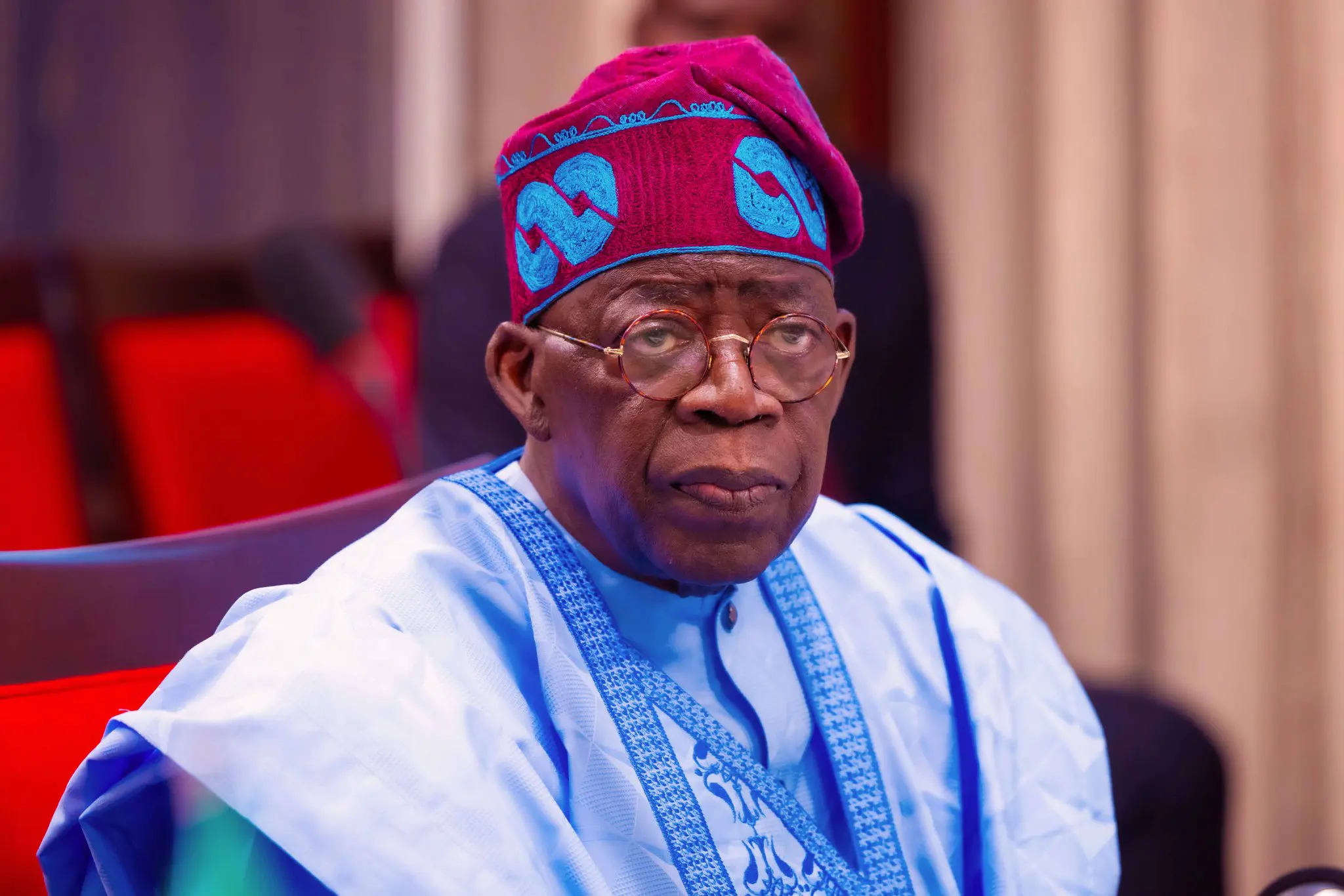
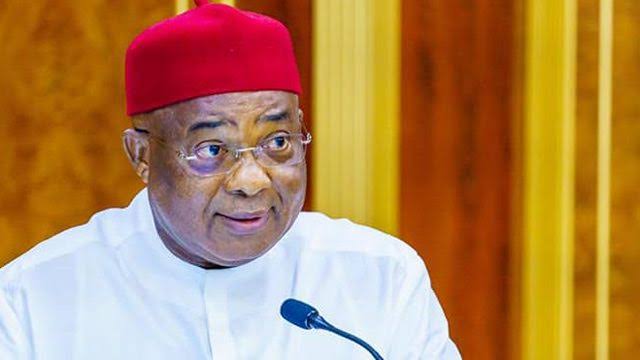
Tinubu’s Re-election Shaky: APC Fears of 2015 Saraki Senate Presidency Scenario as Akpabio, Uzodimma Camps Battle for Gavel
The emerging contest for the Senate Presidency between Godswill Akpabio and Hope Uzodimma is raising concerns within the APC over a possible repeat of the 2015 National Assembly leadership crisis.
A fresh power struggle is reportedly brewing within the ruling All Progressives Congress (APC) over who will emerge as Senate President of the 11th National Assembly after the 2027 general elections.
With three months to the polls, influential allies of President Bola Tinubu are said to be making behind-the-scenes moves to position their preferred candidates for the leadership of the Senate, raising concerns that the contest could deepen divisions within the party ahead of the elections.
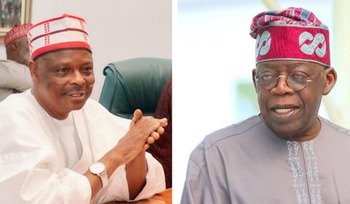
According to party sources cited by Rank News, the emerging contest centres on the incumbent Senate President, Godswill Akpabio, and Imo State Governor Hope Uzodimma, who is also believed to be considering a return to the Senate with the ambition of occupying the nation’s third-highest political office.
Although neither camp has openly declared a formal contest, party insiders claim that their supporters have begun lobbying potential senators, building alliances and positioning themselves for influence in the next National Assembly.
The early manoeuvres are reportedly causing concern among some APC stakeholders, who fear that the struggle could distract the party from its immediate priority of securing victory for Tinubu and retaining control of the National Assembly in 2027.
Akpabio Seeks Continuity
Akpabio, who became Senate President in June 2023 after defeating Senator Abdulaziz Yari in a closely contested race, is reportedly relying on his relationship with Tinubu and his record of working with the executive to strengthen his chances of retaining the position.
The former Akwa Ibom State governor is said to be reaching out to serving senators seeking re-election and prospective members of the next Senate, with the argument that continuity would help sustain legislative stability and support the President’s second-term agenda.
His supporters reportedly believe that his experience in managing the 10th Senate and his working relationship with the presidency place him in a strong position to seek another term as Senate President.
However, the reported emergence of Uzodimma as a potential challenger could complicate Akpabio’s calculations, particularly if influential party leaders decide to support a change in the Senate’s leadership after the elections.
Uzodimma’s Senate Ambition
Uzodimma, who previously represented Imo West Senatorial District in the Senate from 2011 to 2019, is reportedly leveraging his political influence and relationships within the APC to strengthen his position.
As chairman of the Progressive Governors Forum and a prominent figure in the party’s political structure, the Imo governor is believed to have access to influential stakeholders whose support could prove decisive in determining the next Senate leadership.
Sources within the party suggest that his supporters view him as an experienced political strategist capable of managing competing interests within the Senate while maintaining a strong relationship with the executive.
His reported ambition is also being linked to his longstanding relationship with Tinubu, although the President’s position on the emerging contest has not been publicly established.
Beyond Akpabio and Uzodimma, other ranking senators and former governors seeking senatorial seats are also reportedly assessing their chances of emerging as Senate President.
APC Fears Repeat of 2015 Saraki Crisis
The emerging contest has revived memories of the 2015 National Assembly leadership crisis, when Bukola Saraki defeated the APC leadership’s preferred candidate, Ahmed Lawan, to become Senate President.
Saraki’s emergence, which came amid divisions within the ruling party, created a prolonged political struggle between the Senate leadership and the executive, complicating the relationship between the National Assembly and the administration of former President Muhammadu Buhari.
Some APC stakeholders reportedly fear that a similar outcome could emerge in 2027 if rival camps begin consolidating support before the elections and the party fails to agree on a common candidate.
A party chieftain, who spoke anonymously, was quoted as saying that the current situation was particularly concerning because the struggle had started before the elections.
“What is happening now is more dangerous because the fight has started even before the election. Everybody is claiming to be fighting for Tinubu but they are fighting for themselves,” the source said.
Another source close to the Presidential Villa reportedly disclosed that Tinubu was aware of the manoeuvres and had urged his allies to concentrate on winning the elections before pursuing National Assembly leadership positions.
“The President does not want any distraction. He has told some of them that if we don’t win, there will be no Senate President to fight for,” the source said.
The presidency has not publicly confirmed the reported exchanges.
Zoning Could Determine the Next Senate President
The contest is also expected to be influenced by the APC’s zoning arrangements and the need to maintain a balance of political power across the country’s geopolitical zones.
With Tinubu from the South-West and Vice President Kashim Shettima expected to remain his running mate from the North-East, political calculations could favour the South-South or South-East for the Senate Presidency.
Such an arrangement could place Akpabio, from Akwa Ibom State in the South-South, and Uzodimma, from Imo State in the South-East, in strong positions if the party eventually considers either zone for the office.
However, the final decision would depend on the outcome of the elections, the composition of the 11th Senate and the APC leadership’s eventual zoning formula.
Until then, the reported rivalry is expected to remain part of a broader contest for influence within the ruling party.
Proxy Battles and Alleged Lobbying
The struggle is also reportedly playing out through media commentaries and competing narratives about the two politicians.
According to party insiders, some commentaries have questioned Akpabio’s handling of the 10th Senate, while others have portrayed Uzodimma’s reported ambition as an attempt to concentrate too much political power in a few hands.
There are also allegations that rival camps are preparing substantial financial resources to lobby prospective senators-elect after the results of the 2027 elections are announced.
Such claims have not been independently verified.
Political observers warn that if the rivalry intensifies, it could affect the APC’s mobilisation efforts and create divisions among influential supporters of the President during the campaign.
The party’s national leadership, headed by Nentawe Yilwatda, is reportedly urging restraint, with its immediate focus said to be winning the presidential election and securing a majority in the National Assembly.
Nevertheless, the reported manoeuvres suggest that the struggle for the Senate Presidency could become one of the most consequential internal contests within the APC after the 2027 polls.
Ultimately, the outcome will depend on which contenders secure senatorial seats, the balance of power in the incoming National Assembly, the party’s zoning arrangements and, potentially, whom Tinubu chooses to support.
For now, the reported battle remains largely behind the scenes, but its implications could extend well beyond the Senate chamber if the ruling party fails to manage competing ambitions before the elections.
You May Also Like

Trending Now