Corrupt Judges: Four Nigerian Judges at the Centre of Judicial Controversies
Who are the Corrupt Judges in Nigeria?
Nigeria’s judiciary has come under intense public scrutiny over conflicting court orders, controversial ex-parte injunctions and judicial decisions involving politically sensitive disputes. The controversies surrounding some Federal High Court judges have raised questions about judicial independence, accountability and the use of court processes in political battles.
The growing concern centres on cases in which different courts issue contradictory orders over the same subject matter, sometimes leaving government institutions, security agencies and litigants uncertain about which directives to obey.
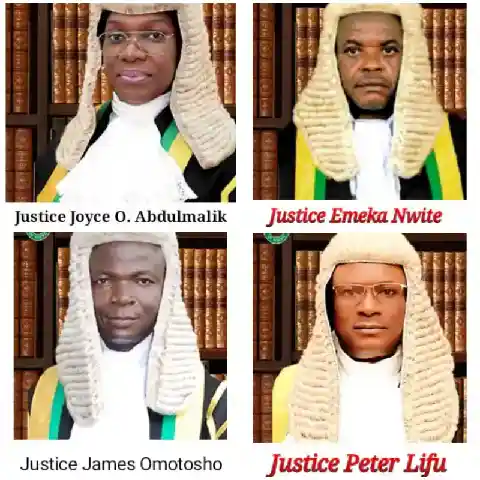
Ejes Gist News reports that four judges whose decisions have featured prominently in these controversies are Justices James Omotosho, Peter Lifu, Emeka Nwite and Joyce O. Abdulmalik.
NJC Suspends Three Judges for One Year Without Pay, Cautions Eight Others
Their involvement in high-profile cases has generated criticism from political parties, lawyers and other stakeholders. However, allegations of corruption, judicial bias and abuse of office must be distinguished from established findings of misconduct by the National Judicial Council (NJC) or appellate courts.
1. Justice James Omotosho: Rivers State Political Crisis and Controversial Court Orders.

Justice James Omotosho of the Federal High Court, Abuja, has attracted public attention over several politically sensitive cases, particularly disputes involving Rivers State and political party affairs.
One of the notable cases concerned the Rivers State 2024 budget, following the political dispute between Governor Siminalayi Fubara and lawmakers aligned with former governor Nyesom Wike.
Justice Omotosho nullified the N800.3 billion 2024 Rivers State budget passed by a faction of the state House of Assembly led by former Speaker Edison Ehie. He also ordered Governor Fubara to re-present the budget to the lawmakers led by Martin Amaewhule, whom the court recognised as the authentic Speaker.
The judgment became part of the wider legal battle over the legitimacy of the rival legislative factions and the political crisis in Rivers State.
His handling of the dispute attracted criticism because of the wider implications of the court’s orders for the state government and its legislature.
Justice Omotosho also presided over the case that led to the reinstatement of former Edo State Deputy Governor Philip Shaibu, following his removal by the Edo State House of Assembly.
Another high-profile matter involved the bail proceedings of suspended Deputy Commissioner of Police Abba Kyari, whose case attracted considerable public attention.
However, the existence of controversial judgments does not automatically establish that a judge issued conflicting orders or acted corruptly. Each allegation requires examination against the relevant court records and appellate decisions.
Related reports:
- Breaking: Shaibu Reinstated as Edo Deputy Governor, Assembly Takes Immediate Action
- Abba Kyari Granted Bail After 18 Months in Kuje
2. Justice Peter Lifu: Conflicting Orders, PDP Crisis and ADC Deregistration Dispute
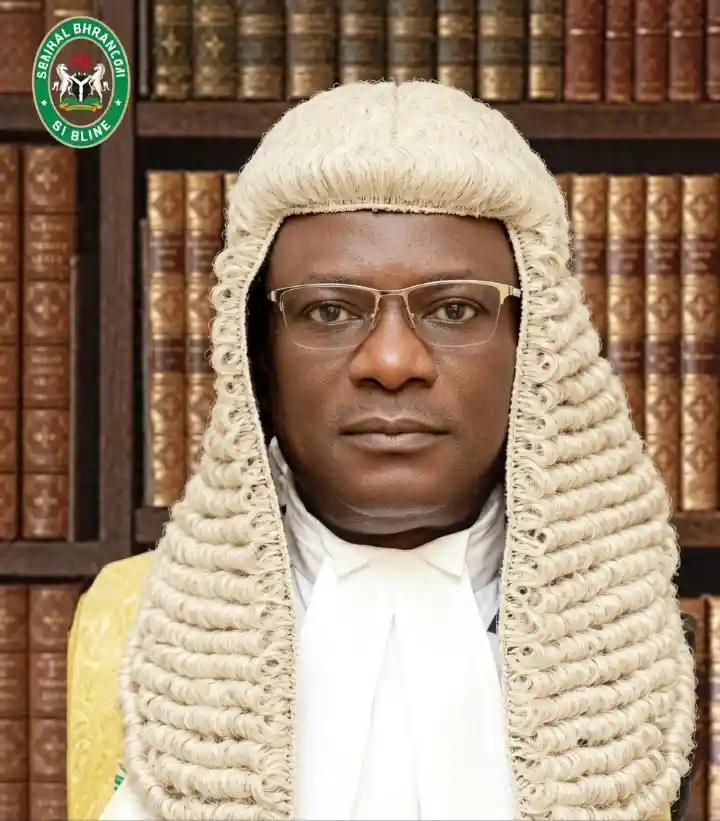
Justice Peter Lifu of the Federal High Court, Abuja, has featured in several politically sensitive disputes involving political party leadership, electoral matters and the internal affairs of political organisations.
His decisions in the Peoples Democratic Party’s leadership crisis attracted criticism from different political interests, particularly over court orders affecting the party’s national convention and leadership arrangements.
In November 2025, the PDP petitioned the Chief Judge of the Federal High Court, Justice John Tsoho, over what it described as the repeated assignment of cases involving the party to Justices James Omotosho, Peter Lifu and Mohammed Abdulmalik.
The party argued that the repeated assignment of its cases to the three judges, despite the availability of other judges in the Abuja division, could create a perception of partiality.
The PDP cited separate rulings by Justices Omotosho and Lifu that affected its planned national convention.
The party’s petition represented its position and did not establish that the judges had acted corruptly.
ADC Deregistration Judgment and Court of Appeal Intervention
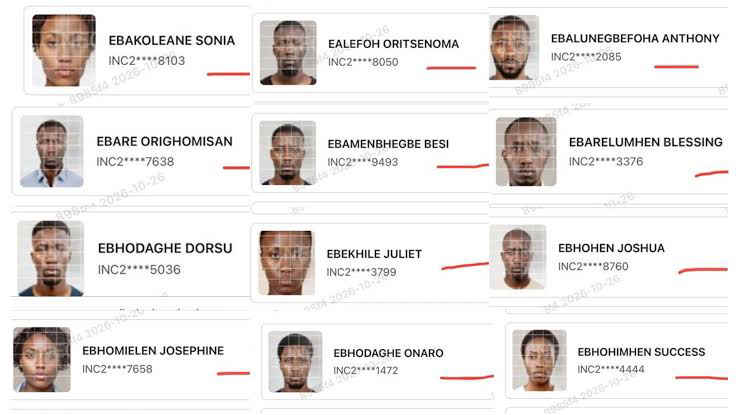
Justice Lifu attracted further controversy in June 2026 after delivering a judgment directing the Independent National Electoral Commission (INEC) to deregister five political parties, including the African Democratic Congress (ADC).
The other affected parties were Accord Party, Action Alliance, Action Peoples Party and Zenith Labour Party.
The Court of Appeal had earlier directed the Federal High Court to stay proceedings in the matter pending the determination of appeals before it.
However, Justice Lifu proceeded with the case and delivered the judgment despite the appellate court’s directive.
On June 16, 2026, the Court of Appeal stayed the execution of the judgment and faulted the trial judge for proceeding despite the subsisting order.
The appellate court described the action as a disregard for judicial hierarchy and an affront to the authority of the Court of Appeal.
The appellate proceedings subsequently resulted in the nullification of the judgment after the court found that the originating suit was incompetent.
The development renewed calls for scrutiny of judicial conduct, with the ADC and other interested parties pursuing complaints against the handling of the matter.
These appellate findings are significant because they establish specific procedural failures in the case. However, they should not be presented as a criminal conviction for corruption.
3. Justice Emeka Nwite: Electoral Disputes and Judicial Intervention

Justice Emeka Nwite of the Federal High Court, Abuja, has also attracted public attention over cases involving politically exposed persons, electoral disputes and applications for urgent judicial intervention.
One notable case involved former Kogi State Governor Yahaya Bello and the Economic and Financial Crimes Commission (EFCC).
While a Kogi State High Court was delivering judgment in a substantive case involving Bello, the EFCC approached Justice Nwite at the Federal High Court in Abuja for an arrest warrant. The Federal High Court subsequently issued the warrant.
The development formed part of the wider legal proceedings involving the former governor and generated public debate about the jurisdiction of different courts and the timing of judicial interventions.
Justice Nwite also featured in proceedings involving the Rivers State political crisis and disputes surrounding the state’s local government election.
The controversy over Rivers State’s electoral process involved competing court orders concerning the release of the voters’ register by INEC to the Rivers State Independent Electoral Commission.
Different courts issued orders that affected the electoral arrangements, raising questions about the authority of courts of coordinate jurisdiction to entertain related disputes.
Although Justice Nwite’s involvement in politically sensitive cases has attracted criticism, allegations of bias or political motivation require evidence beyond the nature or outcome of his judgments
4. Justice Joyce O. Abdulmalik: Rivers State Budget and Federal Allocation Dispute

Justice Joyce O. Abdulmalik of the Federal High Court, Abuja, attracted national attention in 2024 over a case involving the Rivers State Government and the political crisis surrounding the state’s legislature.
The judge ordered the Federal Government to withhold statutory allocations to Rivers State until the state government presented its 2024 budget to the lawmakers recognised by the court.
The order followed a legal dispute over the legitimacy of the Rivers State House of Assembly after a group of lawmakers defected from the Peoples Democratic Party to the All Progressives Congress.
The dispute arose from the wider political confrontation between Governor Siminalayi Fubara and the lawmakers aligned with Nyesom Wike.
The ruling generated considerable controversy because of its potential financial implications for the state government and its administration.
The case also contributed to public debate over the extent to which federal courts should intervene in disputes involving state legislative proceedings and the constitutional responsibilities of state institutions.
However, the fact that a judgment attracts political criticism does not establish that the judge acted under external influence. Any allegation of judicial bias or corruption must be supported by evidence and subjected to the appropriate disciplinary process.
How Conflicting Court Orders Threaten Nigeria’s Judiciary
Conflicting court orders have become a major source of concern for Nigeria’s justice system, particularly in disputes involving political parties, elected officials, traditional institutions and government agencies.
The problem occurs when different courts issue contradictory directives concerning the same subject matter, creating uncertainty over which order should be obeyed.
A report by THISDAY on June 2, 2024, documented the conflicting court orders surrounding the Kano Emirate dispute.
Justice Mohammed Liman of the Federal High Court, Kano, issued an ex-parte order restraining the implementation of the decision to reinstate Muhammadu Sanusi II as Emir of Kano.
In a separate proceeding, Justice Amina Adamu Aliyu of the Kano State High Court issued an order directing security agencies to stop Aminu Ado Bayero from parading himself as Emir and to remove him from the mini palace where he was residing.
Another Federal High Court judge, Justice S. Amobeda, subsequently issued an order directing the police to remove Sanusi from the Emir’s Palace.
The competing orders created confusion for security agencies and heightened tensions surrounding the traditional institution.
The National Judicial Council, under the leadership of former Chief Justice of Nigeria, Justice Olukayode Ariwoola, subsequently summoned the Chief Judges of the Federal High Court and Kano State High Court over the controversy.
The Nigerian Bar Association also criticised the handling of the proceedings and called for disciplinary action against lawyers and judges found culpable.
The controversy demonstrated how conflicting orders from courts of coordinate jurisdiction can undermine public confidence in the administration of justice.
Why Frivolous Ex-Parte Injunctions Attract Criticism
An ex-parte application is a legal procedure through which a party seeks an urgent court order without first hearing the opposing party.
The procedure is recognised under Nigerian law and may be necessary where immediate judicial intervention is required to prevent irreparable harm or preserve the subject matter of a dispute.
However, the procedure becomes controversial when litigants use it to obtain orders without adequately disclosing relevant facts, particularly where another court is already handling a related matter.
Some of the concerns surrounding the practice include:
- Forum shopping: Litigants approach multiple courts in search of favourable orders.
- Suppression of material facts: Applicants may fail to disclose the existence of related proceedings or earlier court orders.
- Conflicting injunctions: Different courts issue orders that cannot easily be enforced together.
- Political interference allegations: Parties sometimes accuse powerful political interests of influencing the direction of judicial proceedings.
- Disregard for judicial hierarchy: A lower court proceeds with a matter despite an existing directive from an appellate court.
These practices can delay justice, increase litigation costs and create uncertainty for public institutions and citizens.
NJC’s Responsibility in Checking Judicial Misconduct
The National Judicial Council is constitutionally empowered to investigate complaints against judicial officers and recommend appropriate disciplinary measures.
Its responsibilities include examining allegations of abuse of judicial powers, misconduct, corruption and violations of the ethical standards governing judicial officers.
Where an investigation establishes misconduct, the Council can recommend disciplinary sanctions in accordance with the Constitution.
The NJC has previously taken disciplinary action against judges over conflicting court orders.
A THISDAY investigation published in June 2024 reported that the Council had barred three judges — Justices Okogbule Gbasam of Rivers State, Nusirat Umar of Kebbi State and Edem Kooffreh of Cross River State — from elevation to higher courts for issuing conflicting orders in a political case.
The disciplinary action demonstrated that judicial officers are subject to professional and ethical standards and that the Council can intervene where investigations establish violations.
However, a petition against a judge is not proof of corruption. The allegations must be investigated, the affected judicial officer must be given an opportunity to respond, and any disciplinary findings must be properly established.
Calls for Judicial Reforms and Accountability
The controversies involving politically sensitive court cases have strengthened calls for reforms to improve judicial transparency, discipline and accountability.
The National Judicial Council, the Nigerian Bar Association and the leadership of the various courts have important responsibilities in addressing the misuse of court processes.
Some of the measures frequently advocated by legal stakeholders include stronger monitoring of ex-parte applications, improved coordination of related cases, transparent judicial case assignments and stricter enforcement of appellate court directives.
The judiciary also needs effective mechanisms to identify and investigate judicial officers who deliberately abuse their positions or disregard established legal procedures.
The credibility of Nigeria’s justice system depends on the consistent application of the law, the independence of judicial officers and the ability of disciplinary institutions to hold erring officers accountable.
Recommended reading: Nigeria’s Federal High Court: A Scandalised Court — The Guardian
Related report: NJC Probes Judges Over Conflicting Rulings in Cases Involving Rivers State
Ejes Gist News stands for truth, responsible journalism, editorial integrity and fearless accountability.
You May Also Like


Trending Now