Okubor: Nigeria’s Democracy Under Pressure From Ballot, Bullet and Phone
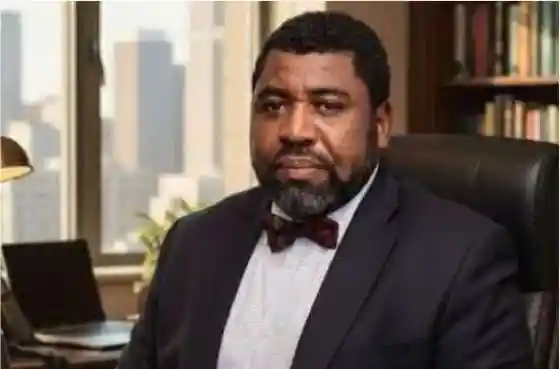
Dr Festus Goziem Okubor, National Publicity Secretary of the Grassroot Democratic Movement and former Commissioner for Information in Delta State, has warned that Nigeria’s democracy is under pressure from three interconnected forces: the ballot, the bullet and the phone.
Delivering the chairman’s address at the Delta Online Publishers Forum (DOPF) 2026 Annual Conference and 6th Annual Lecture Series, Okubor said the theme, “Democracy Under Pressure: Electoral Integrity, Security Challenges and Media Accountability in Nigeria,” brought together politics, government and the media, three institutions that had shaped his adult life.
He joked that DOPF had chosen a man with a complicated past and that, if all the journalists he had met were assembled in one hall, some would applaud him, others would interrogate him and a few would demand payment of outstanding advertisement bills. He said he had come neither to defend politicians nor to prosecute journalists but to provoke a conversation about a democracy under considerable pressure.
Electoral integrity and the ballot
Okubor argued that democracy is not merely the conduct of elections but the ability of citizens to believe in the outcomes, including when their preferred candidates lose. He said electoral integrity begins with credible party primaries and runs through voting, collation, declaration and dispute resolution.
He acknowledged that Nigeria had introduced BVAS and IReV to strengthen transparency, but insisted that technology could not manufacture integrity. He said the devices could not cure a politician’s hunger for power, could not upload good character and could not make any Nigerian politician accept that defeat at the polls was not a death sentence.
He illustrated the inconsistency of some politicians with a winner who announces, “The people have spoken!” and the same politician, after losing, declares, “Democracy is under serious threat!” He pointed out that nothing had changed about the voters, INEC or the ballot papers except where the politician’s name appeared on the result sheet.
He said some politicians believed in free and fair elections only when they were declared winners. He said party primaries could be so predictable that the winner was known before delegates learned the venue, yet the party would still praise itself for transparency.
He insisted that democratic institutions must be stronger than personal ambition and that losing an election should no longer be regarded as a medical emergency.
Security and the freedom to vote
On security, he argued that credible elections depended on safety. He said a citizen who could not reach a polling unit without danger had effectively lost the right to vote, an electoral official under intimidation could not be independent, and a journalist under threat could not scrutinise power.
He said the vote should be secret, but voters should not have to sneak to the polls. In his view, security agencies should safeguard democracy instead of deciding who benefits from it. He called for conditions in which citizens vote without fear, journalists report without danger and politicians accept defeat without crisis.
Okubor suggested, in jest, that INEC introduce a compulsory course titled “HOW TO LOSE AN ELECTION WITHOUT LOSING YOUR MIND!” He suggested a mock examination for defeated candidates, listing possible responses: congratulating the victor, going to court with credible evidence, pronouncing oneself the true winner, or blaming INEC, the party chairman, village witches and the network provider. He guessed that some politicians would choose every option.
The smartphone, AI and media accountability
He then focused on the smartphone, calling it perhaps the most amusing danger facing modern democracy. He contrasted the past, when publishing demanded reporters, editors, printing presses, distribution vehicles and substantial capital, with the present, when a phone, data and unusual self-assurance are enough.
He said phone owners now style themselves as journalists: an accident witness produces breaking news, a rumour becomes an exclusive investigation, forwarding to 37 WhatsApp groups turns someone into a national publisher, and a challenge to the facts is denounced as an attack on press freedom. By evening, he said, the person’s Facebook profile may describe him as an investigative journalist, international security analyst, political consultant and public affairs expert.
He said technology had widened access to communication without widening access to truth. A falsehood that once moved slowly from one village to another now travels in luxury, he said; before truth has even stirred, the lie has already appeared on WhatsApp, Facebook and TikTok, been given background music, gathered 50,000 shares and been rendered into four Nigerian languages.
He ridiculed the disclaimer that often accompanies a forwarded message, “I don’t know how true this is, but please forward widely!” and asked why anyone unsure of a claim’s truth would make himself Minister of National Distribution. He also mocked the WhatsApp expert who becomes a medical consultant by 7 a.m., an economist by 9 a.m., a military strategist at noon, a constitutional lawyer by 4 p.m. and an end-of-the-world prophet by 8 p.m., all from a single Android phone.
That, he said, was why DOPF mattered. He defined journalism as more than publication: it involved checking facts, being fair, providing context, attributing claims, exercising editorial judgement and correcting errors. He pointed to Sections 22 and 39 of Nigeria’s Constitution, which he said recognised the media’s accountability role and protected free expression, adding that freedom carried responsibility.
He said the press should question government and government should respond to legitimate questions, but journalists should also examine their own behaviour. He listed the questions he said they should ask: was the allegation checked, was the accused approached, was paid content disclosed, or had someone simply taken a brown envelope and then discovered an urgent national emergency?
He used a fictional example to attack sensationalism: a governor coughs at a meeting and the headline reads “PANIC IN GOVERNMENT HOUSE AS GOVERNOR STRUGGLES TO SPEAK!” After the governor drinks water, the headline changes to “GOVERNOR IN EMERGENCY CONSULTATION WITH UNIDENTIFIED LIQUID!” When he leaves, it becomes “GOVERNOR ABANDONS CRUCIAL MEETING AS TENSION ESCALATES!” In reality, Okubor said, the man had only choked on pepper, and he warned against journalism becoming creative alarm manufacturing.
He said AI had entered the debate at a point when social media seemed to have exhausted the public’s capacity for confusion. He acknowledged that AI could strengthen research, transcription, translation and investigative reporting, but warned that it could also create convincing voices, images and videos.
He asked the audience to imagine a video appearing at midnight before an election, showing a leading candidate withdrawing. By 1 a.m., he said, WhatsApp would be ablaze; by 2 a.m., party spokesmen would be trading insults; by 3 a.m., lawyers would have issued statements; by 4 a.m., someone would have published a book titled “THE RISE AND FALL OF A POLITICAL GIANT!” At 8 a.m., investigators would discover that the video was AI-generated, while the candidate had slept peacefully through the national emergency.
He described such a scenario as a real danger to confidence in elections and called for professional fact-checking, public media literacy and responsible conduct by digital platforms. Above all, he urged Nigerians to pause before forwarding any message, adding that if the country managed that feat, DOPF should nominate it for the Nobel Peace Prize.
Politicians, journalists and public trust
Drawing on his experience in politics, government and the media, Okubor said politicians welcomed an independent press as long as journalists agreed with them, while journalists demanded transparency from politicians but sometimes regarded scrutiny of their own conduct as an intrusion.
He described the mutual suspicion: government says, “Please report responsibly,” and the journalist hears, “Government wants to silence the press!” The journalist says, “We are holding government accountable,” and the politician hears, “These people have come to finish me!” Meanwhile, the ordinary citizen asks, “Please, can somebody just tell me what actually happened?”
He said the ordinary citizen must remain central to democracy. Politicians needed scrutiny, journalists needed reliable information and citizens needed the truth, and none of those needs should be treated as an enemy of the others.
He observed that established democracies also faced misinformation, polarisation and falling trust, but their strength rested largely on robust institutions, professional traditions, independent scrutiny and a willingness to accept defeat. Nigeria, he said, needed to cultivate the same outlook.
He mocked politicians who praise their party for years as the greatest political organisation on earth but, after losing a primary, describe it as “An undemocratic contraption hijacked by desperate political merchants!” Within 48 hours, he said, such a politician announces, “After extensive consultations with my family, supporters and political associates…” and concludes, “I have decided to join another party in the overriding interest of my people.” Okubor wondered why the overriding interest of the people waited until the politician lost a primary.
He said democracy needed parties founded on principle, governments willing to tolerate criticism and oppositions that criticised responsibly.
He said the ballot, the bullet and the phone were linked. Weak election credibility bred public anger, spreading insecurity bred fear, careless journalism allowed falsehood to thrive, and thriving falsehood destroyed public trust.
He called trust democracy’s most valuable currency: confidence that votes would be counted, security agencies would stay neutral, courts would be fair, journalists would check facts, governments would speak honestly and citizens would refuse to become mass distributors of lies.
He challenged DOPF to lead the way in setting professional standards for online publishers, covering fact-checking, corrections, disclosure of paid content and careful use of AI. Online publishing, he said, should be a respected profession, not a pastime for anyone whose phone battery is above 20 per cent.
In closing, Okubor said Nigeria had no shortage of laws, intelligent people or opinions. If opinions could produce electricity, he joked, the country would be exporting power to Europe. What it lacked, he said, were stronger institutions, accountability, restraint and truth.
He reminded politicians that power was temporary, electoral officials that credibility was their greatest asset, security agencies that protection must be impartial, journalists that speed mattered but accuracy was sacred, and citizens that forwarding information was itself an exercise of power.
He said a phone could expose corruption, record injustice and teach millions, but it could also ruin reputations, spread dangerous lies and stir violence. The phone was smart, he said; the real question was whether its owner was equally smart.
He called on government to listen, politicians to learn, electoral bodies to improve, security agencies to protect, journalists to check facts and publishers to maintain standards. Before anyone forwarded a message, he said, someone should first establish whether it was true.
He welcomed guests to the DOPF 2026 Annual Conference and 6th Annual Lecture Series, hoping for frank discussions, robust disagreements and fact-based arguments. If anyone had to fight, he said, it should be with ideas, because, as CSP Imegwu esq would confirm, ideas do not require police bail. He thanked the audience and prayed for God to bless the Federal Republic of Nigeria.
Ejes Gist News stands for truth, responsible journalism, editorial integrity and fearless accountability.
You May Also Like


Trending Now