
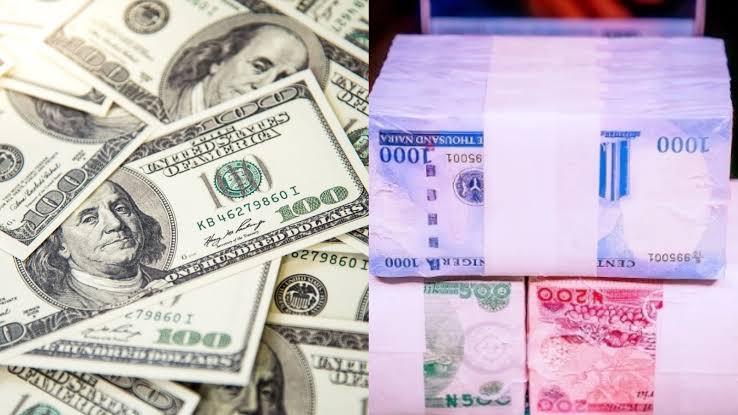
Dollar to Naira Exchange Rate Today November 17, 2027
The naira closed at N1,357.19 to the dollar at Nigeria’s official foreign exchange market on Monday, 16 November 2026, weakening from N1,353.97 in the previous session as seasonal demand for foreign currency built ahead of the year-end.
The official closing rate is the reference point for importers, travellers and diaspora remitters going into Tuesday, 17 November.
Dollar to Naira Exchange Rate Today Tuesday November 17, 2026
- Buying Rate: ₦1,359 to ₦ 1, 4200
- Selling Rate : ₦1,362 to ₦ 1, 400
Business Post reported that the dollar to naira exchange rate at the Nigerian Autonomous Foreign Exchange Market (NAFEM) fell by N3.22, or 0.23 per cent, on the day. Some market reports, including Lagos Metropolitan, refer to the same window as the Nigerian Foreign Exchange Market (NFEM) and attribute the closing figure to Central Bank of Nigeria data reported by MarketForces Africa.
| Market or reference | Naira per dollar | Change |
|---|---|---|
| Official window closing rate (NAFEM) | 1,357.19 | Down N3.22 (0.23 per cent) |
| Official window intraday range | 1,353.50 to 1,360.00 | Thin trading |
| Parallel market (Business Post) | 1,405 | Down N15 from N1,390 |
| Parallel market (MarketForces Africa) | 1,425 | Weaker quote |
| Bureau de change quote (Arbiterz) | 1,417 | Up from N1,408 on Friday |
| GTBank forex desk | 1,361 | Improved N4 from N1,365 |
| Wise mid-market rate | 1,417.00 | Up 0.52 per cent |
Thin turnover and a mixed cross-currency picture
Trading at the official window was light. Business Post reported that banks executed $68.66 million across 79 deals, a decline of 81.0 per cent from the $446.965 million recorded across 146 deals the previous Friday. Lagos Metropolitan put the fall at more than 85 per cent against a Friday total of $446.97 million.
The naira’s performance against other major currencies was mixed. It lost 60 kobo against the pound sterling to close at N1,792.04/£1, compared with N1,791.44/£1 at the previous session, but gained N1.60 against the euro to settle at N1,495.08/€1, against N1,496.68/€1 previously, according to Business Post.
At the GTBank forex desk, the local currency strengthened by N4 to N1,361/$1 from N1,365/$1. The official window’s movement followed a choppy week in which the naira gained 0.53 per cent on Friday, 13 November, after earlier losses, Lagos Metropolitan reported.
Why the Dollar to naira parallel market quotes diverged
Parallel market quotations varied widely across reports, although all pointed to a weaker naira than at the official window. Business Post recorded a parallel rate of N1,405/$1, down N15 from N1,390/$1. MarketForces Africa put the rate at N1,425/$1, with traders blaming year-end demand for business and personal travel allowances.
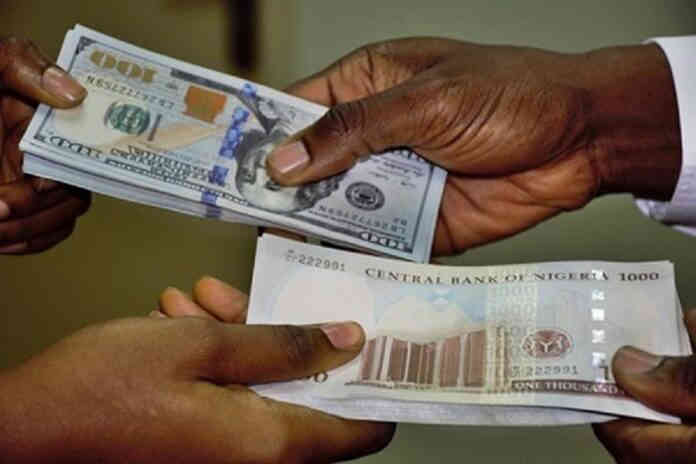
Arbiterz reported that bureau de change operators quoted N1,417/$1 on Monday, up from N1,408/$1 on Friday, leaving a gap of about N63.50 between the official and parallel rates. Earlier on Monday, Vanguard reported that dealers in Lagos and Abuja were selling the dollar at N1,390.
Nigeria maintains a formal official window alongside an informal parallel market run largely by bureau de change operators, who are licensed by the Central Bank of Nigeria. The spread between the two rates is closely watched as a gauge of unmet demand for hard currency.
Inflation, reserves and the policy backdrop
Nigeria’s headline inflation rate moderated to a six-year low of 14.06 per cent in October 2026, down from 14.63 per cent in September, according to the consumer price index report published by the National Bureau of Statistics on Monday. The bureau said the October figure represented a decrease of 0.43 percentage points compared with September.
External reserves eased to $54.873 billion as of 12 November from $54.904 billion a day earlier, according to Central Bank of Nigeria data cited by Arbiterz and reported by Lagos Metropolitan.
Analysts quoted by MarketForces Africa linked the recent pressure on the naira to seasonal dollar demand, which they said had risen sharply over the preceding four weeks as fourth-quarter outflows continued. Analysts cited by Vanguard said steady reserves and continued central bank interventions were helping to keep volatility in check despite the demand pressure.
The official window dates from June 2023, when the Central Bank of Nigeria collapsed the country’s multiple exchange rate segments into a single market and allowed the naira to trade more freely. The change produced sharp swings in the currency’s value and left the central bank managing liquidity through periodic interventions.
What the rate means for households and businesses
The dollar to naira exchange rate feeds directly into costs for Nigerian importers, traders, families paying foreign school fees and travellers planning December trips. It also shapes the naira value of diaspora remittances, which arrive mostly in dollars and are converted at the prevailing rate.
Wise’s currency converter quoted a mid-market rate of N1,417.00 to the dollar on 16 November 2026, up 0.52 per cent, with a 30-day average of N1,375.66 and a 90-day average of N1,372.28. Mid-market rates track global currency pricing rather than the central bank’s official window, so they do not always match the closing rate published by Nigerian market operators.
Dealers will be watching whether official-market liquidity improves as the year-end period approaches, with the size of the gap between the official and parallel rates remaining the clearest signal of pressure on the currency.
Ejes Gist News ( EGN) stands for truth, responsible journalism, editorial integrity and fearless accountability.
You May Also Like
Trending Now