DOPF chairman warns of tough months ahead of 2027 elections
Fears that political violence could escalate before Nigeria’s 2027 general elections have been raised by members of the Delta Online Publishers Forum (DOPF), after a video went viral showing a woman holding a cutlass following an alleged attack on members of the Nigerian Democratic Convention (NDC) at a town hall meeting in Lagos.
The footage reportedly showed the woman brandishing the weapon in the aftermath of the attack, which was allegedly carried out by suspected thugs believed to be backers of a rival political party. On the Forum’s WhatsApp platform, the video drew reactions from several members, who said political disagreements could degenerate into more serious confrontations as the 2027 elections draw nearer.
Also Read: Ahon, DOPF Celebrate Aniagwu on Birthday, Praise His Role in Governance
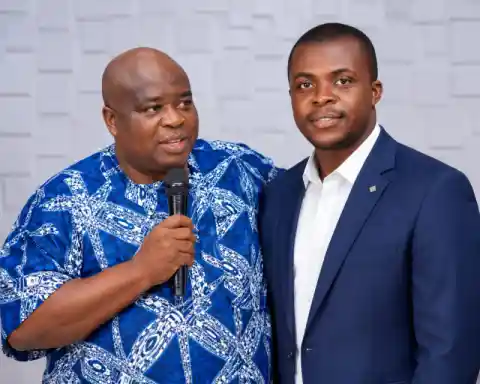
Responding to the footage, the DOPF Chairman, Emmanuel Enebeli, said the emerging political mood left him apprehensive, and warned that the country may face particularly hard months in January and February 2027.
“We are in for tough rides come January and February 2027,” Enebeli wrote.
His observation prompted a string of responses from members of the professional media association. Contributors disagreed on political resistance, on what security agencies should be doing, on how political leaders have behaved, and on where the toleration of intimidation in the electoral process could lead.
The Forum’s Vice Chairman, Chukwudi Abiandu, called the development serious, saying he feared the rising tension could spill over into broader violence.
“Unfortunately, I hope it does not degenerate,” he stated.
Wilbert Ijeoma, another member, said backers of Peter Obi, widely known as Obidients, seemed to be turning more confrontational, and likened their emerging stance to the political movement built around Rabiu Musa Kwankwaso.
“Obidients now have some touch of Kwankwassiya madness,” Ijeoma remarked.
Celestine Ukah made a similar point, suggesting the country may be entering a more combustible phase, since abnormal political conditions tend to call forth equally abnormal reactions.
“Abnormal situation gets abnormal situation too oooo as it looms oooo,” he wrote.
In a later contribution, Ukah insisted that matters were already worsening, declaring, “Already generating ooooo.”
The Forum’s Secretary, Shedrack Onitsha, weighed in as well, saying opposition backers were now more ready to fight back against attacks than to stay passive when intimidated.
“It takes madness to cure madness! NDC members are fully prepared for APC thugs, sadly, NDC now has more deadly thugs than APC,” Onitsha stated.
His remarks reflected his own reading of the confrontation and were not supported by independently established evidence identifying those responsible for the alleged attack.
In a longer contribution, Austin Azuh faulted what he described as the failure of political leaders to speak firmly against attacks on opposition supporters, warning that continued silence could encourage those behind political intimidation.
“This period nor be for English ooo!” Azuh declared.
He argued that leaders who ought to condemn violence had, through their silence and their actions, helped to create an atmosphere in which attacks on political opponents appeared to be tolerated.
“The political leaders who ought to condemn these acts have, by their silence and actions, created an atmosphere where invasion, intimidation, harassment, assaults and even the killing of opposition supporters and members appear to be tolerated or endorsed,” he stated.
Azuh maintained that a firmer response from the Federal Government, including the investigation and prosecution of those responsible for political attacks, would help discourage further violence.
He also voiced particular concern about what the unfolding political atmosphere meant for younger Nigerians, warning that the country’s democratic future could be endangered if citizens became indifferent to threats against political freedom.
“This is not the democracy we fought for, nor the country we envisioned. I am deeply worried and emotional about the future of my generation, especially those who seem unconcerned about the dangers threatening the very democracy that should protect their future,” he said.
Recalling the position repeatedly expressed by former President Goodluck Jonathan, Azuh stressed that political ambition should never be placed above human life.
“As President Goodluck Jonathan would always remind us, no election is worth the blood of any Nigerian. Political ambition must never be placed above human life, peace and the sanctity of our democracy,” he added.
Police response criticised, members turn to faith
Members also took up the behaviour of security agencies, with Abiandu criticising the Delta State Police Command over what he described as its handling of unfolding political developments.
“Even the attitude of the Delta State Police Command in the unfolding scenarios leaves much to be desired. Their attitude exposes them as complicit. The current police leadership in Delta should hide its head in shame. A big let down,” he alleged.
His allegation was a personal assessment of the command’s conduct and did not establish police involvement in any political attack. No response from the Delta State Police Command was provided in the discussion.
As concern mounted, Azuh posed a question that summed up the mood: “Who will help us?”
Abiandu answered by turning to biblical teaching, expressing confidence that divine intervention remained possible even in uncertain political times.
Invoking Psalm 37:33, he spoke of the assurance that God would not leave the righteous at the mercy of the wicked, nor let them be condemned unjustly. He also pointed to Job 8:20, a passage he said affirms that God upholds people of integrity and does not side with wrongdoers.
Abiandu then compared the present with the military rule of General Sani Abacha, recalling the fear and political repression that defined those years.
“There was a time in this country when one Sani Abacha held the nation by the jugular. But somehow, the God who rules in the affairs of man stepped in, and death defied all the security equipment in Aso Rock and took Abacha away,” he said.
His conclusion was that divine authority extends over every political leader, however influential or heavily guarded.
“The lesson for me is that God has not yet created the man or woman that He cannot handle. He is our help,” Abiandu stated.
Video of INEC chairman at Chatham House
A different thread emerged when the Forum’s Treasurer, Joe Ogbodu, shared a separate video circulating online that purported to show the Chairman of the Independent National Electoral Commission (INEC), Professor Joash Amupitan, being confronted by Nigerians during a visit to Chatham House in London.
The video was circulated with a claim that the INEC Chairman had been disgraced, and purported to show aggrieved Nigerians demanding that he address concerns about developments in their home country.
A voice accompanying the footage claimed that Nigerian youths had confronted the electoral commission chairman and insisted that he come out to explain what was happening in Nigeria.
“The INEC chairman of Nigeria is in England. The angry youth of Nigeria stopped him that he should come out and tell them what is happening in Nigeria. He must come down to address them,” the voice claimed.
The recording also featured the declaration, “A new Nigeria is possible. This is just testing the microphone.”
With his post, Ogbodu brought a fresh strand into the discussion, pointing to the expectations Nigerians place on electoral transparency and accountability as another general election approaches.
Read together, the contributions showed how worried the media professionals have become about the country’s political climate, above all about the prospect that clashes between rival camps could stand in the way of peaceful political participation.
Though the contributors read the unfolding developments differently, their exchanges raised questions about what political parties, government authorities, electoral institutions and security agencies must do so that citizens can exercise their democratic rights without intimidation.
The conversation also underlined the need to separate legitimate political resistance and peaceful protest from acts of violence, particularly as preparations for the 2027 elections gather momentum.
For DOPF members, the coming election season is a test both of whether political actors will respect democratic principles and of whether state institutions can protect citizens whatever their political affiliation.
It remains uncertain whether the Chairman’s fears will be realised. What the exchange made plain is the anxiety among the media professionals that political disagreements could turn into violence as the country moves closer to the polls.
Tomorrow
Brasileirão Série A
-
Brasileirão Série A UPCOMING
-
Brasileirão Série A UPCOMING


Wednesday, Nov 18, 2026
Brasileirão Série A
-
Brasileirão Série A UPCOMING
-
Brasileirão Série A UPCOMING
-
Brasileirão Série A UPCOMING


Ejes Gist News stands for truth, responsible journalism, editorial integrity and fearless accountability.
You May Also Like

Trending Now