
How to Protect Yourself from Ebola virus disease: A Step-by-Step Guide
Details on How to Protect Yourself from Ebola virus disease can be found here on Ejes Gist News.
The Federal Government on Tuesday confirmed the first case of the Bundibugyo strain of the Ebola virus in the Federal Capital Territory (FCT), putting fresh attention on how Nigerians can protect themselves from one of the world’s most lethal viral diseases.
Ebola is a rare but severe illness that spreads through direct contact with the blood or bodily fluids of an infected person or animal, according to the Nigeria Centre for Disease Control and Prevention (NCDC). The Bundibugyo strain is one of several species of the virus, and its confirmation in the FCT makes public understanding of transmission routes, symptoms and prevention measures especially important.
What Is Ebola virus disease?
Ebola virus disease is a severe, often fatal haemorrhagic illness first identified in 1976 near the Ebola River in what is now the Democratic Republic of the Congo. There are six identified species of orthoebolavirus, four of which cause disease in humans.
On average, about half of infected people die, although fatality rates in past outbreaks have ranged from 25 per cent to 90 per cent, depending on the virus strain, the strength of the health system and how quickly patients receive care.
Past outbreaks have occurred in the Democratic Republic of the Congo, Sudan, Gabon, Uganda and the Republic of Congo. In 2014, Ebola broke out for the first time in West Africa — in Guinea, Liberia and Sierra Leone — where transmission was intense in urban areas.
How Ebola virus disease Spreads
Ebola spreads through close, direct physical contact with the blood, secretions, organs or other bodily fluids of an infected person, or with surfaces and materials contaminated by those fluids. According to the NCDC, transmission can happen through:
- Direct contact with blood, sweat, saliva, vomit, urine, faeces, breast milk, semen or other bodily fluids of an infected person who is showing symptoms
- Touching contaminated objects such as clothing, bedding, towels, needles or medical equipment
- Contact with infected animals — fruit bats, monkeys, chimpanzees, gorillas, forest antelope — or their blood, fluids or raw meat, including during hunting, butchering or preparing bushmeat
- Handling the body of someone who has died from Ebola without appropriate protective equipment, including during funeral and burial practices
- Sexual transmission from a person who has recovered from Ebola, until testing shows the virus is no longer present in their semen
Key Fact: Patients Are Not Infectious Before Symptoms
People infected with Ebola virus disease cannot spread the virus until they develop symptoms. The risk of transmission rises as the illness becomes more severe. Symptoms usually appear between two and 21 days after exposure.
How Ebola virus disease Does Not Spread
Ebola is not an airborne virus. It does not spread through the air the way influenza or measles do, and there is no evidence of airborne transmission. It is also not spread through routine social contact — such as shaking hands or sitting next to someone — with a person who has no symptoms.
Ebola is not a waterborne disease. However, handling or eating raw or undercooked meat from an infected animal is a recognised route of infection, which is why all meat should be handled hygienically and cooked thoroughly.
Symptoms to Watch For in Ebola virus disease
The illness usually begins suddenly, with early symptoms that can be mistaken for other conditions:
Early Symptoms
- Sudden fever
- Extreme weakness and fatigue
- Muscle and joint pain
- Headache
- Sore throat
Later Symptoms
- Vomiting
- Diarrhoea
- Stomach pain
- Rash
- Red eyes
- Impaired kidney and liver function
Severe Symptoms
- Bleeding from the gums, nose or injection sites
- Blood in vomit or stool
- Shock and organ failure
How to Protect Yourself and Your Family
- Wash your hands regularly with clean running water and soap, or use an alcohol-based hand sanitiser where soap is unavailable.
- Avoid contact with anyone showing symptoms of Ebola, and avoid their blood, bodily fluids and any items that may have been contaminated by them.
- Do not touch or handle the bodies of people who have died from suspected or confirmed Ebola. Safe and dignified burial procedures should be followed.
- Avoid contact with wild animals, especially bats and non-human primates, and do not eat, cook or prepare raw or wild meat (bushmeat) or meat from unknown sources.
- Cook all meat thoroughly and wash and peel fruit and vegetables carefully. Drink clean water.
- Practice safer sex — survivors should use condoms until testing confirms the virus is no longer present in semen.
- Monitor your health for 21 days if you have had contact with a suspected or confirmed case, or if you have returned from an area with an ongoing outbreak. Seek immediate medical care if symptoms develop.
- Report early. Do not wait at home if you develop fever and other symptoms after possible exposure. Go to the nearest health facility and tell health workers about any contact or recent travel.
Advice for Health Workers
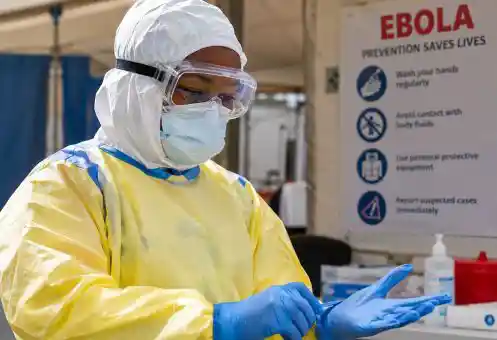
Health workers face increased risk because their work brings them into close contact with infected patients. Strict adherence to Personal Protective Equipment (PPE) standards is essential — including correct donning and removal of equipment, observation by a trained buddy, and frequent disinfection of gloved hands with an alcohol-based hand rub or chlorine solution.
If infection is suspected after initial screening, immediate isolation is warranted before further investigation, to reduce contact with other patients and with health workers. Isolation should continue until the patient tests negative.
Vaccines and Treatment
There is currently no licensed vaccine for the Bundibugyo strain or for other non-Zaire species of the virus. Two licensed vaccines offer protection against the Zaire orthoebolavirus, the species responsible for most large outbreaks, and are used to protect high-risk individuals such as frontline workers during outbreaks.
Treatment for Ebola is supportive care — balancing fluids and electrolytes, maintaining oxygen status and blood pressure, and treating co-infections. Starting supportive care promptly after symptoms begin improves the likelihood of survival. Two approved monoclonal antibody treatments exist for Ebola caused by the Zaire strain.
Myth vs Fact
| Myth | Fact |
|---|---|
| Ebola spreads through casual contact such as handshakes or hugging. | Ebola does not spread through casual contact. It requires direct contact with the bodily fluids of an infected person who has symptoms. |
| Ebola spreads through food and water. | Ebola is not spread through water or through properly prepared food. All meat should still be cooked thoroughly and drinking water should be clean. |
| Ebola is an airborne virus. | Ebola is not airborne. Transmission requires direct physical contact with bodily fluids or contaminated objects from a person showing active symptoms. |
| People who have been exposed can infect others immediately. | Infected people cannot spread the virus until symptoms appear, which can take up to 21 days. |
| Healthcare facilities are not safe during outbreaks. | Health facilities strengthen infection prevention and control measures, including triage systems, hand hygiene, use of PPE and isolation procedures, to protect patients and health workers. |
When to Seek Medical Attention
Seek medical attention immediately if you develop a sudden fever, fatigue, muscle pain, headache or sore throat — followed by vomiting, diarrhoea or a skin rash — within 21 days of possible exposure to Ebola or of travelling to an area with an ongoing outbreak. Call ahead or inform health workers of your possible exposure on arrival so that appropriate measures and testing can be arranged. It is important to tell them about any recent travel, because other serious conditions such as malaria and typhoid may also be a risk.
Frequently Asked Questions About Ebola
Is Ebola in Nigeria a reason to panic?
Nigerians are advised to stay informed and avoid panic. Spreading unverified rumours causes unnecessary fear and hampers response efforts. Rely on official health updates from the NCDC and federal and state health authorities.
How long does it take for Ebola symptoms to appear?
Symptoms usually appear between two and 21 days after exposure to the virus.
Can someone who has recovered from Ebola still transmit the virus?
The virus can persist in semen after recovery. Survivors should avoid unprotected sex until testing shows the virus is no longer present.
Is there a vaccine for Ebola?
Two licensed vaccines protect against the Zaire strain of the virus and are used for high-risk groups during outbreaks. There is currently no licensed vaccine for the Bundibugyo strain or other non-Zaire species.
What should I do if I have been in contact with a suspected Ebola patient?
Monitor your temperature and your health for 21 days, avoid close contact with others if you develop symptoms, and seek medical care immediately, informing health workers of the possible exposure.
Stay Informed, Not Alarmed
The confirmation of the Bundibugyo strain in the FCT is a reminder that early reporting, good hygiene and strict infection control save lives. Ebola is a serious disease, but it is not spread by handshakes, by sitting beside someone, or through the air — and outbreaks are contained when communities report symptoms early and follow official guidance.
Nigerians should continue to cooperate with health workers and rely on verified updates from the NCDC and the Federal Ministry of Health rather than unconfirmed social media claims.
Ejes Gist News stands for truth, responsible journalism, editorial integrity and fearless accountability.
You May Also Like



Trending Now