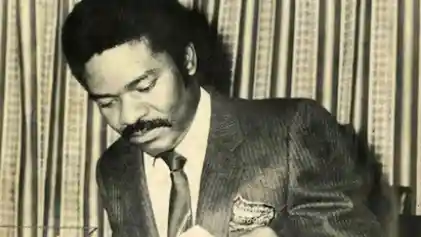
Dele Giwa: How the Newswatch Co-Founder Was Killed by Parcel Bomb
Sumonu Oladele Giwa, widely known as Dele Giwa, was a Nigerian journalist, editor and publisher who co-founded Newswatch magazine and ranked among the most influential editorial figures of his generation.
He was born on 16 March 1947 in Ile-Ife and died on 19 October 1986 in Ikeja, Lagos, aged 39, when a parcel bomb delivered to his residence detonated as he handled it.
His parents, Musa and Ayi Elekia Giwa, came from Ugbekpe-Ekperi in present-day Edo State; his father worked as a laundryman near the palace of the Ooni of Ife. Giwa attended the Local Authority Modern School in Lagere, Ile-Ife, and later Oduduwa College, where he founded and edited a bi-monthly school magazine, The Torch.
Dele Giwa Biography profile
| Name | Sumonu Oladele Giwa (Dele Giwa) |
|---|---|
| Born | 16 March 1947, Ile-Ife, Nigeria |
| Died | 19 October 1986, Ikeja, Lagos, Nigeria |
| Nationality | Nigerian |
| Profession | Journalist, editor, publisher |
| Known For | Co-founding Newswatch magazine; investigative journalism and advocacy of press freedom |
In 1971 he travelled to the United States, where he earned a Bachelor of Arts in English from Brooklyn College and a master’s degree in public communication from Fordham University. He worked for The New York Times as a news assistant for about four years before returning to Nigeria in 1979.
Also Read : Who is Stella Okoli, whose birthday was marred by the death of Onyeka Onwenu?
He then served as features editor of the Daily Times, where his columns attracted wide readership. Moshood Abiola later recruited him to the Concord Group, where he became pioneer editor of Sunday Concord.
In 1984 Giwa joined Ray Ekpu, Dan Agbese and Yakubu Mohammed to establish Newswatch, whose first edition appeared on 28 January 1985. As founding editor-in-chief, he helped introduce bold investigative formats to Nigerian print reporting; a 1989 assessment credited the magazine with changing the format of the country’s print journalism.
Before his death, security agents had questioned Giwa over gun-running allegations, which he denied. No one has been prosecuted for the bombing, and the case remains a reference point in Nigerian debates on press freedom and the safety of journalists.
You May Also Like


Trending Now