
Shang-chi And The Legend Of The Ten Rings Parents Guide
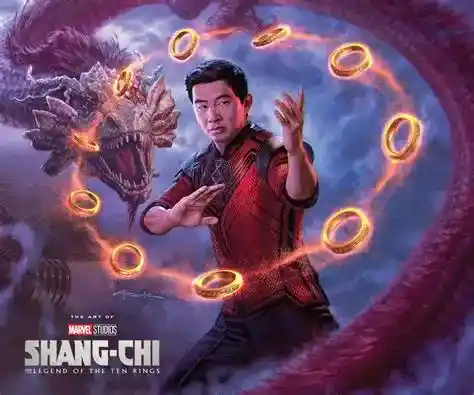
Shang-Chi and the Legend of the Ten Rings carries a PG-13 rating in the United States and a 12A in the United Kingdom, placing the 2021 Marvel Studios film in the same age bracket as most Marvel Cinematic Universe releases.
The 132-minute martial-arts adventure is streaming on Disney+ and remains one of the most-watched family titles in the studio’s library. For parents and carers deciding whether it suits their household, the practical questions are how violent it is, how frightening it gets, what language appears, and which themes may need explaining afterwards.
This guide covers all of those, draws on the official classification decisions in the US and UK, and notes the practical detail many families miss: a substantial share of the dialogue is in Mandarin with English subtitles.
What is Shang-Chi and the Legend of the Ten Rings?
Directed by Destin Daniel Cretton and released in cinemas in September 2021, the film stars Simu Liu as Shang-Chi, a San Francisco valet who has spent a decade hiding from the father who trained him as a child assassin.
Tony Leung plays Xu Wenwu, the immortal leader of the Ten Rings organisation, a figure who has wielded ten magical rings for a thousand years and whose criminal empire previously featured in Iron Man 3. Awkwafina plays Shang-Chi’s friend Katy, Meng’er Zhang plays his estranged sister Xialing, and Fala Chen plays his late mother Ying Li. Michelle Yeoh appears as Ying Nan, Ben Kingsley reprises his Iron Man 3 role as the actor Trevor Slattery, Florian Munteanu plays the assassin Razor Fist and Ronny Chieng plays Jon Jon.
The story moves from a bus fight in San Francisco to a skyscraper under construction in Macau and finally to Ta Lo, a hidden village guarded by mythical creatures. The film became the highest-grossing release of 2021 in North America and the first pandemic-era title to pass $200 million at the domestic box office, taking more than $430 million worldwide. It was nominated for the Academy Award for Best Visual Effects. A sequel is in development with Cretton attached to direct.
Age ratings: PG-13 in the US, 12A in the UK
The Motion Picture Association’s Classification and Rating Administration gave the film a PG-13, citing “sequences of violence and action, and language”. The PG-13 label means parents are strongly cautioned and that some material may be inappropriate for children under 13.
The British Board of Film Classification gave it a 12A, citing moderate violence, threat and language. The 12A is a legal restriction in cinemas: children under 12 may only be admitted if accompanied by an adult. In practice, that makes the UK cinema release stricter than the US, where PG-13 is advisory only.
Both ratings set the bar at roughly 12 or 13 and older. As with any guide, the ratings describe the content, not the individual child. Families weighing it up can also check independent review sites such as Common Sense Media, which break the film down scene by scene.
What is actually on screen
| Content category | What appears on screen |
|---|---|
| Violence | Near-constant stylised martial-arts combat, weapons including blades, a machete-fitted hand, a rope dart and bows, plus a large-scale battle in the final act. Blood is minimal; several characters die. |
| Frightening images | A vast, dark, tentacled creature that consumes souls, shown as glowing orbs drawn out of its victims. Some younger children will find it disturbing. |
| Language | Mid-range profanity, including “hell”, “damn”, “shit” and “bastard”. The strongest swear words do not appear. |
| Sex and nudity | None. A romance is portrayed through courtship and dancing, with no sexual content. |
| Alcohol and drugs | Social drinking appears in several scenes, including a bar and karaoke sequence featuring the lead characters. No drug use is depicted. |
| Themes | Grief, the death of a parent, an abusive and controlling father, sibling estrangement and the pressure of family expectations. |
Violence and frightening scenes
The action is constant but heavily choreographed in the style of Hong Kong martial-arts cinema rather than horror or gore. The opening prologue shows Wenwu using the ten rings to defeat armies, and the fights that follow include a close-quarters brawl on a moving bus, a confrontation in a Macau tower, a chase across bamboo scaffolding and a full battle in Ta Lo.
The heavier content sits in the family history. Shang-Chi’s mother, Ying Li, is killed when he is a child, an event referred to in dialogue and shown in flashback. His father then trains him from the age of seven as an assassin and sends him to kill the man responsible for his mother’s death. The film presents that killing as a source of lasting trauma rather than as a victory.
The final act introduces the soul-consuming creature, which kills on screen, and Wenwu himself dies. Marvel films routinely include two post-credits scenes; this one has a mid-credits scene and a final tag, so families who leave early will miss a plot point about Xialing.
Language, sex, drinking and drugs
Swearing is present but not constant, and it stays within the range the PG-13 and 12A ratings allow. There is no sexual content and no nudity. The romance between Wenwu and Ying Li is tender and entirely non-explicit.
Alcohol is the most frequently repeated mature element. Shang-Chi and Katy drink together at a bar, Katy sings karaoke, and drinking is treated as a normal part of their social lives before the plot takes over. No drug use is shown.
Talking points and a verdict for families
On the evidence of the ratings and the content, the film suits most viewers aged about 12 and over, and many children of nine or ten who already handle Marvel films such as Black Panther will manage it. Younger children who are easily frightened by monsters, or who struggle with subtitles, are the ones most likely to lose interest or need reassurance.
The subtitling is the most underrated practical factor. A large portion of the dialogue is in Mandarin, rendered in English subtitles, which means children who cannot yet read quickly will miss parts of the story.
The film also offers unusually rich material for a conversation afterwards. Its central relationships are built on grief and on a father’s attempt to control his children, and Xialing’s resentment of her brother for leaving her behind drives much of the plot. Katy’s parents, meanwhile, press her to stop wasting her life in a valet job.
Parents looking for discussion starters could ask why Shang-Chi hid his past from his closest friend, whether Wenwu’s actions can be separated from his grief, and why Xialing chooses the path she does in the film’s closing minutes.