
Dollar to Naira Today, Sept 29 2026: Official Window vs Black Market Rate
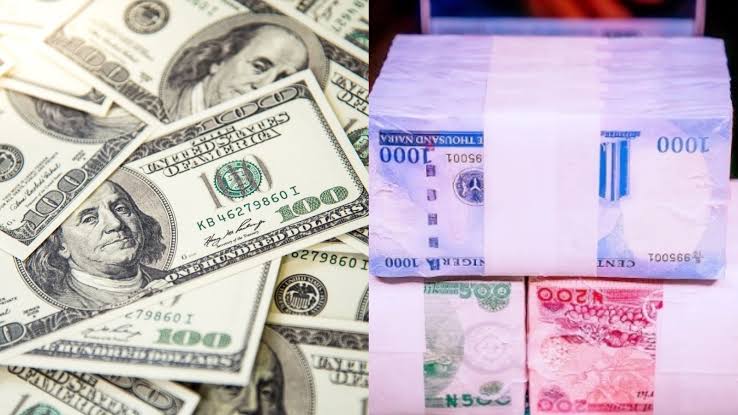
See Latest Dollar to Naira Today, Sept 29 2026.
The naira traded at ₦1,321.44 to the US dollar at the Nigerian Foreign Exchange Market (NFEM) on Tuesday, 29 September 2026, while the dollar sold for as much as ₦1,385 in the parallel market, according to market quotations reported by Nigerian financial media.
Bureau de Change dealers quoted a buying rate of about ₦1,375 and a selling rate of roughly ₦1,385, leaving a gap of about ₦63.56 per dollar between the official NFEM figure and the parallel-market selling price.
Nigerians sourcing dollars from the parallel market therefore pay noticeably more than those able to access foreign exchange at the official window. At the NFEM rate, $100 costs about ₦132,144, compared with ₦138,500 in the parallel market. For $500, the cost is roughly ₦660,720 officially against ₦692,500 in the informal market, and $1,000 converts to about ₦1.321 million officially versus ₦1.385 million on the street.
Today’s rates at a glance
| Market segment | Buying rate (₦/$) | Selling rate (₦/$) |
|---|---|---|
| NFEM (official) | Not quoted in reports | 1,321.44 |
| Parallel market (Bureau de Change) | 1,375 | 1,385 |
The quoted NFEM figure is lower than the previous session’s official rate. Data published by the Central Bank of Nigeria showed the naira at an NFEM rate of ₦1,331.3292 per dollar on Monday, 28 September 2026, closing at ₦1,331.5000. The currency had traded at an NFEM rate of ₦1,329.5138 on Friday, 25 September 2026.
Over the week ended 25 September, the official rate moved within a relatively narrow band of about ₦1,325 to ₦1,336 per dollar, closing the week at ₦1,330, according to data from the CBN.
How Nigeria sets the naira’s exchange rate
Nigeria determines its exchange rate through a managed, market-driven system rather than a fixed peg. The framework dates back to June 2023, when the CBN replaced a regime of multiple exchange-rate windows with a single window in which rates were intended to be set by market forces. That window was later renamed the Nigerian Autonomous Foreign Exchange Market (NAFEM), and the market is now known as the Nigerian Foreign Exchange Market (NFEM).
The central mechanism is the Electronic Foreign Exchange Matching System (EFEMS), which the CBN introduced on 2 December 2024. EFEMS matches buy and sell orders automatically and runs on Bloomberg’s BMatch platform, which the CBN approved as the authorised interbank trading venue.
Under the rules, authorised dealer banks trade through EFEMS at a minimum size of $100,000, in incremental clips of $50,000. Unmatched orders are cleared at the end of each trading day and must be resubmitted the following day. Transactions conducted outside EFEMS must still be reported on the platform within 10 minutes and priced in line with the prevailing NFEM rate.
Access is limited to CBN-licensed dealer banks, while other participants must secure the regulator’s approval. Licensed Bureau de Change operators may buy foreign exchange from authorised dealers up to an aggregate monthly cap set by the CBN, and are required to sell cash purchased from the dealers at a margin not exceeding 1 per cent above their buying rate.
The CBN describes the NFEM rate as a volume-weighted average and the official exchange rate for the day. As the apex regulator and primary custodian of foreign exchange transaction data, the bank publishes daily market statistics, including transaction rates, on its website. EFEMS platforms are also required to publish live market data during trading hours.
The stated aim of the system is to improve price discovery, reduce speculative activity and give the regulator better oversight of the market.
Why two rates exist
The official and parallel markets differ in who can access them and under what conditions. The NFEM rate reflects transactions between banks and their clients in the formal market, while parallel-market rates are set by individual Bureau de Change dealers and respond to cash demand and supply, which can move independently of the formal window.
The premium between the two windows has narrowed substantially compared with earlier periods, when the gap ran into hundreds of naira per dollar. On 25 September, the spread stood at about ₦56, or 4.2 per cent, before widening again this week.
What is behind the recent stability
Market analysts attribute the naira’s relatively steady performance in recent months to the CBN’s policy measures and stronger external buffers.
Dollar to Naira Black Market today 14th January 2023 | Aboki Fx Today, USD to Naira
The Monetary Policy Committee cut the benchmark Monetary Policy Rate by 350 basis points, from 26.5 per cent to 23 per cent, while inflation eased to 15.39 per cent in August. Gross external reserves have exceeded $55 billion, supported by diaspora remittances, trade balances and crude oil receipts, giving the CBN room to meet legitimate commercial and invisible demand.
Turnover, however, has been uneven. Data from the CBN showed that turnover on the NFEM fell 17.7 per cent week-on-week to $2.25 billion in the week ended 25 September 2026, extending a decline for a second consecutive week from $2.74 billion in the preceding week. Analysts note that thinner liquidity can allow small pockets of corporate dollar demand to nudge the naira weaker during individual sessions.
Where to check today’s figure
- Central Bank of Nigeria website: The CBN publishes NFEM rates on its Exchange Rates page, including the daily rate, highest and lowest rates, closing rate, simple average rate and turnover figures.
- FMDQ Exchange: The exchange publishes the NAFEM closing rate, computed using its foreign exchange closing rate methodology from Bloomberg BMatch data.
- Bloomberg BMatch: The interbank trading platform provides live pricing data during market hours.
- Commercial and authorised dealer banks: Banks quote their own buy-and-sell rates for customers, guided by the prevailing NFEM rate.
- Bureau de Change operators and market trackers: Street rates are published by dealer networks and rate-tracking sites, which reflect parallel-market quotations rather than the official window.
- International converters: Services such as Wise publish a mid-market rate used for remittances and card transactions, which may differ from both the NFEM and parallel-market quotes.
Readers comparing figures should note that the rate they see depends on the market, the time of day and the source. The NFEM rate is a daily average drawn from qualifying transactions on the formal market, while parallel-market quotations vary between dealers and locations and can change within hours.