
BREAKING: US Journalist Reveals Three Drug Cases Linked To Tinubu, Raises Possibility Of Fourth Sealed Case
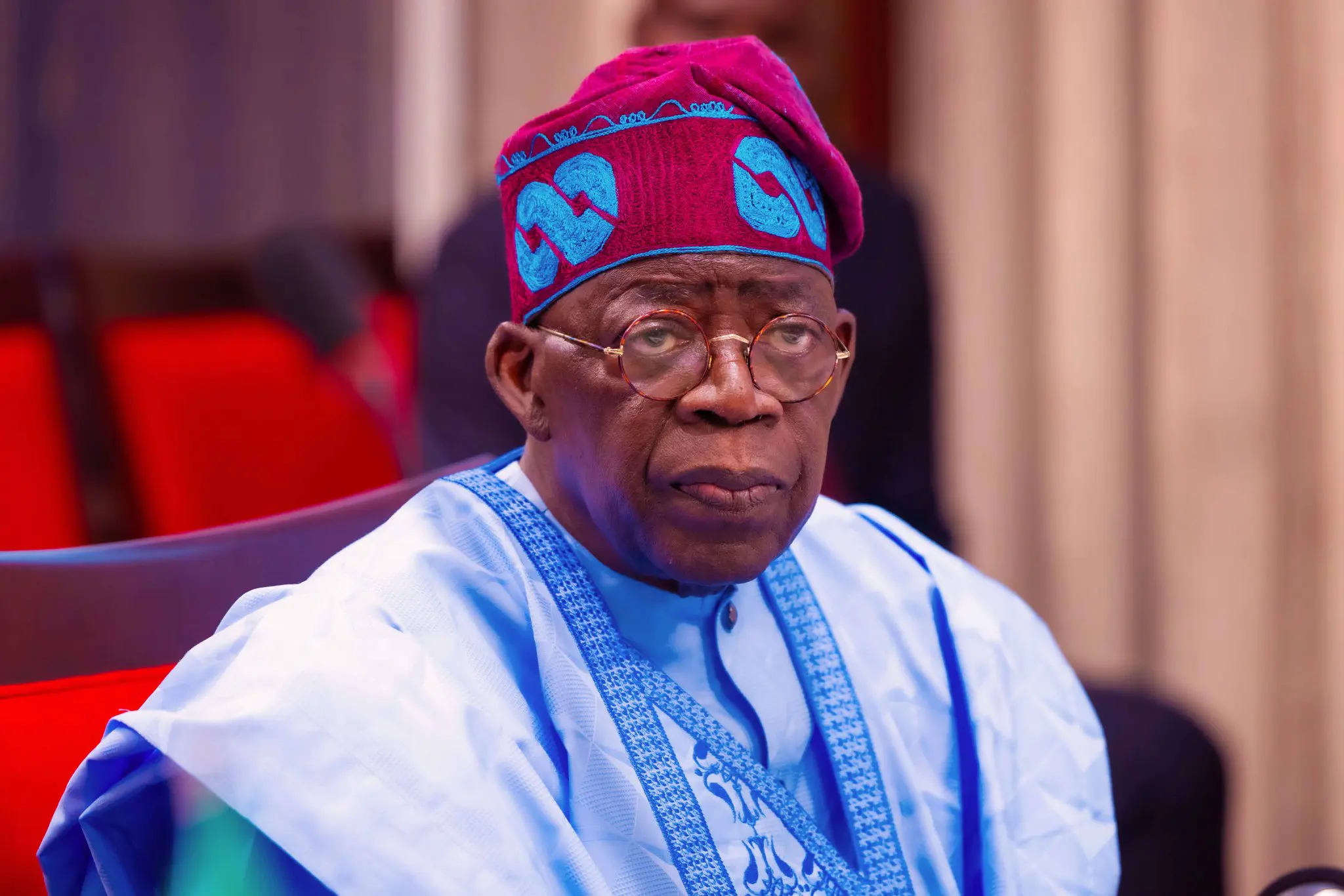
A US journalist and owner of Plainsite.org, Aaron Greenspan, who filed an ongoing Freedom of Information suit in a Washington, DC court seeking to release investigation details about President Bola Ahmed Tinubu’s involvement in a 1993 drug case, has shared fresh details about the long-running controversy.
Greenspan made the comments in an exclusive interview in the USA with Laolu Akande, who is the founder of Empowered Newswire. During the interview, he explained his personal involvement and spoke about President Tinubu’s alleged links to a 1990s United States drug investigation. He identified three separate cases that he said were connected to the same alleged drug network, and he raised the possibility of a fourth case.
According to Greenspan, one of the other investigations may involve a criminal indictment, but it may have been filed under seal. He did not provide or claim to have conclusive proof of this criminal indictment, but he identified details of some of the other cases in publicly available court documentation. Those cases, he said, were essentially unknown before now.
He stressed that, from the currently available cases, there is no established or known criminal indictment against the President. But his account centres on a series of US investigations and legal proceedings that the journalist said warrant further examination of Tinubu’s reported connections to the alleged network.
Three known cases and a possible fourth
According to the US journalist and owner of Plainsite.org, the three identified cases comprise a 1992 series of criminal indictments involving members of the alleged drug network, a separate criminal indictment involving Nigerian businessman Abiodun Agbele, and the civil forfeiture case through which US authorities obtained the US$460,000 held in an account in Tinubu’s name.
“There’s at least three known cases now that are tied to this drug ring,” Greenspan stated.
“There is the 1992 set of criminal indictments, which is where this transcript comes from, and that’s available in the National Archives. There’s the unknown date indictment of Mr Agbele, and then there’s the civil forfeiture case, which involves Bola Tinubu.”
The journalist said there could be a fourth.
“There could be a fourth. There could be a criminal indictment of Bola Tinubu as well, and that’s what we’re trying to do,” he said.
He said the question of a possible fourth case arose from the unusual character of federal investigative documents relating to Tinubu. Rather than a conventional indictment, he said, the material sets out detailed allegations and investigative findings. These include bank accounts about his wife, possible involvement by his mother, and details of a Nissan vehicle and its VIN.
“It is very detailed. Yet, at the end of all this excruciating detail, nothing happens,” he said.
The journalist said this raised two possibilities: either there was no criminal case and authorities decided not to prosecute after years of investigation, or a criminal case existed but remained hidden from public view, sealed. He explained that criminal cases can be filed under seal, which prevents the public from seeing the allegations until a court orders them unsealed. He raised the possibility that such an arrangement could involve information supplied to authorities, but he stressed that he had no evidence Tinubu entered any such agreement.
“I don’t have any evidence that such a deal had been made, to be very clear,” he said. “That remains an open question right now.”
The journalist said Agbele was tied to the same investigation and was described as the nephew of Muiz Akande, a Chicago-based figure whom he said facilitated heroin distribution from Thailand and other parts of Asia through Nigeria. He said Tinubu’s alleged connection was financial.
“Bola Tinubu comes into this because he was not distributing heroin directly. He was (accused of) laundering money for the proceeds from the heroin distribution,” he said.
He cited a trial transcript in which DEA special agent Vincent Balbo testified about participating in Agbele’s indictment.
“If you look for that case, you can’t find it. It’s not there, which means it’s under seal,” he said.
Civil forfeiture and unresolved questions
The US$460,000 proceeding, however, was a civil forfeiture case, and not a criminal conviction of Tinubu. Tinubu’s lawyers and his Nigerian spokespeople have maintained that the matter was civil forfeiture related.
The claims have also revived questions about Tinubu’s absence from the UNGA in New York. The journalist’s revelations may hint that the historical investigation could form part of the background to concerns about his presence in the United States and possible arrest.
That suggestion remains unproven. The Presidency has previously rejected claims that Tinubu faces any US travel restriction, while Nigerian officials have attributed his absence from UNGA to other reasons and have said there was no impediment to his travelling to the United States.
The emerging picture is therefore more complex than the familiar reference to the US$460,000 forfeiture alone.
The unresolved question is whether a fourth case exists, whether it contains a criminal indictment of Tinubu, and, if it does, why it remains sealed.
Until documentary evidence establishes that such a case exists, the possible fourth indictment remains a possible investigative lead, and not an established fact. Greenspan’s account, as presented in the interview, does not establish that such a case exists.