
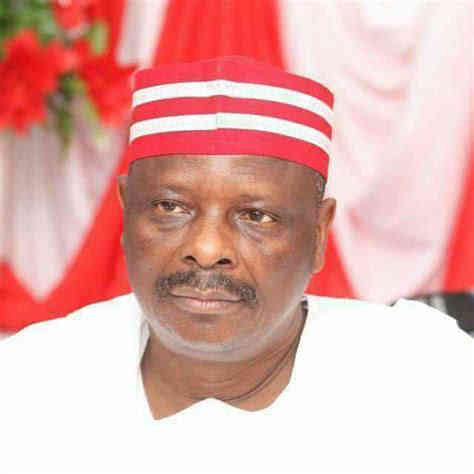
Strong indications have emerged that former Kano State Governor, Rabiu Musa Kwankwaso, is poised to formally join the African Democratic Congress (ADC), in a move that could significantly reshape Nigeria’s opposition landscape ahead of the 2027 general elections.
Sources within the party disclosed that Kwankwaso is expected to obtain his membership card in his hometown in Kano State, marking a decisive step in what appears to be a calculated political transition. Ejes Gist News reports that the development follows weeks of speculation surrounding his future after the 2023 elections.
Planned Defection and Political Calculations
Kwankwaso, who contested the 2023 presidential election under the New Nigeria Peoples Party (NNPP), has recently intensified consultations with key political actors across party lines.
The anticipated defection is widely interpreted as part of broader strategic positioning ahead of the next electoral cycle, particularly amid ongoing discussions about opposition coalition-building.
Key details surrounding the move include:
- Expected formal registration in Madobi Local Government Area of Kano State
- Planned acquisition of ADC membership card
- Coordination with party stakeholders at national and state levels
High-Level Political Engagements Fuel Speculation
Recent engagements involving Kwankwaso have heightened speculation about an emerging political alliance among opposition figures.
Notably, the 2023 presidential candidate of the Labour Party, Peter Obi, paid a visit to the former governor, a meeting that drew national attention and triggered discussions about a potential coalition.
Similarly, Oyo State Governor, Seyi Makinde, has also held consultations with Kwankwaso. Makinde is regarded as a leading figure within a faction of the Peoples Democratic Party (PDP), reportedly aligned with Kabiru Turaki.
PDP Crisis and Emerging Political Blocs
The PDP continues to face internal divisions, with rival factions struggling for control of the party’s structure.
Also Read: BREAKING: Nine Senators Defect to ADC as PDP, LP, APGA Lose Key Lawmakers
One bloc is associated with Makinde and Turaki, while another is linked to the Minister of the Federal Capital Territory, Nyesom Wike.
Efforts to reconcile these factions have yet to yield a durable resolution, raising concerns about the party’s cohesion and electoral readiness.
Analysts suggest that Kwankwaso’s potential exit from the NNPP and entry into the ADC could further weaken existing opposition alignments while simultaneously accelerating the formation of new coalitions.
ADC Internal Reforms Underway
The development coincides with ongoing structural reforms within the ADC aimed at strengthening its institutional framework.
The party recently received the report of its constitution review committee, presented on behalf of the National Chairman, David Mark, by the National Legal Adviser, Oserheimen Osunbor.
According to the party leadership, the review process focused on:
- Enhancing internal democracy
- Promoting transparency and accountability
- Aligning party structures with evolving political realities
Mark emphasised that the National Working Committee would examine the recommendations thoroughly, describing the process as inclusive and consultative.
Implications for 2027 Political Landscape
Kwankwaso’s anticipated defection is viewed as a strategic development with potential implications for opposition politics.
Observers note that:
- The ADC could emerge as a consolidation platform for opposition figures
- Coalition talks among major political actors may intensify
- Party realignments could redefine electoral competition ahead of 2027
The coming days are expected to clarify the extent to which the ADC can leverage these developments to position itself as a viable alternative within Nigeria’s political system.