
Peter Obi shouldn’t have been allowed to contest presidential election — Justice Ayo Salami
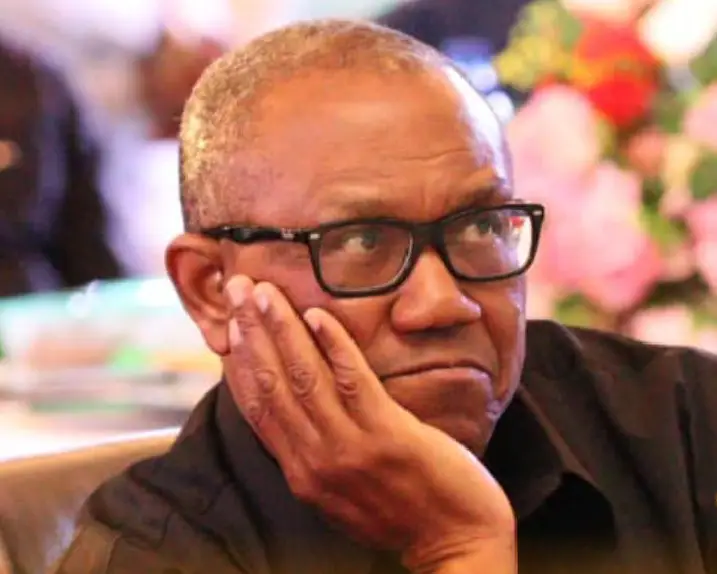
A former President of the Court of Appeal, Isa Ayo Salami, has raised fresh concerns over the legality of Peter Obi’s participation in Nigeria’s 2023 presidential election under the Labour Party Nigeria.
Speaking in Ilorin during a recognition event organised by the Wole Soyinka Centre for Investigative Journalism, Ejes Gist News reports that Salami questioned whether Obi met constitutional requirements to contest, citing provisions that prohibit independent candidacy in Nigeria.
Salami Raises Constitutional Concerns
Salami argued that Obi’s emergence as a presidential candidate followed a process that may not align with constitutional expectations.
Also Read: MC Oluomo vs Baruwa: Everything You Need to Know About Arrest and Sacking of NURTW Chairman
According to him, the Labour Party had already submitted its membership register to the Independent National Electoral Commission before Obi defected from the Peoples Democratic Party.
“Strictly speaking, Peter Obi ought not to have been allowed to contest,” Salami stated. “By the time he left the PDP after losing its primary election, the Labour Party had already submitted its list of members to INEC. The Constitution does not recognise independent candidacy.
The retired jurist linked what he described as inconsistencies in electoral adjudication to gaps in judicial competence.
He maintained that some judges lack the depth of training and experience required to interpret complex electoral laws, a situation he said has affected the quality of judgments in politically sensitive cases.
Salami pointed to judicial decisions arising from the 2023 elections as examples, noting that conflicting interpretations of party membership and eligibility requirements continue to generate legal controversy.
Salami also referenced the case of Abba Kabir Yusuf, whose election under the New Nigeria Peoples Party faced legal challenges over party membership status.
He observed that while lower courts raised concerns about Yusuf’s eligibility, the Supreme Court ultimately upheld his election, a development he described as indicative of deeper institutional issues.
“The register is supposed to be the primary evidence of membership,” Salami said, questioning the basis upon which the final judgment validated the candidacy.
Salami criticised the process of judicial appointments in Nigeria, arguing that regional considerations often take precedence over merit.
He said the current system allows less experienced judges to be elevated to higher courts due to zonal balancing, sometimes at the expense of more qualified candidates.
Key concerns raised include:
- Promotion based on regional quotas rather than competence
- Supersession of experienced judicial officers
- Declining standards in legal interpretation at higher courts
According to Salami, these structural issues have contributed to inconsistencies in judicial outcomes.
The former appellate court president also raised alarm over the rapid expansion of law faculties across Nigerian universities.
He noted that while increased access to legal education may reflect population growth, it raises questions about quality control and professional standards.
“Every university now wants to establish a law faculty,” he said, warning that inadequate training at the foundational level could affect the competence of future judicial officers.
The event where Salami spoke was organised by the Wole Soyinka Centre for Investigative Journalism, which honoured him for his contributions to the legal profession.
The award was presented by the organisation’s founder, Dapo Olorunyomi, alongside its Executive Director, Motunrayo Alaka.
Salami described the recognition as a significant encouragement for integrity and professionalism within the judiciary.
Reflecting on his career, Salami credited late statesman Obafemi Awolowo as a major influence on his decision to study law.
He also acknowledged the enduring impact of Nobel Laureate Wole Soyinka on his views regarding justice and national development.
Salami’s remarks add to ongoing debates about electoral law, judicial independence, and institutional reforms in Nigeria.
Legal analysts note that questions surrounding party membership, candidate eligibility, and judicial consistency remain central to discussions on strengthening Nigeria’s democratic framework.