
Month: January 2026

  • Govt Officials Trapped as Bandits Ambush Security Team in Zamfara

    Govt Officials Trapped as Bandits Ambush Security Team in Zamfara

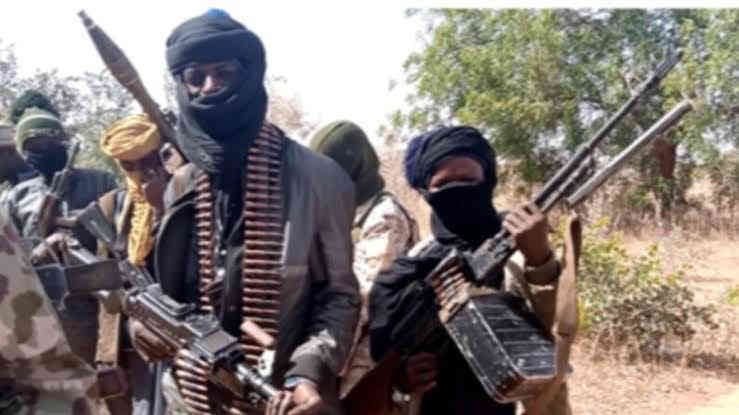
    Officials of Tsafe Local Government Area in Zamfara State were reportedly trapped after suspected bandits ambushed a joint security team while on an official assignment in the state. The incident has raised serious concerns about the safety of government officials and the effectiveness of security measures in regions frequently targeted by criminal gangs.

    Security analyst Zagazola Makama provided details of the attack, noting that it occurred on Monday along the Kunchin Kalgo–Danjibga road. The officials, including the Local Government Chairman, were travelling under a coordinated security escort when the ambush took place. The team was reportedly heading to Danjibga to facilitate the reunion of villagers from the Keta area, who had recently regained freedom from abduction, when they were unexpectedly confronted by armed assailants.


    Nigeria Police Backtrack, Confirm Abduction of 172 Christians in Kaduna


    Ejes Gist News reports that preliminary accounts indicate the bandits may have had prior knowledge of the movement of the officials and their security detail. Sources suggest that the attackers strategically laid an ambush along the route, taking advantage of the area’s difficult terrain and the relative isolation of the road.


    Makama further explained that the ambush left the Local Government Chairman and members of his entourage trapped in Danjibga, with some people feared kidnapped. Vehicles within the convoy were reportedly set on fire, further complicating rescue operations. The attack underscores the risks faced by officials operating in Zamfara, where banditry remains a persistent security challenge.

    Security sources confirmed that reinforcements have been deployed to the affected area. The operation aims to secure the release of those trapped, recover any vehicles taken or destroyed, and restore order. Forces involved in the response include local police, military units, and special tactical teams already familiar with the region’s security dynamics.

    Officials and analysts warn that the ambush could have broader implications for local governance and public safety. Government representatives frequently travel to remote communities to oversee relief efforts, mediate conflicts, and ensure administrative operations. Such attacks, they note, threaten both operational efficiency and the morale of officials tasked with maintaining governance under hazardous conditions.

    Makama also noted that investigations are ongoing to establish the full scope of the attack, including the number of people affected, the identities of potential kidnappings, and the extent of property damage. Security operatives have intensified patrols and are conducting coordinated sweeps in surrounding areas to prevent further attacks or the escape of the assailants.

    The Tsafe Local Government Area has witnessed repeated incidents of banditry, including kidnappings, attacks on travellers, and raids on communities. Experts say these attacks are often carried out by highly organised groups familiar with the terrain and local movement patterns, making security operations challenging.

    Residents of Danjibga and surrounding communities have expressed fear and anxiety following the ambush. Eyewitnesses report that panic spread rapidly after the convoy was attacked, and some residents have temporarily evacuated vulnerable areas pending intensified security operations.

    The incident highlights the continuing challenges faced by government authorities and security agencies in northern Nigeria, where banditry remains entrenched despite ongoing counter-insurgency measures. Security analysts stress the need for enhanced intelligence, community collaboration, and proactive measures to anticipate movements of officials and other high-profile targets.

    As operations continue, authorities have appealed to members of the public to remain calm, cooperate with security forces, and avoid spreading unverified reports that could compromise rescue and law enforcement efforts. The Zamfara State Government has pledged to monitor the situation closely and provide updates as developments unfold.

    Ejes Gist News can authoritatively report that while the full impact of the ambush is yet to be determined, the incident has once again drawn attention to the vulnerability of officials travelling in areas prone to bandit attacks, as well as the urgent need for robust security strategies in the state.

  • Labour Party Crisis Deepens as Abure Rejects Court Ruling, Heads to Appeal Court

    Labour Party Crisis Deepens as Abure Rejects Court Ruling, Heads to Appeal Court

    The internal crisis within Nigeria’s Labour Party has escalated following the rejection of a Federal High Court judgment by a faction led by its National Chairman, Julius Abure, who has announced plans to challenge the ruling at the Court of Appeal.

    The dispute centres on a judgment delivered by the Federal High Court in Abuja, which directed the Independent National Electoral Commission to recognise a caretaker committee to manage the party’s affairs pending the conduct of a national convention. The committee is headed by former Minister of Finance, Nenadi Usman.

    Ejes Gist News reports that Abure’s faction has described the ruling as legally flawed and inconsistent with an earlier decision of the Supreme Court, insisting that the matter of the party’s leadership had already been settled at the apex court.

    Background to the Leadership Dispute

    The Labour Party, which gained national prominence during the 2023 general elections, has since been embroiled in prolonged internal disagreements over its leadership structure. These disputes have resulted in parallel claims to authority, factionalisation, and repeated court actions.

    At the centre of the current controversy is the expiration of Abure’s tenure as national chairman. Opposing factions within the party have argued that his continued stay in office lacks constitutional backing, while Abure and his supporters maintain that due process was followed and that his leadership remains valid.

    Also Read: Nigeria Police Backtrack, Confirm Abduction of 172 Christians in Kaduna

    Federal High Court Judgment

    The Federal High Court ruling, delivered by Peter Lifu, held that Abure’s tenure had elapsed and that a caretaker committee was required to stabilise the party and prepare for a properly constituted national convention.

    The court ordered INEC to recognise the Nenadi Usman-led caretaker committee as the legitimate interim leadership of the Labour Party. The decision was welcomed by stakeholders aligned with Abia State Governor Alex Otti, who has been a prominent figure in the faction opposing Abure.

    Abure’s Rejection and Appeal Plans

    In a statement issued by Obiora Ifoh, identified as the National Publicity Secretary loyal to Abure, the faction announced its rejection of the judgment and its intention to appeal.

    Abure was quoted as saying that the ruling amounted to a misinterpretation of the Supreme Court’s decision delivered in April 2025 and constituted an intrusion into the internal affairs of a political party.

    According to the statement, the faction believes the Federal High Court lacked the jurisdiction to issue directives affecting the party’s leadership, particularly in light of what it described as an existing Supreme Court position on the matter.

    Although Abure acknowledged that his group had yet to obtain the Certified True Copy of the judgment, he expressed confidence that a detailed review would strengthen their case at the appellate court.

    Reaction Within the Party

    The ruling has been interpreted by many party stakeholders as a significant victory for the faction seeking Abure’s removal. Supporters of the caretaker committee argue that it offers a temporary framework to reconcile aggrieved members, restore internal order, and organise a credible national convention.

    However, Abure’s decision to proceed to the Court of Appeal has effectively prolonged the crisis, ensuring that the leadership question remains unresolved.

    Implications for INEC

    INEC has found itself repeatedly drawn into the Labour Party’s internal disputes through a series of court orders directing which faction to recognise. The electoral body has consistently stated that it will comply with valid court judgments, but the existence of multiple rulings and ongoing appeals has complicated compliance.

    Legal observers note that INEC’s role in such disputes underscores the broader challenge of enforcing judicial decisions amid overlapping legal processes.

    Broader Political Impact

    Political analysts warn that the continued leadership tussle could weaken the Labour Party’s position as an opposition force. Expectations that followed its electoral performance in 2023 have been tempered by persistent infighting, which has diverted attention from policy development and grassroots mobilisation.

    The crisis has also reignited debate over the role of the judiciary in political party affairs. While some critics argue that frequent court interventions undermine internal democracy, others maintain that judicial oversight becomes necessary when parties fail to resolve disputes through constitutional mechanisms.

    Calls for Reconciliation

    Several party elders and stakeholders have called for dialogue and reconciliation, urging all factions to prioritise the collective interest of the party. These appeals have so far yielded limited results, as legal strategies continue to dominate the conflict.

    As the dispute moves to the Court of Appeal, attention will focus on whether the appellate court can provide clarity on the leadership question. Until then, the Labour Party remains divided, with competing structures and unresolved claims to legitimacy shaping its immediate political future.

  • Nigeria Police Backtrack, Confirm Abduction of 172 Christians in Kaduna

    Nigeria Police Backtrack, Confirm Abduction of 172 Christians in Kaduna

    The Nigeria Police Force has formally confirmed the abduction of 172 Christians by Islamic terrorists in Kurmin Wali community, Kajuru Local Government Area of Kaduna State, following days of public confusion, contradictory statements, and mounting criticism over an apparent initial attempt to downplay the incident.

    The confirmation came through an official press statement issued by the Force Headquarters in Abuja and signed by the Force Public Relations Officer, CSP Benjamin Hundeyin. The statement acknowledged that earlier communications from the Kaduna State Police Command created uncertainty after reports of the mass abduction were first disputed at a high-level security meeting convened by the Kaduna State Government.

    The development has renewed scrutiny of security communications in Nigeria’s conflict-affected regions and intensified concerns over the persistent targeting of Christian communities in parts of the country’s northwest.

    Ejes Gist News reports that the police admission followed internal verification by operational units and intelligence sources, which confirmed that the abduction incident did occur as initially reported by local communities and church sources.

    Background to the Kurmin Wali Abduction

    Kurmin Wali is a remote rural settlement in Kajuru Local Government Area, a region that has experienced repeated attacks attributed to armed groups described by residents and local leaders as Islamist terrorists. The area has been the site of several mass kidnappings and violent raids over the past decade, often targeting Christian villages.

    Initial reports from the community indicated that armed men stormed Kurmin Wali during church activities, abducting worshippers from multiple congregations. Community leaders and church officials reported that women, children, and elderly persons were among those taken.

    Early estimates placed the number of abducted persons at 172. These figures circulated widely in local and international media, prompting public outrage and calls for urgent security intervention.

    Conflicting Official Responses and Public Confusion

    Despite the gravity of the reports, official confirmation from security authorities was not immediate. According to the police statement, the Kaduna State Security Council was convened by the state governor shortly after the incident was reported.

    During the meeting at the Government House in Kaduna, some individuals identified as representatives from the affected local government area reportedly disputed the abduction figures and described the reports as false. This disagreement introduced uncertainty into the official response and led to a pause in definitive public confirmation by security agencies.

    The Commissioner of Police for Kaduna State later made comments during a media interaction that were widely interpreted as a denial of the abduction. Those remarks drew sharp criticism from civil society groups, Christian organizations, and residents, who accused the police of attempting to suppress or minimize the scale of the attack.

    Police Explanation for Initial Statements

    In its formal clarification, the Nigeria Police Force stated that the remarks attributed to the Commissioner of Police were intended to prevent panic while verification was ongoing.

    According to the Force, the comments were “not a denial of the incident but a measured response pending confirmation of details from the field, including the identities and number of those affected.”

    The statement emphasized that the sensitive nature of mass abduction incidents requires thorough verification to avoid misinformation, particularly in volatile security environments where unverified claims can escalate fear and tension.

    However, the admission that the abduction did occur has reinforced public perception that initial police communications were inconsistent and poorly managed.

    Confirmation of the Abduction

    Following subsequent verification by operational units and intelligence sources, the Nigeria Police Force confirmed that the incident at Kurmin Wali did take place.

    The Force disclosed that coordinated security operations were immediately activated after confirmation, with a focus on locating the abducted victims, ensuring their safe rescue, and restoring calm to the affected area.

    The confirmation effectively reversed earlier impressions that the reports were exaggerated or false and aligned official accounts with those provided by community members and religious leaders from the outset.

    Deployment of Security Assets

    The Inspector-General of Police, Kayode Egbetokun, has ordered the full deployment of critical operational and intelligence assets to Kajuru Local Government Area and surrounding communities.

    According to the police statement, these measures include the deployment of tactical units, intensified patrols, targeted search-and-rescue operations, and proactive security measures aimed at protecting lives and property.

    The police also confirmed that they are working in coordination with other security agencies as part of a broader inter-agency response to the incident.

    Kaduna’s Security Context

    Kaduna State, particularly its southern axis, has long been a flashpoint for communal violence, religiously motivated attacks, and mass kidnappings. Kajuru Local Government Area has repeatedly featured in reports of attacks on Christian communities, with residents often alleging that assailants selectively target churches and Christian settlements.

    Security analysts have attributed the persistence of violence in the area to a combination of rugged terrain, limited security presence, and the activities of armed groups operating across state boundaries.

    Despite repeated military and police operations, residents continue to report attacks, kidnappings, and displacement, raising questions about the effectiveness and sustainability of current security strategies.

    Impact on Christian Communities

    Christian leaders in southern Kaduna have described the Kurmin Wali abduction as part of a broader pattern of targeted violence. They argue that repeated attacks on churches and Christian villages have created an atmosphere of fear and displacement, forcing many families to abandon their homes.

    Also Read: Black Market Dollar to Naira Exchange Rate Today, Wednesday, January 21, 2026

    Community representatives say the psychological impact of mass abductions extends beyond the immediate victims, undermining trust in security institutions and weakening social cohesion.

    Religious organizations have called for transparent investigations, sustained security deployments, and accountability for both perpetrators and officials responsible for security lapses.

    Calls for Transparency and Accountability

    The police appeal for patience and cooperation has been met with mixed reactions. While some stakeholders acknowledge the need for careful verification in security reporting, others argue that delayed or contradictory statements erode public confidence.

    Media analysts note that timely, clear, and consistent communication is critical during security crises, particularly in regions with a history of violence and mistrust between communities and authorities.

    Civil society groups have urged the Nigeria Police Force to review its crisis communication protocols to ensure that accurate information is released promptly without compromising ongoing operations.

    Ongoing Rescue Operations

    While the police have not disclosed specific operational details, they confirmed that search-and-rescue efforts are ongoing in Kajuru and neighboring areas.

    Security sources say such operations typically involve ground patrols, aerial surveillance, and coordination with local vigilante groups familiar with the terrain. However, officials caution that disclosing tactical details could endanger both victims and security personnel.

    Families of the abducted persons continue to await updates on the whereabouts and condition of their loved ones.

  • Black Market Dollar to Naira Exchange Rate Today, Wednesday, January 21, 2026

    Black Market Dollar to Naira Exchange Rate Today, Wednesday, January 21, 2026

    The black market dollar to naira exchange rate remains a key reference point for individuals, businesses, and informal traders across Nigeria, reflecting real-time supply and demand conditions in the foreign exchange market. On Wednesday, January 21, 2026, the parallel market continued to trade within a relatively tight but elevated range, highlighting ongoing pressure on dollar availability despite policy reforms.

    The United States dollar remains Nigeria’s most sought-after foreign currency, used extensively for imports, overseas education, medical expenses, and as a hedge against inflation and currency risk. As a result, the black market—commonly referred to as the parallel market—continues to serve as an informal price discovery mechanism, even though it operates outside official regulatory structures.

    Ejes Gist News reports that checks conducted across major foreign exchange hubs show that rates remained broadly stable compared with the previous trading session, with only marginal differences recorded across locations.

    Black Market Dollar to Naira Rate on January 21, 2026

    Findings from Bureau De Change operators and street traders in Lagos, Abuja, Port Harcourt, and Kano indicate that the US dollar exchanged within the following range:

    • Buying rate: approximately ₦1,485 to ₦1,490 per $1
    • Selling rate: approximately ₦1,495 to ₦1,500 per $1

    The buying rate reflects the price at which dealers purchase dollars from individuals, while the selling rate represents the cost to buyers seeking dollars. Differences of ₦5 to ₦15 are common within the same day, depending on transaction size, dealer liquidity, and urgency of demand.

    Jada Pollock Biography, Net Worth, Wiki, Real Name, Husband, Wizkid Manager

    Market operators noted that while some early trades cleared slightly below these levels, sustained demand from importers and retail buyers supported prices closer to the upper band.

    Difference Between Black Market and Official Exchange Rates

    Nigeria operates an official foreign exchange framework through authorized dealers, with rates determined under the Nigerian Foreign Exchange Market system. The official rate published by the Central Bank of Nigeria remains notably lower than black market quotations.

    Around this period, official rates hovered in the low ₦1,420 range per dollar, reflecting transactions conducted through banks and approved FX windows. The persistent gap between the official and parallel market rates is driven by structural factors that limit access to official foreign exchange.

    Key contributors to this disparity include limited FX supply through banks, unmet demand from individuals and small businesses, import-related dollar requirements, and reduced confidence in naira-denominated savings during inflationary periods.

    Regional Differences in Parallel Market Rates

    Although Lagos typically sets the tone for black market pricing due to higher liquidity, rates vary slightly across different parts of the country.

    Lagos remains the most active market and often records the most competitive pricing. Abuja closely mirrors Lagos trends but can experience wider spreads during periods of heightened official FX scarcity. Port Harcourt sees demand influenced by oil services, shipping, and industrial activity, while Kano’s market is shaped partly by cross-border trade dynamics.

    Dealers confirm that large-volume transactions often attract better rates, while smaller retail purchases tend to be priced higher.

    Key Factors Influencing the January 2026 Exchange Rate

    The dollar to naira black market rate observed in January 2026 reflects a combination of monetary policy decisions, inflation trends, and structural characteristics of the Nigerian economy.

    Inflation and Monetary Policy Environment

    Nigeria’s inflation rate moderated in late 2025 following earlier spikes associated with fuel subsidy removal and exchange rate adjustments. While easing inflation typically reduces pressure on the local currency, the impact on foreign exchange markets tends to lag, especially when import demand remains elevated.

    Tight monetary policy measures have helped curb speculative demand but have not fully resolved underlying FX supply constraints.

    External Reserves and FX Liquidity

    Nigeria’s external reserves improved during 2025, supported by energy exports and reform efforts aimed at attracting foreign investment. Stronger reserves enhance the central bank’s capacity to stabilize markets but do not automatically translate into widespread access to dollars for end users.

    Black Market Dollar to Naira Exchange Rate Today, Friday, January 16, 2026

    Market participants emphasize that sustained reserve growth, combined with transparent FX allocation processes, is necessary to significantly narrow the gap between official and black market rates.

    Persistent Demand for Dollars

    Nigeria’s reliance on imports for refined fuel products, machinery, pharmaceuticals, and consumer goods continues to fuel dollar demand. In addition, households seeking to preserve purchasing power often turn to foreign currency holdings, reinforcing pressure on the naira.

    How the Exchange Rate Reached Current Levels

    The current black market rate is the outcome of a multi-year adjustment process that began with major reforms introduced from 2023 onward. These reforms included the unification of exchange rate windows and a shift toward market-determined pricing.

    While the reforms improved transparency, they initially led to sharp depreciation of the naira. By late 2025, the pace of depreciation slowed, with the currency entering a period of relative stabilization, though at much weaker levels than before the reforms.

    The January 2026 trading range therefore reflects consolidation rather than abrupt volatility.

    Comparison With Other Market Indicators

    Beyond street trading, alternative pricing benchmarks provide context for the naira’s valuation. International mid-market rates quoted the dollar slightly below black market levels, reflecting global pricing without local scarcity premiums. Rates on peer-to-peer and digital exchange platforms broadly aligned with parallel market prices.

    Official bank rates remained significantly lower, underscoring ongoing segmentation within Nigeria’s foreign exchange system.

    Impact on Businesses and Households

    The prevailing black market exchange rate has far-reaching implications across the economy.

    Higher parallel market rates raise import costs for businesses unable to access official FX, leading to higher consumer prices. Families funding overseas education or medical treatment often rely on the parallel market, making exchange rate movements a critical budgeting factor.

    Persistent depreciation also encourages dollarization, as individuals seek to protect savings from inflation. While rational at the individual level, widespread dollarization reduces confidence in the local currency and complicates monetary policy effectiveness.

    Official Position on Parallel Market Trading

    Authorities continue to discourage the use of the black market for foreign exchange transactions, stressing that it is not recognized for official dealings. Individuals and businesses are advised to source FX through banks and licensed dealers.

    Despite these warnings, analysts acknowledge that the black market will remain active as long as official supply falls short of demand.

    Outlook for the Dollar to Naira Exchange Rate

    Future movements in the exchange rate will depend on the consistency of economic reforms, growth in non-oil exports, stability in global energy markets, and the ability to sustain FX inflows from investment and remittances.

    While expectations differ, many analysts anticipate gradual convergence between official and parallel market rates over time, rather than a sharp appreciation of the naira.

    Summary of Current Market Conditions

    • The black market dollar to naira rate on January 21, 2026 traded around ₦1,485 to ₦1,500 per dollar.
    • Rates showed relative stability with modest intraday fluctuations.
    • A significant gap persists between official and parallel market exchange rates.
    • Structural demand for dollars and limited official access continue to support black market activity.

    The black market exchange rate therefore remains a critical indicator of Nigeria’s foreign exchange realities, reflecting both the progress achieved through reforms and the structural challenges that continue to shape currency dynamics.

  • Court Dismisses Pro-Wike PDP Faction’s Suit as Anyanwu Loses Fresh Legal Bid to Retain National Secretary Position

    Court Dismisses Pro-Wike PDP Faction’s Suit as Anyanwu Loses Fresh Legal Bid to Retain National Secretary Position

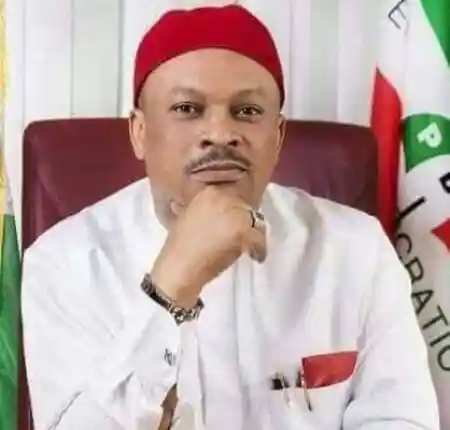
    The Peoples Democratic Party has suffered another judicial setback in its protracted internal leadership crisis following a ruling of the Federal High Court in Abuja dismissing a suit filed by Senator Samuel Anyanwu challenging his removal as the party’s National Secretary.

    The judgment, delivered by Justice M. G. Umar, struck out all the reliefs sought by the former senator, holding that the dispute fell squarely within the internal affairs of the PDP and was therefore not justiciable. The court further ruled that the suit constituted an abuse of court process and that Anyanwu’s tenure in office had already expired.


    Ejes Gist News reports that the decision represents one of the clearest judicial pronouncements yet against attempts by rival factions to use the courts to resolve internal party leadership battles.

    Background of the Legal Dispute

    The suit, marked FHC/ABJ/CS/254/2025 – Senator Samuel Anyanwu v. Independent National Electoral Commission & Others, was instituted by Anyanwu in an effort to remain in office as National Secretary of the PDP despite internal party developments and earlier court decisions that weakened his claim.

    Anyanwu, widely identified with a faction aligned to the former Rivers State governor Nyesom Wike, approached the court seeking judicial intervention to restrain the party from effecting his removal. He also asked the court to issue consequential orders binding INEC and other parties to continue recognizing him as the PDP’s National Secretary.

    The case formed part of a series of litigations arising from the PDP’s post-2023 leadership struggles, which have seen competing claims to authority within the party’s National Working Committee.

    Also Read : BREAKING: Crisis Breaks Out in APC Over Fubara Impeachment as Party Demands Immediate Resignation of National Publicity Secretary

    Reliefs Sought by Senator Anyanwu

    In his originating processes, Anyanwu sought several declaratory and injunctive reliefs. Chief among them was an order restraining the PDP from removing or replacing him as National Secretary pending the determination of the substantive dispute.

    He also asked the court to restrain INEC from recognizing or acting on any correspondence, notices, or submissions emanating from the PDP that did not bear his signature. According to his argument, any communication to the electoral body without his endorsement was invalid and unlawful.

    Anyanwu maintained that his tenure as National Secretary had not expired and asserted that he was entitled to remain in office until December 2025. He relied partly on his interpretation of an earlier Supreme Court decision, which he claimed affirmed that issues relating to his position were matters for internal party resolution rather than unilateral removal.

    Argument on Tenure and Due Process

    The former senator argued that his purported removal violated the PDP constitution and amounted to a denial of due process. He warned that sidelining him without exhausting internal dispute-resolution mechanisms could further destabilize the party and undermine its preparations for future elections.

    According to his filings, Anyanwu insisted that his continued stay in office was necessary to preserve institutional continuity within the PDP’s national secretariat. He also contended that attempts to replace him were politically motivated and designed to marginalize certain blocs within the party.

    Court’s Ruling: Lack of Jurisdiction

    Justice Umar, however, rejected all the arguments advanced by the claimant. Central to the court’s decision was the long-established principle that disputes arising from the internal affairs of political parties are non-justiciable.

    The judge held that matters relating to the appointment, removal, or tenure of party officers fall within the exclusive domain of political parties and are governed by their constitutions and internal regulations. Nigerian courts, he emphasized, lack jurisdiction to intervene in such disputes.

    In his ruling, Justice Umar noted that the judiciary has consistently maintained this position, citing several precedents where courts declined to interfere in internal party leadership matters. He described Anyanwu’s suit as an invitation for the court to overstep its constitutional role.

    Reaffirmation of Non-Justiciability Doctrine

    The court stressed that political parties are voluntary associations with the autonomy to manage their internal affairs. As such, disputes over party offices must be resolved through internal mechanisms rather than through litigation.

    Justice Umar ruled that Anyanwu’s claims, by their nature, sought judicial control over the PDP’s internal administration, which the court could not grant without violating settled legal principles.

    “This court lacks the jurisdiction to meddle in the internal affairs of a political party,” the judge stated, adding that granting the reliefs sought would amount to an unconstitutional intrusion into party governance.

    Abuse of Court Process

    Beyond the issue of jurisdiction, the court also found that the suit constituted an abuse of court process. Justice Umar observed that multiple litigations involving the same subject matter and parties were already pending before various courts.

    According to the court, Anyanwu and his allies had instituted similar actions in the High Courts, the Court of Appeal, and the Supreme Court, all revolving around his claim to the office of National Secretary. The judge held that filing parallel suits in different courts amounted to a misuse of judicial process.

    The court emphasized that such conduct undermines the integrity of the judicial system and places unnecessary strain on court resources. It warned that the judiciary would not allow litigants to engage in forum shopping or attempt to secure conflicting judgments.

    Finding on Expiration of Tenure

    Justice Umar further ruled that Anyanwu’s tenure as National Secretary had expired by effluxion of time. The court found that he was elected into office in 2021 and that the PDP constitution clearly stipulates the duration of tenure for national officers.

    Contrary to Anyanwu’s assertion that his tenure extended to December 2025, the court held that he could not lawfully continue in office beyond the term for which he was elected. The judge noted that even if the court were inclined to consider other aspects of the case, the expiration of tenure alone was sufficient to defeat the claims.

    This finding effectively dismantled the legal foundation of Anyanwu’s bid to remain in office.

    Context of the PDP Leadership Crisis

    The ruling is the latest development in a prolonged leadership crisis that has afflicted the PDP since its loss of power at the federal level in the 2023 general elections. The party has since been embroiled in factional disputes, internal power struggles, and extensive litigation over the control of its National Working Committee.

    Several senior party figures have been locked in disagreements over the direction of the party, its internal reforms, and the composition of its leadership. These disputes have frequently spilled into the courts, creating uncertainty about the party’s official structures.

    Anyanwu’s Role in the Crisis

    Senator Anyanwu has remained a central figure in many of these controversies. Despite repeated legal setbacks, he had continued to assert his authority as National Secretary, often clashing with other party leaders and rival factions.

    His position became increasingly tenuous following a series of court rulings and internal party decisions that questioned the legitimacy of his continued stay in office. Nevertheless, he persisted in seeking judicial backing to reinforce his claim.

    Developments at the Ibadan Convention

    Anyanwu’s situation deteriorated further at the PDP National Convention held in Ibadan, Oyo State, in November 2025. At the convention, delegates passed resolutions that resulted in the expulsion of several high-ranking party members, including Anyanwu.

    The convention also produced a new National Working Committee, signaling a decisive shift in the party’s leadership structure. The outcome of the convention was presented by the PDP as a reset aimed at stabilizing the party and ending years of internal discord.

    Emergence of New PDP Leadership

    Following the Ibadan convention, the PDP now recognizes a National Working Committee led by Kabiru Tanimu Turaki. The Turaki-led NWC was elected by accredited delegates and has been presented by the party as the legitimate leadership of the opposition party.

    INEC, which was joined as a defendant in Anyanwu’s suit, has continued to monitor developments within the PDP, particularly regarding compliance with electoral laws and the recognition of party officials.

    The Federal High Court’s ruling is widely seen as strengthening the position of the current PDP leadership while significantly weakening Anyanwu’s legal standing.


    Legal practitioners note that the judgment reinforces the judiciary’s consistent reluctance to intervene in internal party disputes. By striking out the suit on jurisdictional grounds, the court reaffirmed a principle that has shaped Nigerian political jurisprudence for decades.

    The ruling also sends a signal to political actors that the courts will not be used as instruments for prolonging internal power struggles or delaying the implementation of party decisions.

    For the PDP, the decision may reduce the volume of litigation that has distracted the party from organizational rebuilding and political repositioning. However, analysts caution that judicial victories alone may not resolve deep-seated factional divisions.

    Silence After the Judgment

    As of the time of filing this report, Senator Anyanwu had not publicly reacted to the judgment. There was also no indication that he intended to pursue further legal action in respect of the same subject matter.

    What remains clear from the ruling is that the Federal High Court has firmly closed the door on Anyanwu’s latest attempt to retain the office of PDP National Secretary, leaving the resolution of the party’s leadership challenges squarely in the realm of internal political processes rather than judicial intervention.

  • BREAKING: Crisis Breaks Out in APC Over Fubara Impeachment as Party Demands Immediate Resignation of National Publicity Secretary

    BREAKING: Crisis Breaks Out in APC Over Fubara Impeachment as Party Demands Immediate Resignation of National Publicity Secretary

    Nigeria’s ruling party, the All Progressives Congress, is facing a renewed internal crisis following sharp disagreements over the political turmoil in Rivers State, where impeachment threats against Governor Siminalayi Fubara and his deputy have continued to generate national controversy.

    The dispute has now escalated into an open confrontation between the Rivers State chapter of the party and its national leadership, with calls for the immediate resignation of the APC’s National Publicity Secretary, Felix Morka. The demand reflects widening fractures within the party over questions of legality, party hierarchy, and the appropriate response to the unfolding Rivers crisis.


    Ejes Gist News reports that the development marks one of the most direct challenges to the authority of a serving national officer in the party’s recent history.

    Internal Party Rift Triggered by Rivers Political Crisis

    The latest confrontation is rooted in the prolonged political standoff in Rivers State, where tensions between the executive arm of government and factions of the State House of Assembly have persisted. At the center of the controversy are moves by some lawmakers to initiate impeachment proceedings against Governor Fubara and his deputy, Professor Ngozi Odu.


    Also Read: BREAKING: Lawyers Write INEC, Begin Recall Process Against Rivers Assembly Members Over Impeachment Move

    Within the APC, the situation has exposed competing interpretations of party loyalty and constitutional order. While some national figures have sought to downplay the severity of the crisis, the Rivers chapter insists that the impeachment moves amount to an unlawful attempt to subvert the democratic mandate of a sitting governor elected on the party’s platform.

    Rivers APC Issues Formal Call for Resignation

    The Rivers State chapter’s demand for Morka’s resignation was contained in a formal statement issued and signed by Mr. Darlington Nwauju, who identified himself as the legally recognized spokesperson of the party in the state. The statement accused the national spokesman of conduct unbecoming of a senior party officer and of actions that allegedly undermined the rule of law.

    According to the Rivers APC, Morka’s recent public comments on the Rivers crisis crossed the boundary between personal opinion and official party position. The chapter argued that such remarks, delivered on national television, had the effect of legitimizing actions it considers unconstitutional and deeply injurious to party cohesion.


    The immediate trigger for the crisis was Morka’s appearance on a national television programme, where he addressed the Rivers political impasse and commented on the leadership structure of the APC in the state. During the interview, he reportedly questioned the standing of Nwauju, describing him as an official of a former state executive committee and casting doubt on his authority to speak for the party.

    For the Rivers APC, these remarks were viewed as both misleading and provocative. Party officials in the state accused the national spokesman of trivializing what they described as a grave constitutional matter involving alleged legislative overreach and an attempted usurpation of executive power.


    At the heart of the disagreement is a long-running dispute over who legitimately controls the APC structure in Rivers State. The party has been factionalized since internal disagreements led to the dissolution of elected executives and the conduct of parallel congresses.

    The Rivers APC insists that the issue has already been settled by the courts. In its statement, the chapter cited two judgments it said affirmed the legitimacy of the executives elected on October 16, 2021, and nullified subsequent congresses held in November 2023.

    Court Judgments Cited by Rivers APC

    The party referenced Suit No. PHC/3592/CS/2023, filed by Sam Sam Etetegwung against the APC, and Suit No. PHC/3859/CS/2024, instituted by OkwuJoe Brown Ndke against the party. According to the Rivers chapter, both cases resulted in clear judicial pronouncements invalidating the dissolution of the 2021 executives and voiding any replacement process conducted thereafter.

    Party officials argue that these rulings provide the legal basis for Nwauju’s continued role as spokesperson. They contend that any suggestion to the contrary represents a direct challenge to the authority of the judiciary and an erosion of respect for court decisions.

    Accusations of Disregard for Rule of Law

    In strongly worded language, the Rivers APC accused Morka of ridiculing subsisting court judgments by advancing what it called a partisan narrative on national television. The chapter said such conduct was incompatible with the responsibilities of a national officer in a party that claims commitment to constitutional democracy.

    The statement asserted that respect for judicial outcomes is not optional within a democratic system and warned that selective obedience to court rulings could set a dangerous precedent for the party and the country at large.

    Claims of Undermining Party Unity

    Beyond legal concerns, the Rivers APC framed the controversy as a threat to internal party unity. The chapter argued that public disagreements between national officers and state structures weaken the APC’s capacity to mobilize supporters and compete effectively in elections.

    According to the statement, Morka’s comments embarrassed party members in Rivers State and deepened existing divisions at a time when cohesion is critical. The chapter warned that failure to address such issues could have lasting consequences for the party’s fortunes in the state.

    Allegations of Bias Against a Sitting Governor

    One of the more contentious aspects of the Rivers APC’s response was its claim that Morka’s television appearance appeared to favor interests hostile to Governor Fubara. The statement accused the national spokesman of using his platform to “launder the image of a non-party member” while undermining a sitting APC governor described as the undisputed leader of the party in Rivers State.

    Although the statement did not explicitly name the individual allegedly being defended, the implication was that Morka’s remarks aligned with forces seeking to weaken the governor’s position amid the impeachment threats.

    Party Constitution and the Role of the NWC

    The Rivers APC also invoked provisions of the party’s constitution to support its position. It cited Article 13.4(xvi), which assigns the National Working Committee responsibility for liaising with governments formed by the party and safeguarding the political interests of its elected officials.

    From the perspective of the Rivers chapter, the national spokesman’s actions represented a failure to uphold these obligations. The party questioned why the NWC would allow a senior officer to publicly downplay what it described as a self-serving impeachment process targeting one of its own governors.

    Questions Over Loyalty and Official Position

    The statement emphasized that Morka’s televised remarks could not be treated as the official position of the NWC. It described the comments as personal opinions that risked being misconstrued as party policy, thereby compounding confusion among members and the wider public.

    Raising questions about loyalty, the Rivers APC suggested that the national spokesman’s stance was inconsistent with the party’s stated commitment to fairness, internal democracy, and respect for constitutional processes.

    Legal Profession Drawn Into the Dispute

    In a significant escalation, the Rivers APC called on the Nigerian Bar Association and the Legal Practitioners Privileges Council to examine Morka’s conduct. The chapter noted that Morka is a trained lawyer and argued that his comments on national television were unbecoming of a legal practitioner.

    According to the statement, the remarks were “calculated to detract from the dignity of the court” and risked undermining public confidence in the legal profession. The party said lawyers, particularly those holding public office, have a heightened responsibility to uphold respect for judicial institutions.

    Rejection of Disputed Congresses Reaffirmed

    The Rivers APC reiterated its rejection of the leadership produced by the November 2023 congresses, which it described as illegitimate and unlawfully conducted. The chapter referred to the exercises as “kangaroo congresses” allegedly organized under the supervision of the party’s national leadership.

    It maintained that any decisions or actions taken by those executives lack legal foundation and would not withstand judicial scrutiny. This position further entrenches the factional divide within the state chapter.

    Warning to National Leadership

    In its closing sections, the statement issued a direct warning to the party’s national leadership, including the National Chairman and National Secretary. The Rivers APC urged them to intervene decisively to prevent a repeat of past internal crises that weakened the party in the state during previous election cycles.

    The chapter argued that unresolved disputes and perceived injustice within the party structure have historically contributed to electoral setbacks. It cautioned that failure to act promptly could undermine the APC’s prospects in Rivers State and damage its national standing.

    Broader Implications for the APC

    The unfolding controversy highlights the challenges facing the APC as it seeks to balance centralized authority with the autonomy of state chapters. The Rivers dispute underscores how internal disagreements, when aired publicly, can escalate into full-blown crises that test party discipline and leadership credibility.

    For political observers, the situation also raises questions about how Nigeria’s major parties manage internal conflict, particularly when legal disputes intersect with high-stakes political contests such as impeachment proceedings.

    Silence From National Leadership

    As of the filing of this report, Felix Morka had not issued a public response to the Rivers APC’s demand for his resignation. The National Working Committee has also refrained from commenting, leaving party members, legal analysts, and the public to speculate on how the leadership will address a dispute that threatens to further fracture the party.

    The Rivers political crisis remains fluid, with the impeachment threats against Governor Fubara continuing to dominate public discourse. Within the APC, the episode has become a defining test of its commitment to internal democracy, respect for the rule of law, and the ability to manage dissent without undermining institutional integrity.

  • BREAKING: Lawyers Write INEC, Begin Recall Process Against Rivers Assembly Members Over Impeachment Move

    BREAKING: Lawyers Write INEC, Begin Recall Process Against Rivers Assembly Members Over Impeachment Move

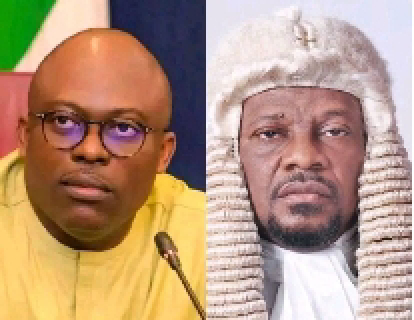
    A coalition of lawyers under the Association of Legislative Drafting and Advocacy Practitioners (ALDRAP) has formally written to the Independent National Electoral Commission (INEC), initiating a recall process against the Speaker of the Rivers State House of Assembly, Rt. Hon. Martin Amaewhule, and 25 other lawmakers.


    Ejes Gist News reports that the move is tied to the controversial impeachment notice issued against the Governor of Rivers State.

    In a letter dated January 8, 2026, and addressed to the INEC Chairman in Abuja, ALDRAP accused the legislators of acting in defiance of the spirit and letter of a Supreme Court judgment delivered in February 2025.


    The apex court had urged all parties in the Rivers political conflict to pursue peaceful coexistence and exhaust amicable methods for resolving disputes, rather than resorting to confrontational actions capable of destabilising governance.


    Also Read: Bandits Attack Two Churches in Kaduna, Abduct Over 170 Worshippers


    The lawyers’ letter, signed by ALDRAP Secretary Dr. Tonye Clinton Jaja, formally placed INEC on notice of its intention to commence the constitutional process for recalling the affected lawmakers.

    The group also requested certified true copies (CTCs) of the voter registers for all state constituencies represented in the Rivers State House of Assembly, documents deemed essential to initiate the recall under the 1999 Constitution of the Federal Republic of Nigeria (as amended).

    ALDRAP emphasised that its members include lawyers who are constituents across Rivers State, providing them with both legal standing and civic interest to demand accountability from elected representatives. The letter described the lawmakers’ impeachment notice as “belligerent conduct,” highlighting that their actions contradicted the Supreme Court’s February 2025 guidance for de-escalation and reconciliation.

    “Contrary to the judgment of February 2025 of the Supreme Court of Nigeria that enjoined the members of the Rivers State House of Assembly to work in peaceful harmony with the Governor of Rivers State by exploring and exhausting amicable methods to resolve conflicts, the members of the Rivers State House of Assembly have once again initiated belligerent methods,” the letter stated.


    ALDRAP further described the situation as “ironic,” noting that both the governor and the legislators involved belong to the same political party, the All Progressives Congress (APC).


    The group argued that the crisis should have been resolved internally within the party rather than through actions capable of paralysing governance and prolonging political uncertainty in the state.

    Under Nigerian law, voters possess the constitutional right to recall elected representatives deemed unfit to continue in office. The recall process requires a petition signed by more than half of registered voters in the affected constituency, verification of the signatures by INEC, and a referendum to determine whether the lawmaker should be removed.


    ALDRAP’s request for voter registers signals its intention to follow this legal framework, framing the recall as a civic response to perceived legislative recklessness.

    Political analysts note that recall processes in Nigeria are uncommon and often face logistical, legal, and political challenges. However, the ongoing crisis in Rivers State, given its intensity and national attention, may test the practical application of the constitutional provisions.

    The recall notice comes amid a prolonged political standoff in Rivers State, where tensions between the executive and legislative branches have escalated since the impeachment threat against the governor emerged.


    The controversy has elicited widespread national attention, with civil society groups, legal experts, and political stakeholders weighing in on the potential impact on democracy and governance.

    Observers have warned that the political deadlock could distract from critical governance functions, especially as Rivers State faces economic pressures, infrastructural deficits, and rising social demands.


    Some commentators argue that the recall initiative reflects growing public frustration with elite power struggles, particularly when these conflicts appear detached from the concerns of ordinary citizens.

    INEC is expected to acknowledge ALDRAP’s letter and respond according to its constitutional mandate. While the commission is not automatically obliged to release voter registers, the formal notice ensures the matter is formally placed on INEC’s agenda.

    Should the recall process proceed, it may open a new chapter in Rivers State politics and establish a precedent for civic engagement in holding legislators accountable. The initiative underscores the constitutional mechanisms available to citizens seeking redress for perceived legislative misconduct.

    For now, attention remains focused on INEC, the Rivers State House of Assembly, and key political actors, as the state braces for what could become another extended phase of political and legal contestation. Analysts stress that the situation will test the interplay between constitutional provisions, judicial guidance, and citizen activism in shaping governance outcomes.

    Ejes Gist News will continue to track developments and provide updates on the recall process and its implications for political stability in Rivers State.

  • Bandits Attack Two Churches in Kaduna, Abduct Over 170 Worshippers

    Bandits Attack Two Churches in Kaduna, Abduct Over 170 Worshippers

    Kaduna State has witnessed a violent assault on places of worship as Islamist militants targeted two churches in Kurmin Wali community, Kajuru Local Government Area.

    Ejes Gist News reports that over 170 worshippers were abducted during Sunday services, marking one of the most significant church attacks in the region in recent years.


    Eyewitness accounts confirm that the attackers struck without warning while congregants were attending services at the Evangelical Church Winning All (ECWA) and Cherubim and Seraphim churches. The assailants reportedly stormed the premises, forcibly taking the worshippers before fleeing the scene.

    Sources indicate that nine of the victims, considered vulnerable, managed to escape and return home. The remaining 163 individuals are reportedly still in the custody of the abductors.


    Also Read: John Okeoghene Afareha, Catholic Bishop Emeritus of Warri, Dies at 72

    Rev. Joseph John Hayab, Chairman of the Christian Association of Nigeria (CAN) in the Northern region, confirmed the abductions to Daily Trust, describing the incident as deeply troubling. He stated, “I don’t like talking about the figures but what I got from the area is 172 were said to have been abducted and 9 managed to escape, with the remaining 163 people still with the abductors. It’s a very tough and sad thing but we will not give up.”


    Hayab emphasized ongoing collaboration with security agencies and government authorities to ensure the safe return of the victims. “Whatever the reason, we are not going to give up. We want to work with the security agencies and the government to ensure that these people return safely.


    We know the efforts that have been put in place by security and the government to ensure that there’s restoration of peace, so we cannot be accusing people. If they [bandits] are doing it to provoke anger, they will be surprised. We’ll get our people back just as others have been coming back these days. These people will come back,” he said.


    The Kaduna State Government and the Nigeria Police Force have not issued any official statements on the attack as of the filing of this report. Security analysts warn that such incidents reflect growing insecurity in rural communities, particularly in Southern Kaduna, where church attacks and abductions have been recurring over the past decade.

    Church leaders in the region have called for heightened vigilance and reinforced security at places of worship. According to reports from local residents, communities in Kajuru and surrounding areas have been on high alert following repeated threats of attacks by armed Islamist groups.

    Security experts note that the kidnapping of worshippers is a tactic increasingly used to destabilize rural communities and instill fear among residents. Analysts argue that prompt intervention by state and federal security forces is critical to preventing further escalation.

    Humanitarian agencies have expressed concern over the welfare of the abducted individuals. The majority are believed to include women, children, and elderly congregants, heightening fears for their safety under captivity.

    Ejes Gist News can authoritatively report that the Kaduna State government is reportedly coordinating with the military and police units to track the abductors and negotiate the release of the victims. Previous similar abductions in the state have occasionally ended with the release of hostages following negotiation or military intervention, though some have tragically resulted in casualties.

    Security challenges in Kaduna have persisted despite various government initiatives. Experts attribute the rise in attacks to the proliferation of armed groups exploiting limited rural security coverage. Analysts stress the importance of intelligence-led operations, community engagement, and strategic deployment of security personnel to vulnerable areas.

    Religious bodies in Kaduna have reiterated the need for national attention and policy measures addressing rural insecurity. CAN officials urge authorities to strengthen local vigilance networks, improve rapid response mechanisms, and provide adequate protection to churches and other community gathering points.

    Community members in Kurmin Wali expressed outrage over the attack, noting the psychological and social impact on families whose loved ones remain in captivity. Local sources reported that children and elderly victims are particularly traumatized, emphasizing the urgent need for psychological support alongside security interventions.

    This incident underscores the continued volatility in Kaduna State and other northern regions, where sporadic attacks on religious institutions and abductions remain a pressing security concern. Analysts warn that without sustained intervention, rural communities are likely to remain vulnerable to similar attacks.

    Authorities have advised residents to remain vigilant, report suspicious activities, and cooperate with security agencies while efforts to rescue the abducted worshippers continue.

    Ejes Gist News will continue to provide updates on this developing situation as more information becomes available from Kaduna State authorities and security agencies.

  • Outrage as Nigerians question how Nigeria’s tax chairman earns enough to afford ₦157 million luxury watches

    Outrage as Nigerians question how Nigeria’s tax chairman earns enough to afford ₦157 million luxury watches

    Outrage as Nigerians Question How Much Nigeria’s Tax Chairman Earns to Afford 157 million Luxury Watches.


    Public outrage has escalated following confirmation that luxury wristwatches valued at tens and hundreds of millions of naira are owned by the Chairman of the Nigeria Revenue Service (NRS), Zacch Adedeji. The confirmation has intensified nationwide debate over public sector remuneration, asset transparency, and ethical expectations of senior government officials.

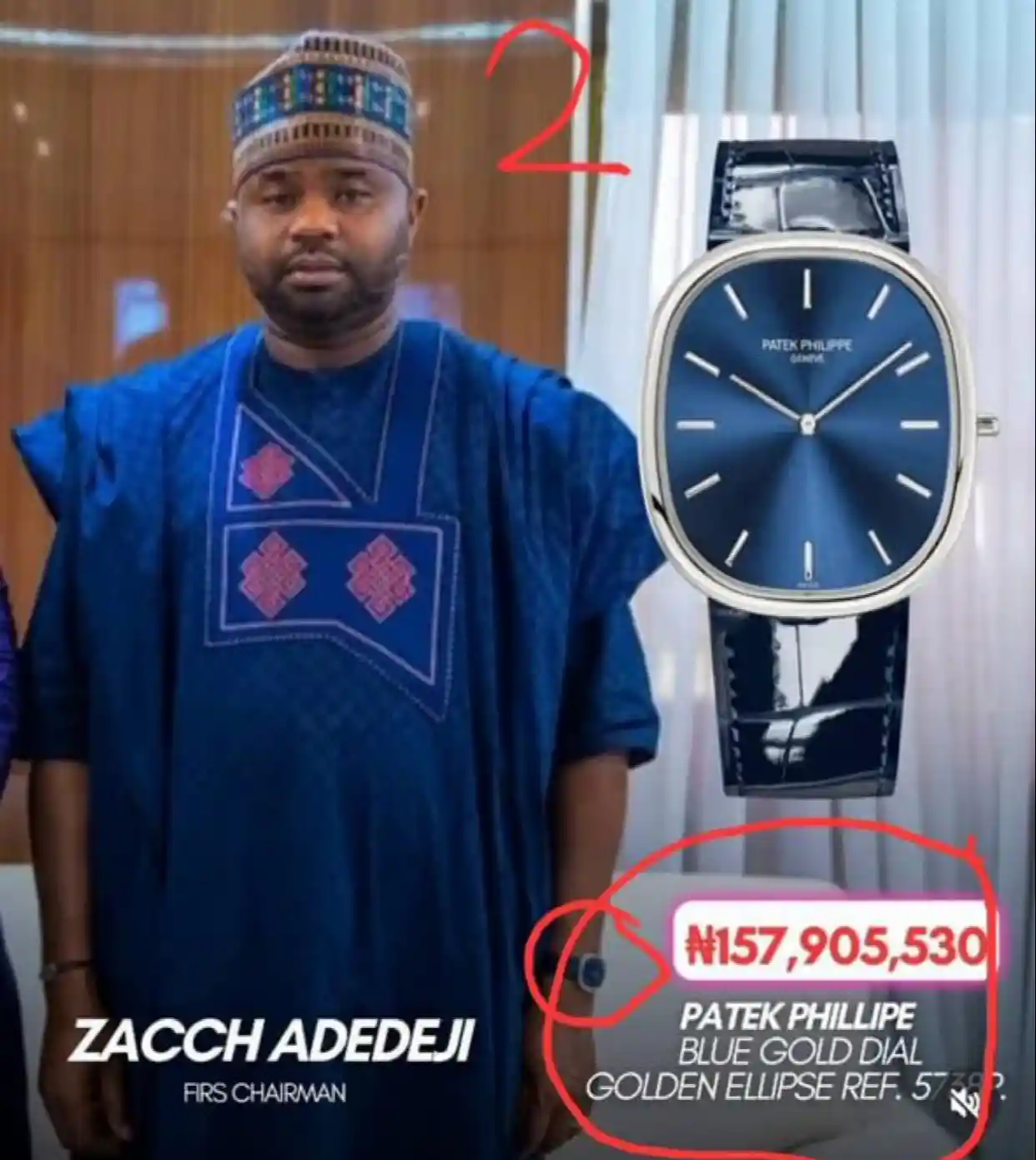
    The controversy erupted after images circulated widely on social media showing the NRS chairman wearing high-end Swiss wristwatches, with accompanying claims that the timepieces are worth approximately ₦91 million and ₦157 million respectively. While initial reactions were marked by uncertainty over ownership, confirmation that the watches belong to the revenue chief has shifted the conversation from speculation to scrutiny.

    Ejes Gist News reports that the development has triggered sustained public questioning of how a serving public official, whose income is tied to government pay structures, could lawfully acquire luxury items whose combined value far exceeds the annual earnings of most Nigerians and senior civil servants.

    Outrage as Nigerians question how Nigeria’s tax chairman earns enough to afford ₦157 million luxury watches

    The Watches and Their Valuations

    The watches identified in the circulating images are luxury models from Patek Philippe, a Swiss manufacturer widely regarded as one of the most prestigious watchmakers in the world. The brand’s watches often sell for substantial sums, particularly on the international secondary market, where scarcity, reference numbers, and condition significantly influence price.


    Also Read: Senegal Defeat Morocco to Win Second AFCON Title After Dramatic Final

    One of the watches is valued at about ₦91 million, while another, described as a gold elliptical model with a blue dial, carries an estimated value of ₦157 million. These figures align with prevailing international market prices for comparable models when converted to naira at prevailing exchange rates.

    With ownership now confirmed, public attention has shifted to the financial implications and what they suggest about wealth accumulation by top public officials.

    Who Is the NRS Chairman?

    Zaccheus Adedeji is an economist and public finance professional who has held several senior positions within Nigeria’s fiscal and revenue administration architecture. Prior to his appointment as chairman, he served in advisory and executive roles related to taxation, budgeting, and economic policy.

    As Chairman of the Nigeria Revenue Service, Adedeji heads the country’s apex tax authority, responsible for assessing, collecting, and accounting for federally collectible revenues. The office places him among the most powerful non-ministerial public officers in Nigeria, with oversight over trillions of naira in tax receipts annually.

    Despite the prominence of the position, personal income details of the office holder are not publicly itemised beyond the general salary structures applicable to heads of federal agencies.

    Public Sector Pay and the Central Question

    Nigeria’s public service operates under a regulated remuneration framework approved by the Revenue Mobilisation Allocation and Fiscal Commission. Salaries and allowances for heads of agencies are fixed and significantly lower than earnings in the private sector.

    Available open-source data on senior management remuneration within the revenue service and comparable agencies suggest that even the highest-ranking executives earn total annual compensation in the low tens of millions of naira when salary and allowances are combined.

    Against this backdrop, the confirmed ownership of wristwatches valued at over ₦200 million collectively has become the focal point of public concern. Many Nigerians are asking how such assets could be acquired solely from public sector earnings, particularly in an economy marked by widespread hardship, high inflation, and declining purchasing power.

    Online Reactions and Public Sentiment

    Reaction across social media platforms has been swift and intense. Critics argue that the confirmed ownership reinforces perceptions of elite excess and deepens mistrust in public institutions, especially one charged with tax enforcement and revenue mobilisation.

    Some commentators have framed the issue as a moral and symbolic one, contending that visible luxury by tax administrators undermines public willingness to comply voluntarily with tax obligations. Others have demanded explanations, insisting that confirmation of ownership creates a duty to clarify the source of funds used to acquire such high-value items.

    At the same time, a minority of voices have urged caution, stressing that ownership of expensive assets is not inherently illegal and that public debate should distinguish between lawful wealth and corruption.

    Legal Framework on Asset Ownership

    Under Nigeria’s Code of Conduct for Public Officers, public officials are required to declare their assets to the Code of Conduct Bureau at the commencement and end of their tenure. The law, however, does not make these declarations public, except where they become relevant in judicial or quasi-judicial proceedings.

    This legal structure means that even with confirmed ownership of luxury items, the public has no direct access to information about when the watches were acquired, whether they predate the official’s appointment, or how they were financed.

    From a legal standpoint, possession of high-value assets does not constitute wrongdoing unless it can be shown that they were acquired unlawfully, improperly declared, or funded through proceeds of corruption.

    Questions of Timing and Source of Wealth

    A central issue in the unfolding debate is whether the watches were acquired before or after Adedeji assumed his current role. Analysts note that this distinction is critical, as assets accumulated prior to public office are treated differently under the law from those acquired while in office.

    There has been no public disclosure regarding the timing of the purchases, nor any official statement outlining whether the assets were funded through pre-existing wealth, investments, loans, or gifts permissible under the law.

    In the absence of such information, public discourse has been shaped largely by inference rather than verified financial records.

    Implications for Public Trust and Tax Compliance

    The controversy carries particular weight because it involves the head of the nation’s tax authority. Tax systems depend heavily on public confidence in fairness, integrity, and accountability. Perceptions that senior tax officials live far above the economic realities of the average citizen can erode trust and weaken compliance.

    Revenue experts caution that even when wealth is lawfully acquired, lack of transparency can damage institutional credibility. They argue that tax authorities must not only enforce compliance but also embody restraint and integrity to maintain moral authority.

    Civil society groups have seized on the episode to renew calls for greater openness in public service, including voluntary disclosure of assets by senior officials as a confidence-building measure.

    Calls for Official Clarification

    With ownership now confirmed, pressure is mounting for clarification from the Nigeria Revenue Service or from the chairman himself. Some stakeholders believe a clear explanation of the provenance of the watches would help calm public anger and prevent further speculation.

    Others argue that responding to public pressure risks normalising a culture where officials are compelled to justify personal property, even when lawfully acquired. They maintain that any questions about asset legitimacy should be handled through established legal and oversight institutions, not social media debates.

    A Recurring Pattern in Nigerian Governance

    The episode reflects a familiar pattern in Nigerian public life, where confirmed or alleged displays of wealth by public officials become lightning rods for public frustration. Similar controversies in the past have centred on luxury vehicles, overseas properties, and private aircraft linked to public office holders.

    In some instances, investigations later established that assets were lawfully acquired. In others, probes uncovered significant misconduct. This mixed history has shaped a public mood that oscillates between scepticism and suspicion.

    What Is Now Established

    What is now established is that the luxury watches belong to the Nigeria Revenue Service chairman and that their market value far exceeds what would be expected from official earnings alone. It is also established that Nigerian law does not automatically criminalise such ownership without evidence of illegality.

    What remains unresolved is the source of funds used to acquire the watches, the timing of their purchase, and whether they were fully declared in accordance with asset declaration laws.


    As the debate continues, the issue has become a broader test of transparency, accountability, and public trust in Nigeria’s revenue administration, highlighting the enduring tension between legal compliance and public expectations of modesty in public office.

  • Senegal Defeat Morocco to Win Second AFCON Title After Dramatic Final

    Senegal Defeat Morocco to Win Second AFCON Title After Dramatic Final

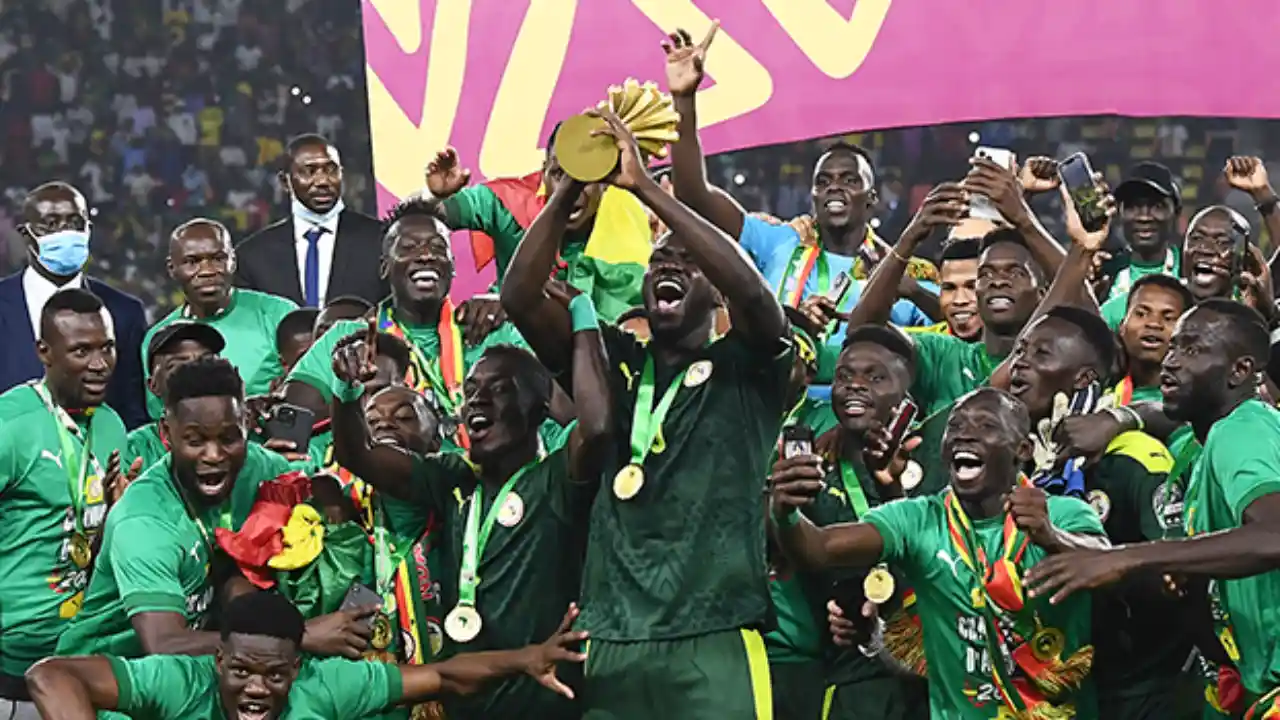
    Senegal have won their second Africa Cup of Nations (AFCON) title after defeating host nation Morocco in a tense and dramatic final decided in stoppage time.

    The final, played at the Prince Moulay Abdellah Stadium in Rabat, saw Senegal national football team edge past the Morocco national football team with a late goal that silenced the home crowd.


    Ejes Gist News reports that the decisive moment came in the 94th minute when P. Gueye found the back of the net, sealing victory for Senegal after a closely contested encounter.

    Senegal Secure Second AFCON Crown

    The win confirms Senegal as champions of Africa for the second time in their history, underlining their consistency and strength at the continental level. The West African side maintained defensive discipline throughout the match and capitalised on their opportunity late in the game.


    Morocco, buoyed by home support, dominated periods of possession but struggled to break down Senegal’s organised backline. Despite sustained pressure, the hosts were unable to convert their chances, leaving the final to be decided by a single goal.

    Late Goal Decides AFCON Final

    The breakthrough arrived deep into stoppage time when P. Gueye struck in the 94th minute, turning the final decisively in Senegal’s favour. The goal proved to be the difference in a match defined by tactical caution and high intensity.

    The result ended Morocco’s hopes of lifting the AFCON trophy on home soil, while Senegal celebrated another historic achievement on African football’s biggest stage.

    Senegal’s Growing Legacy in African Football

    With this victory, Senegal add a second AFCON title to their honours, reinforcing their status as one of Africa’s dominant football nations. The triumph reflects years of investment in player development and tactical stability at international level.

    For Morocco, the defeat represents a missed opportunity despite hosting the tournament and enjoying strong home backing, but their performance throughout the competition reaffirmed their position among Africa’s elite teams.

    The AFCON final in Rabat will be remembered for its late drama, with Senegal’s stoppage-time goal sealing a landmark victory and another chapter in the nation’s football history.

  • John Okeoghene Afareha, Catholic Bishop Emeritus of Warri, Dies at 72

    John Okeoghene Afareha, Catholic Bishop Emeritus of Warri, Dies at 72

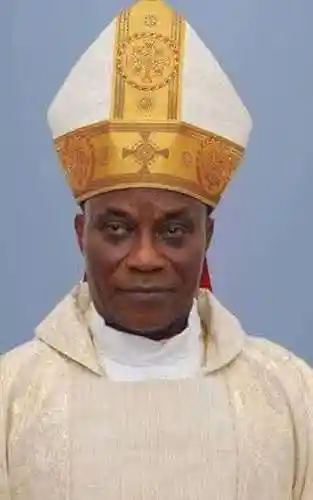
    The Catholic Church in Nigeria has announced the death of John Okeoghene Afareha, Bishop Emeritus of the Warri Diocese, who passed on in the early hours of Sunday, January 18, 2026.

    Ejes Gist News reports that the respected cleric “was called home by the Lord” on Sunday morning, prompting prayers across the Diocese of Warri and the wider Catholic community for the repose of his soul.

    Most Rev. Afareha was a senior figure within the Catholic hierarchy in the Niger Delta, known for decades of pastoral service, priestly formation, and diocesan leadership.


    Priestly Formation and Episcopal Ordination

    John Okeoghene Afareha was ordained a Catholic priest on December 30, 1973, beginning a ministry that spanned more than five decades. His priesthood was marked by parish administration, pastoral care, and active involvement in the growth of the Catholic Church in southern Nigeria.

    He was consecrated a bishop on May 14, 1997, entering the episcopacy at a time of significant expansion and reorganisation within Nigerian dioceses.

    Service as Bishop of Warri Diocese

    Most Rev. Afareha served as the fourth Catholic Bishop of Warri Diocese, providing leadership during periods of social, economic, and security challenges in the Niger Delta.

    His episcopal tenure extended until April 2022, when he formally retired in line with canonical provisions of the Catholic Church. Following his retirement, he was succeeded by the current diocesan bishop, Anthony Ewherido.

    During his years in office, Bishop Afareha was regarded for his emphasis on pastoral outreach, clergy discipline, and the strengthening of diocesan institutions.

    Retirement and Final Years

    After stepping down as diocesan bishop in 2022, Most Rev. Afareha assumed the title Bishop Emeritus of Warri. In retirement, he remained a spiritual reference point within the diocese, occasionally participating in liturgical and pastoral functions as his health permitted.

    Church sources described him as a bishop who remained deeply committed to prayer and mentorship, particularly for younger priests.

    Reactions from the Catholic Community

    The announcement of his death has drawn solemn reactions from clergy, religious, and lay faithful across the Diocese of Warri and beyond. Messages circulated within the diocese urged the faithful to join in prayers for the eternal repose of his soul.

    Catholic leaders described his passing as a significant loss to the local Church, noting his long years of service and his role in guiding the diocese through critical periods of transition.

    Legacy of Service

    Most Rev. John Okeoghene Afareha’s life was defined by priestly fidelity and episcopal responsibility. From his ordination in 1973 to his retirement nearly five decades later, his ministry reflected continuity in pastoral leadership within the Catholic Church in Nigeria.

    Funeral arrangements and official liturgical programmes are expected to be communicated by the Diocese of Warri in due course.

  • BREAKING: Popular Igbo Monarch Jailed in United States Over Medicaid Fraud

    BREAKING: Popular Igbo Monarch Jailed in United States Over Medicaid Fraud

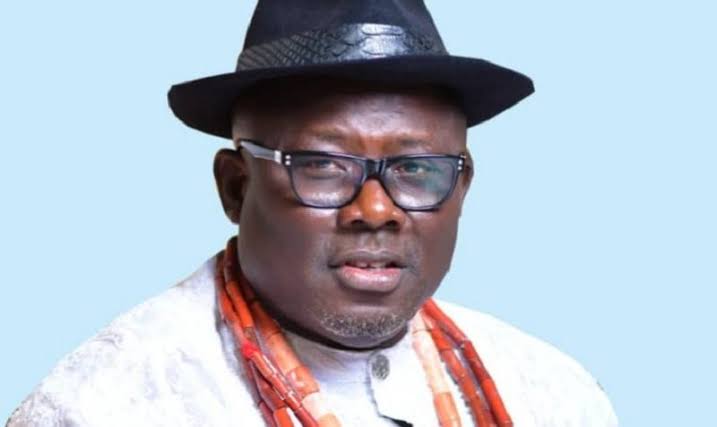
    A Nigerian traditional ruler, Ekelekamchukwu Alphonsus Ngwadom, has been convicted and sentenced in the United States for committing Medicaid fraud after billing dozens of minors for mental health services they never received.

    Ngwadom, 61, a psychotherapist and university professor based in North Carolina, was crowned king of Mbubu, Amiri Kingdom in Oru East Local Government Area of Imo State in 2021, following the death of his father.

    Ejes Gist News reports that the conviction followed a multi-year investigation into fraudulent Medicaid claims linked to Ngwadom’s private counseling practice in the United States.

    Also Read: Siminalayi Fubara: Why Four Rivers Lawmakers Who Withdrew From Impeachment Move Made a Sudden U-Turn

    Conviction and Sentence in the United States

    The North Carolina Department of Justice confirmed that Ngwadom pleaded guilty to 27 counts of obtaining property by false pretenses in connection with Medicaid fraud.

    Ekelekamchukwu Alphonsus Ngwadom,
    His Royal Highness Professor Ekelekamchukwu Alphonsus Ngwadom,


    The announcement was made by Jeff Jackson on January 13, 2025.

    Ngwadom was sentenced to between 12 and 34 months in prison, a sentence that was suspended in favour of 36 months of supervised probation. The probation terms include a 90-day house arrest, 100 hours of community service, and restitution payments totaling $72,014.66.

    “If people defraud the Medicaid program, they are stealing from North Carolina taxpayers and from those who rely on this care,” Jackson said. “My office will not allow it, and we will continue to work with our law enforcement partners to prevent fraud.”

    Details of the Fraud Scheme

    Court documents showed that between February 18, 2020, and March 18, 2021, Ngwadom submitted $72,014.66 in fraudulent claims to Alliance Health, a health insurance company that manages Medicaid and state-funded health plans in North Carolina.

    The claims were for behavioural health services allegedly provided to 27 Medicaid patients, including minors. Investigators later established that the services were never rendered.

    Alliance Health initially paid the claims, but its internal integrity unit flagged irregularities, prompting a formal investigation by the Attorney General’s Medicaid Integrity Division.

    Investigation Triggered by Parent Complaints

    The investigation began in 2020 after Alliance Health reported that one of Ngwadom’s clients appeared to have overlapping services billed by two different providers.

    According to a search warrant, parents of the minor clients told investigators they had never received services from Ngwadom or his company, Almarch Counseling Services. Despite this, records showed Ngwadom had submitted 52 claims for the family’s two children between January and October 2020.

    Prosecutor Tracy Grimes told the court that Ngwadom billed for services he claimed were part of an after-school programme. However, the programme was not operational due to the COVID-19 pandemic.

    She added that Ngwadom had met some of the families years earlier while participating in the programme between 2016 and 2019.

    Impact on Children and Families

    Investigators were told by multiple families that Ngwadom sometimes visited their homes offering services, which they declined. Despite the refusal, claims were still submitted in their names.

    Prosecutors said the fraudulent billing prevented some of the affected children from accessing legitimate mental health care from providers they were actively seeing, as Medicaid records showed they had already been billed for services.

    Defence Argument and Court Proceedings

    Ngwadom’s defence attorney, Lauren Toole, told the court that her client’s actions followed severe financial difficulties triggered by the COVID-19 pandemic.

    She said the collapse of his business led to the foreclosure of his home and mounting financial pressure.

    “He cannot undo what he did,” Toole told the court. “All he can do now is take responsibility and attempt to make it right.”

    Ngwadom has reportedly taken out a second mortgage to help pay the restitution owed to Alliance Health.

    Loss of Professional Licences

    As part of his plea agreement, Ngwadom surrendered his professional licences and can no longer practice as a clinical mental health counselor.

    State records show he became licensed in North Carolina in March 2015 and opened Almarch Counseling Services later that year. He has since secured alternative employment, according to his legal counsel.

    During sentencing, Ngwadom admitted guilt after initial hesitation, later apologising to the court.

    “This is not typically who I am,” he said, breaking down in tears before sentencing.

    Probation Conditions and Future Risk

    Judge Winston Gilchrist denied the prosecution’s request for immediate imprisonment and imposed a suspended sentence.

    If Ngwadom violates the terms of his probation, he faces a minimum of one year and a maximum of three years in prison.

    He was ordered to pay $45,000 of the restitution by January 21, 2026, with the balance to be settled under court supervision. After two years of compliance, he may be moved to unsupervised probation.

    Coronation as Traditional Ruler in Imo State

    Ngwadom was coronated on April 16, 2021, immediately after the burial of his father, the late Alphonsus Ngwadom, who reigned as the monarch of Mbubu, Amiri Kingdom.

    Following the coronation, he assumed the title HRH Sir Eze Alphonsus Obianokwu IV of Mbubu, Amiri Ancient Kingdom.

    At the time, community leaders expressed confidence in his leadership, citing his academic background, international exposure, and professional experience as strengths expected to drive development in the community.

  • Siminalayi Fubara: Why Four Rivers Lawmakers Who Withdrew From Impeachment Move Made a Sudden U-Turn

    Siminalayi Fubara: Why Four Rivers Lawmakers Who Withdrew From Impeachment Move Made a Sudden U-Turn

    Fresh details have emerged explaining the political calculations behind the sudden reversal by four members of the Rivers State House of Assembly who earlier withdrew from the impeachment move against Governor Siminalayi Fubara.


    The lawmakers, according to sources familiar with the developments, are seeking firm political assurances from the governor ahead of the 2027 general elections, particularly guarantees that they would secure return tickets to the Assembly.


    Ejes Gist News learnt that the decision to initially distance themselves from the impeachment plot was not driven by any discovery of wrongdoing or lack thereof, but by fears over their political future within the state’s rapidly shifting power structure.

    Lawmakers Seek 2027 Return Tickets

    A political actor with direct knowledge of the negotiations, who spoke on condition of anonymity, said the four lawmakers are focused primarily on securing their political survival.


    Also Read : Destiny Boy Confirmed Dead as Social Media Erupts Over Viral Death Claims


    “There is nothing like gross misconduct against the governor,” the source said. “What they want is assurance that they will return to the Assembly in the next election cycle.”

    According to the source, the lawmakers believe their recent posture towards the governor has weakened their standing and exposed them to political retaliation.

    “With the way they have related with the governor, they are no longer sure of coming back,” the source added. “That is the assurance they are demanding. That is the agreement they are referring to.”

    Impeachment Crisis Linked to Party Defection

    The source further linked the impeachment crisis to Governor Fubara’s reported political realignment, noting that tensions escalated after the governor’s defection from the Peoples Democratic Party to the All Progressives Congress.

    According to the account, the lawmakers believe the governor’s new political platform gives him an advantage ahead of 2027, including the likelihood of securing an automatic ticket.

    “This whole problem started when the governor defected to the APC last December,” the source said. “They knew the governor would have his automatic ticket in the APC.”

    The concern, the source explained, is that without a negotiated understanding, the lawmakers could be sidelined during party primaries and effectively end their legislative careers.

    “If they don’t get that assurance, they would be dead politically,” the source said.

    Background to the Rivers Assembly Crisis

    The Rivers State House of Assembly has been embroiled in internal divisions over the impeachment attempt against Governor Fubara, with factions emerging over loyalty to the executive and alignment with broader party interests.

    The withdrawal and subsequent repositioning of the four lawmakers added a new layer of uncertainty to the process, raising questions about the credibility and motivation behind the impeachment drive.

    A report by Vanguard first highlighted the lawmakers’ demand for political guarantees as the key factor behind their shifting stance.

    No Evidence of Gross Misconduct

    Notably, sources insist that allegations of gross misconduct against the governor lack substance and have not been supported by concrete evidence within the Assembly.

    This assertion weakens the legal and moral foundation of the impeachment move, reinforcing views that the crisis is largely rooted in political bargaining rather than constitutional breaches.

    As negotiations continue behind closed doors, the Rivers political landscape remains tense, with the impeachment process increasingly seen as a tool for leverage rather than accountability.

  • Destiny Boy Confirmed Dead as Social Media Erupts Over Viral Death Claims

    Destiny Boy Confirmed Dead as Social Media Erupts Over Viral Death Claims

    Nigerian singer Destiny Boy, born Afeez Adeshina, has been confirmed dead following hours of widespread speculation triggered by viral content on social media platforms.

    The confirmation came after a video circulated on X, formerly Twitter, alleging that the young musician had died under unclear circumstances. The footage, which spread rapidly across multiple accounts, prompted intense public interest and repeated searches around questions such as is Destiny Boy dead, is Destiny Boy alive, and is it true that Destiny Boy died. Ejes Gist News reports that the claims, initially unverified, were later confirmed by sources familiar with the situation.

    Destiny Boy’s death has reignited debate about the speed at which unverified information spreads online, particularly when it involves public figures with a strong youth following. Despite the confirmation, official details surrounding the circumstances of his death remain limited, with no formal statement released by family members, record labels, or law enforcement authorities at the time of this report.


    Who Is Destiny Boy?

    Destiny Boy, whose real name is Afeez Adeshina, was a Nigerian singer best known for blending Fuji music with contemporary Afrobeats influences. Born on June 24, 2004, in Agege, a densely populated area of Lagos State, he emerged as one of the most recognisable child-to-teenage music acts in Nigeria during the late 2010s.

    He gained national attention for Fuji-style covers of popular Nigerian pop songs, reinterpreting mainstream hits with traditional Yoruba vocal techniques and rhythms. This approach distinguished him from peers in his age group and earned him a devoted following across southwestern Nigeria and beyond.


    Also Read: Court Bars Rivers Chief Judge From Acting on Assembly Impeachment Letters

    By his mid-teens, Destiny Boy had become a regular name on digital music blogs, entertainment radio discussions, and social media timelines, often trending under spellings such as Destiny Boy, Destinyboy, and Destiny Boi.


    Destiny Boy Age and Early Life

    Destiny Boy was 20 years old at the time of his death. Born in 2004, he grew up in Agege, Lagos, an area historically associated with Fuji music and grassroots entertainment culture. His environment played a significant role in shaping his musical identity, exposing him early to traditional Yoruba sounds and street-level performance culture.

    As a child, he reportedly performed at local events and informal gatherings before transitioning to online platforms where his covers began attracting significant attention. His youthful age became a central part of his public image, often cited in media reports that described him as a “teenage Fuji sensation.”

    Search interest around Destiny Boy age has remained consistently high, reflecting public fascination with how early he entered the Nigerian music space and how quickly he rose to prominence.


    Rise to Fame in Nigeria’s Music Industry

    Destiny Boy’s breakthrough came through viral video performances and audio releases that circulated widely on social media platforms and music blogs. His ability to adapt contemporary Afrobeats hits into Fuji renditions resonated with both older Fuji audiences and younger pop music fans.

    Music analysts often described his work as part of a broader trend that blurred the lines between traditional Nigerian genres and modern commercial sounds. His performances were frequently shared as examples of how indigenous music styles could be repackaged for digital-native audiences.

    Although he did not maintain a consistent mainstream chart presence, his cultural relevance was evident in his sustained online visibility and regular mentions across entertainment platforms.


    Is Destiny Boy Dead? What Is Confirmed

    Yes, Destiny Boy has been confirmed dead. Following the circulation of the viral video that sparked initial speculation, confirmation emerged that the singer had indeed passed away.

    The confirmation addressed a wave of online queries such as is Destiny Boy dead, is it true that Destiny Boy is dead, and is it true that Destiny Boy died. While the fact of his death has been established, the absence of official documentation or a public family statement has left many details unresolved.

    Earlier social media claims alleged that Destiny Boy died at a Babalawo or Ifá house, described as a traditional Yoruba spiritual setting. These claims circulated widely but remain unverified by any official or authoritative source. No medical, police, or family confirmation has been issued to substantiate or refute these specific allegations.


    Is Destiny Boy Alive? Addressing Conflicting Reports

    In the hours following the viral reports, conflicting narratives emerged online, leading to repeated searches such as is Destiny Boy alive and is Destiny Boy dead or alive. This confusion was fueled by the lack of immediate clarification from credible sources and the speed at which speculative content spread across social media platforms.

    Such situations are not uncommon in Nigeria’s entertainment space, where false death reports have previously circulated about public figures before being debunked. In this case, however, subsequent confirmation established that Destiny Boy had indeed passed away, ending speculation about his survival.


    Circumstances Surrounding Destiny Boy’s Death

    As of the time of filing this report, details surrounding Destiny Boy’s death remain limited. No official cause of death has been disclosed, and there has been no public briefing from authorities or representatives.

    The absence of verified information has contributed to continued speculation online. Media analysts and digital safety advocates have cautioned against amplifying unconfirmed claims, particularly those involving sensitive cultural or religious contexts.

    Until an official statement is released, any specific narrative about how or where Destiny Boy died remains unsubstantiated.


    Destiny Boy’s Personal Life and Family

    In late 2024, Destiny Boy publicly celebrated the birth of his first child, a son named Junior. The announcement marked a significant personal milestone and was widely reported across entertainment news platforms.

    The development also shifted public perception of the singer, highlighting his transition from teenage performer to young parent. Searches related to his personal life increased following the announcement, reflecting public interest beyond his music career.

    No public information has been released regarding how his death affects his immediate family or whether funeral arrangements have been concluded.


    Impact on Fans and the Nigerian Music Scene

    Destiny Boy’s death has prompted widespread reactions across social media, particularly among young fans who followed his career from its early stages. Tributes, condolence messages, and reposted performances have circulated widely, underscoring his cultural impact despite a relatively short career.

    Within the Nigerian music industry, his passing has renewed conversations about the pressures faced by young artists, especially those who achieve early fame without structured institutional support. While Destiny Boy operated largely outside major label systems, his visibility made him a recognizable figure in discussions about youth, fame, and sustainability in entertainment.


    Destiny Boy’s Musical Style and Legacy

    Destiny Boy’s defining contribution to Nigerian music was his fusion of Fuji with Afrobeats. By adapting contemporary pop songs into Fuji arrangements, he introduced traditional sounds to audiences who might not otherwise engage with the genre.

    Cultural commentators have noted that his work formed part of a generational shift, where younger artists reinterpreted indigenous music forms for digital platforms. This approach helped preserve cultural elements while ensuring relevance in a rapidly changing media environment.

    Although his discography was limited, his influence is evident in the continued popularity of similar fusion styles among emerging performers.


    Why Destiny Boy Continues to Trend Online

    The sustained interest in Destiny Boy following his death reflects broader patterns in digital media consumption. Search phrases such as who is Destiny Boy, Destinyboy, Destiny Boi, and is it true that Destiny Boy is dead continue to trend due to a combination of nostalgia, shock, and the lack of detailed official information.

    His relatively young age at death has further intensified public attention, positioning his story within a wider discourse about youth mortality, celebrity culture, and online rumor dynamics.


    Media Responsibility and Viral Death Reports

    The circumstances surrounding Destiny Boy’s death highlight ongoing challenges in digital journalism and social media moderation. Viral videos and unverified claims can rapidly shape public perception before facts are established, creating confusion and emotional distress for families and fans.

    Media ethics experts emphasize the importance of verification, attribution, and restraint, particularly when reporting on deaths. In Destiny Boy’s case, the delay in official communication created an information vacuum that was quickly filled by speculation.


    What Remains Unanswered

    Despite confirmation of Destiny Boy’s death, several key questions remain unresolved. These include the exact cause of death, the location and circumstances surrounding it, and whether official investigations are ongoing.

    Until credible sources release further information, these gaps are likely to persist, continuing to fuel online discussion and repeated search interest.


    Destiny Boy in Retrospect

    Destiny Boy’s life and career reflect the possibilities and vulnerabilities of Nigeria’s digital entertainment ecosystem. Rising to prominence as a teenager, he leveraged social media to bypass traditional gatekeepers and reach a national audience.

    His death at a young age has brought his story to an abrupt end, leaving behind unanswered questions and a body of work that continues to circulate online.

    As discussions around is Destiny Boy dead, who is Destiny Boy, and is it true that Destiny Boy died continue, his legacy remains tied to both his musical innovation and the circumstances that followed his passing.

  • Niger Delta University (NDU) Recruitment for Academic and Non-Academic Staff

    Niger Delta University (NDU) Recruitment for Academic and Non-Academic Staff

    Niger Delta University (NDU) recruitment for academic and non-academic staff has opened opportunities for qualified Nigerians seeking careers in higher education, research, healthcare, and technical services. The recruitment exercise covers a wide range of teaching and non-teaching positions across multiple faculties and departments at the Bayelsa State–owned institution.

    Niger Delta University was established in 2000 by the Bayelsa State Government and is located on Wilberforce Island, approximately 30 kilometres from Yenagoa, the state capital. The university operates a main campus and a College of Health Sciences campus on Wilberforce Island, alongside a satellite campus in Yenagoa that houses the Faculty of Law.

    Since the commencement of academic activities in the 2001/2002 session, the institution has expanded from an initial intake of 1,039 students to a population exceeding 20,000 students, supported by more than 3,500 academic and non-academic staff.


    Ejes Gist News reports that the latest recruitment drive aligns with the university’s ongoing efforts to strengthen teaching capacity, research output, and administrative efficiency across its twelve faculties.


    Overview of Niger Delta University Recruitment

    The Niger Delta University recruitment exercise targets both academic and non-academic roles. The vacancies are distributed across teaching faculties, laboratories, farms, health sciences units, and technical departments. All positions are based at Wilberforce Island, Bayelsa State.

    The recruitment reflects NDU’s mandate to provide quality tertiary education, promote research relevant to the Niger Delta region, and contribute to national development through skilled manpower training. Candidates are expected to meet defined academic, professional, and regulatory standards, depending on the position applied for.


    Academic Staff Vacancies at Niger Delta University

    Assistant Lecturer Positions at NDU

    The Assistant Lecturer role is an entry-level academic position designed for early-career scholars with strong academic foundations and postgraduate training.

    Location: Wilberforce Island, Bayelsa State

    Faculties Covered:

    • Social Sciences
    • Science
    • Pharmacy
    • Nursing
    • Management Sciences
    • Environmental Sciences
    • Engineering
    • Education
    • Clinical Sciences
    • Basic Medical Sciences
    • Basic Clinical Sciences
    • Arts
    • Agriculture

    Requirements:

    • A good First Degree, not below Second Class Lower Division, plus a Master’s Degree, or
    • A Master’s Degree with relevant professional registration
    • Mandatory registration on Google Scholar

    The Google Scholar requirement reflects the university’s emphasis on research visibility, academic publishing, and citation tracking, which are increasingly used as performance metrics in Nigerian universities.


    Lecturer II Positions at NDU

    Lecturer II positions are mid-level academic roles requiring demonstrated teaching experience and research productivity.

    Location: Wilberforce Island, Bayelsa State

    Faculties Covered:

    • Social Sciences
    • Science
    • Pharmacy
    • Nursing
    • Management Sciences
    • Environmental Sciences
    • Engineering
    • Education
    • Clinical Sciences
    • Basic Medical Sciences
    • Basic Clinical Sciences
    • Arts
    • Agriculture

    Requirements:

    • A Ph.D. from a recognized university, or
    • A Master’s Degree with at least one journal publication
    • Minimum of three years pre-teaching or teaching experience
    • Registration on Google Scholar

    Applicants are expected to show evidence of scholarly publications in reputable journals, consistent with National Universities Commission (NUC) standards for academic appointments.


    Non-Academic Staff Vacancies at Niger Delta University

    Beyond teaching roles, the Niger Delta University recruitment includes several non-academic positions essential to institutional operations, research support, and service delivery.


    Technologist II Positions

    Location: Wilberforce Island, Bayelsa State

    Requirements:

    • HND, Final Diploma, or B.Sc (Professional Degree)
    • Eligibility for registration with the relevant professional institute
    • National Youth Service Corps (NYSC) discharge or exemption certificate

    Technologists are critical to laboratory management, equipment maintenance, and practical training support for students.


    Laboratory Scientist II Positions

    Location: Wilberforce Island, Bayelsa State

    Requirements:

    • HND, Final Diploma, or B.Sc (Professional Degree)
    • Registrable with the relevant professional institute
    • NYSC discharge or exemption certificate

    Laboratory Scientists support diagnostic, teaching, and research activities, particularly within health sciences and medical faculties.


    Medical Laboratory Technician Positions

    Location: Wilberforce Island, Bayelsa State

    Requirements:

    • WASC or SSCE qualification
    • Three years of professional training
    • Registration with the Medical Laboratory Science Council of Nigeria

    This role supports laboratory services in clinical and teaching hospitals associated with the university.


    Pharmacy Technician Positions

    Location: Wilberforce Island, Bayelsa State

    Requirements:

    • WASC or SSCE qualification
    • Three years of professional training
    • Registration with the Pharmacy Council of Nigeria

    Pharmacy Technicians assist in drug dispensing, inventory management, and pharmaceutical services within the university’s health facilities.


    Nursing Officer Positions

    Location: Wilberforce Island, Bayelsa State

    Requirements:

    • N.R.N or N.R.M qualification

    Nursing Officers are deployed within teaching hospitals and health centres linked to the university’s College of Health Sciences.


    Agricultural Superintendent Positions

    Location: Wilberforce Island, Bayelsa State

    Requirements:

    • OND or ND in a relevant agricultural field

    The role supports agricultural teaching, research farms, and field operations under the Faculty of Agriculture.


    Farm Officer II Positions

    Location: Wilberforce Island, Bayelsa State

    Requirements:

    • HND with PGD in Agriculture, or
    • B.Agric or B.Fisheries degree
    • NYSC discharge or exemption certificate

    Farm Officers contribute to crop production, livestock management, fisheries operations, and applied agricultural research.


    Faculties and Departments Covered by the Recruitment

    The Niger Delta University recruitment spans twelve faculties, reflecting the institution’s multidisciplinary structure. These include:

    • Faculty of Social Sciences
    • Faculty of Science
    • Faculty of Pharmacy
    • Faculty of Nursing
    • Faculty of Management Sciences
    • Faculty of Environmental Sciences
    • Faculty of Engineering
    • Faculty of Education
    • Faculty of Clinical Sciences
    • Faculty of Basic Medical Sciences
    • Faculty of Arts
    • Faculty of Agriculture

    Each faculty plays a role in addressing regional and national development challenges, particularly in areas such as environmental sustainability, public health, engineering, and socio-economic policy.


    Research Environment and Academic Expectations at NDU

    Niger Delta University is situated within a biologically rich environment on Wilberforce Island, providing opportunities for collaborative research in biodiversity, environmental science, agriculture, public health, and oil-producing region studies.

    Academic staff are expected to:

    • Engage in teaching, research, and community service
    • Publish in peer-reviewed journals
    • Supervise undergraduate and postgraduate research
    • Participate in faculty and university committees

    The emphasis on Google Scholar registration reflects global trends in research profiling, citation analysis, and academic impact measurement.


    Employment Conditions and Career Development

    While specific remuneration details are determined by university regulations and government-approved salary structures, staff appointments at NDU typically follow Nigerian university norms, including:

    • Consolidated academic salary structures for teaching staff
    • Pension and contributory schemes
    • Opportunities for promotion based on performance and qualifications
    • Access to research grants and conference participation, subject to policy

    Non-academic staff similarly benefit from structured career progression within the university system.


    How to Apply for Niger Delta University Recruitment

    Interested and qualified candidates are required to apply through the official online recruitment portal. Apply Here

    Application Procedure:

    • Complete the online application form accurately
    • Upload required academic and professional credentials
    • Submit the application before the stated deadline

    Applicants are advised to ensure that all information provided is verifiable and consistent with uploaded documents, as discrepancies may lead to disqualification.


    Application Deadline

    The closing date for all applications under the Niger Delta University recruitment exercise is 31 January 2026, with submissions accepted until 12:00 midnight.

    Early submission is encouraged to avoid technical challenges associated with last-minute applications.

  • Court Bars Rivers Chief Judge From Acting on Assembly Impeachment Letters

    Court Bars Rivers Chief Judge From Acting on Assembly Impeachment Letters

    Court Bars Rivers Chief Judge From Acting on Assembly Communications Over Fubara Impeachment.


    A Rivers State High Court sitting in Port Harcourt has issued an interim order restraining the Chief Judge of the state, Justice Simeon Chibuzor Amadi, from accepting or acting on any communication from the Rivers State House of Assembly concerning the impeachment of Governor Siminalayi Fubara and Deputy Governor, Prof. Ngozi Nma Odu.

    The order was granted by the Oyibo Local Government Area High Court following two separate suits filed by the governor and his deputy, marked Suit No. OYHC/7/CS/2026 and Suit No. OYHC/6/CS/2026.


    Ejes Gist News reports that the applications were brought to halt ongoing legislative moves linked to the impeachment process.

    In the ruling, the presiding judge, Justice F. A. Fiberesima, issued interim injunctions restraining the Speaker of the House of Assembly, Martin Chike Amaewhule; the Clerk of the House; the Chief Judge; and 31 other defendants from taking any further steps in the impeachment proceedings.

    Also Read: Rivers Lawmakers Begin Impeachment of Governor Fubara as Four Lawmakers Withdraw Support

    Justice Fiberesima specifically ordered that Justice Amadi be restrained for a period of seven days from “receiving, forwarding, considering, or acting upon any request, resolution, articles of impeachment, or any form of communication whatsoever” from the House of Assembly or its agents relating to the constitution of an investigative panel to probe allegations of misconduct against the governor and his deputy.

    The court granted the motions ex parte and authorized the claimants to serve the originating processes and interim orders on the 1st to the 31st defendants by substituted means. This includes pasting the court documents at the gate of the Rivers State House of Assembly Quarters.

    The judge further directed that service on the Chief Judge be effected through any judiciary staff member at his chambers.

    The matter has been adjourned to January 23, 2026, for the hearing of the motion on notice.

  • Rivers Lawmakers Begin Impeachment of Governor Fubara as Four Lawmakers Withdraw Support

    Rivers Lawmakers Begin Impeachment of Governor Fubara as Four Lawmakers Withdraw Support

    Rivers State lawmakers loyal to the Speaker of the House, Rt. Hon. Martin Chike Amaewhule, have commenced impeachment proceedings against Governor Siminalayi Fubara and his deputy, Professor Ngozi Odu, even as four legislators who initially supported the move have publicly withdrawn their backing.


    Ejes Gist News reports that the impeachment process began formally at the first plenary session of the year on Thursday, January 8, 2026, when notices alleging gross misconduct were read against the governor and his deputy. The allegations include the demolition of the Rivers State House of Assembly complex and expenditure without legislative approval.


    The impeachment action unfolds against the backdrop of a prolonged political struggle in Rivers State between factions aligned with Governor Fubara and those loyal to his predecessor, Nyesom Wike, who is now the Minister of the Federal Capital Territory. The Assembly leadership under Mr. Amaewhule is widely recognised as aligned with Wike’s political interest.


    Impeachment Proceedings Commenced

    At the plenary session where the impeachment process was initiated, the Majority Leader of the House, Major Jack, formally read the notice of allegations citing alleged breaches of the Nigerian Constitution by Governor Fubara and his deputy. The impeachment notice was reportedly supported by a majority of the 26 members of the Rivers State House of Assembly.


    Following the commencement of the impeachment process, the House adjourned its sittings and scheduled a reconvening date for Thursday, January 15, 2026. However, lawmakers did not resume on that date, with the legislature’s conference hall along Aba Road remaining largely inactive. No official explanation for the delay in reconvening was provided by the House leadership.

    On Friday, January 16, 2026, the House Majority Leader, Jack, said at a press conference held in Port Harcourt that the impeachment process has commenced and they are not backing down. He described the governor as authoritarian, clarified that they are also Ijaw and that the matter is not about tribe, and affirmed that the impeachment will proceed as planned.


    Withdrawal of Four Lawmakers

    In a development that has weakened the momentum of the impeachment effort, four lawmakers who initially signed the impeachment notice have publicly withdrawn their support.

    The legislators who have stepped back from the impeachment process are:

    • Sylvanus Enyinna Nwankwo, Minority Leader representing Omuma Constituency;
    • Peter Abbey, representing Degema Constituency;
    • Barile Nwakoh, representing Khana Constituency I;
    • Emilia Amadi, representing Obio/Akpor Constituency II.

    Sylvanus Nwankwo and Peter Abbey were the first to urge colleagues to reconsider the impeachment move, calling for restraint and dialogue amid state tensions. They cited concerns that the legislature should pursue political solutions and broader consensus rather than escalate conflict.


    Barile Nwakoh and Emilia Amadi followed suit, urging their colleagues to conditionally discontinue the impeachment process. The two lawmakers acknowledged that while constitutional breaches could be a matter of concern, broader stakeholder interventions and appeals for stability encouraged them to reconsider their positions.


    The withdrawal of support by these four legislators has reduced the number of lawmakers backing the impeachment notice, raising questions about whether the Assembly can maintain the required two‑thirds majority to sustain the process.


    Political Context and Legislative Tension

    The impeachment move comes amid longstanding political friction in Rivers State. Disputes between Governor Fubara and the Wike‑aligned faction in the House of Assembly have repeatedly disrupted governance. Relations deteriorated over disagreements on the presentation of the budget and the handling of state appointments, leading to repeated clashes between the executive and legislative arms.


    Earlier in the decade‑long political crisis, the visual demolition of the Rivers State House of Assembly complex and parallel governance claims contributed to heightened tensions. Allegations of constitutional violations and contested party loyalty among lawmakers have frequently surfaced in litigation and public statements.


    Despite the impeachment notice and related political pressure, the Assembly has also indicated that there will be no immediate political solution to halt the process. Spokespersons for the House have reiterated that the legislature intends to pursue constitutional procedures, despite calls for dialogue and political negotiations.


    Public Reaction and Calls for Stability

    The impeachment proceedings and the subsequent withdrawal of backing by some lawmakers have drawn attention from civic groups and political stakeholders. Certain coalitions and community organisations have warned that disrupting governance via impeachment could have adverse consequences for public administration, urging a return to constitutional dialogue and stability.

    As the political situation continues to evolve, citizens and observers are watching closely whether the House of Assembly will reconvene to progress the impeachment process or pivot toward legislative engagement that defuses tensions.

    No official statement has yet been issued by Governor Fubara’s office in response to the latest developments in the impeachment process.

  • DOPF Urges Oborevwori to Sign, Implement Community Security Corps Agency Law Amid Rising Insecurity in Delta State

    DOPF Urges Oborevwori to Sign, Implement Community Security Corps Agency Law Amid Rising Insecurity in Delta State

    The Delta Online Publishers Forum (DOPF) has called on Governor Sheriff Oborevwori to immediately assent to and implement the Delta State Community Security Corps Agency Law, 2025, citing escalating security threats across the state.


    In a formal appeal addressed to the governor, the group warned that persistent attacks on farmers by armed herdsmen, kidnappings for ransom, and other violent crimes are undermining livelihoods, food security, and public confidence in governance.


    Ejes Gist News reports that the appeal was jointly signed by the Chairman of DOPF, Emmanuel Enebeli, and the Secretary, Shedrack Onitsha, who expressed concern that the law has remained unsigned several months after passage despite growing insecurity.


    Legislative Background and Objectives

    The Community Security Corps Agency Law was passed by the Delta State House of Assembly on Tuesday, July 22, 2025, following full legislative scrutiny and a third reading. Sponsored by the Chairman of the House Committee on Peace and Security, Hon. (Dr.) Isaac Anwuzia, the law repeals the 2020 version and establishes a comprehensive legal framework for community-based security operations across Delta State.


    Also Read: Atiku Reacts to Son’s Defection to APC, Says Decision Is Personal


    DOPF said the legislation was designed to strengthen the state’s security architecture by creating a formal Community Security Corps Agency capable of complementing conventional security agencies. The proposed agency would focus on grassroots intelligence gathering, rapid response to local threats, and coordination with federal and state security forces.


    The forum drew comparisons to other regional security initiatives, such as Amotekun in the South-West, noting that community-based policing structures have proven effective in addressing local security challenges.


    Concerns Over Delay in Assent

    While commending Governor Oborevwori for assenting to the Delta State Anti-Terrorism and Anti-Cultism (Amendment) Law, 2025, and for launching the Delta State Security Trust Fund, DOPF expressed concern that the Community Security Corps Agency Law remains unsigned.


    Emmanuel Enebeli warned that the delay undermines the operational backbone required for effective grassroots security enforcement. The forum noted that laws without enforcement structures risk becoming symbolic documents rather than tools for protecting citizens.


    The group also referenced the Delta State Anti-Open Grazing Law, enacted during a previous administration, stating that it has largely remained unenforced despite continuing attacks by armed herdsmen.

    Rising Security Threats

    DOPF highlighted the broader national security environment as a reason for urgency. The forum said recent military operations against terrorist groups in the North-East have raised concerns that displaced criminal elements could migrate to regions perceived as less fortified, including parts of the Niger Delta.


    Shedrack Onitsha added that the lack of a functional community-based security framework leaves Delta State vulnerable to infiltration by organized criminal networks, threatening rural communities, farmlands, and local businesses.


    Call for Immediate Implementation

    Beyond urging assent, DOPF called for the immediate establishment of implementation structures, including:

    • Recruitment guidelines and selection criteria for community security personnel
    • Standardized training and operational protocols
    • Sustainable funding mechanisms
    • Oversight and accountability frameworks
    • Coordination procedures with existing federal and state security agencies

    The forum emphasized that signing the law without these operational measures would not yield the intended improvements in public safety.


    Public Assurance and Governance

    DOPF stated that assenting to and implementing the law would signal a proactive, people-centered governance approach, demonstrating the administration’s commitment to protecting lives, farmlands, and investments.


    The forum appealed to Governor Oborevwori to make the law’s signing and activation a priority, describing it as a decisive early-year action to reassure Deltans that legislation enacted for their benefit will be effectively enforced.