What The U.S. Military Presence In Nigeria Really Means For Security
The question of U.S. military presence in Nigeria continues to generate debate across diplomatic, security and policy circles. Discussions often focus on whether such cooperation strengthens national security or risks compromising sovereignty.
Nigeria faces persistent threats from insurgency, banditry, piracy and transnational crime. In this context, defence collaboration between Abuja and Washington has evolved over the years through training, intelligence-sharing and logistical support. Ejes Gist News reports that there is no publicly confirmed establishment of a permanent United States military base on Nigerian soil, according to official statements from both governments.
Background: U.S.–Nigeria Security Cooperation
Security engagement between Nigeria and the United States has primarily taken the form of:
- Military training and advisory support
- Counterterrorism intelligence sharing
- Arms sales and defence equipment transfers
- Joint maritime security initiatives
Nigeria has been battling insurgency in the North-East, largely attributed to Boko Haram and its offshoot, the Islamic State West Africa Province. The scale of these threats prompted closer collaboration with international partners, including Washington.
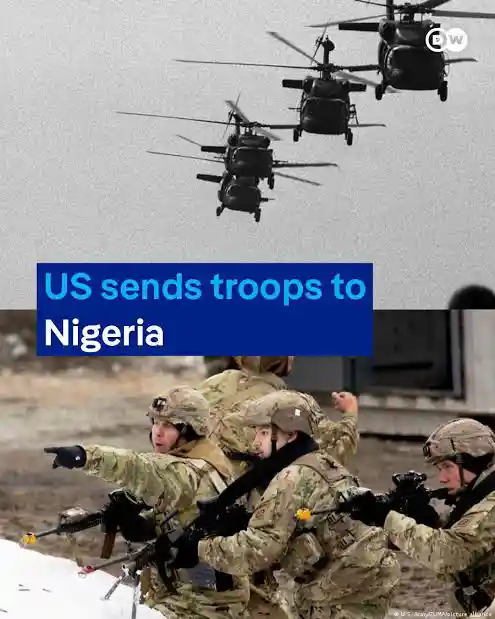
Also Read: US Pentagon to Send 200 Soldiers to Nigeria to Train Military Against Islamist Insurgents
The Nigerian military has also worked with the United States Africa Command (AFRICOM), which oversees U.S. defence operations across the African continent. AFRICOM’s role typically includes capacity building rather than permanent troop deployment.
What “Military Presence” Actually Means
The phrase “U.S. military presence” in Nigeria does not equate to a standing American combat base. Instead, experts describe it as a combination of:
- Temporary deployments for joint exercises.
- Intelligence and surveillance support.
- Technical assistance in counterterrorism operations.
- Training programmes for Nigerian armed forces.
Security analysts note that cooperation intensified following high-profile terrorist incidents, including the 2014 abduction of schoolgirls in Chibok, which drew global attention and international assistance.
Implications for Nigeria’s Security
Supporters argue that U.S. collaboration enhances Nigeria’s operational capacity in several areas:
- Intelligence capabilities: Access to satellite imagery and signals intelligence improves surveillance of insurgent movements.
- Equipment modernisation: Advanced aircraft and surveillance systems strengthen air and ground operations.
- Professional training: Exposure to international standards improves tactical coordination and counterinsurgency doctrine.
The sale of A-29 Super Tucano aircraft to Nigeria, approved by Washington in 2017, represented a significant upgrade in air combat capability against insurgent groups.
Sovereignty and Political Sensitivities
Concerns about sovereignty often shape public discourse. Nigerian officials have repeatedly stated that any foreign military engagement must respect national laws and territorial integrity.
The Federal Government has maintained that cooperation agreements do not involve ceding control of Nigerian territory. Analysts observe that Nigeria, as Africa’s most populous country and one of its largest economies, remains cautious about hosting foreign bases.
Regional Security Context
Nigeria plays a leading role in West African security initiatives, including the Multinational Joint Task Force combating insurgency in the Lake Chad Basin. Collaboration with external partners is often framed as complementary to regional efforts.
Across Africa, debates over foreign military footprints have intensified, particularly following shifts in defence arrangements in countries such as Niger and Mali. These developments have influenced regional perceptions of international security partnerships.
What It Means Going Forward
The trajectory of U.S.–Nigeria defence relations will likely depend on:
- The evolution of insurgent threats.
- Nigeria’s internal defence reforms.
- Broader geopolitical competition on the African continent.
- Domestic political consensus regarding foreign military engagement.
Security experts emphasize that long-term stability depends not only on military cooperation but also on governance reforms, economic development and community-based conflict resolution.
While the phrase “U.S. military presence” may suggest permanent deployment, available official information indicates a structured security partnership centered on training, intelligence and equipment support rather than a standing American base.
You May Also Like



Trending Now