Tinubu US Drug Records: Buratai Urges Unity, Defense of Sovereignty
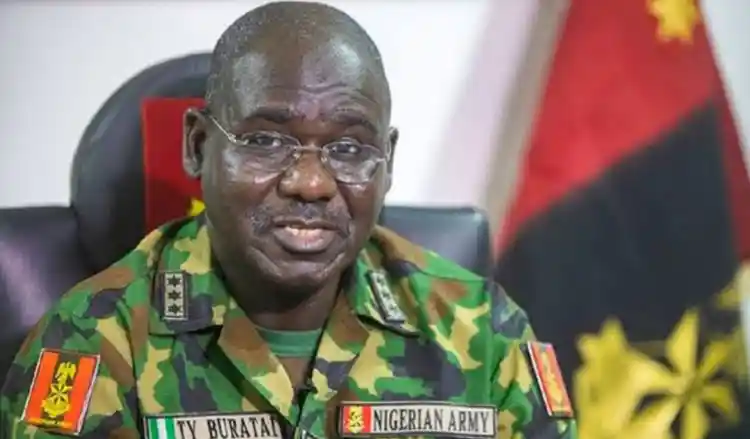
In a major public statement regarding international legal proceedings involving the nation’s leadership, the former Chief of Army Staff, Lt. Gen. Tukur Yusufu Buratai (rtd.), has strongly urged citizens across Nigeria to close ranks in defense of the country’s sovereignty and national dignity.
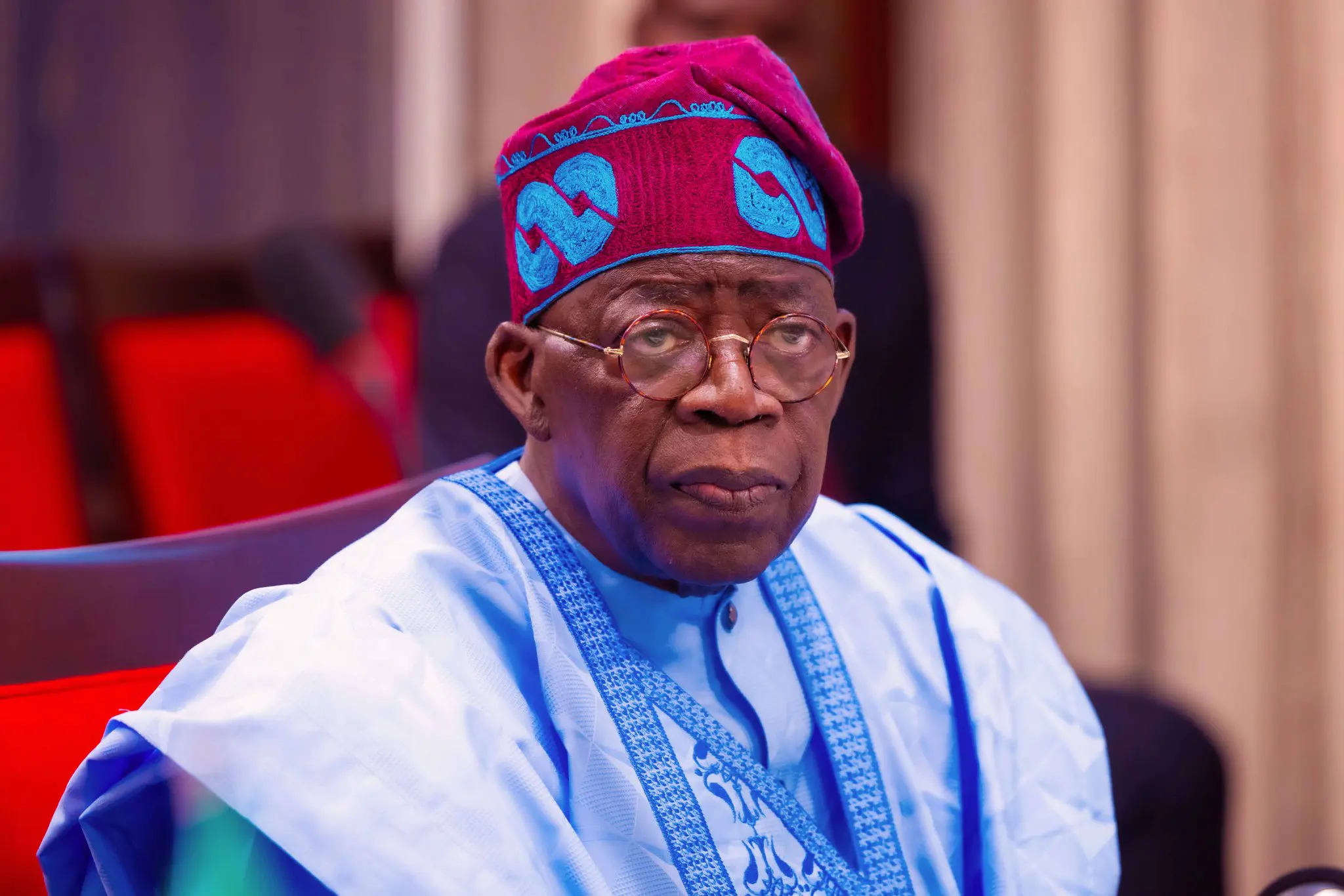
His call comes amid ongoing legal proceedings taking place within the judicial system of the United States concerning the potential disclosure and release of official documents relating to President Bola Ahmed Tinubu.
Lt. Gen. Buratai articulated his position and recommendations in an officially authored position paper titled, “Nigeria First: A Case for Protecting National Sovereignty and Dignity — A Patriotic and Non-Partisan Perspective.”
Also Read : ‘Don’t Cry, My Princess’: Daughter Shares Final Emotional Exchange With Late Yoruba Actor Ogogo
Within the position paper, the retired military commander argued that the ongoing judicial matter should under no circumstances be viewed or treated solely as a personal legal issue involving President Tinubu alone.
Instead, he emphasized that the proceeding carries far-reaching potential implications for Nigeria’s international image, global standing, and overarching national interests.
According to Lt. Gen. Buratai, emerging reports concerning public records and documents allegedly tied to investigations that date back more than three decades possess consequences that extend far beyond the specific individual named in the proceedings.
He cautioned that this is particularly true if the development serves to generate widespread negative international publicity surrounding the Federal Republic of Nigeria.
Nigerians to FBI: Release Tinubu Full Drug Files, Our People Are Already Dying Under His Watch
Detailing the timeline of the judicial proceedings abroad, Buratai highlighted that the United States District Court for the District of Columbia has officially fixed August 28, 2026, as the designated date for President Bola Ahmed Tinubu, the Federal Bureau of Investigation (FBI), and the United States Department of Justice to formally respond to the legal issues surrounding the potential release of the requested documents.
He pointed out that the FBI’s official indication that it currently possesses information characterized as “highly sensitive,” alongside its formal application requesting a private judicial review, underscores the overall significance of this legal development.
However, despite the gravity of the legal actions in Washington, Buratai firmly maintained that all Nigerians ought to evaluate and approach the ongoing matter primarily through the perspective of national interest.
“We are not protecting Tinubu; we are protecting ourselves. We are protecting the millions of hardworking Nigerians who have never been accused of any wrongdoing but who will bear the stigma of this disclosure,” he said.
National Image, Global Perceptions, and Historical Context
Expanding on his core arguments, the former Army chief posited that international audiences, foreign observers, and global media outlets are highly likely to associate allegations concerning a sitting Nigerian president directly with the nation as a whole. He explained that such broad generalization risks negatively affecting how Nigerian citizens, domestic businesses, and national institutions are perceived in foreign jurisdictions across the globe.
In particular, Lt. Gen. Buratai expressed serious concern that the ultimate release of these documents could spark sensationalized international media coverage as well as hostile social media narratives. Such coverage, he warned, possesses the capacity to overshadow Nigeria’s significant achievements and global contributions across key sectors, including:
- Business and commerce
- Technology and innovation
- Academia and educational research
- Sports and athletics
- The creative industries and cultural sector
Furthermore, Buratai fundamentally questioned the actual weight and significance that should reasonably be attached to legal allegations stemming from events reported to have transpired approximately 33 years ago. He asserted that over such a substantial duration of time, both individual human beings and entire societies undergo significant transformations, growth, and development.
In light of this long timeframe, he stated that President Tinubu’s subsequent political career, public service record, and governance history must also be fully considered when evaluating his broader legacy. Buratai cautioned against permitting allegations anchored in a distant historical period to unilaterally define the President’s entire professional career and public life.
Sovereignty, Institutional Integrity, and Economic Implications
Addressing the fundamental issue of national sovereignty, Lt. Gen. Buratai stressed that citizens throughout Nigeria ought to be deeply concerned regarding what he described as the broader systemic implications of a foreign judicial process examining the past actions of a sitting Nigerian leader.
He forcefully contended that all questions, evaluations, and determinations concerning the personal character, moral conduct, and fitness of Nigerian political leaders should primarily be addressed and resolved through Nigeria’s own internal constitutional framework and established institutional processes.
“We did not elect an American court to vet our leaders. We did not ask the FBI to determine the character of our president. We have our own processes, our own institutions, and our own standards,” he said.
At the same time, the former military chief explicitly stressed that his patriotic position should by no means be interpreted, construed, or mischaracterized as a plea for public leaders to be exempted from institutional accountability. On the contrary, he affirmed that public accountability must always be pursued through appropriate, lawful, and established domestic legal mechanisms while simultaneously preserving and respecting the institutional dignity of the Nigerian state.
Beyond matters of constitutional sovereignty, Lt. Gen. Buratai warned of potential economic ramifications that could materialize if the ongoing legal controversy results in a severe deterioration of Nigeria’s standing and image in the international community.
Specifically, he outlined several critical economic areas that could suffer collateral damage, including:
- Foreign direct investment flows
- International business relationships and commercial partnerships
- Engagement with the global Nigerian diaspora
- The national tourism industry
- The international reputation of Nigerian companies operating in foreign markets
He noted that these potential consequences must not be casually dismissed or ignored by the public, as ordinary Nigerian citizens—who possess no personal connection whatsoever to events alleged to have taken place decades ago—could ultimately end up bearing the heavy societal and economic consequences of a major reputational crisis.
Political Unity, Strategic Action, and National Resolve
Turning to domestic politics, Lt. Gen. Buratai issued a direct appeal to political leaders representing all political parties across the country. He urged them to avoid turning the ongoing foreign legal matter into a partisan confrontation or political weapon, insisting that the entire situation must be viewed and handled strictly from the unifying standpoint of Nigeria’s overarching national interest.
He also brought attention to the strategic timing of these foreign legal developments as the nation moves closer toward the 2027 presidential election. Buratai expressed concern that the unsealing or release of sensitive legal information involving the incumbent president during this specific period could heavily influence domestic public discourse, manipulate political sentiment, and inadvertently impact Nigeria’s democratic electoral process.
To effectively navigate these challenges, the former Army chief outlined a series of strategic recommendations for the country:
- Direct and proactive diplomatic engagement between the government of Nigeria and the United States.
- Robust and enhanced legal representation for the President in the ongoing U.S. court proceedings.
- Comprehensive public education initiatives aimed at explaining the wider legal and sovereign implications of the case to citizens.
- Active strategic engagement with Nigerian communities living across the global diaspora.
- The development and execution of a clear, coherent communication strategy designed to manage public narratives in the event of any eventual document disclosure.
Additionally, he reiterated his call for the continued strengthening of domestic Nigerian institutions. He emphasized the necessity of building robust national mechanisms capable of independently addressing any questions or concerns regarding public office holders through internal accountability structures.
Buratai advised that Nigeria must thoroughly prepare for all potential outcomes that may arise from the United States court proceedings, while remaining steadfastly committed to upholding its national dignity, self-determination, and sovereign independence.
In concluding his position paper, Lt. Gen. Buratai delivered a strong statement of unity to the populace:
“Nigerians must resist this not because we blindly support any leader but because we love our nation. We must do so because we refuse to let foreigners define our national identity.”
He concluded by urging all Nigerians to clearly distinguish between supporting an individual political leader and fulfilling the collective, patriotic duty of defending the global reputation, sovereignty, and sovereign interests of the Nigerian nation. Lt. Gen. Buratai previously served as Nigeria’s Chief of Army Staff from 2015 to 2021.
Ejes Gist News stands for truth, responsible journalism, editorial integrity and fearless accountability.
You May Also Like
![Tinubu Makes 19 New Appointments [Full List]](https://ejesgist.com/wp-content/uploads/2023/07/Presisident-Tinubu-signing.webp)


Trending Now