
Sapele Is Drowning. The Excuses Have Run Out
The floodwater swallowing parts of Sapele is more than a seasonal inconvenience. It is a public failure unfolding in plain sight, one that residents have warned about for years and one that those in authority can no longer explain away.
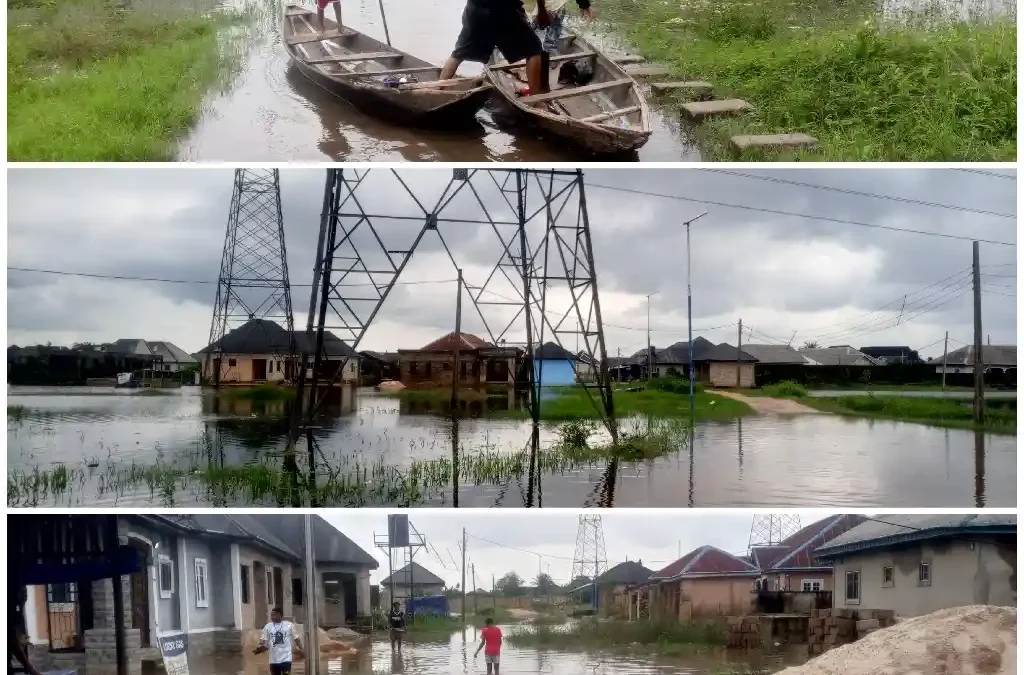
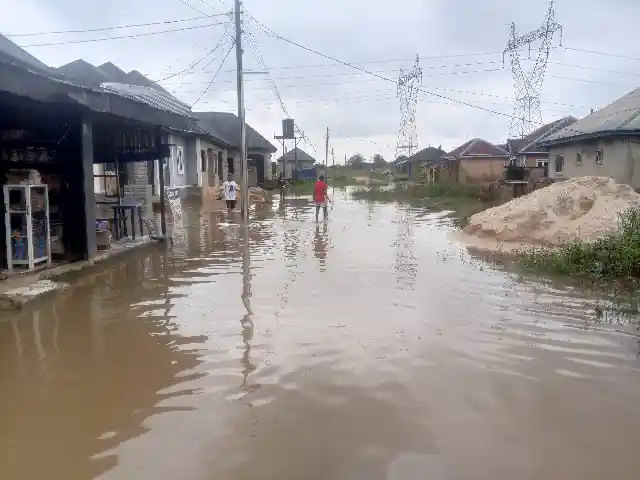
The photographs captured by journalist Don Omajemite are not statistics on a government report. They are evidence of human suffering. A child paddles a canoe through what used to be a neighbourhood street. Families move through floodwater carrying what remains of their belongings. Homes sit surrounded by water. Critical infrastructure stands exposed to conditions that raise obvious safety concerns.
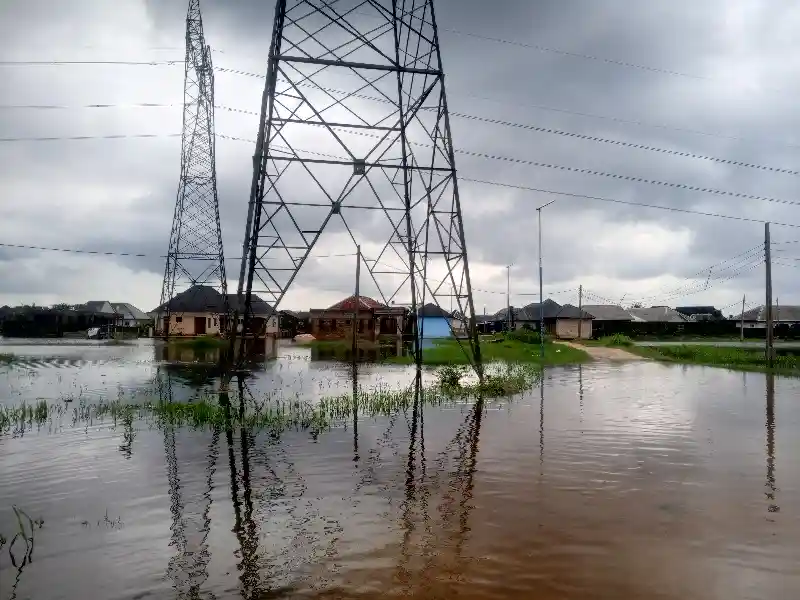
This is not a remote settlement forgotten by the map. This is Sapele. And the most damning detail is not the depth of the water—it is the proximity of power. The flooding behind Okpe Grammar School, along Jes Motel Road, Comprehensive Road, Community Road, and Mountain of Fire Road is unfolding a mere five electric poles from the personal residence of the immediate past Chairman of Sapele Local Government Area, Hon. Chief Eugene Okpeh Inoaghan. Five electric poles away. A short walk. And yet, for years, residents say drainage complaints went unanswered.
A History of Broken Promises
Let it be recorded that the community did not suffer in silence. Following protests during the previous flooding season, the then Commissioner for Environment, Mr. Jamani Tommy Ejiro, deployed excavators to create earth drains for the community. Residents recall that he promised those temporary earth drains would be converted into permanent concrete drainage channels.
That promise, like so many others made to the people of Sapele, remains unfulfilled. The earth drains have deteriorated. The promised concrete channels never came. Mr. Ejiro has since left office, but the flooding remains.
In his place now sits Moses Ogodo, the newly appointed Honourable Commissioner for Environment, Delta State. He inherits a ministry, a budget, and an unfinished promise made to a community once again battling floodwaters. The question facing him is straightforward: will he complete what his predecessor began, or will another rainy season pass while residents continue to wait for action?
The Monument to a Tenure
That single fact transforms this crisis into a question of accountability. How does a man occupy the highest local office in Sapele, live within walking distance of communities repeatedly affected by flooding, and leave office with residents still making the same drainage complaints they made years earlier?
Hon. Chief Eugene Okpeh Inoaghan may no longer hold office, but the floodwater surrounding these communities has become an unavoidable reminder of unresolved problems that persisted throughout his tenure. Five electric poles from his residence, residents continue to ask why a lasting solution never arrived.
The Report Card No One Wants to Sign
Governor Sheriff Oborevwori came into office selling the MORE Agenda to the people of Delta State. But for the residents of Sapele, that agenda has been translated into a crueller dialect: More flooding. Oppression by neglect. Rotten infrastructure. Every year, the same disaster.
Residents of the affected communities are entitled to ask a simple question: where is that development when entire neighbourhoods are submerged? Where is the MORE Agenda when children are paddling canoes past power lines just five poles from a former chairman’s house?
The floodwater has become a report card, and the grades are impossible to defend.
For years, residents have complained about drainage. For years, they have raised alarms before the rains arrived. Yet every rainy season seems to produce the same outcome. The water returns. The promises return. The suffering returns.
At some point, citizens stop accepting explanations and start demanding accountability.
A Gallery of Inaction
The current Sapele Local Government Chairman, Bright Abeke, cannot claim ignorance. This flooding crisis did not begin yesterday. Residents of the affected communities protested over the same drainage concerns during the previous flooding season and took their complaints directly to the local government.
The warnings were delivered. The appeals were made. The problem was known.
Yet a year later, families behind Okpe Grammar School, along Jes Motel Road, Comprehensive Road, Community Road, and Mountain of Fire Road are once again navigating floodwaters where roads should be. Citizens are therefore entitled to ask a simple but uncomfortable question: after more than two years in office and after last year’s protests, what tangible measures were taken to prevent the same disaster from happening again?
Senator Ede Dafinone represents Delta Central in the Senate, yet many residents of the affected communities are asking a question that grows louder with every passing day: where is their voice in Abuja?
As homes disappear beneath floodwaters, residents say they have seen little evidence of the urgency this crisis demands. Constituents are not asking for sympathy. They are asking for advocacy. They are asking their senator to use the influence of his office to ensure that a recurring disaster affecting thousands of people receives the attention it deserves.
Representation is not measured during elections. It is measured during moments like this.
And what of the councillor representing the affected ward? In any functioning democracy, the councillor should be the first official voice carrying the concerns of residents to government. Yet many affected residents say they feel abandoned as floodwaters continue to invade their homes and streets.
The people living in these communities should not have to fight alone for basic drainage infrastructure and environmental protection. If residents are forced to become their own advocates because those elected to represent them have fallen silent, then serious questions must be asked about the purpose of local representation itself.
The Time for Excuses Is Over
The new Commissioner for Environment enters office at a moment when the crisis can no longer be hidden behind reports, briefings, or official statements. The floodwater is visible. The suffering is visible. The consequences of years of unresolved drainage problems are visible.
The current local government leadership cannot claim surprise. Residents raised the alarm long before the floodwater reached their homes. They protested. They complained. They demanded intervention. Yet the same communities are once again underwater.
The legislators cannot continue to observe from a distance while their constituents live through a disaster that returns with alarming regularity. Public office is not a spectator position. It carries a responsibility to act when citizens are in distress.
Every hour spent shifting responsibility is another hour families spend trapped in floodwater. Every day without meaningful intervention deepens public anger. Every broken promise widens the gap between government and the people it was elected to serve.
The people of Sapele do not need another inspection tour. They do not need another assurance that government is aware of the problem. They do not need another promise that disappears when the floodwater recedes.
They need action. They need drainage. They need results.
The water is rising. The photographs are public. The evidence is impossible to ignore.
And as canoes move through flooded streets behind Okpe Grammar School, along Jes Motel Road, Comprehensive Road, Community Road, and Mountain of Fire Road, one fact continues to stand out above all others: this crisis is unfolding just five electric poles from the residence of a former local government chairman.
Five poles away from power. Five poles away from influence. Five poles away from people entrusted with the ability to make a difference.
That is why the flooding in Sapele is becoming more than an environmental crisis. It is becoming a test of leadership, a test of accountability, and a test that far too many public officials appear to be failing while the water continues to rise.
Don Omajemite writes from the affected area behind Okpe Grammar School, Sapele.
Ejes Gist News stands for truth, responsible journalism, editorial integrity and fearless accountability.
You May Also Like



Trending Now