Former APC Lawmaker Gives EFCC 14-Day Ultimatum to Reopen Atiku Case
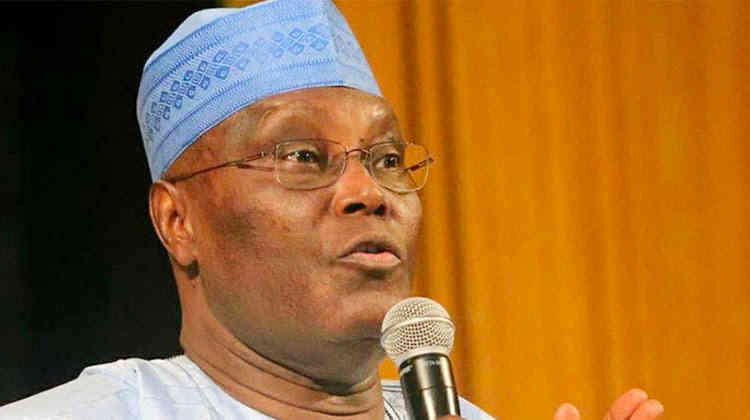
The Economic and Financial Crimes Commission (EFCC) has been given a 14-day ultimatum by a former member of the House of Representatives and chieftain of the All Progressives Congress (APC), Ehiozuwa Agbonayinma, to reopen and prosecute a financial crimes case allegedly involving former Vice President and African Democratic Congress (ADC) presidential candidate, Atiku Abubakar.
Also Read FBI Files: Tinubu Was Under Investigation For Drugs
In a petition dated not specified and filed on his behalf by his Principal Counsel, Hannibal Egbe Uwaifo, SAN, of Sagitarian Law Firm, Agbonayinma alleged that the EFCC had investigated corruption allegations against Atiku between 2005 and 2006, when he served as Vice President.
The petition cited a report titled “The EFCC Report on Vice-President Abubakar Atiku (Full Report)”, dated September 2006, which allegedly contained findings of corrupt practices, money laundering, and other financial crimes involving the former Vice President.
Agbonayinma claimed that despite the EFCC’s vow to prosecute Atiku after he left office—when he was covered by constitutional immunity—no action had been taken to date. The petition stated:
“That although the allegations were mind-boggling and the EFCC vowed to prosecute Alhaji Abubakar Atiku as soon as he leaves office as Vice President (being covered by Constitutional Immunity then), nothing has been done till date despite public outcry both within and outside Nigeria.”
The petitioner argued that the EFCC’s failure to act constituted a dereliction of duty and undermined the agency’s anti-corruption mandate. He further referenced an alleged investigation by the United States Senate Permanent Sub-Committee on Investigations, part of the Committee on Homeland Security and Government Affairs, which reportedly made allegations of money laundering and financial crimes against Atiku in a report dated February 4, 2010.
Corruption: Court dismisses Keyamo’s case against Atiku Abubakar
Agbonayinma urged the EFCC to reactivate both the 2006 EFCC report and the 2010 US Senate report as the basis for prosecuting Atiku. The petition read:
“In the circumstances, it is the demand of our Client that the EFCC report and the report of the United States Senate Permanent Sub-Committee on Investigations, Committee on Homeland Security and Government Affairs report dated February 4, 2010, be reactivated as a basis for the immediate prosecution of former Vice President Abubakar Atiku to serve as a deterrent.”
The petitioner asserted that prosecuting the case would demonstrate the EFCC’s commitment to tackling corruption, particularly among high-profile individuals. The document added:
“Our Client believes that the present leadership at the EFCC has all it takes to bring Nigeria out of the high corruption index for which the country is presently infamous, and the prosecution of this case will represent one of the greatest milestone achievements of your anti-corruption body.”
Agbonayinma warned the EFCC that if it failed to act within 14 days of receiving the petition, legal action would be taken against the commission. The petition concluded:
“Take notice that if, after 14 days of this letter, your Commission, the EFCC, refuses or neglects to act, our further instruction is to take legal action against your Commission.”
EFCC’s Stance on the Petition
As of the time of filing this report, the EFCC has not publicly responded to the petition. The commission, which is Nigeria’s primary anti-corruption agency, has historically faced scrutiny over its handling of high-profile cases, with critics alleging selective prosecution and delays in investigations.
In recent years, the EFCC has pursued several high-profile corruption cases, including those involving former state governors and government officials. However, the agency has not commented on whether it plans to reopen the Atiku case or whether the allegations cited in the petition are still under consideration.
Reactions from Political Stakeholders
Atiku Abubakar has not issued a public response to the petition. His political party, the African Democratic Congress (ADC), has also not commented on the matter. Political analysts note that the petition comes at a time when Atiku is actively involved in Nigeria’s political landscape, having contested in the most recent presidential election.
Meanwhile, APC chieftains have largely refrained from publicly endorsing or criticizing the petition. The All Progressives Congress has not issued an official statement regarding the allegations or the ultimatum issued to the EFCC. Political observers suggest that the APC’s silence may reflect a broader strategy of avoiding direct engagement with opposition figures in high-stakes legal matters.
Legal and Procedural Context
The petition raises questions about the legal and procedural steps required to prosecute a former Vice President in Nigeria. Under the 1999 Constitution of Nigeria, a Vice President enjoys constitutional immunity while in office, but this immunity does not extend to acts committed before or after their tenure. The EFCC has previously stated that it can investigate and prosecute former public officials for offenses committed during their time in office, provided immunity is no longer applicable.
Legal experts have noted that the EFCC’s decision to reopen or pursue the Atiku case would depend on several factors, including the availability of new evidence, the admissibility of previously gathered evidence, and the agency’s internal priorities. The petition does not provide details on whether new evidence has emerged since the 2006 and 2010 reports were published.
Broader Implications for Nigeria’s Anti-Corruption Efforts
The petition underscores ongoing debates about the effectiveness of Nigeria’s anti-corruption agencies, particularly the EFCC. Critics argue that the agency has struggled to secure convictions in high-profile cases, while supporters contend that it has made progress in holding powerful individuals accountable.
Civil society organizations and anti-corruption advocates have called for greater transparency and consistency in the EFCC’s operations. Some have questioned whether the agency’s actions are driven by political considerations rather than a commitment to fighting corruption. The EFCC has repeatedly denied these allegations, stating that its investigations and prosecutions are based on evidence and legal merit.
Ejes Gist News understands, the petition by Agbonayinma adds to the broader discourse on corruption in Nigeria’s political system. The outcome of the EFCC’s response—or lack thereof—could have significant implications for public trust in the agency and the country’s anti-corruption efforts.
You May Also Like



Trending Now