From Poor School Teacher to Billionaire: The Jack Ma Story
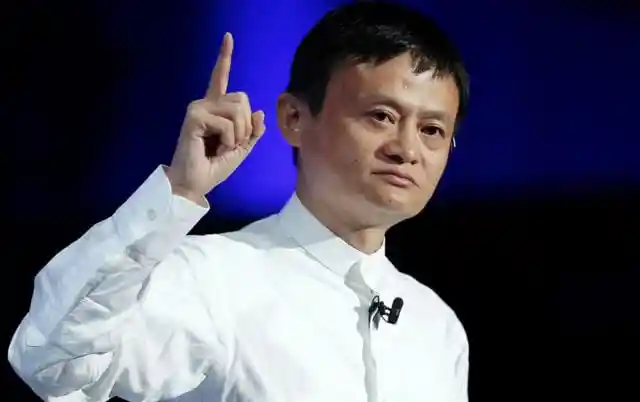
Jack Ma, co-founder of the e-commerce giant Alibaba and today the second richest man in Asia, began life as a poor school teacher who struggled to make his way. Born Ma Yun on 10 September 1964 in Hangzhou, China, he came from a very poor home and rose from that humble start to become one of the wealthiest and most powerful men in Asia.
Forbes ranks him 21st on its list of the world’s richest people, with a fortune of about $37.3 billion. Just one Asian sits above him: Ma Huateng, chief executive officer of Tencent, the Chinese multinational investment holding conglomerate.
Ma’s wife, Zhang Ying, is a teacher he met at school; the two married after graduating in the late ’80s and have two children, a daughter and a son.
Early years and a hard education
Ma started learning English as a child, practising in conversation with English speakers at the Hangzhou international hotel. To perfect the language he rode 70 miles on his bicycle to give tourists tours of the area, keeping the routine going for nine years. One of those visitors became a pen pal and gave him the nickname “Jack” because the Chinese name was hard for him to pronounce.
Wanting to lift himself out of poverty and make a difference, Ma set out to further his education, a task that proved far from easy. He failed his primary school examination twice, his middle school exams three times and his university entrance exams three times before Hangzhou Normal University finally admitted him to study English.
Rejection after rejection
Progress brought no smooth path. After taking a B.A. in English, Ma taught at Hangzhou Dianzi University, but teaching was not everything he wanted. He began applying for jobs and met refusals at every turn. “You have to get used to failure,” he told an audience at the University of Nairobi while recounting what those rejections taught him.
Thirty job applications in his home city of Hangzhou brought thirty rejections.
At Kentucky Fried Chicken in China, 24 people applied for the job and 23 were hired. Ma was the only one turned away. “I even went to KFC when it came to my city. Twenty-four people went for the job. Twenty-three were accepted. I was the only guy …” he told interviewer Charlie Rose.
The police were no more welcoming: four of the five applicants were taken on and Ma was the exception. “I went for a job with the police; they said, ‘you’re no good'”, he told Rose in 2015.
He even lost a job to his cousin. “My cousin and I waited for two hours [in a] long queue to be the waiter for the four star hotel in my city, on a very hot day,” he says. “My cousin’s score was much lower than mine, [but] he was accepted and I was rejected!”
Harvard turned him down 10 times, he told Rose. “I told myself someday I should go teach there maybe,” he laughs.
The rejections were very painful, he later admitted. “If you can not get used to failure — just like a boxer — if you can’t get used to [being] hit, how can you win?” he told the audience in Nairobi.
The breakthrough and the building of Alibaba
Ma’s opening came in 1995, when a trip to the United States with friends introduced him to the Internet. He noticed that information about beer from many countries could be found online, yet nothing about China was available; a search for general information about China turned up nothing. The gap gave him an idea of something greater to come.
That year he launched a website at 9:40 AM. By 12:30 PM emails had arrived from Chinese investors who wanted to know about him, and Ma realised the Internet had something great to offer. In April 1995 he and a friend, He Yibing, a computer teacher, opened the first office for China Pages. He registered the domain chinapages.com, and within three years the company had made 5,000,000 Chinese Yuan, equivalent at the time to US$800,000.
A greater business idea was still ahead of him. Having gathered enough knowledge about the line of business he meant to enter, Ma quit his position as head of the China International Electronic Commerce Center, a department of the Ministry of Foreign Trade and Economic Cooperation, and founded Alibaba with his team in 1999. He suffered a serious setback when Silicon Valley rejected his funding proposal, and the business made zero revenue for its first three years.
Alibaba stood on the brink of bankruptcy before it went public in September 2014 at $92.70 per share, the biggest US IPO in history. Yahoo’s $1 billion investment in exchange for a 40% stake had marked a significant step forward for the company.
Time named Ma one of its 100 most influential people in 2009 and again in 2014, and Business Week chose him as one of ‘China’s Most Powerful People’. He was the first mainland Chinese entrepreneur to appear on the cover of Forbes.
Alibaba’s market cap stood at US$352.28 billion as of 19 December 2018. It is the second Asian company to break the US$500 billion valuation mark, after its competitor Tencent.
Alongside its valuation, Alibaba holds the 9th highest global brand value. It is today the world’s largest retailer and e-commerce company, one of the largest Internet and AI companies, one of the biggest venture capital firms and one of the biggest investment corporations in the world. Since 2015 its online sales and profits have surpassed those of all US retailers combined, including Walmart, Amazon and eBay.
From nothing, Ma built an empire — a striking feat for a boy from a poor home.
Ejes Gist News stands for truth, responsible journalism, editorial integrity and fearless accountability.
You May Also Like



Trending Now