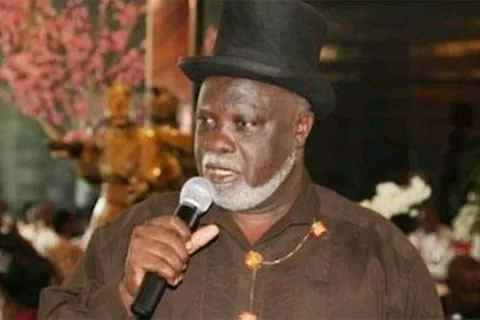
2027: PANDEF Chieftain Predicts Tinubu’s Defeat, Says APC Cannot Win Rivers
A chieftain of the Pan Niger Delta Elders Forum (PANDEF), Chief Anabs Sara-Igbe, has predicted that President Bola Tinubu could lose Rivers State in the 2027 presidential election, insisting that opposition figure Peter Obi is better positioned to secure victory in the state.
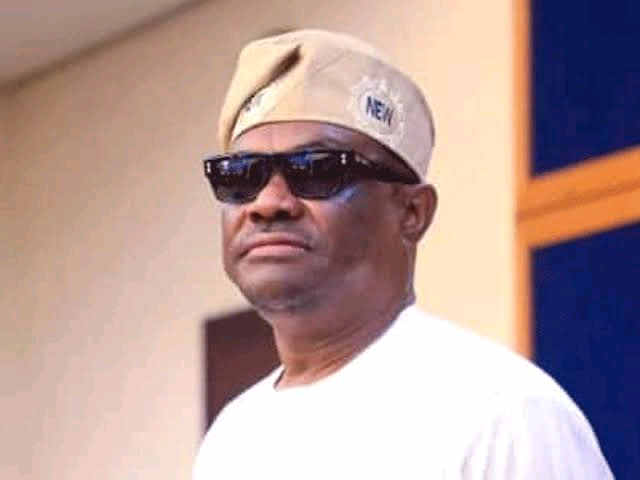
Sara-Igbe, an Ijaw elder statesman, made the prediction in an interview in Port Harcourt, where he argued that the political situation in Rivers had changed and that the influence of the Minister of the Federal Capital Territory, Nyesom Wike, and his allies could be tested at the polls.
He dismissed suggestions that Tinubu and the All Progressives Congress (APC) were assured of victory in Rivers, accusing Wike and his political allies of losing the confidence of the people.
Sara-Igbe Backs Peter Obi, Dumo Lulu-Briggs
The PANDEF chieftain maintained that Rivers voters would support Peter Obi in the presidential election, while backing Dumo Lulu-Briggs for the governorship under the Nigeria Democratic Congress (NDC), as identified in his remarks.
He said the political arrangement would build on the voting pattern witnessed in the state during the 2023 general election, warning Wike against assuming that his political influence would guarantee victory for Tinubu.
“Rivers State remains for Peter Obi and Chief Dumo Lulu-Briggs. We shall repeat what we did in 2023, but this time, let Wike come and do that his political abracadabra at his own risk,” Sara-Igbe said.
His remarks come amid growing political realignments ahead of the 2027 elections, as parties and influential political figures seek to strengthen their positions across Rivers State.
Wike, a former Rivers governor, has expressed confidence in Tinubu’s electoral prospects and questioned the need for opposition figures, including Obi and former Vice President Atiku Abubakar, to campaign in the state.
Sara-Igbe, however, argued that the outcome would ultimately depend on voters rather than the influence of political officeholders.
PANDEF Chieftain Questions APC’s Position in Rivers
Sara-Igbe also predicted that the APC would face difficulties in the Rivers governorship election, citing what he described as legal and electoral complications affecting the party’s position.
He argued that being the ruling party at the federal level would not automatically translate into electoral success in Rivers.
“APC has no candidate in Rivers State going by the Supreme Court judgment and the Electoral Act. But if because they are in government and they think they can do whatever they like, the people will decide whether they will vote for them or not,” he said.
The claim regarding the APC’s eligibility and candidate status reflects Sara-Igbe’s interpretation of the legal and electoral situation. It would require confirmation against the relevant court decisions and official electoral records.
Nevertheless, his comments highlight the legal disputes and political calculations that could shape party participation and alliances ahead of the 2027 governorship election.
Ijaw, Ogoni and Kalabari Alliance
The PANDEF chieftain further disclosed that discussions were ongoing among Ijaw, Ogoni and Kalabari stakeholders over a possible political understanding ahead of the governorship election.
According to him, the arrangement would support a candidate of Ijaw extraction in 2027, with the expectation that the governorship would subsequently rotate to an Ogoni candidate in the interest of equity and inclusion.
He said the proposed alliance was intended to strengthen support for Lulu-Briggs and bring together different ethnic and political interests around a common development agenda.
“Ijaws in Rivers State are going to work with a Kalabari candidate, their own son. Ogonis and Kalabaris are parleys. They are going to work together with the candidate that will reset the state. Thereafter, it will be an Ogoni governor,” Sara-Igbe said.
He also pointed to the reported involvement of Ogoni figures in the deputy governorship and campaign structures associated with Lulu-Briggs as evidence of the proposed political cooperation.
If sustained, such an alliance could influence the governorship contest by bringing together communities whose support may be important to the candidates’ electoral prospects.
However, the extent of the proposed agreement, the level of support it commands among the communities involved and whether it will translate into a formal political arrangement remain to be established.
Sara-Igbe Criticises Wike Over Rivers Political Crisis
Sara-Igbe also took aim at Wike over the prolonged political disagreement involving the minister and Rivers State Governor Siminalayi Fubara.
He questioned Wike’s recent efforts to consolidate political support, arguing that they contrasted with the minister’s previous expressions of dominance over Rivers politics.
“You can see that one man who boasted that he owned Rivers State is now running from pillar to post begging people for support,” he said.
The PANDEF chieftain further alleged that Wike had sought support from Fubara despite the strained relationship between the two political figures.
The dispute between Wike and Fubara has been a major feature of Rivers politics, drawing attention to divisions within the state’s political establishment and raising questions about the future of existing alliances.
Sara-Igbe also claimed that Wike’s Rainbow Coalition had lost momentum. However, the actual electoral strength of the coalition will depend on its organisation, the political figures it retains and its ability to mobilise voters ahead of the polls.
Tinubu’s Economic Policies Under Fire
Beyond Rivers State politics, Sara-Igbe criticised the Tinubu administration over the cost of living, fuel prices and the economic difficulties facing Nigerians.
He argued that rising living costs and widespread hardship could weaken the president’s chances of securing a second term.
“People are hungry and angry. How much is the cost of fuel? I spend N2 million monthly on fuel. The level of poverty is high under this government. I’m afraid President Bola Tinubu will not get re-elected,” he said.
His comments reflect concerns over the economic impact of fuel prices and other living expenses, issues likely to feature prominently in political debates ahead of the 2027 general election.
Sara-Igbe expressed confidence that Obi would be better positioned to manage the country’s economy, predicting a decisive victory for the opposition figure in Rivers.
He also outlined an ambitious economic vision for the state, saying its economy, which he estimated at $20 billion, could grow to $30 billion and eventually reach $200 billion or more.
According to him, achieving such growth would require policies capable of attracting investment, creating employment opportunities and empowering young people.
However, he did not provide details of the proposed economic strategy or the timeframe within which the projected expansion could be achieved.
Calls for International Monitoring of 2027 Elections
Sara-Igbe also called on the international community to pay close attention to Nigeria’s 2027 general elections, naming the Economic Community of West African States (ECOWAS), African Union, European Union, United States and United Kingdom among those he wants involved in supporting a credible electoral process.
He warned that electoral violence or a disputed outcome could have consequences beyond Nigeria, particularly for neighbouring countries.
“If there is crisis in this election, it will affect the neighbouring countries negatively. They must ensure that things are done properly in this election. People are angry and agitated,” he said.
His appeal comes as political parties and their supporters prepare for another major electoral contest, with questions surrounding security, political competition and public confidence expected to remain important.
International observers can help assess electoral processes and make recommendations, although responsibility for conducting Nigeria’s elections rests primarily with the country’s electoral and relevant security institutions.
What Sara-Igbe’s Prediction Means for 2027
Sara-Igbe’s comments underscore the political contest expected in Rivers State as the 2027 elections approach. His prediction of an Obi victory, his support for Lulu-Briggs and his proposed alliance among Ijaw, Ogoni and Kalabari stakeholders point to efforts to build an alternative political bloc.
At the same time, Wike’s influence, the positions of the major political parties, candidate selection and the strength of competing alliances will remain important factors in determining the eventual outcome.
His claims about voter sentiment, the APC’s electoral position and the proposed ethnic alliance have not been independently established. Tinubu’s prospects in Rivers and the outcome of the governorship election will ultimately depend on political developments, party nominations, voter decisions and the conduct of the electoral process.
For now, Sara-Igbe’s prediction represents a strong challenge to claims that Tinubu and the APC can take Rivers State for granted in 2027.
Ejes Gist News stands for truth, responsible journalism, editorial integrity and fearless accountability.
You May Also Like

Trending Now