Peter Obi Weighs In as NBC’s New Directive to Broadcast Organisations Raises Dust, Sparks Controversy
The recent threat by the Nigerian Broadcasting Commission (NBC) to sanction broadcast organizations, comprising radio and television outfits, over declining standards in news and political analysis has not gone down well with some Nigerians, including the Nigerian Union of Journalists (NUJ), the umbrella body of all media practitioners in the country.
Ejes Gist News reports that the commission’s directive has sparked widespread controversy, with many describing it as a veiled attempt to gag the media ahead of the 2027 general elections.
What NBC Said
A few days ago, the NBC issued a formal notice to broadcast stations across Nigeria, warning of stricter enforcement of the Nigeria Broadcasting Code following what it described as a sustained rise in ethical and professional breaches, particularly in news, current affairs, and political programming.
In a statement, the commission said it had observed a troubling pattern in which broadcast platforms were increasingly being used in ways that undermine their core responsibility to inform the public with accuracy, balance and professionalism.
The commission noted that the trend, if left unchecked, could erode public trust in the media and heighten tensions as the country gradually moves towards the 2027 general elections.
It stressed that it would enforce “strict and uncompromised compliance” with the provisions of the 6th Edition of the Nigeria Broadcasting Code.
Key provisions highlighted by NBC:
- Fairness, accuracy, and balance in reporting
- Prohibition of hate speech and incitement
- Respect for constitutional authorities
- Ban on anchors expressing personal opinions as facts
The commission warned that any anchor or presenter found to have expressed personal opinions as fact, intimidated guests, denied fair hearing to opposing views or otherwise compromised neutrality would be deemed to have committed a Class B breach under the code – attracting regulatory sanctions including fines or suspension.
Mixed Reactions from Nigerians
However, as patriotic as the NBC’s warning may seem, some Nigerians have said it is a subtle means to further constrict the political space, just to align with what the ruling All Progressives Congress (APC) is allegedly trying to do.
Those who hold this view argue that the NBC’s notice overtly appears altruistic but covertly smells of selfishness. There are also claims that the ruling APC is afraid of honest criticism and the only way to stop opposition politicians from exposing its shortcomings is to prevent them from airing their honest views on radio and television.
A leading voice on this divide is a political analyst, Adebayo Okunade.
He told Ejes Gist News: “What the NBC is doing is to give political advantage to the ruling APC. Of course, we all know that APC is full of baggage. The party has failed woefully and because this is election time with campaigns around the corner, the only way to stop the opposition from exposing the failures and rot in the system is to prevent the broadcast media from entertaining them in their stations.
“This is a subtle means of stopping the opposition from telling Nigerians the truth about this government.
“When an opposition candidate begins to reel out corruption and profligacy in the system, they will say you are inciting the public against the government and the NBC will come after the station. But in reality, the politician has only spoken the truth. Every well-meaning Nigerian should speak out against this NBC voyage because it is not good for our democracy.”
NUJ Fires Back
In the same vein, the NUJ has faulted the advisory, describing it as a veiled attempt at censorship.
In a statement by its national secretary, Achike Chude, the NUJ described the warning as a veiled attempt to gag the media and institutionalize censorship.
The union said it viewed the NBC’s notice with grave concern and utter disappointment, adding that the directive threatens free speech and editorial independence in Nigeria’s media space.
“Journalism, particularly in the realm of current affairs and political analysis, requires robust engagement. To strip presenters of their right to analyse and contextualise news is to reduce the Nigerian media to a mere mouthpiece,” the union stated.
The NUJ also raised concerns about vague regulatory provisions, warning that the classification of such actions as ‘Class B breaches’ with penalties could intimidate journalists and stifle critical reporting.
“This regime of fear encourages self-censorship, where journalists are too afraid to ask tough questions for fear of being labeled ‘unprofessional’ or ‘hostile’ by a regulatory body that has increasingly become a political tool,” the statement added.
The NUJ reminded the commission that Section 39 of the 1999 Constitution guarantees freedom of expression.
Nigerian Guild of Editors Reacts
Also reacting, the Nigerian Guild of Editors (NGE) said the move was not only dangerous and injurious to journalism but also amounts to a direct assault on press freedom, editorial independence and democratic accountability.
The Guild, in a statement by Eze Anaba and Onuoha Ukeh (president and general secretary, respectively), argued that the Commission’s vague and broadly worded statement was open to multiple interpretations.
The statement read: “By positioning itself as the sole arbiter regarding rigorous questioning or appropriate scrutiny, the NBC opens the door to potential abuse. This approach risks weaponizing the broadcasting code to induce self-censorship among broadcasters, stifle legitimate journalistic inquiry and silence critical voices.
“We reiterate that the role of broadcast presenters and journalists, particularly during interviews, is to ask probing questions, challenge inconsistencies and demand clarity in the public interest. Journalism is not designed to place public officials in a comfort zone, but to hold power accountable.
“As the country moves closer to another election cycle, there is no better time for the media to intensify its watchdog role than now. Democracy does not thrive on timid journalism, but on bold, responsible and fact-driven interrogation of issues.
“In the face of such threats, the Nigerian press will not be intimidated. We remain resolute in our commitment to ask tough questions, report facts and provide analysis without fear or favour.”
Peter Obi Weighs In
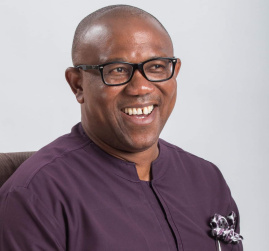
Also in his reaction, the former presidential candidate of the Labour Party (LP), Mr. Peter Obi, warned that attempts to regulate media content during a sensitive political period could undermine Nigeria’s democracy.
Writing on his verified X handle, he expressed concern that the country was drifting dangerously at a time when democratic institutions should be strengthened rather than constrained.
“The recent notice by the National Broadcasting Commission, especially at this critical time of the general elections, is very troubling,” he said.
Also Read: “Unfair Leadership” – Sokoto Senator Dumps APC over Lingering Internal Crisis
He emphasized the role of the media as a vital pillar of democracy: “A free and responsible media should not be an enemy to any administration. The media is the conscience of the nation. Attempting to stifle voices, moderate opinions or intimidate journalists under the guise of regulation only weakens our already fragile democracy.”
He further stressed that institutions should serve citizens rather than governments, adding: “At a time when insecurity is on the rise, young Nigerians are losing faith in the country and the economy continues to fail the average citizen, our focus should not be on controlling media narratives, but on delivering results.”
He declared solidarity with media organizations across the country, saying: “Nigeria does not need stronger control. Nigeria needs stronger institutions.”
What Happens Next?
As the 2027 election draws closer, all eyes will be on how the NBC implements its directive and whether broadcast stations will push back against what many see as an assault on press freedom.
For now, the debate rages on – with the government on one side and journalists, editors, and opposition figures on the other.
Stay with Ejes Gist News for more updates on this developing story.
You May Also Like
Trending Now