EXPOSED: INEC Chairman Accused of Using AI-Generated Images to Create Fake Voters Ahead of 2027 Election
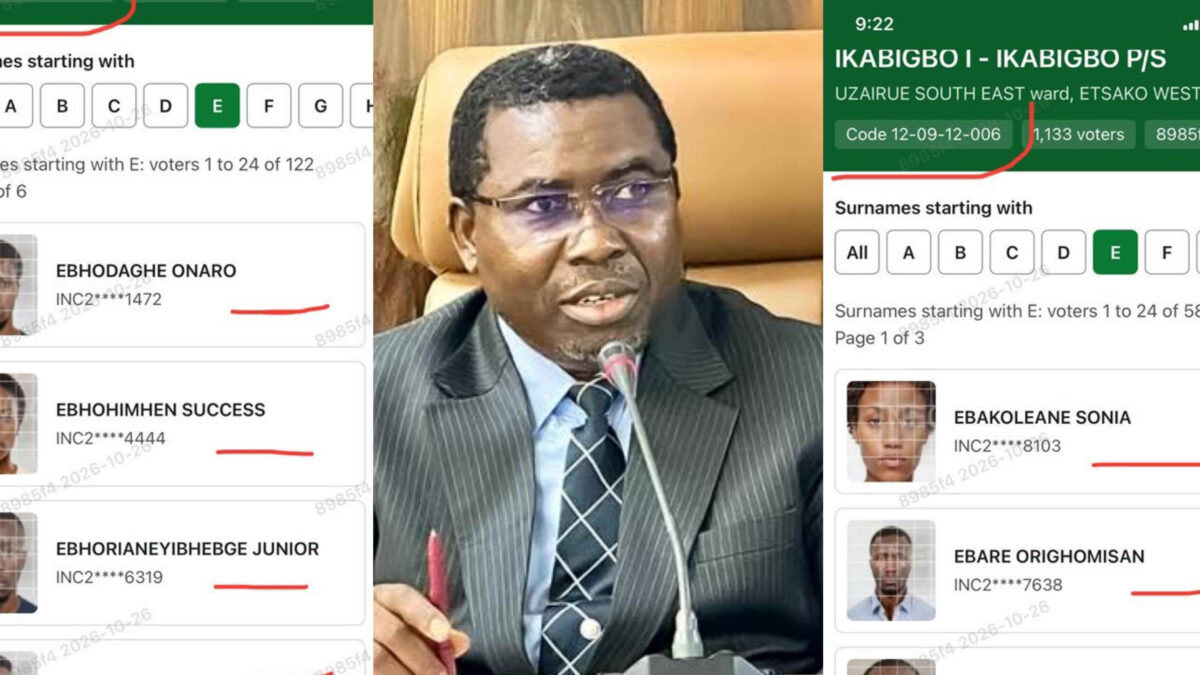
The Independent National Electoral Commission (INEC) has come under scrutiny following allegations that photographs suspected of being generated by artificial intelligence (AI) appeared in its preliminary voters’ register for Ward 11, Uzairue South East, Etsako West Local Government Area of Edo State.
The development has raised concerns about the integrity of Nigeria’s electoral database ahead of the 2027 general elections, with questions emerging over the authenticity of some voter records and the procedures used to verify information uploaded to the commission’s database.
The controversy became public on October 26, 2026, after a housing advocate and property expert identified as Decosule, who uses the handle @SuleDeco on X, shared screenshots from INEC’s online voter register portal showing photographs he questioned as potentially AI-generated.
The allegations have placed INEC Chairman Joash Amupitan and the commission’s voter registration and verification processes under renewed public scrutiny.
However, the appearance of suspicious photographs does not, on its own, establish that the affected entries are fake registrations or that the images were deliberately created to inflate the number of eligible voters.
Suspicious Photographs Found in Edo Voter Register
The screenshots shared by Decosule reportedly showed voter entries from several polling units in Ward 11, including Iyoku-Utukwe Afashio Booth and Ikabigbo Primary School.
The photographs appeared alongside personal details in the preliminary register, prompting questions about whether the images belonged to genuine registered voters and how they were accepted into the commission’s system.
Decosule called on INEC to explain who uploaded the photographs, who captured them and whether Permanent Voter Cards (PVCs) had been collected for the affected entries.
The questions have drawn attention to the importance of maintaining accurate voter records, particularly as political parties and voters prepare for the next general election.
If the photographs are found to be fabricated or linked to fictitious identities, the findings could raise serious concerns about the effectiveness of INEC’s safeguards against fraudulent registration.
However, establishing whether any electoral offence occurred would require verification of the affected records and an explanation from the commission.
Nigerians Raise Concerns Over Electoral Database
The allegations have generated reactions on social media, with some Nigerians questioning how photographs suspected of being AI-generated could appear in an official electoral database.
Other users have raised broader concerns about possible duplicate registrations, the continued appearance of deceased persons in voter records and the accessibility of INEC’s online register for public scrutiny.
One X user, identified as eleniyán of cve, recounted an experience during voter registration in which the system allegedly flagged a duplicate record containing the same surname, first name, middle name, date of birth, state and National Identification Number (NIN), with only the photograph differing.
The account has added to calls for greater transparency in the management of voter information. However, the reported experience has not independently established whether the duplicate record was fraudulent or resulted from a technical or administrative error.
Another user, Mundus, questioned access restrictions affecting the online register from foreign IP addresses and complained about the absence of an online process for submitting claims and objections. The user also alleged that deceased persons remained on the register in their polling unit.
These claims have not been independently verified, but they reflect wider public concerns about the accessibility, accuracy and reliability of the voter register.
Allegations Spark Political Reactions Ahead of 2027
The controversy has also attracted political reactions, with some social media users making unverified allegations that INEC and the ruling All Progressives Congress (APC) were using AI-generated images to create fictitious voters.
Some posts suggested that such records could be used to influence the outcome of the 2027 presidential election in favour of President Bola Tinubu.
Others expressed fears that questionable registrations could undermine the credibility of election results and disadvantage opposition candidates, including Peter Obi and Atiku Abubakar.
However, the claims linking the photographs to the APC, President Tinubu or any planned electoral manipulation have not been substantiated by the evidence presented in the screenshots described in the reports.
The distinction is important because suspicious photographs, duplicate records and deliberately fabricated voter identities are separate issues that require different forms of investigation.
An image that appears artificial may warrant further examination, but it does not automatically prove that the person listed does not exist or that the registration was carried out to manipulate an election.
Questions Over INEC’s Verification Procedures
The controversy has renewed attention on the processes INEC uses to register voters, verify their identities and maintain an accurate electoral database.
The preliminary voters’ register is an important part of the electoral process because it allows eligible voters and other authorised stakeholders to scrutinise the records and identify possible errors or irregularities.
A credible verification process should be able to establish whether the photographs in question correspond to genuine individuals, whether the underlying registration details are authentic and whether any entries violate electoral regulations.
INEC would also need to clarify whether the photographs resulted from deliberate manipulation, mistakes during data processing, technical problems or another cause.
If the images are confirmed to be artificial, the commission’s explanation should address how they entered the database, whether the affected records represent genuine voters and what corrective measures will be taken.
Such clarification would help distinguish isolated errors from systemic weaknesses and prevent unverified allegations from being treated as established facts.
INEC Yet to Address the Allegations in the Provided Reports
The allegations have prompted calls for INEC to provide a clear account of the photographs and the voter records associated with them.
As of the information contained in the reports provided, no official response from the commission addressing the specific photographs, identifying the affected entries or explaining the verification process was included.
INEC’s response would be central to determining whether the photographs represent genuine registered voters, technical or administrative errors, or fabricated identities.
The commission could also help address public concerns by explaining the procedures available for challenging questionable entries and reporting suspected irregularities in the voters’ register.
Given the importance of public confidence in elections, a transparent investigation would help establish the facts and determine whether any corrective action is necessary.
Credibility of 2027 Election at Stake
The controversy comes as political parties and their supporters increasingly focus on preparations for the 2027 general elections.
The accuracy of the voters’ register is fundamental to public confidence in the electoral process. Unresolved questions about voter identities can create suspicion, while unsupported allegations can also deepen distrust in electoral institutions.
For INEC, the immediate challenge is to establish the authenticity of the disputed photographs and explain how the affected records were processed.
Until the claims are independently verified, allegations that AI-generated images were deliberately used to create fake voters should not be treated as proven.
A credible investigation, accompanied by clear public communication, would help determine the facts and reinforce confidence in the electoral process ahead of 2027.
Ejes Gist News stands for truth, responsible journalism, editorial integrity and fearless accountability.
You May Also Like

Trending Now