
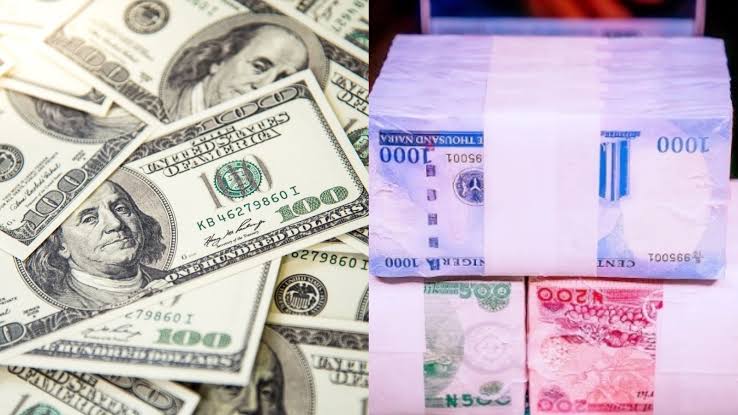
Dollar to Naira Exchange Rate Today — April 22, 2026
The dollar to naira exchange rate today, April 22, 2026, reflects continued stability across Nigeria’s foreign exchange markets, with only marginal movements recorded between the official and parallel segments.
Data from the Nigerian Foreign Exchange Market (NFEM) indicates that the naira is trading within the ₦1,346 to ₦1,350 per dollar range in official transactions, maintaining a narrow band consistent with recent market performance.
Ejes Gist News reports that the local currency has sustained relative stability due to improved liquidity in the official window and steady foreign exchange inflows, particularly from exporters and remittances.
Official Exchange Rate (NFEM / CBN Window)
At the official market window:
- Average rate: ₦1,346 – ₦1,350 per $1
- Trend: stable with slight fluctuations
- Market condition: balanced demand and supply
The Central Bank of Nigeria’s exchange rate management continues to anchor the naira within a controlled range, reducing volatility in the formal segment of the market.
Black Market (Parallel Market) Rate
In the parallel market, also known as the black market, rates remain higher due to persistent demand outside official channels:
- Buying rate: approximately ₦1,400 per $1
- Selling rate: between ₦1,410 and ₦1,420 per $1
The spread between the official and parallel market rates highlights ongoing structural challenges in foreign exchange accessibility.
Dollar to Naira Rate Trend Analysis
A comparison with the previous trading session shows minimal variation:
- April 21, 2026: around ₦1,345 per dollar (official market)
- April 22, 2026: ₦1,346 – ₦1,350 per dollar (official market)
This indicates a largely flat trend, with the naira maintaining stability against the US dollar in the short term.
Key Factors Driving the Exchange Rate
Several macroeconomic and policy-driven factors continue to influence the dollar to naira exchange rate:
1. Central Bank Interventions
The Central Bank of Nigeria plays a critical role in stabilising the naira through liquidity management and foreign exchange interventions.
2. Foreign Exchange Supply
Inflows from oil exports, non-oil exports, and diaspora remittances contribute to FX availability in the official market.
3. Demand Pressure
Importers, businesses, and individuals seeking foreign currency continue to drive demand, particularly in the parallel market.
4. Global Economic Conditions
Movements in global markets, including US monetary policy and geopolitical developments, affect the strength of the dollar and emerging market currencies.
Implications for Nigeria’s Economy
The current exchange rate stability has several implications:
- Inflation Control: Stable exchange rates can moderate imported inflation
- Business Planning: Predictable rates support pricing and investment decisions
- Investor Confidence: Reduced volatility improves market sentiment
However, the persistent gap between official and parallel market rates underscores the need for continued reforms in the foreign exchange market.
- Dollar to Naira Exchange Rate Today — April 21, 2026
- Dollar to Naira Exchange Rate Today — April 20, 2026
Outlook for the Naira
Market observers expect the naira to remain within a controlled range in the near term, provided current liquidity levels are sustained and demand pressures do not intensify significantly.
Attention remains on policy direction from the Central Bank of Nigeria, fiscal authorities, and broader economic reforms aimed at strengthening the currency and improving foreign exchange supply dynamics.
Ejes Gist News stands for truth, responsible journalism, editorial integrity and fearless accountability.
You May Also Like

Trending Now