
15 best methods for preventing food wastage now
15 Practical Ways to Stop Wasting Food Today
Research suggests that about 14% of the food the world grows is lost on its way from the farm to the retailer. Substantial quantities are also thrown away once they reach shops and households.
Food loss covers what disappears between harvest and the retail stage, not counting retail itself. Food waste, by contrast, refers to what is discarded by retailers or consumers.
Available figures indicate that waste accounts for roughly 17% of all food produced worldwide, broken down into 11% from households, 5% from food service and 2% from retail.
The global food system also expends 38% of its energy on food that ends up being wasted.
The Food and Agriculture Organization of the United Nations (FAO) warns that losing and wasting food adds further pressure on natural resources and inflicts damage on the environment.
Related: INEC ad hoc staff recruitment — how to apply on pres.inecnigeria.org
According to the FAO, discarding food amounts to discarding the labour, effort, investment and precious inputs such as water, seeds and feed that went into producing it, together with everything spent on transporting and processing it.
Waste also contributes to climate change by driving up greenhouse gas emissions.
The United Nations has issued the following 15 recommendations for cutting food loss and waste:
- Move to a healthier, more sustainable diet
Busy lives can make nutritious cooking a challenge, yet healthy meals need not be difficult. Quick, healthy recipes that you can pass on to family and friends are plentiful online.
-
Buy only what you actually need
Plan meals in advance. Write a shopping list, stick to it and resist impulse purchases. Food waste falls, and so does your bill.
-
Choose imperfect fruit and vegetables
Appearance should not be the only measure of food. Produce that is bruised or oddly shaped is often binned for failing arbitrary cosmetic standards. The taste is no different. Ripe fruit works well in juices, smoothies and desserts.
Rearrange your fridge or cupboard so that older items sit at the front and newer ones behind, and keep opened food in sealed, airtight containers so insects cannot get in.
Understand food labels
A “best before” date and a “use-by” date do not mean the same thing. Food can sometimes still be safe to eat after its “best before” date, whereas the “use-by” date marks the point at which eating it is no longer safe.
Read labels for unhealthy ingredients such as preservatives and trans fats, and steer clear of products with added sugar or salt.
Fifteen easy ways to prevent food waste now
Start small
Serve yourself less at home, and share bigger dishes when eating out.
-
Make the most of leftovers
Anything you have cooked but cannot finish can be frozen for another day or used as an ingredient in a different meal.
Buying less-than-perfect produce and devising new uses for leftovers are both effective ways to curb food loss and waste.
- Recycle your food scraps
Compost scraps rather than binning them. The soil gets its nutrients back and your carbon footprint shrinks.
-
Give food the respect it deserves
Food is what brings people together. Reconnect with it by learning how it is produced: read up on the farmers behind it and get to know them.
Back local food producers
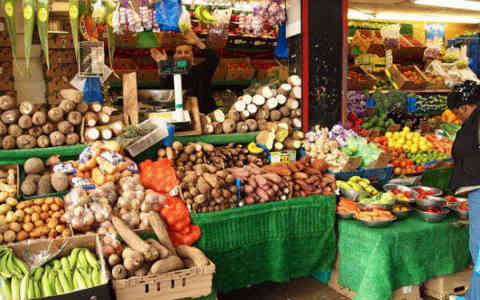
Buying local produce sustains family farms and small businesses in your area. Pollution also falls when trucks and other delivery vehicles travel shorter distances.
Keep fish stocks viable
Opt for plentiful species such as mackerel or herring rather than overfished ones such as cod or tuna. Choose fish that is certified or eco-labelled as sustainably caught or farmed.
Separately, food worth millions of dollars is left to rot in Niger.
Conserve water
Nothing can be grown without water. Farmers need to use less of it, and wasting less food also preserves the water that went into producing it. Fixing leaks and turning off the tap while brushing your teeth are two more ways to save water.
-
Protect soils and water from contamination
Some household waste is hazardous and should never be put in an ordinary bin. Batteries, paint, mobile phones, medicines, chemicals, fertilisers, tyres and ink cartridges are among the items that can leach into soil and water supplies, damaging the natural resources on which food production depends.
Add more pulses and vegetables to your plate
Try a weekly meal built around pulses or “ancient” grains such as quinoa.
You may also like
- Eight reasons to eat bananas and groundnuts regularly
- Three major benefits of tiger nuts
- Ten health benefits of sugarcane juice
- Fifteen easy ways to prevent food waste
- Sharing helps others
Donate food that would otherwise be thrown away. Apps, for instance, can link neighbours and local businesses so that surplus food is shared instead of discarded.
Stay informed and ahead of the curve! Follow our channel on WhatsApp for real-time updates, breaking news, and exclusive content.
Join Our WhatsApp ChannelEjes Gist News ( EGN) stands for truth, responsible journalism, editorial integrity and fearless accountability.
You May Also Like
Trending Now