
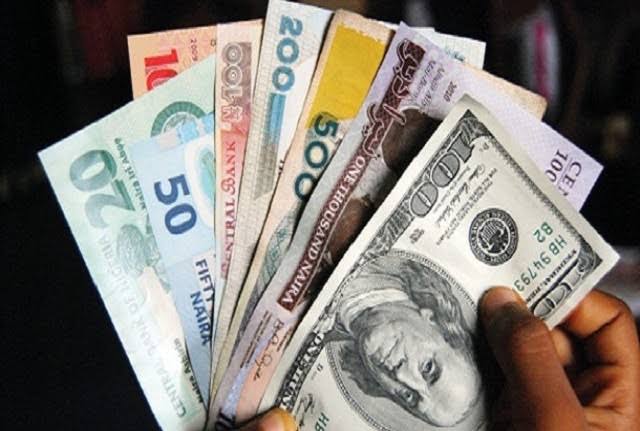
Tag: Dollar To Naira Exchange Rate Today In Banks

  • Dollar to Naira Exchange Rate at Black Market (Aboki FX) August 1, 2024: USD to NGN CBN Rate

    Dollar to Naira Exchange Rate at Black Market (Aboki FX) August 1, 2024: USD to NGN CBN Rate

    For many Nigerians, especially those engaged in foreign trade, travel, and investments, there is a nagging concern for the dollar-naira exchange rate.

    The black market rate for dollars to naira, parallel or Aboki FX as some know it will most of the time give different rates from the official CBN rates.

    At this point, the exchange rate was still moving up and down. The current dollar to naira exchange rate today, August 1, 2024, what drives the rate, and how all these affect the economy of Nigeria are discussed in this article.

    Dollar to Naira Today Black Market. 

    Current Black Market Dollar to Naira exchange rate. 

    • Buying Rate: N1600
    • Selling Rate: N1610

    Official CBN Rates

    • Buying Rate: N1684
    • Selling Rate: N1685

    Understanding the Black Market for Forex

    What is the Black Market?

    The black market refers to unofficial exchange channels where currencies are traded without government regulation. This market often provides more competitive rates due to the high demand and limited supply of foreign currencies.

    Why Do People Use the Black Market?

    People turn to the black market due to:

    • Favorable Rates: Often higher than official rates.
    • Accessibility: Easier to obtain foreign currency without stringent regulatory requirements.

    Factors Influencing Black Market Rates.

    Economic Policies

    Government decisions on interest rates, inflation control, and forex regulations by the CBN directly affect the naira’s value. Policy adjustments aimed at stabilizing the naira impact the exchange rates.

    Supply and Demand

    The availability of foreign currency versus its demand significantly influences exchange rates. A shortage of foreign currency or high demand leads to naira depreciation.

    Political Stability

    Geopolitical events and internal political stability affect investor confidence. Political unrest or uncertainty can cause the naira to depreciate, while stability strengthens it.

    Global Economic Conditions

    Global market conditions, such as oil prices, international economic trends, and global inflation rates, influence the naira’s value. A significant drop in oil prices, for instance, negatively impacts Nigeria’s economy.

    Comparing Dollar to Naira Official and  Black Market Rates

    Why the Disparity?

    Several factors contribute to the disparity:

    • Supply and Demand: Limited availability in the official market drives people to the black market.
    • Regulatory Restrictions: CBN imposes limits on forex availability, leading to higher black market rates.
    • Economic Instability: Fluctuations in oil prices and inflation prompt people to seek more favorable black market rates.

    Impact on the Economy

    High black market rates can:

    • Inflation: Increase costs for imported goods.
    • Investment: Deter foreign investment due to economic instability.
    • Trade: Benefit exporters while imposing higher costs on importers.

    Using the Parallel Market Safely

    Tips for Transactions

    • Verify Rates: Check reliable sources like Aboki FX for the latest rates.
    • Reputable Dealers: Engage with trusted Bureau De Change operators to avoid scams.

    Pounds and Euro to Naira Exchange Rates

    Pounds to Naira (CBN Rates)

    • Buying Rate: ₦2,139
    • Selling Rate: ₦2,140

    Euro to Naira (Black Market Rates)

    • Buying Rate: ₦1,778
    • Selling Rate: ₦1,779

    Geegpay and Grey: Online Exchange Platforms

    Geegpay Rates

    • EUR (€): Buying at ₦1,690.03, Selling at ₦1,695.55
    • GBP (£): Buying at ₦1,950, Selling at ₦1,965
    • USD ($): Buying at ₦1,504, Selling at ₦1,570

    Grey Rates

    • EUR (€): Buying at ₦1,640.03, Selling at ₦1,719
    • GBP (£): Buying at ₦1,902, Selling at ₦2,015
    • USD ($): Buying at ₦1,550, Selling at ₦1,570

    FAQs on Dollar to Naira Exchange Rate. 

    How much is a dollar to naira today in the black market? The buying rate is N1588, and the selling rate is N1590 as of July 29, 2024.

    Why does the black market offer higher rates than the CBN? The black market rates are driven by supply and demand dynamics, regulatory restrictions, and economic instability.

    Is it legal to trade forex in the black market? While the CBN discourages it, many engage in the black market due to the unavailability of sufficient forex through official channels.

    What are the risks of trading in the black market? Risks include fluctuating rates, potential scams, and the legal gray area of such transactions.

    Can the CBN influence black market rates? The CBN can influence these rates through monetary policy, forex interventions, and regulatory measures, but direct control is limited.

    How often do black market rates change? Rates can change on a daily or even multiple times per day, depending on market conditions and economic news.

    Conclusion on Dollar to Naira Black Market Rate Today.

    The black market dollar-to-naira exchange rate represents an interaction of intricate components: economic factors, regulatory frameworks, and market dynamics. It’s a reality for quite a good number of Nigerians who need forex, and this also highlights the depth and scope of the challenges and opportunities Nigeria has encountered in its economic landscape. Knowledge of these rates and the underpinning determinants is also quite instrumental in making decisions related to finance.

    Happy New Month of August 2024 Messages, Wishes, Prayers and Quotes


    Good morning, and welcome to the month of August 2024. May this month of August be your month of total upliftment. May the Almighty God do for you those things you cannot do for yourself, in Jesus name, amen.


    Read more at: https://ejesgist.com/happy-new-month-of-august-messages-wishes-prayers/

  • Dollar to Naira Exchange Rate at Black Market (Aboki FX) July 31, 2024: USD to NGN CBN Rate

    Dollar to Naira Exchange Rate at Black Market (Aboki FX) July 31, 2024: USD to NGN CBN Rate

    For many Nigerians, especially those engaged in foreign trade, travel, and investments, there is a nagging concern for the dollar-naira exchange rate.

    The black market rate for dollars to naira, parallel or Aboki FX as some know it will most of the time give different rates from the official CBN rates.

    At this point, the exchange rate was still moving up and down. The current dollar to naira exchange rate today, July 31, 2024, what drives the rate, and how all these affect the economy of Nigeria are discussed in this article.

    Dollar to Naira Today Black Market. 

    Current Black Market Dollar to Naira exchange rate. 

    • Buying Rate: N1595
    • Selling Rate: N1600

    Official CBN Rates

    • Buying Rate: N1684
    • Selling Rate: N1685

    Understanding the Black Market for Forex

    What is the Black Market?

    The black market refers to unofficial exchange channels where currencies are traded without government regulation. This market often provides more competitive rates due to the high demand and limited supply of foreign currencies.

    Why Do People Use the Black Market?

    People turn to the black market due to:

    • Favorable Rates: Often higher than official rates.
    • Accessibility: Easier to obtain foreign currency without stringent regulatory requirements.

    Factors Influencing Black Market Rates.

    Economic Policies

    Government decisions on interest rates, inflation control, and forex regulations by the CBN directly affect the naira’s value. Policy adjustments aimed at stabilizing the naira impact the exchange rates.

    Supply and Demand

    The availability of foreign currency versus its demand significantly influences exchange rates. A shortage of foreign currency or high demand leads to naira depreciation.

    Political Stability

    Geopolitical events and internal political stability affect investor confidence. Political unrest or uncertainty can cause the naira to depreciate, while stability strengthens it.

    Global Economic Conditions

    Global market conditions, such as oil prices, international economic trends, and global inflation rates, influence the naira’s value. A significant drop in oil prices, for instance, negatively impacts Nigeria’s economy.

    Comparing Dollar to Naira Official and  Black Market Rates

    Why the Disparity?

    Several factors contribute to the disparity:

    • Supply and Demand: Limited availability in the official market drives people to the black market.
    • Regulatory Restrictions: CBN imposes limits on forex availability, leading to higher black market rates.
    • Economic Instability: Fluctuations in oil prices and inflation prompt people to seek more favorable black market rates.

    Impact on the Economy

    High black market rates can:

    • Inflation: Increase costs for imported goods.
    • Investment: Deter foreign investment due to economic instability.
    • Trade: Benefit exporters while imposing higher costs on importers.

    Using the Parallel Market Safely

    Tips for Transactions

    • Verify Rates: Check reliable sources like Aboki FX for the latest rates.
    • Reputable Dealers: Engage with trusted Bureau De Change operators to avoid scams.

    Pounds and Euro to Naira Exchange Rates

    Pounds to Naira (CBN Rates)

    • Buying Rate: ₦2,139
    • Selling Rate: ₦2,140

    Euro to Naira (Black Market Rates)

    • Buying Rate: ₦1,778
    • Selling Rate: ₦1,779

    Geegpay and Grey: Online Exchange Platforms

    Geegpay Rates

    • EUR (€): Buying at ₦1,690.03, Selling at ₦1,695.55
    • GBP (£): Buying at ₦1,950, Selling at ₦1,965
    • USD ($): Buying at ₦1,504, Selling at ₦1,570

    Grey Rates

    • EUR (€): Buying at ₦1,640.03, Selling at ₦1,719
    • GBP (£): Buying at ₦1,902, Selling at ₦2,015
    • USD ($): Buying at ₦1,550, Selling at ₦1,570

    FAQs on Dollar to Naira Exchange Rate. 

    How much is a dollar to naira today in the black market? The buying rate is N1588, and the selling rate is N1590 as of July 29, 2024.

    Why does the black market offer higher rates than the CBN? The black market rates are driven by supply and demand dynamics, regulatory restrictions, and economic instability.

    Is it legal to trade forex in the black market? While the CBN discourages it, many engage in the black market due to the unavailability of sufficient forex through official channels.

    What are the risks of trading in the black market? Risks include fluctuating rates, potential scams, and the legal gray area of such transactions.

    Can the CBN influence black market rates? The CBN can influence these rates through monetary policy, forex interventions, and regulatory measures, but direct control is limited.

    How often do black market rates change? Rates can change on a daily or even multiple times per day, depending on market conditions and economic news.

    Conclusion on Dollar to Naira Black Market Rate Today.

    The black market dollar-to-naira exchange rate represents an interaction of intricate components: economic factors, regulatory frameworks, and market dynamics. It’s a reality for quite a good number of Nigerians who need forex, and this also highlights the depth and scope of the challenges and opportunities Nigeria has encountered in its economic landscape. Knowledge of these rates and the underpinning determinants is also quite instrumental in making decisions related to finance.


    Kerosene Sold To Nigerians At ₦1,555 Per Liter In June – NBS

    The National Bureau of Statistics has said that Nigerians paid an average of ₦1,555 per liter for kerosene in June as against what it sold for in June 2023.


    The NBS, in its National Household Kerosene Price Watch Report on Tuesday, said the current price of kerosene increased from ₦1,450 in May by 7.22 percent.


    On the report, a litre of kerosene sold at ₦1,236 per liter in June 2023. It increased by 25.73 percent at that price.


    “The average retail price paid by consumers for a liter of Household Kerosene, HHK, in June 2024 was ₦1,555.11, showing an increase of 7.22% over ₦1,450.35 recorded in May 2024. Year-on-year, average retail price per liter of the product increased by 25.73% from ₦1,236.91 in June 2023,” it read.


    Further analysis showed that in some Nigerian families, the price of cooking product varied from state to state. While, Kaduna, Benue and Zamfara states showed the highest increase in price; Kebbi, Taraba and Sokoto states showed the lowest price increase.

  • Dollar to Naira Exchange Rate at Black Market (Aboki FX) July 29, 2024: USD to NGN CBN Rate

    Dollar to Naira Exchange Rate at Black Market (Aboki FX) July 29, 2024: USD to NGN CBN Rate

    For many Nigerians, especially those engaged in foreign trade, travel, and investments, there is a nagging concern for the dollar-naira exchange rate.

    The black market rate for dollars to naira, parallel or Aboki FX as some know it will most of the time give different rates from the official CBN rates.

    At this point, the exchange rate was still moving up and down. The current dollar to naira exchange rate today, 29th July 2024, what drives the rate, and how all these affect the economy of Nigeria are discussed in this article.

    Dollar to Naira Today Black Market. 

    Current Black Market Dollar to Naira exchange rate. 

    • Buying Rate: N1591
    • Selling Rate: N1593

    Official CBN Rates

    • Buying Rate: N1635
    • Selling Rate: N1638

    Understanding the Black Market for Forex

    What is the Black Market?

    The black market refers to unofficial exchange channels where currencies are traded without government regulation. This market often provides more competitive rates due to the high demand and limited supply of foreign currencies.

    Why Do People Use the Black Market?

    People turn to the black market due to:

    • Favorable Rates: Often higher than official rates.
    • Accessibility: Easier to obtain foreign currency without stringent regulatory requirements.

    Factors Influencing Black Market Rates.

    Economic Policies

    Government decisions on interest rates, inflation control, and forex regulations by the CBN directly affect the naira’s value. Policy adjustments aimed at stabilizing the naira impact the exchange rates.

    Supply and Demand

    The availability of foreign currency versus its demand significantly influences exchange rates. A shortage of foreign currency or high demand leads to naira depreciation.

    Political Stability

    Geopolitical events and internal political stability affect investor confidence. Political unrest or uncertainty can cause the naira to depreciate, while stability strengthens it.

    Global Economic Conditions

    Global market conditions, such as oil prices, international economic trends, and global inflation rates, influence the naira’s value. A significant drop in oil prices, for instance, negatively impacts Nigeria’s economy.

    Comparing Dollar to Naira Official and  Black Market Rates

    Why the Disparity?

    Several factors contribute to the disparity:

    • Supply and Demand: Limited availability in the official market drives people to the black market.
    • Regulatory Restrictions: CBN imposes limits on forex availability, leading to higher black market rates.
    • Economic Instability: Fluctuations in oil prices and inflation prompt people to seek more favorable black market rates.

    Impact on the Economy

    High black market rates can:

    • Inflation: Increase costs for imported goods.
    • Investment: Deter foreign investment due to economic instability.
    • Trade: Benefit exporters while imposing higher costs on importers.

    Using the Parallel Market Safely

    Tips for Transactions

    • Verify Rates: Check reliable sources like Aboki FX for the latest rates.
    • Reputable Dealers: Engage with trusted Bureau De Change operators to avoid scams.

    Pounds and Euro to Naira Exchange Rates

    Pounds to Naira (CBN Rates)

    • Buying Rate: ₦2,139
    • Selling Rate: ₦2,140

    Euro to Naira (Black Market Rates)

    • Buying Rate: ₦1,778
    • Selling Rate: ₦1,779

    Geegpay and Grey: Online Exchange Platforms

    Geegpay Rates

    • EUR (€): Buying at ₦1,690.03, Selling at ₦1,695.55
    • GBP (£): Buying at ₦1,950, Selling at ₦1,965
    • USD ($): Buying at ₦1,504, Selling at ₦1,570

    Grey Rates

    • EUR (€): Buying at ₦1,640.03, Selling at ₦1,719
    • GBP (£): Buying at ₦1,902, Selling at ₦2,015
    • USD ($): Buying at ₦1,550, Selling at ₦1,570

    FAQs on Dollar to Naira Exchange Rate. 

    How much is a dollar to naira today in the black market? The buying rate is N1588, and the selling rate is N1590 as of July 29, 2024.

    Why does the black market offer higher rates than the CBN? The black market rates are driven by supply and demand dynamics, regulatory restrictions, and economic instability.

    Is it legal to trade forex in the black market? While the CBN discourages it, many engage in the black market due to the unavailability of sufficient forex through official channels.

    What are the risks of trading in the black market? Risks include fluctuating rates, potential scams, and the legal gray area of such transactions.

    Can the CBN influence black market rates? The CBN can influence these rates through monetary policy, forex interventions, and regulatory measures, but direct control is limited.

    How often do black market rates change? Rates can change on a daily or even multiple times per day, depending on market conditions and economic news.

    Conclusion on Dollar to Naira Black Market Rate Today.

    The black market dollar-to-naira exchange rate represents an interaction of intricate components: economic factors, regulatory frameworks, and market dynamics. It’s a reality for quite a good number of Nigerians who need forex, and this also highlights the depth and scope of the challenges and opportunities Nigeria has encountered in its economic landscape. Knowledge of these rates and the underpinning determinants is also quite instrumental in making decisions related to finance.

  • Dollar to Naira Exchange Rate at Black Market (Aboki FX) July 27, 2024: USD to NGN CBN Rate

    Dollar to Naira Exchange Rate at Black Market (Aboki FX) July 27, 2024: USD to NGN CBN Rate

    The dollar to naira exchange rate is a significant concern for many Nigerians, especially those involved in foreign trade, travel, and investments.

    The Dollar to Naira black market, also known as the parallel market or Aboki FX, often presents different rates compared to the official Central Bank of Nigeria (CBN) rates.

    This article delves into the current Dollar to Naira exchange rates for today July 27, 2024, factors influencing these rates, and the implications for Nigeria’s economy.

    Dollar to Naira Today Black Market. 

    Current Black Market Dollar to Naira exchange rate. 

    • Buying Rate: N1590
    • Selling Rate: N1592

    Official CBN Rates

    • Buying Rate: N1635
    • Selling Rate: N1638

    Understanding the Black Market for Forex

    What is the Black Market?

    The black market refers to unofficial exchange channels where currencies are traded without government regulation. This market often provides more competitive rates due to the high demand and limited supply of foreign currencies.

    Why Do People Use the Black Market?

    People turn to the black market due to:

    • Favorable Rates: Often higher than official rates.
    • Accessibility: Easier to obtain foreign currency without stringent regulatory requirements.

    Factors Influencing Black Market Rates.

    Economic Policies

    Government decisions on interest rates, inflation control, and forex regulations by the CBN directly affect the naira’s value. Policy adjustments aimed at stabilizing the naira impact the exchange rates.

    Supply and Demand

    The availability of foreign currency versus its demand significantly influences exchange rates. A shortage of foreign currency or high demand leads to naira depreciation.

    Political Stability

    Geopolitical events and internal political stability affect investor confidence. Political unrest or uncertainty can cause the naira to depreciate, while stability strengthens it.

    Global Economic Conditions

    Global market conditions, such as oil prices, international economic trends, and global inflation rates, influence the naira’s value. A significant drop in oil prices, for instance, negatively impacts Nigeria’s economy.

    Comparing Dollar to Naira Official and  Black Market Rates

    Why the Disparity?

    Several factors contribute to the disparity:

    • Supply and Demand: Limited availability in the official market drives people to the black market.
    • Regulatory Restrictions: CBN imposes limits on forex availability, leading to higher black market rates.
    • Economic Instability: Fluctuations in oil prices and inflation prompt people to seek more favorable black market rates.

    Impact on the Economy

    High black market rates can:

    • Inflation: Increase costs for imported goods.
    • Investment: Deter foreign investment due to economic instability.
    • Trade: Benefit exporters while imposing higher costs on importers.

    Using the Parallel Market Safely

    Tips for Transactions

    • Verify Rates: Check reliable sources like Aboki FX for the latest rates.
    • Reputable Dealers: Engage with trusted Bureau De Change operators to avoid scams.

    Pounds and Euro to Naira Exchange Rates

    Pounds to Naira (CBN Rates)

    • Buying Rate: ₦2,139
    • Selling Rate: ₦2,140

    Euro to Naira (Black Market Rates)

    • Buying Rate: ₦1,778
    • Selling Rate: ₦1,779

    Geegpay and Grey: Online Exchange Platforms

    Geegpay Rates

    • EUR (€): Buying at ₦1,690.03, Selling at ₦1,695.55
    • GBP (£): Buying at ₦1,950, Selling at ₦1,965
    • USD ($): Buying at ₦1,504, Selling at ₦1,570

    Grey Rates

    • EUR (€): Buying at ₦1,640.03, Selling at ₦1,719
    • GBP (£): Buying at ₦1,902, Selling at ₦2,015
    • USD ($): Buying at ₦1,550, Selling at ₦1,570

    FAQs on Dollar to Naira Exchange Rate. 

    How much is a dollar to naira today in the black market? The buying rate is N1588, and the selling rate is N1590 as of July 27, 2024.

    Why does the black market offer higher rates than the CBN? The black market rates are driven by supply and demand dynamics, regulatory restrictions, and economic instability.

    Is it legal to trade forex in the black market? While the CBN discourages it, many engage in the black market due to the unavailability of sufficient forex through official channels.

    What are the risks of trading in the black market? Risks include fluctuating rates, potential scams, and the legal gray area of such transactions.

    Can the CBN influence black market rates? The CBN can influence these rates through monetary policy, forex interventions, and regulatory measures, but direct control is limited.

    How often do black market rates change? Rates can change on a daily or even multiple times per day, depending on market conditions and economic news.

    Conclusion on Dollar to Naira Black Market Rate Today.

    The black market dollar-to-naira exchange rate is a complex interplay of economic factors, regulatory frameworks, and market dynamics. While it provides an alternative for many Nigerians seeking forex, it also highlights the broader challenges and opportunities in Nigeria’s economic landscape. Understanding these rates and the factors influencing them is crucial for making informed financial decisions.

  • Dollar to Naira Exchange Rate at Black Market (Aboki FX) July 25, 2024: USD to NGN CBN Rate

    Dollar to Naira Exchange Rate at Black Market (Aboki FX) July 25, 2024: USD to NGN CBN Rate

    The dollar to naira exchange rate is a significant concern for many Nigerians, especially those involved in foreign trade, travel, and investments.

    The Dollar to Naira black market, also known as the parallel market or Aboki FX, often presents different rates compared to the official Central Bank of Nigeria (CBN) rates.

    This article delves into the current Dollar to Naira exchange rates for today July 25, 2024, factors influencing these rates, and the implications for Nigeria’s economy.

    Dollar to Naira Today Black Market. 

    Current Black Market Dollar to Naira exchange rate. 

    • Buying Rate: N1590
    • Selling Rate: N1595

    Official CBN Rates

    • Buying Rate: N1638
    • Selling Rate: N1639

    Understanding the Black Market for Forex

    What is the Black Market?

    The black market refers to unofficial exchange channels where currencies are traded without government regulation. This market often provides more competitive rates due to the high demand and limited supply of foreign currencies.

    Why Do People Use the Black Market?

    People turn to the black market due to:

    • Favorable Rates: Often higher than official rates.
    • Accessibility: Easier to obtain foreign currency without stringent regulatory requirements.

    Factors Influencing Black Market Rates.

    Economic Policies

    Government decisions on interest rates, inflation control, and forex regulations by the CBN directly affect the naira’s value. Policy adjustments aimed at stabilizing the naira impact the exchange rates.

    Supply and Demand

    The availability of foreign currency versus its demand significantly influences exchange rates. A shortage of foreign currency or high demand leads to naira depreciation.

    Political Stability

    Geopolitical events and internal political stability affect investor confidence. Political unrest or uncertainty can cause the naira to depreciate, while stability strengthens it.

    Global Economic Conditions

    Global market conditions, such as oil prices, international economic trends, and global inflation rates, influence the naira’s value. A significant drop in oil prices, for instance, negatively impacts Nigeria’s economy.

    Comparing Dollar to Naira Official and  Black Market Rates

    Why the Disparity?

    Several factors contribute to the disparity:

    • Supply and Demand: Limited availability in the official market drives people to the black market.
    • Regulatory Restrictions: CBN imposes limits on forex availability, leading to higher black market rates.
    • Economic Instability: Fluctuations in oil prices and inflation prompt people to seek more favorable black market rates.

    Impact on the Economy

    High black market rates can:

    • Inflation: Increase costs for imported goods.
    • Investment: Deter foreign investment due to economic instability.
    • Trade: Benefit exporters while imposing higher costs on importers.

    Using the Parallel Market Safely

    Tips for Transactions

    • Verify Rates: Check reliable sources like Aboki FX for the latest rates.
    • Reputable Dealers: Engage with trusted Bureau De Change operators to avoid scams.

    Pounds and Euro to Naira Exchange Rates

    Pounds to Naira (CBN Rates)

    • Buying Rate: ₦2,139
    • Selling Rate: ₦2,140

    Euro to Naira (Black Market Rates)

    • Buying Rate: ₦1,778
    • Selling Rate: ₦1,779

    Geegpay and Grey: Online Exchange Platforms

    Geegpay Rates

    • EUR (€): Buying at ₦1,690.03, Selling at ₦1,695.55
    • GBP (£): Buying at ₦1,950, Selling at ₦1,965
    • USD ($): Buying at ₦1,504, Selling at ₦1,570

    Grey Rates

    • EUR (€): Buying at ₦1,640.03, Selling at ₦1,719
    • GBP (£): Buying at ₦1,902, Selling at ₦2,015
    • USD ($): Buying at ₦1,550, Selling at ₦1,570

    FAQs on Dollar to Naira Exchange Rate. 

    How much is a dollar to naira today in the black market? The buying rate is N1588, and the selling rate is N1590 as of July 25, 2024.

    Why does the black market offer higher rates than the CBN? The black market rates are driven by supply and demand dynamics, regulatory restrictions, and economic instability.

    Is it legal to trade forex in the black market? While the CBN discourages it, many engage in the black market due to the unavailability of sufficient forex through official channels.

    What are the risks of trading in the black market? Risks include fluctuating rates, potential scams, and the legal gray area of such transactions.

    Can the CBN influence black market rates? The CBN can influence these rates through monetary policy, forex interventions, and regulatory measures, but direct control is limited.

    How often do black market rates change? Rates can change on a daily or even multiple times per day, depending on market conditions and economic news.

    Conclusion on Dollar to Naira Black Market Rate Today.

    The black market dollar-to-naira exchange rate is a complex interplay of economic factors, regulatory frameworks, and market dynamics. While it provides an alternative for many Nigerians seeking forex, it also highlights the broader challenges and opportunities in Nigeria’s economic landscape. Understanding these rates and the factors influencing them is crucial for making informed financial decisions.

  • Dollar to Naira Exchange Rate at Black Market (Aboki FX) July 24, 2024: USD to NGN CBN Rate

    Dollar to Naira Exchange Rate at Black Market (Aboki FX) July 24, 2024: USD to NGN CBN Rate

    The dollar to naira exchange rate is a significant concern for many Nigerians, especially those involved in foreign trade, travel, and investments. The Dollar to Naira black market, also known as the parallel market or Aboki FX, often presents different rates compared to the official Central Bank of Nigeria (CBN) rates. This article delves into the current Dollar to Naira exchange rates for today July 24, 2024, factors influencing these rates, and the implications for Nigeria’s economy.

    Dollar to Naira Today Black Market. 

    Current Black Market Dollar to Naira exchange rate. 

    • Buying Rate: N1588
    • Selling Rate: N1590

    Official CBN Rates

    • Buying Rate: N1639
    • Selling Rate: N1640

    Understanding the Black Market for Forex

    What is the Black Market?

    The black market refers to unofficial exchange channels where currencies are traded without government regulation. This market often provides more competitive rates due to the high demand and limited supply of foreign currencies.

    Why Do People Use the Black Market?

    People turn to the black market due to:

    • Favorable Rates: Often higher than official rates.
    • Accessibility: Easier to obtain foreign currency without stringent regulatory requirements.

    Factors Influencing Black Market Rates

    Economic Policies

    Government decisions on interest rates, inflation control, and forex regulations by the CBN directly affect the naira’s value. Policy adjustments aimed at stabilizing the naira impact the exchange rates.

    Supply and Demand

    The availability of foreign currency versus its demand significantly influences exchange rates. A shortage of foreign currency or high demand leads to naira depreciation.

    Political Stability

    Geopolitical events and internal political stability affect investor confidence. Political unrest or uncertainty can cause the naira to depreciate, while stability strengthens it.

    Global Economic Conditions

    Global market conditions, such as oil prices, international economic trends, and global inflation rates, influence the naira’s value. A significant drop in oil prices, for instance, negatively impacts Nigeria’s economy.

    Comparing Official and Black Market Rates

    Why the Disparity?

    Several factors contribute to the disparity:

    • Supply and Demand: Limited availability in the official market drives people to the black market.
    • Regulatory Restrictions: CBN imposes limits on forex availability, leading to higher black market rates.
    • Economic Instability: Fluctuations in oil prices and inflation prompt people to seek more favorable black market rates.

    Impact on the Economy

    High black market rates can:

    • Inflation: Increase costs for imported goods.
    • Investment: Deter foreign investment due to economic instability.
    • Trade: Benefit exporters while imposing higher costs on importers.

    Using the Parallel Market Safely

    Tips for Transactions

    • Verify Rates: Check reliable sources like Aboki FX for the latest rates.
    • Reputable Dealers: Engage with trusted Bureau De Change operators to avoid scams.

    Pounds and Euro to Naira Exchange Rates

    Pounds to Naira (CBN Rates)

    • Buying Rate: ₦2,139
    • Selling Rate: ₦2,140

    Euro to Naira (Black Market Rates)

    • Buying Rate: ₦1,778
    • Selling Rate: ₦1,779

    Geegpay and Grey: Online Exchange Platforms

    Geegpay Rates

    • EUR (€): Buying at ₦1,690.03, Selling at ₦1,695.55
    • GBP (£): Buying at ₦1,950, Selling at ₦1,965
    • USD ($): Buying at ₦1,504, Selling at ₦1,570

    Grey Rates

    • EUR (€): Buying at ₦1,640.03, Selling at ₦1,719
    • GBP (£): Buying at ₦1,902, Selling at ₦2,015
    • USD ($): Buying at ₦1,550, Selling at ₦1,570

    FAQs

    How much is a dollar to naira today in the black market? The buying rate is N1588, and the selling rate is N1590 as of July 24, 2024.

    Why does the black market offer higher rates than the CBN? The black market rates are driven by supply and demand dynamics, regulatory restrictions, and economic instability.

    Is it legal to trade forex in the black market? While the CBN discourages it, many engage in the black market due to the unavailability of sufficient forex through official channels.

    What are the risks of trading in the black market? Risks include fluctuating rates, potential scams, and the legal gray area of such transactions.

    Can the CBN influence black market rates? The CBN can influence these rates through monetary policy, forex interventions, and regulatory measures, but direct control is limited.

    How often do black market rates change? Rates can change on a daily or even multiple times per day, depending on market conditions and economic news.

    Conclusion on Dollar to Naira Black Market Rate Today

    The black market dollar-to-naira exchange rate is a complex interplay of economic factors, regulatory frameworks, and market dynamics. While it provides an alternative for many Nigerians seeking forex, it also highlights the broader challenges and opportunities in Nigeria’s economic landscape. Understanding these rates and the factors influencing them is crucial for making informed financial decisions.

  • Dollar to Naira Exchange Rate at Black Market (Aboki FX) July 23, 2024: USD to NGN CBN Rate

    Dollar to Naira Exchange Rate at Black Market (Aboki FX) July 23, 2024: USD to NGN CBN Rate

    Dollar to Naira Exchange Rate at the Black Market (Aboki FX) Today, July 23, 2024

    Most Nigerians, especially those engaged in foreign trade, travel, and investment, always tend to be very sensitive and inquisitive about the US dollar-to-naira exchange rate. Parallel market rates, otherwise referred to as black market or Aboki FX rates, would often show different prices from the official Central Bank of Nigeria current rates. For many, this is a critical source of foreign exchange.

    How much is a dollar to naira now in black market? Dollar to naira exchange rate at black market yesterday (Aboki dollar rate): The exchange rate for a dollar to naira selling at Lagos Parallel Market (Black Market), yesterday, July 22, 2024, players bought dollars for N 1555 and sold at N 1565 according to sources at Bureau De Change, BDC.

    Read Also: Ali Ndume Speaks on Leaving APC for PDP After Sack by Akpabio-Led Senate

    Please take note that the Central Bank of Nigeria does not recognize the parallel market, popularly known as the black market, for it has directed anybody willing to sell Forex to go to their respective banks.

    Dollar to Naira Black Market Rate Today, July 23, 2024

    • Buying Rate: N1570
    • Selling Rate: N1575

    Dollar to Naira CBN Exchange Rate

    Some stability may come with a government-regulated setting of official rates by the Central Bank of Nigeria. View current rates below:

    • Dollar to Naira (USD to NGN) CBN Rate Today:
      • Buying Rate: N1652
      • Selling Rate: N1653

    These rates reflect government policies aimed at stabilizing the naira and managing foreign exchange reserves. Businesses and individuals who prefer regulated transactions frequently utilise these rates for their transactions.

    Please note that the rate at which you are selling or buying forex may not be the same during capture in this piece because prices keep varying.

    Dollar to Naira Exchange Rate at Black Market (Aboki FX) July 23, 2024: USD to NGN CBN Rate

    Pounds and Euro to Naira Exchange Rates

    For those dealing with currencies other than the US dollar, here are the latest rates:

    Pounds to Naira (CBN Rates)

    • Buying Rate: ₦2,139
    • Selling Rate: ₦2,140

    Euro to Naira (Black Market Rates)

    • Buying Rate: ₦1,798
    • Selling Rate: ₦1,799

    These rates are also subject to market conditions and economic policies.

    Geegpay and Grey: Online Exchange Platforms

    Digital platforms like Geegpay and Grey offer convenient and secure options for currency exchange, providing competitive rates.

    Geegpay Dollar to Naira Rates

    • EUR (€): Buying at ₦1,690.03, Selling at ₦1,695.55
    • GBP (£): Buying at ₦1,950, Selling at ₦1,965
    • USD ($): Buying at ₦1,504, Selling at ₦1,570

    Grey Dollar to Naira Rates

    • EUR (€): Buying at ₦1,640.03, Selling at ₦1,719
    • GBP (£): Buying at ₦1,902, Selling at ₦2,015
    • USD ($): Buying at ₦1,550, Selling at ₦1,570

    These platforms have gained popularity due to their ease of use, transparency, and security, making them viable alternatives to traditional methods.

    Factors Influencing Black Market Rates

    Understanding the factors that influence the dollar to naira exchange rate in the black market can help anticipate changes and make better financial decisions.

    Economic Policies Government policies significantly impact exchange rates. Decisions on interest rates, inflation control, and foreign exchange regulations by the Central Bank of Nigeria (CBN) directly affect the naira’s value. For instance, when the CBN adjusts policies to manage inflation or stabilize the naira, it impacts the exchange rate.

    Supply and Demand The availability of foreign currency versus the demand for it plays a crucial role. When foreign currency is scarce or demand is high, the naira depreciates, leading to higher exchange rates. Conversely, an abundant supply of dollars can lead to lower rates.

    Political Stability Geopolitical events and internal political stability affect investor confidence. Political unrest or uncertainty can cause the naira to depreciate as investors move towards safer assets. Stability and positive political developments, on the other hand, can strengthen the naira.

    Global Economic Conditions Global market conditions, such as shifts in oil prices (a major export for Nigeria), international economic trends, and global inflation rates, influence the naira’s value. For example, a significant drop in oil prices can negatively impact Nigeria’s economy and the naira.

    Comparing Official and Black Market Rates

    There is a significant disparity between official and black market rates. The black market offers higher rates but with substantial risks such as fraud and legal issues. The CBN advises using official channels to avoid these risks. Official rates are stable and reliable, making them suitable for the majority of transactions.

    Why the Disparity Between Official and Black Market Rates?

    The disparity between the official CBN rates and the black market rates is influenced by several factors:

    • Supply and Demand: The availability of foreign currency in the official market is often limited, leading individuals and businesses to seek forex in the black market where demand drives up prices.
    • Regulatory Restrictions: The CBN imposes restrictions on the amount of forex available for personal and business use, making it difficult for many to meet their needs through official channels.
    • Economic Instability: Fluctuations in oil prices, inflation, and economic policies can create uncertainty, prompting people to turn to the parallel market for more favorable rates.

    Impact of Black Market Rates on the Economy

    The high exchange rates in the black market can have various implications for the Nigerian economy:

    • Inflation: Higher costs for imported goods can drive up prices locally, contributing to inflation.
    • Investment: Unfavorable exchange rates can deter foreign investment as investors seek more stable economic environments.
    • Trade: Exporters may benefit from higher naira values per dollar, while importers face increased costs, potentially leading to trade imbalances.

    How to Use the Parallel Market

    For those needing to engage in forex transactions through the black market, safety and caution are paramount. Here are some tips:

    • Verify Rates: Always check the latest rates from reliable sources like Aboki FX to ensure you get the best deal.
    • Deal with Reputable Dealers: Engage with well-known and trusted Bureau De Change operators to avoid scams.

    FAQs on Dollar to Naira Exchange Rate Black Market

    • How much is a dollar to naira today in the black market? The buying rate is N1570, and the selling rate is N1575 as of July 23, 2024.
    • Why does the black market offer higher rates than the CBN? The black market rates are driven by supply and demand dynamics, regulatory restrictions, and economic instability.
    • Is it legal to trade forex in the black market? While the CBN discourages it, many engage in the black market due to the unavailability of sufficient forex through official channels.
    • What are the risks of trading in the black market? Risks include fluctuating rates, potential scams, and the legal gray area of such transactions.
    • Can the CBN influence black market rates? The CBN can influence these rates through monetary policy, forex interventions, and regulatory measures, but direct control is limited.
    • How often do black market rates change? Rates can change on a daily or even multiple times per day, depending on market conditions and economic news.

    Conclusion on the Dollar-Naira Exchange Rate Black Market.

    The black market dollar-to-naira exchange rate represents an intricate play of economic factors, regulatory frameworks, and market dynamics. As critical as it is—being an alternative for many Nigerians who seek forex—it also underlines the challenges and opportunities that exist in Nigeria’s broader economic context.

  • Dollar to Naira Exchange Rate at Black Market (Aboki FX) July 22, 2024: USD to NGN CBN Rate

    Dollar to Naira Exchange Rate at Black Market (Aboki FX) July 22, 2024: USD to NGN CBN Rate

    Dollar to Naira Exchange Rate at the Black Market (Aboki FX) Today, July 22, 2024

    Most Nigerians, especially those engaged in foreign trade, travel, and investment, always tend to be very sensitive and inquisitive about the US dollar-to-naira exchange rate. Parallel market rates, otherwise referred to as black market or Aboki FX rates, would often show different prices from the official Central Bank of Nigeria current rates. For many, this is a critical source of foreign exchange.

    How much is a dollar to naira now in black market? Dollar to naira exchange rate at black market yesterday (Aboki dollar rate): The exchange rate for a dollar to naira selling at Lagos Parallel Market (Black Market), yesterday, July 21, 2024, players bought dollars for N 1555 and sold at N 1565 according to sources at Bureau De Change, BDC.

    Read Also: Ali Ndume Speaks on Leaving APC for PDP After Sack by Akpabio-Led Senate

    Please take note that the Central Bank of Nigeria does not recognize the parallel market, popularly known as the black market, for it has directed anybody willing to sell Forex to go to their respective banks.

    Dollar to Naira Black Market Rate Today, July 22, 2024

    • Buying Rate: N1565
    • Selling Rate: N1570

    Dollar to Naira CBN Exchange Rate

    Some stability may come with a government-regulated setting of official rates by the Central Bank of Nigeria. View current rates below:

    • Dollar to Naira (USD to NGN) CBN Rate Today:
      • Buying Rate: N1653
      • Selling Rate: N1655

    These rates reflect government policies aimed at stabilizing the naira and managing foreign exchange reserves. Businesses and individuals who prefer regulated transactions frequently utilise these rates for their transactions.

    Please note that the rate at which you are selling or buying forex may not be the same during capture in this piece because prices keep varying.

    Dollar to Naira Exchange Rate at Black Market (Aboki FX) July 22, 2024: USD to NGN CBN Rate

    Pounds and Euro to Naira Exchange Rates

    For those dealing with currencies other than the US dollar, here are the latest rates:

    Pounds to Naira (CBN Rates)

    • Buying Rate: ₦2,139
    • Selling Rate: ₦2,140

    Euro to Naira (Black Market Rates)

    • Buying Rate: ₦1,798
    • Selling Rate: ₦1,799

    These rates are also subject to market conditions and economic policies.

    Geegpay and Grey: Online Exchange Platforms

    Digital platforms like Geegpay and Grey offer convenient and secure options for currency exchange, providing competitive rates.

    Geegpay Dollar to Naira Rates

    • EUR (€): Buying at ₦1,690.03, Selling at ₦1,695.55
    • GBP (£): Buying at ₦1,950, Selling at ₦1,965
    • USD ($): Buying at ₦1,504, Selling at ₦1,570

    Grey Dollar to Naira Rates

    • EUR (€): Buying at ₦1,640.03, Selling at ₦1,719
    • GBP (£): Buying at ₦1,902, Selling at ₦2,015
    • USD ($): Buying at ₦1,550, Selling at ₦1,570

    These platforms have gained popularity due to their ease of use, transparency, and security, making them viable alternatives to traditional methods.

    Factors Influencing Black Market Rates

    Understanding the factors that influence the dollar to naira exchange rate in the black market can help anticipate changes and make better financial decisions.

    Economic Policies Government policies significantly impact exchange rates. Decisions on interest rates, inflation control, and foreign exchange regulations by the Central Bank of Nigeria (CBN) directly affect the naira’s value. For instance, when the CBN adjusts policies to manage inflation or stabilize the naira, it impacts the exchange rate.

    Supply and Demand The availability of foreign currency versus the demand for it plays a crucial role. When foreign currency is scarce or demand is high, the naira depreciates, leading to higher exchange rates. Conversely, an abundant supply of dollars can lead to lower rates.

    Political Stability Geopolitical events and internal political stability affect investor confidence. Political unrest or uncertainty can cause the naira to depreciate as investors move towards safer assets. Stability and positive political developments, on the other hand, can strengthen the naira.

    Global Economic Conditions Global market conditions, such as shifts in oil prices (a major export for Nigeria), international economic trends, and global inflation rates, influence the naira’s value. For example, a significant drop in oil prices can negatively impact Nigeria’s economy and the naira.

    Comparing Official and Black Market Rates

    There is a significant disparity between official and black market rates. The black market offers higher rates but with substantial risks such as fraud and legal issues. The CBN advises using official channels to avoid these risks. Official rates are stable and reliable, making them suitable for the majority of transactions.

    Why the Disparity Between Official and Black Market Rates?

    The disparity between the official CBN rates and the black market rates is influenced by several factors:

    • Supply and Demand: The availability of foreign currency in the official market is often limited, leading individuals and businesses to seek forex in the black market where demand drives up prices.
    • Regulatory Restrictions: The CBN imposes restrictions on the amount of forex available for personal and business use, making it difficult for many to meet their needs through official channels.
    • Economic Instability: Fluctuations in oil prices, inflation, and economic policies can create uncertainty, prompting people to turn to the parallel market for more favorable rates.

    Impact of Black Market Rates on the Economy

    The high exchange rates in the black market can have various implications for the Nigerian economy:

    • Inflation: Higher costs for imported goods can drive up prices locally, contributing to inflation.
    • Investment: Unfavorable exchange rates can deter foreign investment as investors seek more stable economic environments.
    • Trade: Exporters may benefit from higher naira values per dollar, while importers face increased costs, potentially leading to trade imbalances.

    How to Use the Parallel Market

    For those needing to engage in forex transactions through the black market, safety and caution are paramount. Here are some tips:

    • Verify Rates: Always check the latest rates from reliable sources like Aboki FX to ensure you get the best deal.
    • Deal with Reputable Dealers: Engage with well-known and trusted Bureau De Change operators to avoid scams.

    FAQs on Dollar to Naira Exchange Rate Black Market

    • How much is a dollar to naira today in the black market? The buying rate is N1555, and the selling rate is N1565 as of July 22, 2024.
    • Why does the black market offer higher rates than the CBN? The black market rates are driven by supply and demand dynamics, regulatory restrictions, and economic instability.
    • Is it legal to trade forex in the black market? While the CBN discourages it, many engage in the black market due to the unavailability of sufficient forex through official channels.
    • What are the risks of trading in the black market? Risks include fluctuating rates, potential scams, and the legal gray area of such transactions.
    • Can the CBN influence black market rates? The CBN can influence these rates through monetary policy, forex interventions, and regulatory measures, but direct control is limited.
    • How often do black market rates change? Rates can change on a daily or even multiple times per day, depending on market conditions and economic news.

    Conclusion on the Dollar-Naira Exchange Rate Black Market.

    The black market dollar-to-naira exchange rate represents an intricate play of economic factors, regulatory frameworks, and market dynamics. As critical as it is—being an alternative for many Nigerians who seek forex—it also underlines the challenges and opportunities that exist in Nigeria’s broader economic context.

  • Dollar to Naira Exchange Rate at Black Market (Aboki FX) July 21, 2024: USD to NGN CBN Rate

    Dollar to Naira Exchange Rate at Black Market (Aboki FX) July 21, 2024: USD to NGN CBN Rate

    Dollar to Naira Exchange Rate at the Black Market (Aboki FX) Today, July 21, 2024

    Most Nigerians, especially those engaged in foreign trade, travel, and investment, always tend to be very sensitive and inquisitive about the US dollar-to-naira exchange rate. Parallel market rates, otherwise referred to as black market or Aboki FX rates, would often show different prices from the official Central Bank of Nigeria current rates. For many, this is a critical source of foreign exchange.

    How much is a dollar to naira now in black market? Dollar to naira exchange rate at black market yesterday (Aboki dollar rate): The exchange rate for a dollar to naira selling at Lagos Parallel Market (Black Market), yesterday, July 20, 2024, players bought dollars for N 1555 and sold at N 1565 according to sources at Bureau De Change, BDC.

    Read Also: Ali Ndume Speaks on Leaving APC for PDP After Sack by Akpabio-Led Senate

    Please take note that the Central Bank of Nigeria does not recognize the parallel market, popularly known as the black market, for it has directed anybody willing to sell Forex to go to their respective banks.

    Dollar to Naira Black Market Rate Today, July 21, 2024

    • Buying Rate: N1580
    • Selling Rate: N1585

    Dollar to Naira CBN Exchange Rate

    Some stability may come with a government-regulated setting of official rates by the Central Bank of Nigeria. View current rates below:

    • Dollar to Naira (USD to NGN) CBN Rate Today:
      • Buying Rate: N1582
      • Selling Rate: N1583

    These rates reflect government policies aimed at stabilizing the naira and managing foreign exchange reserves. Businesses and individuals who prefer regulated transactions frequently utilise these rates for their transactions.

    Please note that the rate at which you are selling or buying forex may not be the same during capture in this piece because prices keep varying.

    Dollar to Naira Exchange Rate at Black Market (Aboki FX) July 21, 2024: USD to NGN CBN Rate

    Pounds and Euro to Naira Exchange Rates

    For those dealing with currencies other than the US dollar, here are the latest rates:

    Pounds to Naira (CBN Rates)

    • Buying Rate: ₦2,107
    • Selling Rate: ₦2,108

    Euro to Naira (Black Market Rates)

    • Buying Rate: ₦1,767
    • Selling Rate: ₦1,769

    These rates are also subject to market conditions and economic policies.

    Geegpay and Grey: Online Exchange Platforms

    Digital platforms like Geegpay and Grey offer convenient and secure options for currency exchange, providing competitive rates.

    Geegpay Dollar to Naira Rates

    • EUR (€): Buying at ₦1,690.03, Selling at ₦1,695.55
    • GBP (£): Buying at ₦1,950, Selling at ₦1,965
    • USD ($): Buying at ₦1,504, Selling at ₦1,570

    Grey Dollar to Naira Rates

    • EUR (€): Buying at ₦1,640.03, Selling at ₦1,719
    • GBP (£): Buying at ₦1,902, Selling at ₦2,015
    • USD ($): Buying at ₦1,550, Selling at ₦1,570

    These platforms have gained popularity due to their ease of use, transparency, and security, making them viable alternatives to traditional methods.

    Factors Influencing Black Market Rates

    Understanding the factors that influence the dollar to naira exchange rate in the black market can help anticipate changes and make better financial decisions.

    Economic Policies Government policies significantly impact exchange rates. Decisions on interest rates, inflation control, and foreign exchange regulations by the Central Bank of Nigeria (CBN) directly affect the naira’s value. For instance, when the CBN adjusts policies to manage inflation or stabilize the naira, it impacts the exchange rate.

    Supply and Demand The availability of foreign currency versus the demand for it plays a crucial role. When foreign currency is scarce or demand is high, the naira depreciates, leading to higher exchange rates. Conversely, an abundant supply of dollars can lead to lower rates.

    Political Stability Geopolitical events and internal political stability affect investor confidence. Political unrest or uncertainty can cause the naira to depreciate as investors move towards safer assets. Stability and positive political developments, on the other hand, can strengthen the naira.

    Global Economic Conditions Global market conditions, such as shifts in oil prices (a major export for Nigeria), international economic trends, and global inflation rates, influence the naira’s value. For example, a significant drop in oil prices can negatively impact Nigeria’s economy and the naira.

    Comparing Official and Black Market Rates

    There is a significant disparity between official and black market rates. The black market offers higher rates but with substantial risks such as fraud and legal issues. The CBN advises using official channels to avoid these risks. Official rates are stable and reliable, making them suitable for the majority of transactions.

    Why the Disparity Between Official and Black Market Rates?

    The disparity between the official CBN rates and the black market rates is influenced by several factors:

    • Supply and Demand: The availability of foreign currency in the official market is often limited, leading individuals and businesses to seek forex in the black market where demand drives up prices.
    • Regulatory Restrictions: The CBN imposes restrictions on the amount of forex available for personal and business use, making it difficult for many to meet their needs through official channels.
    • Economic Instability: Fluctuations in oil prices, inflation, and economic policies can create uncertainty, prompting people to turn to the parallel market for more favorable rates.

    Impact of Black Market Rates on the Economy

    The high exchange rates in the black market can have various implications for the Nigerian economy:

    • Inflation: Higher costs for imported goods can drive up prices locally, contributing to inflation.
    • Investment: Unfavorable exchange rates can deter foreign investment as investors seek more stable economic environments.
    • Trade: Exporters may benefit from higher naira values per dollar, while importers face increased costs, potentially leading to trade imbalances.

    How to Use the Parallel Market

    For those needing to engage in forex transactions through the black market, safety and caution are paramount. Here are some tips:

    • Verify Rates: Always check the latest rates from reliable sources like Aboki FX to ensure you get the best deal.
    • Deal with Reputable Dealers: Engage with well-known and trusted Bureau De Change operators to avoid scams.

    FAQs on Dollar to Naira Exchange Rate Black Market

    • How much is a dollar to naira today in the black market? The buying rate is N1555, and the selling rate is N1565 as of July 21, 2024.
    • Why does the black market offer higher rates than the CBN? The black market rates are driven by supply and demand dynamics, regulatory restrictions, and economic instability.
    • Is it legal to trade forex in the black market? While the CBN discourages it, many engage in the black market due to the unavailability of sufficient forex through official channels.
    • What are the risks of trading in the black market? Risks include fluctuating rates, potential scams, and the legal gray area of such transactions.
    • Can the CBN influence black market rates? The CBN can influence these rates through monetary policy, forex interventions, and regulatory measures, but direct control is limited.
    • How often do black market rates change? Rates can change on a daily or even multiple times per day, depending on market conditions and economic news.

    Conclusion on the Dollar-Naira Exchange Rate Black Market.

    The black market dollar-to-naira exchange rate represents an intricate play of economic factors, regulatory frameworks, and market dynamics. As critical as it is—being an alternative for many Nigerians who seek forex—it also underlines the challenges and opportunities that exist in Nigeria’s broader economic context.

  • Dollar to Naira Exchange Rate at Black Market (Aboki FX) July 19, 2024: USD to NGN CBN Rate

    Dollar to Naira Exchange Rate at Black Market (Aboki FX) July 19, 2024: USD to NGN CBN Rate

    Dollar to Naira Exchange Rate at the Black Market (Aboki FX) Today, July 19, 2024

    Most Nigerians, especially those engaged in foreign trade, travel, and investment, always tend to be very sensitive and inquisitive about the US dollar-to-naira exchange rate. Parallel market rates, otherwise referred to as black market or Aboki FX rates, would often show different prices from the official Central Bank of Nigeria current rates. For many, this is a critical source of foreign exchange.

    How much is a dollar to naira now in black market? Dollar to naira exchange rate at black market yesterday (Aboki dollar rate): The exchange rate for a dollar to naira selling at Lagos Parallel Market (Black Market), yesterday, July 18, 2024, players bought dollars for N 1555 and sold at N 1565 according to sources at Bureau De Change, BDC.


    Please take note that the Central Bank of Nigeria does not recognize the parallel market, popularly known as the black market, for it has directed anybody willing to sell Forex to go to their respective banks.

    Dollar to Naira Black Market Rate Today, July 19, 2024

    • Buying Rate: N1580
    • Selling Rate: N1585

    Dollar to Naira CBN Exchange Rate

    Some stability may come with a government-regulated setting of official rates by the Central Bank of Nigeria. View current rates below:

    • Dollar to Naira (USD to NGN) CBN Rate Today:
      • Buying Rate: N1655
      • Selling Rate: N1656

    These rates reflect government policies aimed at stabilizing the naira and managing foreign exchange reserves. Businesses and individuals who prefer regulated transactions frequently utilise these rates for their transactions.

    Please note that the rate at which you are selling or buying forex may not be the same during capture in this piece because prices keep varying.

    Dollar to Naira Exchange Rate at Black Market (Aboki FX) July 19, 2024: USD to NGN CBN Rate

    Pounds and Euro to Naira Exchange Rates

    For those dealing with currencies other than the US dollar, here are the latest rates:

    Pounds to Naira (CBN Rates)

    • Buying Rate: ₦2,107
    • Selling Rate: ₦2,108

    Euro to Naira (Black Market Rates)

    • Buying Rate: ₦1,767
    • Selling Rate: ₦1,769

    These rates are also subject to market conditions and economic policies.

    Geegpay and Grey: Online Exchange Platforms

    Digital platforms like Geegpay and Grey offer convenient and secure options for currency exchange, providing competitive rates.

    Geegpay Dollar to Naira Rates

    • EUR (€): Buying at ₦1,690.03, Selling at ₦1,695.55
    • GBP (£): Buying at ₦1,950, Selling at ₦1,965
    • USD ($): Buying at ₦1,504, Selling at ₦1,570

    Grey Dollar to Naira Rates

    • EUR (€): Buying at ₦1,640.03, Selling at ₦1,719
    • GBP (£): Buying at ₦1,902, Selling at ₦2,015
    • USD ($): Buying at ₦1,550, Selling at ₦1,570

    These platforms have gained popularity due to their ease of use, transparency, and security, making them viable alternatives to traditional methods.

    Factors Influencing Black Market Rates

    Understanding the factors that influence the dollar to naira exchange rate in the black market can help anticipate changes and make better financial decisions.

    Economic Policies Government policies significantly impact exchange rates. Decisions on interest rates, inflation control, and foreign exchange regulations by the Central Bank of Nigeria (CBN) directly affect the naira’s value. For instance, when the CBN adjusts policies to manage inflation or stabilize the naira, it impacts the exchange rate.

    Supply and Demand The availability of foreign currency versus the demand for it plays a crucial role. When foreign currency is scarce or demand is high, the naira depreciates, leading to higher exchange rates. Conversely, an abundant supply of dollars can lead to lower rates.

    Political Stability Geopolitical events and internal political stability affect investor confidence. Political unrest or uncertainty can cause the naira to depreciate as investors move towards safer assets. Stability and positive political developments, on the other hand, can strengthen the naira.

    Global Economic Conditions Global market conditions, such as shifts in oil prices (a major export for Nigeria), international economic trends, and global inflation rates, influence the naira’s value. For example, a significant drop in oil prices can negatively impact Nigeria’s economy and the naira.

    Comparing Official and Black Market Rates

    There is a significant disparity between official and black market rates. The black market offers higher rates but with substantial risks such as fraud and legal issues. The CBN advises using official channels to avoid these risks. Official rates are stable and reliable, making them suitable for the majority of transactions.

    Why the Disparity Between Official and Black Market Rates?

    The disparity between the official CBN rates and the black market rates is influenced by several factors:

    • Supply and Demand: The availability of foreign currency in the official market is often limited, leading individuals and businesses to seek forex in the black market where demand drives up prices.
    • Regulatory Restrictions: The CBN imposes restrictions on the amount of forex available for personal and business use, making it difficult for many to meet their needs through official channels.
    • Economic Instability: Fluctuations in oil prices, inflation, and economic policies can create uncertainty, prompting people to turn to the parallel market for more favorable rates.

    Impact of Black Market Rates on the Economy

    The high exchange rates in the black market can have various implications for the Nigerian economy:

    • Inflation: Higher costs for imported goods can drive up prices locally, contributing to inflation.
    • Investment: Unfavorable exchange rates can deter foreign investment as investors seek more stable economic environments.
    • Trade: Exporters may benefit from higher naira values per dollar, while importers face increased costs, potentially leading to trade imbalances.

    How to Use the Parallel Market

    For those needing to engage in forex transactions through the black market, safety and caution are paramount. Here are some tips:

    • Verify Rates: Always check the latest rates from reliable sources like Aboki FX to ensure you get the best deal.
    • Deal with Reputable Dealers: Engage with well-known and trusted Bureau De Change operators to avoid scams.

    FAQs on Dollar to Naira Exchange Rate Black Market

    • How much is a dollar to naira today in the black market? The buying rate is N1555, and the selling rate is N1565 as of July 19, 2024.
    • Why does the black market offer higher rates than the CBN? The black market rates are driven by supply and demand dynamics, regulatory restrictions, and economic instability.
    • Is it legal to trade forex in the black market? While the CBN discourages it, many engage in the black market due to the unavailability of sufficient forex through official channels.
    • What are the risks of trading in the black market? Risks include fluctuating rates, potential scams, and the legal gray area of such transactions.
    • Can the CBN influence black market rates? The CBN can influence these rates through monetary policy, forex interventions, and regulatory measures, but direct control is limited.
    • How often do black market rates change? Rates can change on a daily or even multiple times per day, depending on market conditions and economic news.

    Conclusion on the Dollar-Naira Exchange Rate Black Market.

    The black market dollar-to-naira exchange rate represents an intricate play of economic factors, regulatory frameworks, and market dynamics. As critical as it is—being an alternative for many Nigerians who seek forex—it also underlines the challenges and opportunities that exist in Nigeria’s broader economic context.

  • Dollar to Naira Exchange Rate at Black Market (Aboki FX) July 15, 2024: USD to NGN CBN Rate

    Dollar to Naira Exchange Rate at Black Market (Aboki FX) July 15, 2024: USD to NGN CBN Rate

    Dollar to Naira Exchange Rate at the Black Market (Aboki FX) Today, July 15, 2024

    Most Nigerians, especially those engaged in foreign trade, travel, and investment, always tend to be very sensitive and inquisitive about the US dollar-to-naira exchange rate. Parallel market rates, otherwise referred to as black market or Aboki FX rates, would often show different prices from the official Central Bank of Nigeria current rates. For many, this is a critical source of foreign exchange.

    How much is a dollar to naira now in black market? Dollar to naira exchange rate at black market yesterday (Aboki dollar rate): The exchange rate for a dollar to naira selling at Lagos Parallel Market (Black Market), yesterday, July 14, 2024, players bought dollars for N 1555 and sold at N 1565 according to sources at Bureau De Change, BDC.

    Please take note that the Central Bank of Nigeria does not recognize the parallel market, popularly known as the black market, for it has directed anybody willing to sell Forex to go to their respective banks.

    Dollar to Naira Black Market Rate Today, July 15, 2024

    • Buying Rate: N1555
    • Selling Rate: N1565

    Dollar to Naira CBN Exchange Rate

    Some stability may come with a government-regulated setting of official rates by the Central Bank of Nigeria. View current rates below:

    • Dollar to Naira (USD to NGN) CBN Rate Today:
      • Buying Rate: N1660
      • Selling Rate: N1663

    These rates reflect government policies aimed at stabilizing the naira and managing foreign exchange reserves. Businesses and individuals who prefer regulated transactions frequently utilise these rates for their transactions.

    Please note that the rate at which you are selling or buying forex may not be the same during capture in this piece because prices keep varying.

    Dollar to Naira Exchange Rate at Black Market (Aboki FX) July 15, 2024: USD to NGN CBN Rate

    Pounds and Euro to Naira Exchange Rates

    For those dealing with currencies other than the US dollar, here are the latest rates:

    Pounds to Naira (CBN Rates)

    • Buying Rate: ₦2,106
    • Selling Rate: ₦2,107

    Euro to Naira (Black Market Rates)

    • Buying Rate: ₦1,767
    • Selling Rate: ₦1,769

    These rates are also subject to market conditions and economic policies.

    Geegpay and Grey: Online Exchange Platforms

    Digital platforms like Geegpay and Grey offer convenient and secure options for currency exchange, providing competitive rates.

    Geegpay Dollar to Naira Rates

    • EUR (€): Buying at ₦1,690.03, Selling at ₦1,695.55
    • GBP (£): Buying at ₦1,950, Selling at ₦1,965
    • USD ($): Buying at ₦1,504, Selling at ₦1,570

    Grey Dollar to Naira Rates

    • EUR (€): Buying at ₦1,640.03, Selling at ₦1,719
    • GBP (£): Buying at ₦1,902, Selling at ₦2,015
    • USD ($): Buying at ₦1,550, Selling at ₦1,570

    These platforms have gained popularity due to their ease of use, transparency, and security, making them viable alternatives to traditional methods.

    Factors Influencing Black Market Rates

    Understanding the factors that influence the dollar to naira exchange rate in the black market can help anticipate changes and make better financial decisions.

    Economic Policies Government policies significantly impact exchange rates. Decisions on interest rates, inflation control, and foreign exchange regulations by the Central Bank of Nigeria (CBN) directly affect the naira’s value. For instance, when the CBN adjusts policies to manage inflation or stabilize the naira, it impacts the exchange rate.

    Supply and Demand The availability of foreign currency versus the demand for it plays a crucial role. When foreign currency is scarce or demand is high, the naira depreciates, leading to higher exchange rates. Conversely, an abundant supply of dollars can lead to lower rates.

    Political Stability Geopolitical events and internal political stability affect investor confidence. Political unrest or uncertainty can cause the naira to depreciate as investors move towards safer assets. Stability and positive political developments, on the other hand, can strengthen the naira.

    Global Economic Conditions Global market conditions, such as shifts in oil prices (a major export for Nigeria), international economic trends, and global inflation rates, influence the naira’s value. For example, a significant drop in oil prices can negatively impact Nigeria’s economy and the naira.

    Comparing Official and Black Market Rates

    There is a significant disparity between official and black market rates. The black market offers higher rates but with substantial risks such as fraud and legal issues. The CBN advises using official channels to avoid these risks. Official rates are stable and reliable, making them suitable for the majority of transactions.

    Why the Disparity Between Official and Black Market Rates?

    The disparity between the official CBN rates and the black market rates is influenced by several factors:

    • Supply and Demand: The availability of foreign currency in the official market is often limited, leading individuals and businesses to seek forex in the black market where demand drives up prices.
    • Regulatory Restrictions: The CBN imposes restrictions on the amount of forex available for personal and business use, making it difficult for many to meet their needs through official channels.
    • Economic Instability: Fluctuations in oil prices, inflation, and economic policies can create uncertainty, prompting people to turn to the parallel market for more favorable rates.

    Impact of Black Market Rates on the Economy

    The high exchange rates in the black market can have various implications for the Nigerian economy:

    • Inflation: Higher costs for imported goods can drive up prices locally, contributing to inflation.
    • Investment: Unfavorable exchange rates can deter foreign investment as investors seek more stable economic environments.
    • Trade: Exporters may benefit from higher naira values per dollar, while importers face increased costs, potentially leading to trade imbalances.

    How to Use the Parallel Market

    For those needing to engage in forex transactions through the black market, safety and caution are paramount. Here are some tips:

    • Verify Rates: Always check the latest rates from reliable sources like Aboki FX to ensure you get the best deal.
    • Deal with Reputable Dealers: Engage with well-known and trusted Bureau De Change operators to avoid scams.

    FAQs on Dollar to Naira Exchange Rate Black Market

    • How much is a dollar to naira today in the black market? The buying rate is N1555, and the selling rate is N1565 as of July 15, 2024.
    • Why does the black market offer higher rates than the CBN? The black market rates are driven by supply and demand dynamics, regulatory restrictions, and economic instability.
    • Is it legal to trade forex in the black market? While the CBN discourages it, many engage in the black market due to the unavailability of sufficient forex through official channels.
    • What are the risks of trading in the black market? Risks include fluctuating rates, potential scams, and the legal gray area of such transactions.
    • Can the CBN influence black market rates? The CBN can influence these rates through monetary policy, forex interventions, and regulatory measures, but direct control is limited.
    • How often do black market rates change? Rates can change on a daily or even multiple times per day, depending on market conditions and economic news.

    Conclusion on the Dollar-Naira Exchange Rate Black Market.

    The black market dollar-to-naira exchange rate represents an intricate play of economic factors, regulatory frameworks, and market dynamics. As critical as it is—being an alternative for many Nigerians who seek forex—it also underlines the challenges and opportunities that exist in Nigeria’s broader economic context.

  • Dollar to Naira Exchange Rate at Black Market (Aboki FX) July 13, 2024: USD to NGN CBN Rate

    Dollar to Naira Exchange Rate at Black Market (Aboki FX) July 13, 2024: USD to NGN CBN Rate

    Dollar to Naira Exchange Rate at the Black Market (Aboki FX) Today, July 13, 2024

    Many Nigerians, especially those engaged in foreign trade, travel, and investment, have always been very interested in and concerned about the exchange rate between the US dollar and the Nigerian naira. The parallel market, also known as the black market or Aboki FX, often offers a different rate from the official Central Bank of Nigeria (CBN) rates. For many, this is a critical source of foreign exchange.

    How much is a dollar to naira today in the black market? Dollar to naira exchange rate at black market yesterday (Aboki dollar rate): The exchange rate for a dollar to naira at Lagos Parallel Market (Black Market), yesterday, July 12, 2024, players bought dollars for N1555 and sold at N1565 according to sources at Bureau De Change (BDC).

    Please note that the Central Bank of Nigeria (CBN) does not recognize the parallel market (black market), as it has directed individuals who want to engage in Forex to approach their respective banks.

    Dollar to Naira Black Market Rate Today, July 13, 2024

    • Buying Rate: N1555
    • Selling Rate: N1560

    Dollar to Naira CBN Exchange Rate

    The Central Bank of Nigeria sets the official exchange rates, providing stability through government regulation. As of now, the rates are:

    • Dollar to Naira (USD to NGN) CBN Rate Today:
      • Buying Rate: N1556
      • Selling Rate: N1558

    These rates reflect government policies aimed at stabilizing the naira and managing foreign exchange reserves. Businesses and individuals that prefer regulated transactions frequently rely on these rates.

    Please note that the rates you buy or sell forex may be different from what is captured in this article because prices vary.

    Dollar to Naira Exchange Rate at Black Market (Aboki FX) July 13, 2024: USD to NGN CBN Rate

    Pounds and Euro to Naira Exchange Rates

    For those dealing with currencies other than the US dollar, here are the latest rates:

    Pounds to Naira (CBN Rates)

    • Buying Rate: ₦1,993
    • Selling Rate: ₦1,995

    Euro to Naira (Black Market Rates)

    • Buying Rate: ₦1,684
    • Selling Rate: ₦1,686

    These rates are also subject to market conditions and economic policies.

    Geegpay and Grey: Online Exchange Platforms

    Digital platforms like Geegpay and Grey offer convenient and secure options for currency exchange, providing competitive rates.

    Geegpay Dollar to Naira Rates

    • EUR (€): Buying at ₦1,690.03, Selling at ₦1,695.55
    • GBP (£): Buying at ₦1,950, Selling at ₦1,965
    • USD ($): Buying at ₦1,504, Selling at ₦1,570

    Grey Dollar to Naira Rates

    • EUR (€): Buying at ₦1,640.03, Selling at ₦1,719
    • GBP (£): Buying at ₦1,902, Selling at ₦2,015
    • USD ($): Buying at ₦1,550, Selling at ₦1,570

    These platforms have gained popularity due to their ease of use, transparency, and security, making them viable alternatives to traditional methods.

    Factors Influencing Black Market Rates

    Understanding the factors that influence the dollar to naira exchange rate in the black market can help anticipate changes and make better financial decisions.

    Economic Policies Government policies significantly impact exchange rates. Decisions on interest rates, inflation control, and foreign exchange regulations by the Central Bank of Nigeria (CBN) directly affect the naira’s value. For instance, when the CBN adjusts policies to manage inflation or stabilize the naira, it impacts the exchange rate.

    Supply and Demand The availability of foreign currency versus the demand for it plays a crucial role. When foreign currency is scarce or demand is high, the naira depreciates, leading to higher exchange rates. Conversely, an abundant supply of dollars can lead to lower rates.

    Political Stability Geopolitical events and internal political stability affect investor confidence. Political unrest or uncertainty can cause the naira to depreciate as investors move towards safer assets. Stability and positive political developments, on the other hand, can strengthen the naira.

    Global Economic Conditions Global market conditions, such as shifts in oil prices (a major export for Nigeria), international economic trends, and global inflation rates, influence the naira’s value. For example, a significant drop in oil prices can negatively impact Nigeria’s economy and the naira.

    Comparing Official and Black Market Rates

    There is a significant disparity between official and black market rates. The black market offers higher rates but with substantial risks such as fraud and legal issues. The CBN advises using official channels to avoid these risks. Official rates are stable and reliable, making them suitable for the majority of transactions.

    Why the Disparity Between Official and Black Market Rates?

    The disparity between the official CBN rates and the black market rates is influenced by several factors:

    • Supply and Demand: The availability of foreign currency in the official market is often limited, leading individuals and businesses to seek forex in the black market where demand drives up prices.
    • Regulatory Restrictions: The CBN imposes restrictions on the amount of forex available for personal and business use, making it difficult for many to meet their needs through official channels.
    • Economic Instability: Fluctuations in oil prices, inflation, and economic policies can create uncertainty, prompting people to turn to the parallel market for more favorable rates.

    Impact of Black Market Rates on the Economy

    The high exchange rates in the black market can have various implications for the Nigerian economy:

    • Inflation: Higher costs for imported goods can drive up prices locally, contributing to inflation.
    • Investment: Unfavorable exchange rates can deter foreign investment as investors seek more stable economic environments.
    • Trade: Exporters may benefit from higher naira values per dollar, while importers face increased costs, potentially leading to trade imbalances.

    How to Use the Parallel Market

    For those needing to engage in forex transactions through the black market, safety and caution are paramount. Here are some tips:

    • Verify Rates: Always check the latest rates from reliable sources like Aboki FX to ensure you get the best deal.
    • Deal with Reputable Dealers: Engage with well-known and trusted Bureau De Change operators to avoid scams.

    FAQs on Dollar to Naira Exchange Rate Black Market

    • How much is a dollar to naira today in the black market? The buying rate is N1555, and the selling rate is N1565 as of July 13, 2024.
    • Why does the black market offer higher rates than the CBN? The black market rates are driven by supply and demand dynamics, regulatory restrictions, and economic instability.
    • Is it legal to trade forex in the black market? While the CBN discourages it, many engage in the black market due to the unavailability of sufficient forex through official channels.
    • What are the risks of trading in the black market? Risks include fluctuating rates, potential scams, and the legal gray area of such transactions.
    • Can the CBN influence black market rates? The CBN can influence these rates through monetary policy, forex interventions, and regulatory measures, but direct control is limited.
    • How often do black market rates change? Rates can change on a daily or even multiple times per day, depending on market conditions and economic news.

    Conclusion on the Dollar-Naira Exchange Rate Black Market

    The dollar to naira exchange rate at the black market reflects a complex interplay of economic factors, regulatory frameworks, and market dynamics. While it offers a critical alternative for many Nigerians seeking forex, it also underscores the challenges and opportunities within Nigeria’s broader economic landscape.

  • Dollar to Naira Exchange Rate at Black Market (Aboki FX) July 10, 2024: USD to NGN CBN Rate

    Dollar to Naira Exchange Rate at Black Market (Aboki FX) July 10, 2024: USD to NGN CBN Rate

    What is the Dollar to Naira Exchange rate at the black market also known as the parallel market (Aboki fx) Today July 10, 2024?

    Many Nigerians, especially those engaged in foreign trade, travel, and investment, have always been very interested in and concerned about the exchange rate between the US dollar and the Nigerian naira. The parallel market, also known as the black market or Aboki FX, often offers a different rate from the official Central Bank of Nigeria (CBN) rates. For many, this is a critical source of foreign exchange.

    See the black market Dollar to Naira exchange rate for July 10, 2024, below. At these rates, you can exchange your dollar for Naira.

    How much is a dollar to naira today in the black market?

    Dollar to naira exchange rate at black market Yesterday (Aboki dollar rate):

    The exchange rate for a dollar to naira at Lagos Parallel Market (Black Market), yesterday, July 9,  2024, players buy dollars for N1550 and sell at N1555 according to sources at Bureau De Change (BDC).

    Please note that the Central Bank of Nigeria (CBN) does not recognize the parallel market (black market), as it has directed individuals who want to engage in Forex to approach their respective banks.

    Dollar to Naira Black Market Rate Today July 10, 2024

    Dollar to Naira (USD to NGN) Black Market Exchange Rate Today
    Buying Rate N1550
    Selling Rate N1556

    Dollar to Naira CBN Exchange Rate

    The Central Bank of Nigeria sets the official exchange rates, providing stability through government regulation. As of now, the rates are:

    Dollar to Naira CBN Rate Today

    Dollar to Naira (USD to NGN) CBN Rate Today
    Buying Rate N1556
    Selling Rate N1557


    These rates reflect government policies aimed at stabilizing the naira and managing foreign exchange reserves. Businesses and individuals that prefer regulated transactions frequently rely on these rates.

    Please note that the rates you buy or sell forex may be different from what is captured in this article because prices vary.

    Dollar to Naira Exchange Rate at Black Market (Aboki FX) July 2, 2024: USD to NGN CBN Rate

    Pounds and Euro to Naira Exchange Rates

    For those dealing with currencies other than the US dollar, here are the latest rates:

    Pounds to Naira (CBN Rates)

    • Buying Rate: ₦1,993
    • Selling Rate: ₦1,995

    Euro to Naira (Black Market Rates)

    • Buying Rate: ₦1,684
    • Selling Rate: ₦1,686

    These rates are also subject to market conditions and economic policies.

    Geegpay and Grey: online Exchange Platforms

    Digital platforms like Geegpay and Grey offer convenient and secure options for currency exchange, providing competitive rates.

    Geegpay Dollar to Naira Rates

    • EUR (€): Buying at ₦1,690.03, Selling at ₦1,695.55
    • GBP (£): Buying at ₦1,950, Selling at ₦1,965
    • USD ($): Buying at ₦1,504, Selling at ₦1,570

    Grey Dollar to Naira Rates

    • EUR (€): Buying at ₦1,640.03, Selling at ₦1,719
    • GBP (£): Buying at ₦1,902, Selling at ₦2,015
    • USD ($): Buying at ₦1,550, Selling at ₦1,570

    These platforms have gained popularity due to their ease of use, transparency, and security, making them viable alternatives to traditional methods.

    Factors Influencing Black Market Rates

    Understanding the factors that influence the dollar to naira exchange rate in the black market can help anticipate changes and make better financial decisions.

    Economic Policies

    Government policies significantly impact exchange rates. Decisions on interest rates, inflation control, and foreign exchange regulations by the Central Bank of Nigeria (CBN) directly affect the naira’s value. For instance, when the CBN adjusts policies to manage inflation or stabilize the naira, it impacts the exchange rate.

    Supply and Demand

    The availability of foreign currency versus the demand for it plays a crucial role. When foreign currency is scarce or demand is high, the naira depreciates, leading to higher exchange rates. Conversely, an abundant supply of dollars can lead to lower rates.

    Political Stability

    Geopolitical events and internal political stability affect investor confidence. Political unrest or uncertainty can cause the naira to depreciate as investors move towards safer assets. Stability and positive political developments, on the other hand, can strengthen the naira.

    Global Economic Conditions

    Global market conditions, such as shifts in oil prices (a major export for Nigeria), international economic trends, and global inflation rates, influence the naira’s value. For example, a significant drop in oil prices can negatively impact Nigeria’s economy and the naira.

    Comparing Official and Black Market Rates

    There is a significant disparity between official and black market rates. The black market offers higher rates, but with substantial risks such as fraud and legal issues. The CBN advises using official channels to avoid these risks. Official rates are stable and reliable, making them suitable for the majority of transactions.

    Why the Disparity Between Official and Black Market Rates?

    The disparity between the official CBN rates and the black market rates is influenced by several factors:

    1. Supply and Demand: The availability of foreign currency in the official market is often limited, leading individuals and businesses to seek forex in the black market where demand drives up prices.
    2. Regulatory Restrictions: The CBN imposes restrictions on the amount of forex available for personal and business use, making it difficult for many to meet their needs through official channels.
    3. Economic Instability: Fluctuations in oil prices, inflation, and economic policies can create uncertainty, prompting people to turn to the parallel market for more favorable rates.

    Impact of Black Market Rates on the Economy

    The high exchange rates in the black market can have various implications for the Nigerian economy:

    • Inflation: Higher costs for imported goods can drive up prices locally, contributing to inflation.
    • Investment: Unfavorable exchange rates can deter foreign investment as investors seek more stable economic environments.
    • Trade: Exporters may benefit from higher naira values per dollar, while importers face increased costs, potentially leading to trade imbalances.

    How to use the parallel market 

    For those needing to engage in forex transactions through the black market, safety and caution are paramount. Here are some tips:

    1. Verify Rates: Always check the latest rates from reliable sources like Aboki FX to ensure you get the best deal.
    2. Deal with Reputable Dealers: Engage with well-known and trusted Bureau De Change operators to avoid scams.
    3. Stay Informed: Keep abreast of economic news and CBN policies that could affect exchange rates.

    FAQs on dollar naira exchange rate black market

    • How much is a dollar to naira today in the black market? The buying rate is N1495, and the selling rate is N1500 as of June 23rd, 2024.
    • Why does the black market offer higher rates than the CBN? The black market rates are driven by supply and demand dynamics, regulatory restrictions, and economic instability.
    • Is it legal to trade forex in the black market? While the CBN discourages it, many engage in the black market due to the unavailability of sufficient forex through official channels.
    • What are the risks of trading in the black market? Risks include fluctuating rates, potential scams, and the legal gray area of such transactions.
    • Can the CBN influence black market rates? The CBN can influence these rates through monetary policy, forex interventions, and regulatory measures, but direct control is limited.
    • How often do black market rates change? Rates can change on a daily or even multiple times per day, depending on market conditions and economic news.

    Conclusion on the Dollar-Naira Exchange Rate Black Market

    The dollar to naira exchange rate at the black market reflects a complex interplay of economic factors, regulatory frameworks, and market dynamics. While it offers a critical alternative for many Nigerians seeking forex, it also underscores the challenges and opportunities within Nigeria’s broader economic landscape. Staying informed and cautious can help navigate this often volatile market effectively.

    Non-Bank Transactions Surge Threatens West Africa’s Financial Stability – Cardoso

    Yemi Cardoso, Governor of the Central Bank of Nigeria, has raised alarms about the rising volume of transactions by non-bank and Other Financial Institutions (OFIs), warning that this trend threatens West Africa’s financial stability. Speaking at the 10th meeting of the College of Supervisors for Non-Bank Financial Institutions in Abuja, Cardoso emphasized the vital role of non-bank financial institutions in promoting financial growth and inclusion in the West African Monetary Zone (WAMZ).

    Non-bank financial institutions provide essential services to underserved populations, including SMEs, without accepting deposits like commercial banks. Cardoso praised the adoption of the Model Act for Non-Bank Financial Institutions, a legislative milestone aimed at harmonizing supervisory practices across the WAMZ.

    Highlighting fintech innovations, Cardoso noted the rise in fintech loans, crypto, and stablecoin assets. He stressed the importance of monitoring these trends, as their increasing volumes pose significant risks to financial stability. Cardoso urged supervisors to bolster cybersecurity frameworks and adopt risk-based supervisory approaches to mitigate these risks.

    Yaw Sapong, Chairman of the College, highlighted the role of non-bank financial institutions in fostering financial inclusion and economic growth, calling for coordinated policy responses to current challenges. Dr. Olorunsola Olowofeso, Director General of WAMI, emphasized the need for resilience in the financial sector against emerging risks such as cyber threats and climate-related issues.

    The CSNBFI meeting aims to review progress in the NBFI sector and strategize on addressing current challenges, focusing on regulatory harmonization, cybersecurity, and the impact of digital innovations on financial services.

  • Dollar to Naira Exchange Rate at Black Market (Aboki FX) July 9, 2024: USD to NGN CBN Rate

    Dollar to Naira Exchange Rate at Black Market (Aboki FX) July 9, 2024: USD to NGN CBN Rate

    What is the Dollar to Naira Exchange rate at the black market also known as the parallel market (Aboki fx) Today July 9, 2024?

    Many Nigerians, especially those engaged in foreign trade, travel, and investment, have always been very interested in and concerned about the exchange rate between the US dollar and the Nigerian naira. The parallel market, also known as the black market or Aboki FX, often offers a different rate from the official Central Bank of Nigeria (CBN) rates. For many, this is a critical source of foreign exchange.

    See the black market Dollar to Naira exchange rate for July 9, 2024, below. At these rates, you can exchange your dollar for Naira.

    How much is a dollar to naira today in the black market?

    Dollar to naira exchange rate at black market Yesterday (Aboki dollar rate):

    The exchange rate for a dollar to naira at Lagos Parallel Market (Black Market), yesterday, July 8,  2024, players buy dollars for N1515 and sell at N1520 according to sources at Bureau De Change (BDC).

    Please note that the Central Bank of Nigeria (CBN) does not recognize the parallel market (black market), as it has directed individuals who want to engage in Forex to approach their respective banks.

    Dollar to Naira Black Market Rate Today July 9, 2024

    Dollar to Naira (USD to NGN) Black Market Exchange Rate Today
    Buying Rate N1550
    Selling Rate N1555

    Dollar to Naira CBN Exchange Rate

    The Central Bank of Nigeria sets the official exchange rates, providing stability through government regulation. As of now, the rates are:

    Dollar to Naira CBN Rate Today

    Dollar to Naira (USD to NGN) CBN Rate Today
    Buying Rate N1556
    Selling Rate N1557


    These rates reflect government policies aimed at stabilizing the naira and managing foreign exchange reserves. Businesses and individuals that prefer regulated transactions frequently rely on these rates.

    Please note that the rates you buy or sell forex may be different from what is captured in this article because prices vary.

    Dollar to Naira Exchange Rate at Black Market (Aboki FX) July 2, 2024: USD to NGN CBN Rate

    Pounds and Euro to Naira Exchange Rates

    For those dealing with currencies other than the US dollar, here are the latest rates:

    Pounds to Naira (CBN Rates)

    • Buying Rate: ₦1,993
    • Selling Rate: ₦1,995

    Euro to Naira (Black Market Rates)

    • Buying Rate: ₦1,684
    • Selling Rate: ₦1,686

    These rates are also subject to market conditions and economic policies.

    Geegpay and Grey: online Exchange Platforms

    Digital platforms like Geegpay and Grey offer convenient and secure options for currency exchange, providing competitive rates.

    Geegpay Dollar to Naira Rates

    • EUR (€): Buying at ₦1,690.03, Selling at ₦1,695.55
    • GBP (£): Buying at ₦1,950, Selling at ₦1,965
    • USD ($): Buying at ₦1,504, Selling at ₦1,570

    Grey Dollar to Naira Rates

    • EUR (€): Buying at ₦1,640.03, Selling at ₦1,719
    • GBP (£): Buying at ₦1,902, Selling at ₦2,015
    • USD ($): Buying at ₦1,550, Selling at ₦1,570

    These platforms have gained popularity due to their ease of use, transparency, and security, making them viable alternatives to traditional methods.

    Factors Influencing Black Market Rates

    Understanding the factors that influence the dollar to naira exchange rate in the black market can help anticipate changes and make better financial decisions.

    Economic Policies

    Government policies significantly impact exchange rates. Decisions on interest rates, inflation control, and foreign exchange regulations by the Central Bank of Nigeria (CBN) directly affect the naira’s value. For instance, when the CBN adjusts policies to manage inflation or stabilize the naira, it impacts the exchange rate.

    Supply and Demand

    The availability of foreign currency versus the demand for it plays a crucial role. When foreign currency is scarce or demand is high, the naira depreciates, leading to higher exchange rates. Conversely, an abundant supply of dollars can lead to lower rates.

    Political Stability

    Geopolitical events and internal political stability affect investor confidence. Political unrest or uncertainty can cause the naira to depreciate as investors move towards safer assets. Stability and positive political developments, on the other hand, can strengthen the naira.

    Global Economic Conditions

    Global market conditions, such as shifts in oil prices (a major export for Nigeria), international economic trends, and global inflation rates, influence the naira’s value. For example, a significant drop in oil prices can negatively impact Nigeria’s economy and the naira.

    Comparing Official and Black Market Rates

    There is a significant disparity between official and black market rates. The black market offers higher rates, but with substantial risks such as fraud and legal issues. The CBN advises using official channels to avoid these risks. Official rates are stable and reliable, making them suitable for the majority of transactions.

    Why the Disparity Between Official and Black Market Rates?

    The disparity between the official CBN rates and the black market rates is influenced by several factors:

    1. Supply and Demand: The availability of foreign currency in the official market is often limited, leading individuals and businesses to seek forex in the black market where demand drives up prices.
    2. Regulatory Restrictions: The CBN imposes restrictions on the amount of forex available for personal and business use, making it difficult for many to meet their needs through official channels.
    3. Economic Instability: Fluctuations in oil prices, inflation, and economic policies can create uncertainty, prompting people to turn to the parallel market for more favorable rates.

    Impact of Black Market Rates on the Economy

    The high exchange rates in the black market can have various implications for the Nigerian economy:

    • Inflation: Higher costs for imported goods can drive up prices locally, contributing to inflation.
    • Investment: Unfavorable exchange rates can deter foreign investment as investors seek more stable economic environments.
    • Trade: Exporters may benefit from higher naira values per dollar, while importers face increased costs, potentially leading to trade imbalances.

    How to use the parallel market 

    For those needing to engage in forex transactions through the black market, safety and caution are paramount. Here are some tips:

    1. Verify Rates: Always check the latest rates from reliable sources like Aboki FX to ensure you get the best deal.
    2. Deal with Reputable Dealers: Engage with well-known and trusted Bureau De Change operators to avoid scams.
    3. Stay Informed: Keep abreast of economic news and CBN policies that could affect exchange rates.

    FAQs on dollar naira exchange rate black market

    • How much is a dollar to naira today in the black market? The buying rate is N1495, and the selling rate is N1500 as of June 23rd, 2024.
    • Why does the black market offer higher rates than the CBN? The black market rates are driven by supply and demand dynamics, regulatory restrictions, and economic instability.
    • Is it legal to trade forex in the black market? While the CBN discourages it, many engage in the black market due to the unavailability of sufficient forex through official channels.
    • What are the risks of trading in the black market? Risks include fluctuating rates, potential scams, and the legal gray area of such transactions.
    • Can the CBN influence black market rates? The CBN can influence these rates through monetary policy, forex interventions, and regulatory measures, but direct control is limited.
    • How often do black market rates change? Rates can change on a daily or even multiple times per day, depending on market conditions and economic news.

    Conclusion on the Dollar-Naira Exchange Rate Black Market

    The dollar to naira exchange rate at the black market reflects a complex interplay of economic factors, regulatory frameworks, and market dynamics. While it offers a critical alternative for many Nigerians seeking forex, it also underscores the challenges and opportunities within Nigeria’s broader economic landscape. Staying informed and cautious can help navigate this often volatile market effectively.

    Non-Bank Transactions Surge Threatens West Africa’s Financial Stability – Cardoso

    Yemi Cardoso, Governor of the Central Bank of Nigeria, has raised alarms about the rising volume of transactions by non-bank and Other Financial Institutions (OFIs), warning that this trend threatens West Africa’s financial stability. Speaking at the 10th meeting of the College of Supervisors for Non-Bank Financial Institutions in Abuja, Cardoso emphasized the vital role of non-bank financial institutions in promoting financial growth and inclusion in the West African Monetary Zone (WAMZ).

    Non-bank financial institutions provide essential services to underserved populations, including SMEs, without accepting deposits like commercial banks. Cardoso praised the adoption of the Model Act for Non-Bank Financial Institutions, a legislative milestone aimed at harmonizing supervisory practices across the WAMZ.

    Highlighting fintech innovations, Cardoso noted the rise in fintech loans, crypto, and stablecoin assets. He stressed the importance of monitoring these trends, as their increasing volumes pose significant risks to financial stability. Cardoso urged supervisors to bolster cybersecurity frameworks and adopt risk-based supervisory approaches to mitigate these risks.

    Yaw Sapong, Chairman of the College, highlighted the role of non-bank financial institutions in fostering financial inclusion and economic growth, calling for coordinated policy responses to current challenges. Dr. Olorunsola Olowofeso, Director General of WAMI, emphasized the need for resilience in the financial sector against emerging risks such as cyber threats and climate-related issues.

    The CSNBFI meeting aims to review progress in the NBFI sector and strategize on addressing current challenges, focusing on regulatory harmonization, cybersecurity, and the impact of digital innovations on financial services.

  • Dollar to Naira Exchange Rate at Black Market (Aboki FX) July 8, 2024: USD to NGN CBN Rate

    Dollar to Naira Exchange Rate at Black Market (Aboki FX) July 8, 2024: USD to NGN CBN Rate

    What is the Dollar to Naira Exchange rate at the black market also known as the parallel market (Aboki fx) Today July 8, 2024?

    Many Nigerians, especially those engaged in foreign trade, travel, and investment, have always been very interested in and concerned about the exchange rate between the US dollar and the Nigerian naira. The parallel market, also known as the black market or Aboki FX, often offers a different rate from the official Central Bank of Nigeria (CBN) rates. For many, this is a critical source of foreign exchange.

    See the black market Dollar to Naira exchange rate for July 8, 2024, below. At these rates, you can exchange your dollar for Naira.

    How much is a dollar to naira today in the black market?

    Dollar to naira exchange rate at black market Yesterday (Aboki dollar rate):

    The exchange rate for a dollar to naira at Lagos Parallel Market (Black Market), yesterday, July 7,  2024, players buy dollars for N1515 and sell at N1520 according to sources at Bureau De Change (BDC).

    Please note that the Central Bank of Nigeria (CBN) does not recognize the parallel market (black market), as it has directed individuals who want to engage in Forex to approach their respective banks.

    Dollar to Naira Black Market Rate Today July 8, 2024

    Dollar to Naira (USD to NGN) Black Market Exchange Rate Today
    Buying Rate N1518
    Selling Rate N1525

    Dollar to Naira CBN Exchange Rate

    The Central Bank of Nigeria sets the official exchange rates, providing stability through government regulation. As of now, the rates are:

    Dollar to Naira CBN Rate Today

    Dollar to Naira (USD to NGN) CBN Rate Today
    Buying Rate N1530
    Selling Rate N1532


    These rates reflect government policies aimed at stabilizing the naira and managing foreign exchange reserves. Businesses and individuals that prefer regulated transactions frequently rely on these rates.

    Please note that the rates you buy or sell forex may be different from what is captured in this article because prices vary.

    Dollar to Naira Exchange Rate at Black Market (Aboki FX) July 2, 2024: USD to NGN CBN Rate

    Pounds and Euro to Naira Exchange Rates

    For those dealing with currencies other than the US dollar, here are the latest rates:

    Pounds to Naira (CBN Rates)

    • Buying Rate: ₦1,963
    • Selling Rate: ₦1,967

    Euro to Naira (Black Market Rates)

    • Buying Rate: ₦1,662
    • Selling Rate: ₦1,665

    These rates are also subject to market conditions and economic policies.

    Geegpay and Grey: online Exchange Platforms

    Digital platforms like Geegpay and Grey offer convenient and secure options for currency exchange, providing competitive rates.

    Geegpay Dollar to Naira Rates

    • EUR (€): Buying at ₦1,690.03, Selling at ₦1,695.55
    • GBP (£): Buying at ₦1,950, Selling at ₦1,965
    • USD ($): Buying at ₦1,480, Selling at ₦1,550

    Grey Dollar to Naira Rates

    • EUR (€): Buying at ₦1,640.03, Selling at ₦1,719
    • GBP (£): Buying at ₦1,902, Selling at ₦2,015
    • USD ($): Buying at ₦1,460, Selling at ₦1,500

    These platforms have gained popularity due to their ease of use, transparency, and security, making them viable alternatives to traditional methods.

    Factors Influencing Black Market Rates

    Understanding the factors that influence the dollar to naira exchange rate in the black market can help anticipate changes and make better financial decisions.

    Economic Policies

    Government policies significantly impact exchange rates. Decisions on interest rates, inflation control, and foreign exchange regulations by the Central Bank of Nigeria (CBN) directly affect the naira’s value. For instance, when the CBN adjusts policies to manage inflation or stabilize the naira, it impacts the exchange rate.

    Supply and Demand

    The availability of foreign currency versus the demand for it plays a crucial role. When foreign currency is scarce or demand is high, the naira depreciates, leading to higher exchange rates. Conversely, an abundant supply of dollars can lead to lower rates.

    Political Stability

    Geopolitical events and internal political stability affect investor confidence. Political unrest or uncertainty can cause the naira to depreciate as investors move towards safer assets. Stability and positive political developments, on the other hand, can strengthen the naira.

    Global Economic Conditions

    Global market conditions, such as shifts in oil prices (a major export for Nigeria), international economic trends, and global inflation rates, influence the naira’s value. For example, a significant drop in oil prices can negatively impact Nigeria’s economy and the naira.

    Comparing Official and Black Market Rates

    There is a significant disparity between official and black market rates. The black market offers higher rates, but with substantial risks such as fraud and legal issues. The CBN advises using official channels to avoid these risks. Official rates are stable and reliable, making them suitable for the majority of transactions.

    Why the Disparity Between Official and Black Market Rates?

    The disparity between the official CBN rates and the black market rates is influenced by several factors:

    1. Supply and Demand: The availability of foreign currency in the official market is often limited, leading individuals and businesses to seek forex in the black market where demand drives up prices.
    2. Regulatory Restrictions: The CBN imposes restrictions on the amount of forex available for personal and business use, making it difficult for many to meet their needs through official channels.
    3. Economic Instability: Fluctuations in oil prices, inflation, and economic policies can create uncertainty, prompting people to turn to the parallel market for more favorable rates.

    Impact of Black Market Rates on the Economy

    The high exchange rates in the black market can have various implications for the Nigerian economy:

    • Inflation: Higher costs for imported goods can drive up prices locally, contributing to inflation.
    • Investment: Unfavorable exchange rates can deter foreign investment as investors seek more stable economic environments.
    • Trade: Exporters may benefit from higher naira values per dollar, while importers face increased costs, potentially leading to trade imbalances.

    How to use the parallel market 

    For those needing to engage in forex transactions through the black market, safety and caution are paramount. Here are some tips:

    1. Verify Rates: Always check the latest rates from reliable sources like Aboki FX to ensure you get the best deal.
    2. Deal with Reputable Dealers: Engage with well-known and trusted Bureau De Change operators to avoid scams.
    3. Stay Informed: Keep abreast of economic news and CBN policies that could affect exchange rates.

    FAQs on dollar naira exchange rate black market

    • How much is a dollar to naira today in the black market? The buying rate is N1495, and the selling rate is N1500 as of June 23rd, 2024.
    • Why does the black market offer higher rates than the CBN? The black market rates are driven by supply and demand dynamics, regulatory restrictions, and economic instability.
    • Is it legal to trade forex in the black market? While the CBN discourages it, many engage in the black market due to the unavailability of sufficient forex through official channels.
    • What are the risks of trading in the black market? Risks include fluctuating rates, potential scams, and the legal gray area of such transactions.
    • Can the CBN influence black market rates? The CBN can influence these rates through monetary policy, forex interventions, and regulatory measures, but direct control is limited.
    • How often do black market rates change? Rates can change on a daily or even multiple times per day, depending on market conditions and economic news.

    Conclusion on the Dollar-Naira Exchange Rate Black Market

    The dollar to naira exchange rate at the black market reflects a complex interplay of economic factors, regulatory frameworks, and market dynamics. While it offers a critical alternative for many Nigerians seeking forex, it also underscores the challenges and opportunities within Nigeria’s broader economic landscape. Staying informed and cautious can help navigate this often volatile market effectively.

    Non-Bank Transactions Surge Threatens West Africa’s Financial Stability – Cardoso

    Yemi Cardoso, Governor of the Central Bank of Nigeria, has raised alarms about the rising volume of transactions by non-bank and Other Financial Institutions (OFIs), warning that this trend threatens West Africa’s financial stability. Speaking at the 10th meeting of the College of Supervisors for Non-Bank Financial Institutions in Abuja, Cardoso emphasized the vital role of non-bank financial institutions in promoting financial growth and inclusion in the West African Monetary Zone (WAMZ).

    Non-bank financial institutions provide essential services to underserved populations, including SMEs, without accepting deposits like commercial banks. Cardoso praised the adoption of the Model Act for Non-Bank Financial Institutions, a legislative milestone aimed at harmonizing supervisory practices across the WAMZ.

    Highlighting fintech innovations, Cardoso noted the rise in fintech loans, crypto, and stablecoin assets. He stressed the importance of monitoring these trends, as their increasing volumes pose significant risks to financial stability. Cardoso urged supervisors to bolster cybersecurity frameworks and adopt risk-based supervisory approaches to mitigate these risks.

    Yaw Sapong, Chairman of the College, highlighted the role of non-bank financial institutions in fostering financial inclusion and economic growth, calling for coordinated policy responses to current challenges. Dr. Olorunsola Olowofeso, Director General of WAMI, emphasized the need for resilience in the financial sector against emerging risks such as cyber threats and climate-related issues.

    The CSNBFI meeting aims to review progress in the NBFI sector and strategize on addressing current challenges, focusing on regulatory harmonization, cybersecurity, and the impact of digital innovations on financial services.

  • Dollar to Naira Exchange Rate at Black Market (Aboki FX) July 3, 2024: USD to NGN CBN Rate

    Dollar to Naira Exchange Rate at Black Market (Aboki FX) July 3, 2024: USD to NGN CBN Rate

    What is the Dollar to Naira Exchange rate at the black market also known as the parallel market (Aboki fx) Today July 3, 2024?

    Many Nigerians, especially those engaged in foreign trade, travel, and investment, have always been very interested in and concerned about the exchange rate between the US dollar and the Nigerian naira. The parallel market, also known as the black market or Aboki FX, often offers a different rate from the official Central Bank of Nigeria (CBN) rates. For many, this is a critical source of foreign exchange.

    See the black market Dollar to Naira exchange rate for July 3, 2024, below. At these rates, you can exchange your dollar for Naira.

    How much is a dollar to naira today in the black market?

    Dollar to naira exchange rate at black market Yesterday (Aboki dollar rate):

    The exchange rate for a dollar to naira at Lagos Parallel Market (Black Market), yesterday, July 2,  2024, players buy a dollar for N1500 and sell at N1505 according to sources at Bureau De Change (BDC).

    Please note that the Central Bank of Nigeria (CBN) does not recognize the parallel market (black market), as it has directed individuals who want to engage in Forex to approach their respective banks.

    Dollar to Naira Black Market Rate Today July 3, 2024

    Dollar to Naira (USD to NGN) Black Market Exchange Rate Today
    Buying Rate N1510
    Selling Rate N1515

    Dollar to Naira CBN Exchange Rate

    The Central Bank of Nigeria sets the official exchange rates, providing stability through government regulation. As of now, the rates are:

    Dollar to Naira CBN Rate Today

    Dollar to Naira (USD to NGN) CBN Rate Today
    Buying Rate N1548
    Selling Rate N1549


    These rates reflect government policies aimed at stabilizing the naira and managing foreign exchange reserves. Businesses and individuals that prefer regulated transactions frequently rely on these rates.

    Please note that the rates you buy or sell forex may be different from what is captured in this article because prices vary.

    Dollar to Naira Exchange Rate at Black Market (Aboki FX) July 2, 2024: USD to NGN CBN Rate

    Pounds and Euro to Naira Exchange Rates

    For those dealing with currencies other than the US dollar, here are the latest rates:

    Pounds to Naira (CBN Rates)

    • Buying Rate: ₦1,963
    • Selling Rate: ₦1,963

    Euro to Naira (Black Market Rates)

    • Buying Rate: ₦1,662
    • Selling Rate: ₦1,665

    These rates are also subject to market conditions and economic policies.

    Geegpay and Grey: online Exchange Platforms

    Digital platforms like Geegpay and Grey offer convenient and secure options for currency exchange, providing competitive rates.

    Geegpay Dollar to Naira Rates

    • EUR (€): Buying at ₦1,690.03, Selling at ₦1,695.55
    • GBP (£): Buying at ₦1,950, Selling at ₦1,965
    • USD ($): Buying at ₦1,480, Selling at ₦1,550

    Grey Dollar to Naira Rates

    • EUR (€): Buying at ₦1,640.03, Selling at ₦1,719
    • GBP (£): Buying at ₦1,902, Selling at ₦2,015
    • USD ($): Buying at ₦1,460, Selling at ₦1,500

    These platforms have gained popularity due to their ease of use, transparency, and security, making them viable alternatives to traditional methods.

    Factors Influencing Black Market Rates

    Understanding the factors that influence the dollar to naira exchange rate in the black market can help anticipate changes and make better financial decisions.

    Economic Policies

    Government policies significantly impact exchange rates. Decisions on interest rates, inflation control, and foreign exchange regulations by the Central Bank of Nigeria (CBN) directly affect the naira’s value. For instance, when the CBN adjusts policies to manage inflation or stabilize the naira, it impacts the exchange rate.

    Supply and Demand

    The availability of foreign currency versus the demand for it plays a crucial role. When foreign currency is scarce or demand is high, the naira depreciates, leading to higher exchange rates. Conversely, an abundant supply of dollars can lead to lower rates.

    Political Stability

    Geopolitical events and internal political stability affect investor confidence. Political unrest or uncertainty can cause the naira to depreciate as investors move towards safer assets. Stability and positive political developments, on the other hand, can strengthen the naira.

    Global Economic Conditions

    Global market conditions, such as shifts in oil prices (a major export for Nigeria), international economic trends, and global inflation rates, influence the naira’s value. For example, a significant drop in oil prices can negatively impact Nigeria’s economy and the naira.

    Comparing Official and Black Market Rates

    There is a significant disparity between official and black market rates. The black market offers higher rates, but with substantial risks such as fraud and legal issues. The CBN advises using official channels to avoid these risks. Official rates are stable and reliable, making them suitable for the majority of transactions.

    Why the Disparity Between Official and Black Market Rates?

    The disparity between the official CBN rates and the black market rates is influenced by several factors:

    1. Supply and Demand: The availability of foreign currency in the official market is often limited, leading individuals and businesses to seek forex in the black market where demand drives up prices.
    2. Regulatory Restrictions: The CBN imposes restrictions on the amount of forex available for personal and business use, making it difficult for many to meet their needs through official channels.
    3. Economic Instability: Fluctuations in oil prices, inflation, and economic policies can create uncertainty, prompting people to turn to the parallel market for more favorable rates.

    Impact of Black Market Rates on the Economy

    The high exchange rates in the black market can have various implications for the Nigerian economy:

    • Inflation: Higher costs for imported goods can drive up prices locally, contributing to inflation.
    • Investment: Unfavorable exchange rates can deter foreign investment as investors seek more stable economic environments.
    • Trade: Exporters may benefit from higher naira values per dollar, while importers face increased costs, potentially leading to trade imbalances.

    How to use the parallel market 

    For those needing to engage in forex transactions through the black market, safety and caution are paramount. Here are some tips:

    1. Verify Rates: Always check the latest rates from reliable sources like Aboki FX to ensure you get the best deal.
    2. Deal with Reputable Dealers: Engage with well-known and trusted Bureau De Change operators to avoid scams.
    3. Stay Informed: Keep abreast of economic news and CBN policies that could affect exchange rates.

    FAQs on dollar naira exchange rate black market

    • How much is a dollar to naira today in the black market? The buying rate is N1495, and the selling rate is N1500 as of June 23rd, 2024.
    • Why does the black market offer higher rates than the CBN? The black market rates are driven by supply and demand dynamics, regulatory restrictions, and economic instability.
    • Is it legal to trade forex in the black market? While the CBN discourages it, many engage in the black market due to the unavailability of sufficient forex through official channels.
    • What are the risks of trading in the black market? Risks include fluctuating rates, potential scams, and the legal gray area of such transactions.
    • Can the CBN influence black market rates? The CBN can influence these rates through monetary policy, forex interventions, and regulatory measures, but direct control is limited.
    • How often do black market rates change? Rates can change on a daily or even multiple times per day, depending on market conditions and economic news.

    Conclusion on the Dollar-Naira Exchange Rate Black Market

    The dollar to naira exchange rate at the black market reflects a complex interplay of economic factors, regulatory frameworks, and market dynamics. While it offers a critical alternative for many Nigerians seeking forex, it also underscores the challenges and opportunities within Nigeria’s broader economic landscape. Staying informed and cautious can help navigate this often volatile market effectively.

    Non-Bank Transactions Surge Threatens West Africa’s Financial Stability – Cardoso

    Yemi Cardoso, Governor of the Central Bank of Nigeria, has raised alarms about the rising volume of transactions by non-bank and Other Financial Institutions (OFIs), warning that this trend threatens West Africa’s financial stability. Speaking at the 10th meeting of the College of Supervisors for Non-Bank Financial Institutions in Abuja, Cardoso emphasized the vital role of non-bank financial institutions in promoting financial growth and inclusion in the West African Monetary Zone (WAMZ).

    Non-bank financial institutions provide essential services to underserved populations, including SMEs, without accepting deposits like commercial banks. Cardoso praised the adoption of the Model Act for Non-Bank Financial Institutions, a legislative milestone aimed at harmonizing supervisory practices across the WAMZ.

    Highlighting fintech innovations, Cardoso noted the rise in fintech loans, crypto, and stablecoin assets. He stressed the importance of monitoring these trends, as their increasing volumes pose significant risks to financial stability. Cardoso urged supervisors to bolster cybersecurity frameworks and adopt risk-based supervisory approaches to mitigate these risks.

    Yaw Sapong, Chairman of the College, highlighted the role of non-bank financial institutions in fostering financial inclusion and economic growth, calling for coordinated policy responses to current challenges. Dr. Olorunsola Olowofeso, Director General of WAMI, emphasized the need for resilience in the financial sector against emerging risks such as cyber threats and climate-related issues.

    The CSNBFI meeting aims to review progress in the NBFI sector and strategize on addressing current challenges, focusing on regulatory harmonization, cybersecurity, and the impact of digital innovations on financial services.

  • Dollar to Naira Exchange Rate at Black Market (Aboki FX) July 2, 2024: USD to NGN CBN Rate

    Dollar to Naira Exchange Rate at Black Market (Aboki FX) July 2, 2024: USD to NGN CBN Rate

    What is the Dollar to Naira Exchange rate at the black market also known as the parallel market (Aboki fx) Today July 2, 2024?

    Many Nigerians, especially those engaged in foreign trade, travel, and investment, have always been very interested in and concerned about the exchange rate between the US dollar and the Nigerian naira. The parallel market, also known as the black market or Aboki FX, often offers a different rate from the official Central Bank of Nigeria (CBN) rates. For many, this is a critical source of foreign exchange.

    See the black market Dollar to Naira exchange rate for July 2, 2024, below. At these rates, you can exchange your dollar for Naira.

    How much is a dollar to naira today in the black market?

    Dollar to naira exchange rate at black market Yesterday (Aboki dollar rate):

    The exchange rate for a dollar to naira at Lagos Parallel Market (Black Market), yesterday, July 1,  2024, players buy a dollar for N1490 and sell at N1495 according to sources at Bureau De Change (BDC).

    Please note that the Central Bank of Nigeria (CBN) does not recognize the parallel market (black market), as it has directed individuals who want to engage in Forex to approach their respective banks.

    Dollar to Naira Black Market Rate Today July 2, 2024

    Dollar to Naira (USD to NGN) Black Market Exchange Rate Today
    Buying Rate N1500
    Selling Rate N1505

    Dollar to Naira CBN Exchange Rate

    The Central Bank of Nigeria sets the official exchange rates, providing stability through government regulation. As of now, the rates are:

    Dollar to Naira CBN Rate Today

    Dollar to Naira (USD to NGN) CBN Rate Today
    Buying Rate N1547
    Selling Rate N1548


    These rates reflect government policies aimed at stabilizing the naira and managing foreign exchange reserves. Businesses and individuals that prefer regulated transactions frequently rely on these rates.

    Please note that the rates you buy or sell forex may be different from what is captured in this article because prices vary.


    Pounds and Euro to Naira Exchange Rates

    For those dealing with currencies other than the US dollar, here are the latest rates:

    Pounds to Naira (CBN Rates)

    • Buying Rate: ₦1,953
    • Selling Rate: ₦1,955

    Euro to Naira (Black Market Rates)

    • Buying Rate: ₦1,654
    • Selling Rate: ₦1,630

    These rates are also subject to market conditions and economic policies.

    Geegpay and Grey: online Exchange Platforms

    Digital platforms like Geegpay and Grey offer convenient and secure options for currency exchange, providing competitive rates.

    Geegpay Dollar to Naira Rates

    • EUR (€): Buying at ₦1,690.03, Selling at ₦1,695.55
    • GBP (£): Buying at ₦1,950, Selling at ₦1,965
    • USD ($): Buying at ₦1,480, Selling at ₦1,550

    Grey Dollar to Naira Rates

    • EUR (€): Buying at ₦1,640.03, Selling at ₦1,719
    • GBP (£): Buying at ₦1,902, Selling at ₦2,015
    • USD ($): Buying at ₦1,460, Selling at ₦1,500

    These platforms have gained popularity due to their ease of use, transparency, and security, making them viable alternatives to traditional methods.

    Factors Influencing Black Market Rates

    Understanding the factors that influence the dollar to naira exchange rate in the black market can help anticipate changes and make better financial decisions.

    Economic Policies

    Government policies significantly impact exchange rates. Decisions on interest rates, inflation control, and foreign exchange regulations by the Central Bank of Nigeria (CBN) directly affect the naira’s value. For instance, when the CBN adjusts policies to manage inflation or stabilize the naira, it impacts the exchange rate.

    Supply and Demand

    The availability of foreign currency versus the demand for it plays a crucial role. When foreign currency is scarce or demand is high, the naira depreciates, leading to higher exchange rates. Conversely, an abundant supply of dollars can lead to lower rates.

    Political Stability

    Geopolitical events and internal political stability affect investor confidence. Political unrest or uncertainty can cause the naira to depreciate as investors move towards safer assets. Stability and positive political developments, on the other hand, can strengthen the naira.

    Global Economic Conditions

    Global market conditions, such as shifts in oil prices (a major export for Nigeria), international economic trends, and global inflation rates, influence the naira’s value. For example, a significant drop in oil prices can negatively impact Nigeria’s economy and the naira.

    Comparing Official and Black Market Rates

    There is a significant disparity between official and black market rates. The black market offers higher rates, but with substantial risks such as fraud and legal issues. The CBN advises using official channels to avoid these risks. Official rates are stable and reliable, making them suitable for the majority of transactions.

    Why the Disparity Between Official and Black Market Rates?

    The disparity between the official CBN rates and the black market rates is influenced by several factors:

    1. Supply and Demand: The availability of foreign currency in the official market is often limited, leading individuals and businesses to seek forex in the black market where demand drives up prices.
    2. Regulatory Restrictions: The CBN imposes restrictions on the amount of forex available for personal and business use, making it difficult for many to meet their needs through official channels.
    3. Economic Instability: Fluctuations in oil prices, inflation, and economic policies can create uncertainty, prompting people to turn to the parallel market for more favorable rates.

    Impact of Black Market Rates on the Economy

    The high exchange rates in the black market can have various implications for the Nigerian economy:

    • Inflation: Higher costs for imported goods can drive up prices locally, contributing to inflation.
    • Investment: Unfavorable exchange rates can deter foreign investment as investors seek more stable economic environments.
    • Trade: Exporters may benefit from higher naira values per dollar, while importers face increased costs, potentially leading to trade imbalances.

    How to use the parallel market 

    For those needing to engage in forex transactions through the black market, safety and caution are paramount. Here are some tips:

    1. Verify Rates: Always check the latest rates from reliable sources like Aboki FX to ensure you get the best deal.
    2. Deal with Reputable Dealers: Engage with well-known and trusted Bureau De Change operators to avoid scams.
    3. Stay Informed: Keep abreast of economic news and CBN policies that could affect exchange rates.

    FAQs on dollar naira exchange rate black market

    • How much is a dollar to naira today in the black market? The buying rate is N1495, and the selling rate is N1500 as of June 23rd, 2024.
    • Why does the black market offer higher rates than the CBN? The black market rates are driven by supply and demand dynamics, regulatory restrictions, and economic instability.
    • Is it legal to trade forex in the black market? While the CBN discourages it, many engage in the black market due to the unavailability of sufficient forex through official channels.
    • What are the risks of trading in the black market? Risks include fluctuating rates, potential scams, and the legal gray area of such transactions.
    • Can the CBN influence black market rates? The CBN can influence these rates through monetary policy, forex interventions, and regulatory measures, but direct control is limited.
    • How often do black market rates change? Rates can change on a daily or even multiple times per day, depending on market conditions and economic news.

    Conclusion on the Dollar-Naira Exchange Rate Black Market

    The dollar to naira exchange rate at the black market reflects a complex interplay of economic factors, regulatory frameworks, and market dynamics. While it offers a critical alternative for many Nigerians seeking forex, it also underscores the challenges and opportunities within Nigeria’s broader economic landscape. Staying informed and cautious can help navigate this often volatile market effectively.


    Nigerian states spend 123% more on servicing external debt in four months.

    Nigerian states have experienced a significant 123% increase in external debt servicing in the first four months of 2024, reaching N96.52 billion, compared to N43.31 billion in the same period of 2023. This surge is largely due to heightened borrowing costs and currency depreciation, which have heavily impacted state budgets and fiscal health.

    Key highlights include:

    • Lagos and Cross River States: These states have seen substantial increases in debt servicing costs, with Cross River’s rising by 302%.
    • Monthly Debt Servicing Costs: The amount states spend monthly has more than doubled, moving from around N9 billion to over N20 billion.
    • Volatility in Debt Servicing: There has been notable volatility in the amounts spent monthly due to fluctuations in the Nigerian foreign exchange market.
    • Specific Monthly Increases:
      • January 2024: N9.88 billion (down from N13.67 billion in January 2023).
      • February 2024: N24.53 billion (up 148.2% from February 2023).
      • March 2024: N40.41 billion (up 309.1% from March 2023).
      • April 2024: N21.70 billion (up 119.6% from April 2023).

    The analysis also highlights that states such as Kaduna, Bauchi, and Ogun have seen significant increases in their debt servicing costs, exacerbating financial pressures.

    Overall, the increase in external debt servicing underscores the urgent need for prudent financial management and economic reforms to maintain fiscal health and ensure funds are available for essential services and infrastructure

  • Dollar to Naira Exchange Rate at Black Market (Aboki FX) July 1, 2024: USD to NGN CBN Rate

    Dollar to Naira Exchange Rate at Black Market (Aboki FX) July 1, 2024: USD to NGN CBN Rate

    What is the Dollar to Naira Exchange rate at the black market also known as the parallel market (Aboki fx)?

    Many Nigerians, especially those engaged in foreign trade, travel, and investment, have always been very interested in and concerned about the exchange rate between the US dollar and the Nigerian naira. The parallel market, also known as the black market or Aboki FX, often offers a different rate from the official Central Bank of Nigeria (CBN) rates. For many, this is a critical source of foreign exchange.

    See the black market Dollar to Naira exchange rate for July 1, 2024, below. At these rates, you can exchange your dollar for Naira.

    How much is a dollar to naira today in the black market?

    Dollar to naira exchange rate at black market Yesterday (Aboki dollar rate):

    The exchange rate for a dollar to naira at Lagos Parallel Market (Black Market), yesterday, June 30,  2024, players buy a dollar for N1495 and sell at N1500 according to sources at Bureau De Change (BDC).

    Please note that the Central Bank of Nigeria (CBN) does not recognize the parallel market (black market), as it has directed individuals who want to engage in Forex to approach their respective banks.

    Dollar to Naira Black Market Rate Today July 30, 2024

    Dollar to Naira (USD to NGN) Black Market Exchange Rate Today
    Buying Rate N1513
    Selling Rate N1515

    Dollar to Naira CBN Exchange Rate

    The Central Bank of Nigeria sets the official exchange rates, providing stability through government regulation. As of now, the rates are:

    Dollar to Naira CBN Rate Today

    Dollar to Naira (USD to NGN) CBN Rate Today
    Buying Rate N1544
    Selling Rate N1546


    These rates reflect government policies aimed at stabilizing the naira and managing foreign exchange reserves. Businesses and individuals that prefer regulated transactions frequently rely on these rates.

    Please note that the rates you buy or sell forex may be different from what is captured in this article because prices vary.


    Pounds and Euro to Naira Exchange Rates

    For those dealing with currencies other than the US dollar, here are the latest rates:

    Pounds to Naira (CBN Rates)

    • Buying Rate: ₦1,953
    • Selling Rate: ₦1,955

    Euro to Naira (Black Market Rates)

    • Buying Rate: ₦1,654
    • Selling Rate: ₦1,630

    These rates are also subject to market conditions and economic policies.

    Geegpay and Grey: online Exchange Platforms

    Digital platforms like Geegpay and Grey offer convenient and secure options for currency exchange, providing competitive rates.

    Geegpay Dollar to Naira Rates

    • EUR (€): Buying at ₦1,690.03, Selling at ₦1,695.55
    • GBP (£): Buying at ₦1,950, Selling at ₦1,965
    • USD ($): Buying at ₦1,480, Selling at ₦1,550

    Grey Dollar to Naira Rates

    • EUR (€): Buying at ₦1,640.03, Selling at ₦1,719
    • GBP (£): Buying at ₦1,902, Selling at ₦2,015
    • USD ($): Buying at ₦1,460, Selling at ₦1,500

    These platforms have gained popularity due to their ease of use, transparency, and security, making them viable alternatives to traditional methods.

    Factors Influencing Black Market Rates

    Understanding the factors that influence the dollar to naira exchange rate in the black market can help anticipate changes and make better financial decisions.

    Economic Policies

    Government policies significantly impact exchange rates. Decisions on interest rates, inflation control, and foreign exchange regulations by the Central Bank of Nigeria (CBN) directly affect the naira’s value. For instance, when the CBN adjusts policies to manage inflation or stabilize the naira, it impacts the exchange rate.

    Supply and Demand

    The availability of foreign currency versus the demand for it plays a crucial role. When foreign currency is scarce or demand is high, the naira depreciates, leading to higher exchange rates. Conversely, an abundant supply of dollars can lead to lower rates.

    Political Stability

    Geopolitical events and internal political stability affect investor confidence. Political unrest or uncertainty can cause the naira to depreciate as investors move towards safer assets. Stability and positive political developments, on the other hand, can strengthen the naira.

    Global Economic Conditions

    Global market conditions, such as shifts in oil prices (a major export for Nigeria), international economic trends, and global inflation rates, influence the naira’s value. For example, a significant drop in oil prices can negatively impact Nigeria’s economy and the naira.

    Comparing Official and Black Market Rates

    There is a significant disparity between official and black market rates. The black market offers higher rates, but with substantial risks such as fraud and legal issues. The CBN advises using official channels to avoid these risks. Official rates are stable and reliable, making them suitable for the majority of transactions.

    Why the Disparity Between Official and Black Market Rates?

    The disparity between the official CBN rates and the black market rates is influenced by several factors:

    1. Supply and Demand: The availability of foreign currency in the official market is often limited, leading individuals and businesses to seek forex in the black market where demand drives up prices.
    2. Regulatory Restrictions: The CBN imposes restrictions on the amount of forex available for personal and business use, making it difficult for many to meet their needs through official channels.
    3. Economic Instability: Fluctuations in oil prices, inflation, and economic policies can create uncertainty, prompting people to turn to the parallel market for more favorable rates.

    Impact of Black Market Rates on the Economy

    The high exchange rates in the black market can have various implications for the Nigerian economy:

    • Inflation: Higher costs for imported goods can drive up prices locally, contributing to inflation.
    • Investment: Unfavorable exchange rates can deter foreign investment as investors seek more stable economic environments.
    • Trade: Exporters may benefit from higher naira values per dollar, while importers face increased costs, potentially leading to trade imbalances.

    How to use the parallel market 

    For those needing to engage in forex transactions through the black market, safety and caution are paramount. Here are some tips:

    1. Verify Rates: Always check the latest rates from reliable sources like Aboki FX to ensure you get the best deal.
    2. Deal with Reputable Dealers: Engage with well-known and trusted Bureau De Change operators to avoid scams.
    3. Stay Informed: Keep abreast of economic news and CBN policies that could affect exchange rates.

    FAQs on dollar naira exchange rate black market

    • How much is a dollar to naira today in the black market? The buying rate is N1495, and the selling rate is N1500 as of June 23rd, 2024.
    • Why does the black market offer higher rates than the CBN? The black market rates are driven by supply and demand dynamics, regulatory restrictions, and economic instability.
    • Is it legal to trade forex in the black market? While the CBN discourages it, many engage in the black market due to the unavailability of sufficient forex through official channels.
    • What are the risks of trading in the black market? Risks include fluctuating rates, potential scams, and the legal gray area of such transactions.
    • Can the CBN influence black market rates? The CBN can influence these rates through monetary policy, forex interventions, and regulatory measures, but direct control is limited.
    • How often do black market rates change? Rates can change on a daily or even multiple times per day, depending on market conditions and economic news.

    Conclusion on the Dollar-Naira Exchange Rate Black Market

    The dollar to naira exchange rate at the black market reflects a complex interplay of economic factors, regulatory frameworks, and market dynamics. While it offers a critical alternative for many Nigerians seeking forex, it also underscores the challenges and opportunities within Nigeria’s broader economic landscape. Staying informed and cautious can help navigate this often volatile market effectively.


    Nigerian states spend 123% more on servicing external debt in four months.

    Nigerian states have experienced a significant 123% increase in external debt servicing in the first four months of 2024, reaching N96.52 billion, compared to N43.31 billion in the same period of 2023. This surge is largely due to heightened borrowing costs and currency depreciation, which have heavily impacted state budgets and fiscal health.

    Key highlights include:

    • Lagos and Cross River States: These states have seen substantial increases in debt servicing costs, with Cross River’s rising by 302%.
    • Monthly Debt Servicing Costs: The amount states spend monthly has more than doubled, moving from around N9 billion to over N20 billion.
    • Volatility in Debt Servicing: There has been notable volatility in the amounts spent monthly due to fluctuations in the Nigerian foreign exchange market.
    • Specific Monthly Increases:
      • January 2024: N9.88 billion (down from N13.67 billion in January 2023).
      • February 2024: N24.53 billion (up 148.2% from February 2023).
      • March 2024: N40.41 billion (up 309.1% from March 2023).
      • April 2024: N21.70 billion (up 119.6% from April 2023).

    The analysis also highlights that states such as Kaduna, Bauchi, and Ogun have seen significant increases in their debt servicing costs, exacerbating financial pressures.

    Overall, the increase in external debt servicing underscores the urgent need for prudent financial management and economic reforms to maintain fiscal health and ensure funds are available for essential services and infrastructure

  • Dollar to Naira Exchange Rate at Black Market (Aboki FX) June 30, 2024: USD to NGN CBN Rate

    Dollar to Naira Exchange Rate at Black Market (Aboki FX) June 30, 2024: USD to NGN CBN Rate

    What is the Dollar to Naira Exchange rate at the black market also known as the parallel market (Aboki fx)?

    Many Nigerians, especially those engaged in foreign trade, travel, and investment, have always been very interested in and concerned about the exchange rate between the US dollar and the Nigerian naira. The parallel market, also known as the black market or Aboki FX, often offers a different rate from the official Central Bank of Nigeria (CBN) rates. For many, this is a critical source of foreign exchange.

    See the black market Dollar to Naira exchange rate for June 30, 2024, below. At these rates, you can exchange your dollar for Naira.

    How much is a dollar to naira today in the black market?

    Dollar to naira exchange rate at black market Yesterday (Aboki dollar rate):

    The exchange rate for a dollar to naira at Lagos Parallel Market (Black Market), yesterday, June 29,  2024, players buy a dollar for N1495 and sell at N1500 according to sources at Bureau De Change (BDC).

    Please note that the Central Bank of Nigeria (CBN) does not recognize the parallel market (black market), as it has directed individuals who want to engage in Forex to approach their respective banks.

    Dollar to Naira Black Market Rate Today June 28, 2024

    Dollar to Naira (USD to NGN) Black Market Exchange Rate Today
    Buying Rate N1515
    Selling Rate N1525

    Dollar to Naira CBN Exchange Rate

    The Central Bank of Nigeria sets the official exchange rates, providing stability through government regulation. As of now, the rates are:

    Dollar to Naira CBN Rate Today

    Dollar to Naira (USD to NGN) CBN Rate Today
    Buying Rate N1548
    Selling Rate N1549


    These rates reflect government policies aimed at stabilizing the naira and managing foreign exchange reserves. Businesses and individuals that prefer regulated transactions frequently rely on these rates.

    Please note that the rates you buy or sell forex may be different from what is captured in this article because prices vary.


    Pounds and Euro to Naira Exchange Rates

    For those dealing with currencies other than the US dollar, here are the latest rates:

    Pounds to Naira (CBN Rates)

    • Buying Rate: ₦1,953
    • Selling Rate: ₦1,955

    Euro to Naira (Black Market Rates)

    • Buying Rate: ₦1,654
    • Selling Rate: ₦1,630

    These rates are also subject to market conditions and economic policies.

    Geegpay and Grey: online Exchange Platforms

    Digital platforms like Geegpay and Grey offer convenient and secure options for currency exchange, providing competitive rates.

    Geegpay Dollar to Naira Rates

    • EUR (€): Buying at ₦1,690.03, Selling at ₦1,695.55
    • GBP (£): Buying at ₦1,950, Selling at ₦1,965
    • USD ($): Buying at ₦1,480, Selling at ₦1,550

    Grey Dollar to Naira Rates

    • EUR (€): Buying at ₦1,640.03, Selling at ₦1,719
    • GBP (£): Buying at ₦1,902, Selling at ₦2,015
    • USD ($): Buying at ₦1,460, Selling at ₦1,500

    These platforms have gained popularity due to their ease of use, transparency, and security, making them viable alternatives to traditional methods.

    Factors Influencing Black Market Rates

    Understanding the factors that influence the dollar to naira exchange rate in the black market can help anticipate changes and make better financial decisions.

    Economic Policies

    Government policies significantly impact exchange rates. Decisions on interest rates, inflation control, and foreign exchange regulations by the Central Bank of Nigeria (CBN) directly affect the naira’s value. For instance, when the CBN adjusts policies to manage inflation or stabilize the naira, it impacts the exchange rate.

    Supply and Demand

    The availability of foreign currency versus the demand for it plays a crucial role. When foreign currency is scarce or demand is high, the naira depreciates, leading to higher exchange rates. Conversely, an abundant supply of dollars can lead to lower rates.

    Political Stability

    Geopolitical events and internal political stability affect investor confidence. Political unrest or uncertainty can cause the naira to depreciate as investors move towards safer assets. Stability and positive political developments, on the other hand, can strengthen the naira.

    Global Economic Conditions

    Global market conditions, such as shifts in oil prices (a major export for Nigeria), international economic trends, and global inflation rates, influence the naira’s value. For example, a significant drop in oil prices can negatively impact Nigeria’s economy and the naira.

    Comparing Official and Black Market Rates

    There is a significant disparity between official and black market rates. The black market offers higher rates, but with substantial risks such as fraud and legal issues. The CBN advises using official channels to avoid these risks. Official rates are stable and reliable, making them suitable for the majority of transactions.

    Why the Disparity Between Official and Black Market Rates?

    The disparity between the official CBN rates and the black market rates is influenced by several factors:

    1. Supply and Demand: The availability of foreign currency in the official market is often limited, leading individuals and businesses to seek forex in the black market where demand drives up prices.
    2. Regulatory Restrictions: The CBN imposes restrictions on the amount of forex available for personal and business use, making it difficult for many to meet their needs through official channels.
    3. Economic Instability: Fluctuations in oil prices, inflation, and economic policies can create uncertainty, prompting people to turn to the parallel market for more favorable rates.

    Impact of Black Market Rates on the Economy

    The high exchange rates in the black market can have various implications for the Nigerian economy:

    • Inflation: Higher costs for imported goods can drive up prices locally, contributing to inflation.
    • Investment: Unfavorable exchange rates can deter foreign investment as investors seek more stable economic environments.
    • Trade: Exporters may benefit from higher naira values per dollar, while importers face increased costs, potentially leading to trade imbalances.

    How to use the parallel market 

    For those needing to engage in forex transactions through the black market, safety and caution are paramount. Here are some tips:

    1. Verify Rates: Always check the latest rates from reliable sources like Aboki FX to ensure you get the best deal.
    2. Deal with Reputable Dealers: Engage with well-known and trusted Bureau De Change operators to avoid scams.
    3. Stay Informed: Keep abreast of economic news and CBN policies that could affect exchange rates.

    FAQs on dollar naira exchange rate black market

    • How much is a dollar to naira today in the black market? The buying rate is N1495, and the selling rate is N1500 as of June 23rd, 2024.
    • Why does the black market offer higher rates than the CBN? The black market rates are driven by supply and demand dynamics, regulatory restrictions, and economic instability.
    • Is it legal to trade forex in the black market? While the CBN discourages it, many engage in the black market due to the unavailability of sufficient forex through official channels.
    • What are the risks of trading in the black market? Risks include fluctuating rates, potential scams, and the legal gray area of such transactions.
    • Can the CBN influence black market rates? The CBN can influence these rates through monetary policy, forex interventions, and regulatory measures, but direct control is limited.
    • How often do black market rates change? Rates can change on a daily or even multiple times per day, depending on market conditions and economic news.

    Conclusion on the Dollar-Naira Exchange Rate Black Market

    The dollar to naira exchange rate at the black market reflects a complex interplay of economic factors, regulatory frameworks, and market dynamics. While it offers a critical alternative for many Nigerians seeking forex, it also underscores the challenges and opportunities within Nigeria’s broader economic landscape. Staying informed and cautious can help navigate this often volatile market effectively.

  • Dollar to Naira Exchange Rate at Black Market (Aboki FX) June 28, 2024: USD to NGN CBN Rate

    Dollar to Naira Exchange Rate at Black Market (Aboki FX) June 28, 2024: USD to NGN CBN Rate

    What is the Dollar to Naira Exchange rate at the black market also known as the parallel market (Aboki fx)?

    Many Nigerians, especially those engaged in foreign trade, travel, and investment, have always been very interested in and concerned about the exchange rate between the US dollar and the Nigerian naira. The parallel market, also known as the black market or Aboki FX, often offers a different rate from the official Central Bank of Nigeria (CBN) rates. For many, this is a critical source of foreign exchange.

    See the black market Dollar to Naira exchange rate for June 28, 2024, below. At these rates, you can exchange your dollar for Naira.

    How much is a dollar to naira today in the black market?

    Dollar to naira exchange rate at black market Yesterday (Aboki dollar rate):

    The exchange rate for a dollar to naira at Lagos Parallel Market (Black Market) players buy a dollar for N1505 and sell at N1510 on Thursday, June 27, 2024, according to sources at Bureau De Change (BDC).

    Please note that the Central Bank of Nigeria (CBN) does not recognize the parallel market (black market), as it has directed individuals who want to engage in Forex to approach their respective banks.

    Dollar to Naira Black Market Rate Today June 28, 2024

    Dollar to Naira (USD to NGN) Black Market Exchange Rate Today
    Buying Rate N1498
    Selling Rate N1503

    Dollar to Naira CBN Exchange Rate

    The Central Bank of Nigeria sets the official exchange rates, providing stability through government regulation. As of now, the rates are:

    Dollar to Naira CBN Rate Today

    Dollar to Naira (USD to NGN) CBN Rate Today
    Buying Rate N1547
    Selling Rate N1549

    These rates reflect government policies aimed at stabilizing the naira and managing foreign exchange reserves. Businesses and individuals that prefer regulated transactions frequently rely on these rates.

    Please note that the rates you buy or sell forex may be different from what is captured in this article because prices vary

    Factors Influencing Black Market Rates

    Understanding the factors that influence the dollar to naira exchange rate in the black market can help anticipate changes and make better financial decisions.

    Economic Policies

    Government policies significantly impact exchange rates. Decisions on interest rates, inflation control, and foreign exchange regulations by the Central Bank of Nigeria (CBN) directly affect the naira’s value. For instance, when the CBN adjusts policies to manage inflation or stabilize the naira, it impacts the exchange rate.

    Supply and Demand

    The availability of foreign currency versus the demand for it plays a crucial role. When foreign currency is scarce or demand is high, the naira depreciates, leading to higher exchange rates. Conversely, an abundant supply of dollars can lead to lower rates.

    Political Stability

    Geopolitical events and internal political stability affect investor confidence. Political unrest or uncertainty can cause the naira to depreciate as investors move towards safer assets. Stability and positive political developments, on the other hand, can strengthen the naira.

    Global Economic Conditions

    Global market conditions, such as shifts in oil prices (a major export for Nigeria), international economic trends, and global inflation rates, influence the naira’s value. For example, a significant drop in oil prices can negatively impact Nigeria’s economy and the naira.

    Comparing Official and Black Market Rates

    There is a significant disparity between official and black market rates. The black market offers higher rates, but with substantial risks such as fraud and legal issues. The CBN advises using official channels to avoid these risks. Official rates are stable and reliable, making them suitable for the majority of transactions.

    Pounds and Euro to Naira Exchange Rates

    For those dealing with currencies other than the US dollar, here are the latest rates:

    Pounds to Naira (CBN Rates)

    • Buying Rate: ₦1,892
    • Selling Rate: ₦1,905

    Euro to Naira (Black Market Rates)

    • Buying Rate: ₦1,615
    • Selling Rate: ₦1,630

    These rates are also subject to market conditions and economic policies.

    Geegpay and Grey: online Exchange Platforms

    Digital platforms like Geegpay and Grey offer convenient and secure options for currency exchange, providing competitive rates.

    Geegpay Dollar to Naira Rates

    • EUR (€): Buying at ₦1,690.03, Selling at ₦1,695.55
    • GBP (£): Buying at ₦1,950, Selling at ₦1,965
    • USD ($): Buying at ₦1,500, Selling at ₦1,550

    Grey Dollar to Naira Rates

    • EUR (€): Buying at ₦1,640.03, Selling at ₦1,719
    • GBP (£): Buying at ₦1,902, Selling at ₦2,015
    • USD ($): Buying at ₦1,460, Selling at ₦1,500

    These platforms have gained popularity due to their ease of use, transparency, and security, making them viable alternatives to traditional methods.


    Why the Disparity Between Official and Black Market Rates?

    The disparity between the official CBN rates and the black market rates is influenced by several factors:

    1. Supply and Demand: The availability of foreign currency in the official market is often limited, leading individuals and businesses to seek forex in the black market where demand drives up prices.
    2. Regulatory Restrictions: The CBN imposes restrictions on the amount of forex available for personal and business use, making it difficult for many to meet their needs through official channels.
    3. Economic Instability: Fluctuations in oil prices, inflation, and economic policies can create uncertainty, prompting people to turn to the parallel market for more favorable rates.

    Impact of Black Market Rates on the Economy

    The high exchange rates in the black market can have various implications for the Nigerian economy:

    • Inflation: Higher costs for imported goods can drive up prices locally, contributing to inflation.
    • Investment: Unfavorable exchange rates can deter foreign investment as investors seek more stable economic environments.
    • Trade: Exporters may benefit from higher naira values per dollar, while importers face increased costs, potentially leading to trade imbalances.

    How to use the parallel market 

    For those needing to engage in forex transactions through the black market, safety and caution are paramount. Here are some tips:

    1. Verify Rates: Always check the latest rates from reliable sources like Aboki FX to ensure you get the best deal.
    2. Deal with Reputable Dealers: Engage with well-known and trusted Bureau De Change operators to avoid scams.
    3. Stay Informed: Keep abreast of economic news and CBN policies that could affect exchange rates.

    FAQs on dollar naira exchange rate black market

    • How much is a dollar to naira today in the black market? The buying rate is N1495, and the selling rate is N1500 as of June 23rd, 2024.
    • Why does the black market offer higher rates than the CBN? The black market rates are driven by supply and demand dynamics, regulatory restrictions, and economic instability.
    • Is it legal to trade forex in the black market? While the CBN discourages it, many engage in the black market due to the unavailability of sufficient forex through official channels.
    • What are the risks of trading in the black market? Risks include fluctuating rates, potential scams, and the legal gray area of such transactions.
    • Can the CBN influence black market rates? The CBN can influence these rates through monetary policy, forex interventions, and regulatory measures, but direct control is limited.
    • How often do black market rates change? Rates can change on a daily or even multiple times per day, depending on market conditions and economic news.

    Conclusion on the Dollar-Naira Exchange Rate Black Market

    The dollar to naira exchange rate at the black market reflects a complex interplay of economic factors, regulatory frameworks, and market dynamics. While it offers a critical alternative for many Nigerians seeking forex, it also underscores the challenges and opportunities within Nigeria’s broader economic landscape. Staying informed and cautious can help navigate this often volatile market effectively.