





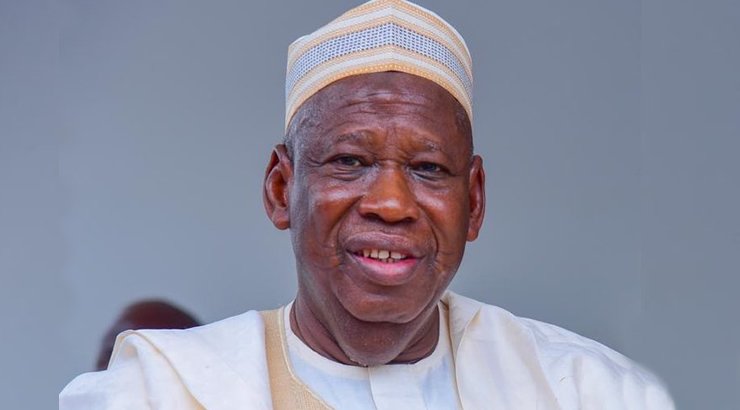
The political confrontation in Kano State deepened following the government’s call for the arrest of former Governor Abdullahi Umar Ganduje and Deputy Senate President, Barau Jibrin, over allegations of incitement and a purported plan to create a 12,000-member religious police outfit known as Khairul Nas.
The government accused both leaders of making inflammatory comments capable of heightening insecurity across vulnerable border communities in the state.
Ejes Gist News reports that the confrontation has triggered widespread public reactions, especially from residents who say the controversy has compounded existing fears in local communities already dealing with sporadic security threats.
Government Raises Alarm Over Alleged Incitement
After an extended State Executive Council meeting in Kano, Commissioner for Information and Internal Affairs, Ibrahim Waiya, briefed journalists on what he described as a grave development.
He said the council deliberated on recent statements allegedly made by Ganduje and Barau, noting that the remarks suggested that Kano was vulnerable to banditry. Waiya added that the pair announced a proposal to recruit 12,000 individuals under a planned religious police structure called Khairul Nas.
According to Waiya, these comments were “inciting and reckless,” and could undermine the ongoing efforts of federal and state security agencies working to stabilise communities. He asserted that the statements risked demoralising security personnel and misleading the public on the government’s counter-insecurity measures.
He said the state government appreciated the Federal Government’s support and called for the immediate investigation and arrest of Ganduje for allegedly attempting to create what he called an “illegal militia group.”
Communities React as Security Anxiety Grows
The government linked the remarks to a security breach that occurred less than 48 hours later, when suspected bandits infiltrated border communities in parts of the state. Local residents in areas such as Bagwai, Shanono, and Tsanyawa told reporters that tension heightened following the political statements, as many feared that political tussles could distract from urgent security interventions.
Some residents who spoke on background said the perception of political actors “trading blame while villages face real threats” has deepened public anxiety. Others noted that any talk of militia-style outfits immediately raises concerns due to the region’s history with security-related organisations.
Farmers in affected areas also expressed worry that fear of attacks could impact dry-season farming, a critical economic activity for surrounding communities.
Ganduje Faults Kano Govt’s Claims
In a statement signed by his Chief Press Secretary, Edwin Olofu, former Governor Ganduje described the call for his arrest as “baseless, reckless, and a reflection of desperation.”
Ganduje said Governor Abba Kabir Yusuf’s administration was abdicating its responsibilities and failing to address what he called “escalating insecurity” in several areas of the state. He accused the state government of using political accusations to mask what he described as governance lapses.
He added that the governor had not visited areas affected by recent attacks and had not shown empathy to victims. Local community members interviewed in the region confirmed that they had not received visits from state leadership, though security teams occasionally patrolled the area.
Ganduje insisted he had never been linked to violence and said his eight-year administration kept Kano stable. He urged the government to focus on its constitutional duties, including protecting vulnerable communities.
Human Angle: Residents Caught Between Politics and Fear
Humanitarian groups operating in some of the affected rural communities say residents now face a “double burden”: insecurity and political tension. Teachers in public schools noted that some parents have kept their children at home due to fear of bandit incursions.
Market traders in Shanono said evening activities have reduced significantly since rumours began spreading that bandits were seen near nearby settlements. Transporters also report fewer passengers taking evening trips.
A community youth leader said, “We are scared, not because of politics, but because we are the ones exposed to real danger.” He added that controversies involving top politicians make rural communities feel “abandoned in the middle of a political battlefield.”
Barau Rejects Allegations, Challenges Govt to Produce Evidence
Deputy Senate President Barau Jibrin also rejected the allegations, describing the government’s claims as “false and malicious.”
In a statement issued by his media aide, Ismail Mudashir, Barau said he had never issued any statement capable of undermining security operations. He said the government was attempting to tarnish his reputation through fabricated accusations.
His camp challenged the government to produce audiovisual evidence of the alleged remarks.
Barau criticised the state leadership for what he said was a downward trend in governance, asserting that Kano used to be a leading state after Lagos in terms of economic strength and development. He argued that mismanagement had eroded the state’s prosperity.
The statement highlighted Barau’s contributions to security agencies, including provision of patrol vehicles, motorcycles, and renovations of police infrastructure. It also referenced his assistance to the Department of State Services (DSS) and support for security training institutions operating within the state.
Residents Demand Clear Strategy to Address Insecurity
Community leaders and civil society observers say the controversy highlights the need for a more coordinated security strategy in Kano. Stakeholders insist that political narratives must not overshadow urgent responses to incidents affecting local populations.
Parents, traders, traditional leaders, and youth groups interviewed expressed a common concern: the need for a clear plan to protect border communities vulnerable to infiltration.
Security analysts note that while political disagreements are common, escalating them without evidence could weaken public confidence in institutions and distract from field-level security operations.
Families Living With Disruption
Families in areas recently affected by attacks say their daily routines have changed. Some farmers now return home earlier than usual, and local vigilante groups have increased night patrols, although residents say they remain poorly equipped.
Women in small-scale businesses told reporters they have reduced travel to weekly markets located on the outskirts of their communities. They fear attacks along the routes, especially during early-morning or late-evening hours.
One mother of four said she now sleeps lightly at night due to fear of sudden attacks and repeatedly wakes her children to ensure they remain close. Another farmer said he lost half of his seasonal harvest because he reduced time spent on his farmland after hearing about bandits spotted near a neighbouring village.
What the Situation Means for Kano’s Stability
Governance experts say prolonged disputes between political leaders may reshape public perception of the administration’s ability to manage crises. They warn that communities in border regions require more resources to prevent attacks, including surveillance equipment, reinforced security presence, and community-level intelligence gathering.
Security officials have not publicly linked the political statements to the bandit activities reported after the controversy, but the coincidence has increased public scrutiny.