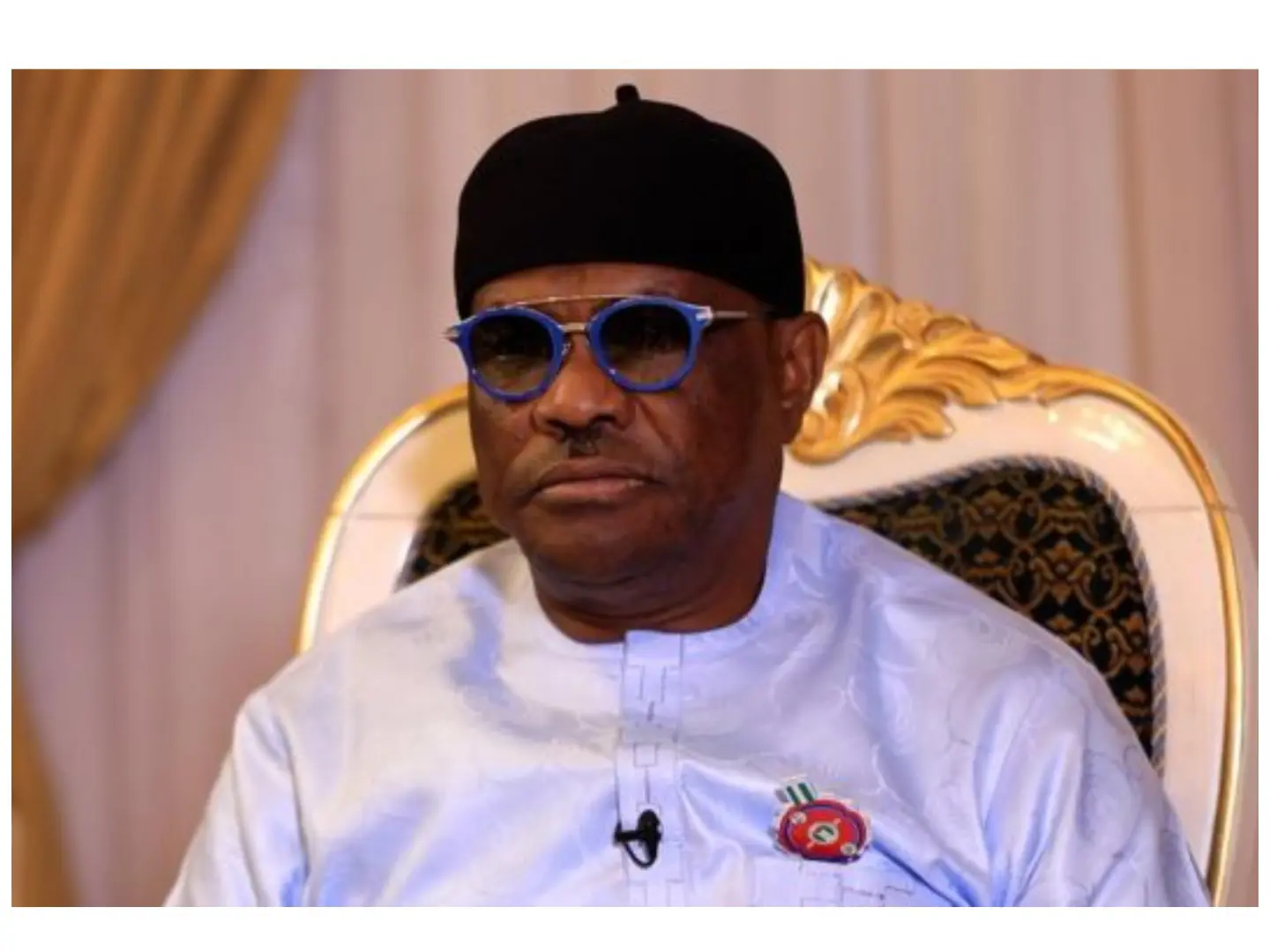



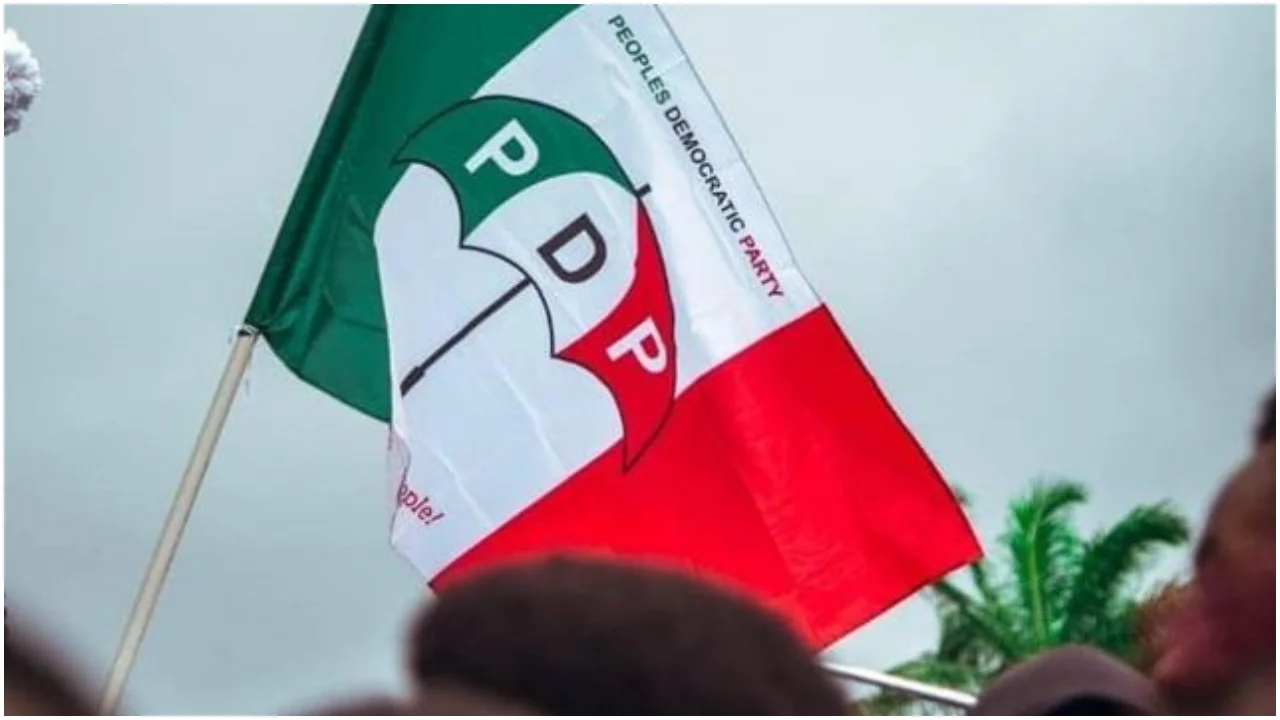
The internal leadership dispute rocking the Peoples Democratic Party (PDP) intensified after the Independent National Electoral Commission (INEC) dismissed a letter submitted by a faction loyal to former Rivers State governor Nyesom Wike. The correspondence had sought to halt the PDP’s Ekiti State Governorship Primary earlier scheduled for November 8, 2025, but INEC ruled that it did not meet the legal standards for recognition.
The development immediately raised questions about the legitimacy of the Wike-aligned faction and its claim that Abdulrahaman Mohammed had assumed the role of the party’s acting national chairman.
Ejes Gist News reports that INEC’s decision effectively nullified Mohammed’s assertion of authority and reaffirmed that only duly recognized national officers of political parties can transmit binding notices to the commission.
How the Controversy Began
The dispute emerged when a letter jointly signed by Abdulrahaman Mohammed and former National Secretary Senator Samuel Anyanwu was delivered to INEC on November 6, 2025. The document, titled “Postponement of PDP Ekiti State Congress/Governorship Primary,” claimed that logistical challenges made it impossible for the PDP to conduct the primary as scheduled.
The signatories informed INEC that a new date for the primary would be communicated after internal consultations. They argued that the leadership had taken the decision “in the interest of fairness and credible preparation,” and urged the commission to take note.
Their intervention was aimed at stopping the PDP from proceeding with the governorship primary in Ekiti State. However, the mainstream leadership of the PDP ignored the directive, insisted that proper procedures had been followed, and moved ahead with the election as initially planned.
Ekiti Primary Proceeds Despite Faction’s Attempted Halt
The primary was conducted in Ado-Ekiti on November 8, 2025, with delegates from all 16 local government areas participating. Dr. Wole Oluyede emerged as the party’s candidate after polling 279 votes. Two other aspirants participated in the exercise: Funso Agent, who polled 239 votes, and Funmilayo Ogun, who secured 17 votes.
Party insiders stated that the primary was conducted transparently, supervised by authorised party officers and monitored by INEC’s official observers. The successful exercise demonstrated that the mainstream NWC did not recognize the directive issued by the Anyanwu-Mohammed faction.
Stakeholders within the PDP pointed to the primary as evidence that the faction lacked institutional control and national acceptance. The fact that delegates attended in large numbers signaled that the postponement notice had no influence within the party structures at the ward, local government, or state levels.
INEC Cites Non-Compliance With Its Regulations
INEC formally responded on November 10, 2025, via a letter referenced INEC/DEPM/PDF/286/94 and signed by the Commission’s Secretary, Mrs. Rose Oriaran-Anthony. The commission declared the submission invalid based on clear provisions of its 2022 Regulations and Guidelines for Political Parties.
The key requirement cited was Part 2(12)3, which mandates that for any party to notify INEC of a congress, convention, conference, or meeting, the correspondence must be jointly signed by the National Chairman and National Secretary of that party.
INEC emphasized that this rule is non-negotiable and forms part of the statutory processes that ensure transparency and internal democratic order within political parties.
The commission stated unequivocally:
“The notice is not in compliance with the requirement of Part 2(12)3 of the Regulations and Guidelines for Political Parties, 2022… The National Chairman and National Secretary of the Party shall jointly sign the notice… Be guided.”
With this statement, INEC underscored that the individuals who signed the letter were not recognized as the legitimate national officers of the PDP. The commission therefore rejected the correspondence for non-compliance with the Electoral Act and related regulations.
Why INEC’s Position Is Significant for PDP Factional Politics
The PDP has a long history of factional disputes, especially during periods of national leadership transition. The claim by Abdulrahaman Mohammed that he had assumed the role of acting national chairman followed internal disagreements over suspensions and resignations within the National Working Committee (NWC).
Supporters of the Wike-aligned bloc argued that Mohammed’s elevation was lawful, citing internal party dynamics. However, that claim had not been ratified by the National Executive Committee (NEC), which is the highest decision-making body of the PDP.
By refusing to acknowledge Mohammed as acting chairman, INEC has now established a public and legal position that favours the mainstream leadership.
The commission’s intervention carries weight because:
- INEC maintains the official register of political party officers in Nigeria.
- Only the officers in this register can sign binding communications.
- Any faction outside this structure cannot influence primaries, congresses, or national decisions.
INEC’s rejection therefore places significant limitations on the political activities of the Wike-aligned faction.
Impact on the Ekiti 2025 Governorship Process
The governorship election in Ekiti State is scheduled for the middle of 2026, and political parties began their processes early. For the PDP, the November 8 primary was a critical step in repositioning the party in the South-West region.
By rejecting the postponement notice, INEC indirectly affirmed:
- The legitimacy of the primary conducted in Ado-Ekiti.
- The validity of Dr. Wole Oluyede as the PDP’s candidate.
- The authority of the officially recognized national leadership.
Legal practitioners note that this position will play an important role if any faction attempts to challenge the primary result in court. Courts often rely on INEC’s official records when determining whether a political party followed due process. INEC’s letter therefore strengthens the defence of the mainstream PDP leadership.
Internal Tensions Continue Within the PDP
The unresolved leadership crisis within the PDP has been growing since the aftermath of the 2023 general elections. The party has faced multiple grievances, including disputes over zoning, allegations of marginalization, and disagreements about the direction of the party.
The Wike-aligned faction has frequently argued that the mainstream leadership has not adequately addressed issues raised by certain blocs within the party, particularly in relation to national representation and power distribution.
However, the mainstream NWC insists that:
- No lawful process appointed Mohammed as acting chairman.
- No NEC resolution supports the claims advanced by the faction.
- Internal structures remain intact and functional.
The refusal of INEC to recognize the faction’s correspondence reinforces the mainstream position, reducing the likelihood that the Wike-backed bloc will secure widespread support within the party’s institutional framework.
Could There Be Further Litigation?
Political observers note that factions within Nigerian political parties often turn to the courts when they feel marginalized. The Wike-aligned faction may explore legal avenues to assert its claim to leadership, especially if its supporters believe that procedural rights were violated.
If litigation emerges, it may focus on:
- Whether the mainstream NWC followed internal party rules.
- Whether Mohammed’s claim to acting chairmanship had any procedural backing.
- Whether the NEC properly addressed leadership vacancies.
However, INEC’s public position is likely to weigh heavily in any legal contest, given the commission’s statutory responsibility for recognizing political party officers.
Broader Implications for PDP’s National Stability
The PDP has faced significant internal turbulence over the past decade. Repeated episodes of parallel primaries, conflicting court orders, and competing factions have weakened its national cohesion.
The latest incident highlights several key risks:
- Fragmentation during off-cycle elections
- Reduced public confidence in the party’s internal structures
- Potential loss of strategic states if parallel candidates emerge
- Difficulty presenting a unified platform ahead of national elections
Party stakeholders argue that without deliberate reconciliation and stronger internal mechanisms, the party could struggle to maintain influence in competitive regions.
The PDP’s ability to resolve its leadership challenges will shape its national standing as Nigeria moves closer to the 2027 electoral cycle.
INEC Reinforces Its Role as a Regulatory Authority
The commission’s response underscores its enforcement of the Electoral Act and related political party guidelines. INEC has consistently insisted that:
- Political parties must maintain transparent internal processes.
- All communications must originate from recognized officers.
- Factions cannot usurp or bypass established authority.
This approach is essential for maintaining credibility in Nigeria’s electoral system. It ensures that parties cannot manipulate processes through last-minute adjustments or factional directives without legal backing.
INEC’s decision in this case reaffirms its position as a neutral arbiter responsible for protecting institutional integrity within the political party system.
What This Means for the Wike-Aligned Bloc Going Forward
The Wike-aligned faction now faces a more constrained path. Without recognition from INEC, any attempt to influence primaries, congresses, or national decisions may be considered unlawful and unenforceable.
To regain influence, the faction would need to:
- Build stronger internal alliances within the NWC.
- Secure majority support within the NEC.
- Pursue legal clarification of its claims, if necessary.
- Engage in negotiation with the mainstream leadership.
Political analysts note that the bloc’s future influence will depend largely on whether it can demonstrate organizational legitimacy rather than political influence alone.