

Advertisements
Nigeria’s Senate has approved an amendment permitting both electronic and manual transmission of election results, a decision that has triggered renewed controversy among political stakeholders and civil society groups.
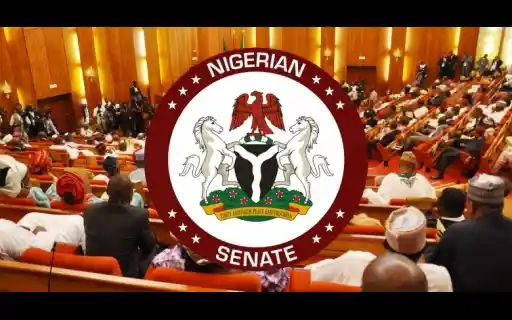
The upper chamber on Tuesday reversed its earlier position rejecting electronic transmission of results from polling units to the Independent National Electoral Commission Results Viewing Portal (IReV). The reversal followed an emergency plenary session in Abuja where lawmakers amended Clause 60(3) of the Electoral Act Amendment Bill.
Ejes Gist News reports that the Senate approved electronic transmission of election results but inserted a proviso allowing manual collation where electronic transfer fails due to communication challenges.
Also Read: U.S. Lists 97 Nigerians for Deportation – See Full Names
Advertisements
What the Amended Clause Provides
Under the revised Clause 60(3), election results must first be entered into Form EC8A at polling units, signed and stamped by the presiding officer and available party agents. After this process, the results may be transmitted electronically to the IReV portal.
However, the amendment stipulates that if electronic transmission is unsuccessful because of network failure or other technical issues, the manually signed EC8A form shall become the primary source for collation and declaration of results.
This adjustment effectively removes the earlier provision for real-time electronic upload of election results, a key demand by electoral reform advocates.
Advertisements
Divergence with House of Representatives Version
The Senate’s position differs significantly from the version earlier passed by the House of Representatives. The House amendment mandates real-time electronic transmission of results from every polling unit without exceptions.
While the House version insists that the presiding officer shall transmit results to IReV immediately after completion at polling units, the Senate amendment introduces a fallback option to manual results where electronic transmission fails.
This difference has intensified debate over the final shape of the electoral law.
How the Senate Reached the Decision
The amendment followed a motion moved by Senate Chief Whip Mohammed Monguno (APC, Borno North), who asked the chamber to rescind its earlier resolution on Clause 60(3).
Monguno explained that fresh issues had emerged after closer examination of the bill, requiring further legislative action to ensure smooth and transparent elections.
He said he was compelled to withdraw his earlier motion, which had supported retention of the existing law, because of the controversy it generated nationwide.
Minority Leader Abba Moro seconded the motion, paving the way for reconsideration and eventual approval of the amended clause.
Opposition Voices Raise Alarm
The Senate decision has drawn strong criticism from opposition parties and civil society organisations, who argue that the amendment creates loopholes that could undermine electoral integrity.
Former Vice President Atiku Abubakar warned that allowing both electronic and manual transmission of results could generate confusion and compromise credibility.
Speaking to journalists in Minna, Atiku said real-time electronic transmission remained the best guarantee for transparent elections and urged opposition parties to unite against the Senate’s position.
“Nigeria expected real-time electronic transfer for elections, but what we got is a mixture of electronic and manual transmission, which will cause more confusion,” he said.
Protests and Political Reactions
Former Minister of Transportation Rotimi Amaechi joined a protest at the National Assembly to oppose the Senate’s earlier rejection of real-time transmission.
Amaechi accused the ruling All Progressives Congress of resisting electronic transmission because it feared losing elections, and called on opposition parties to mobilise against the amendment.
The African Democratic Congress (ADC) and the Peoples Democratic Party (PDP) also rejected the Senate version, insisting that only mandatory real-time transmission without exceptions would protect the votes of Nigerians.
The PDP described the Senate’s caveat as a backdoor attempt to weaken electoral transparency.
Civil Society Groups Divided
Civil society organisations expressed mixed reactions to the development.
Some groups described the Senate’s action as a positive response to public pressure, while others warned that the amendment retained too much discretion in the hands of INEC.
Taiwo Otitolaye of the Community Outreach for Development and Welfare Advocacy called the amendment a double standard, arguing that network reliability concerns remain unresolved.
Other advocacy groups, including Brain Builders Youth Development Initiative, said protests and engagement would continue until the National Assembly adopts unambiguous provisions guaranteeing real-time transmission.
Experts Warn Against Overreliance on Technology
Political scientists offered cautionary perspectives on the debate.
Professor Gbade Ojo of the University of Ilorin commended the Senate for adopting a balanced approach, warning that exclusive reliance on electronic transmission could be risky in Nigeria’s technological environment.
He cited persistent electricity failures, poor internet penetration, and previous glitches in national systems as factors that could affect elections.
Similarly, Dr. Edun Abdulkareem argued that without stable infrastructure, electronic transmission might remain impractical in many parts of the country.
Senate Passes All Clauses
Despite disagreements, the Senate adopted all clauses of the Electoral Act Amendment Bill 2026 after further deliberations.
Senate President Godswill Akpabio read the final version of Clause 60(3), confirming that electronic transmission would be the primary method, with signed EC8A forms serving as fallback where technology fails.
The amendment was approved after a brief rowdy session, during which some senators raised procedural objections before eventually reaching consensus.
Conference Committees to Harmonise Positions
The Senate and House of Representatives have constituted separate conference committees to reconcile differences between the two versions of the bill.
The Senate committee is led by Senator Simon Bako Lalong, while the House committee is chaired by Representative Adebayo Balogun.
Both panels are mandated to produce a harmonised document that will guide the conduct of future elections in Nigeria.
