Oborevwori Presents N1.23trn 2027 Budget, Devotes 65% to Capital
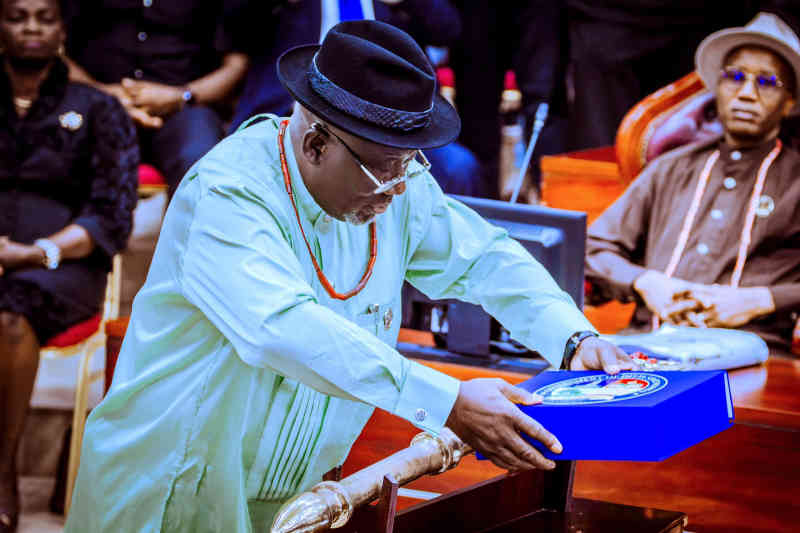
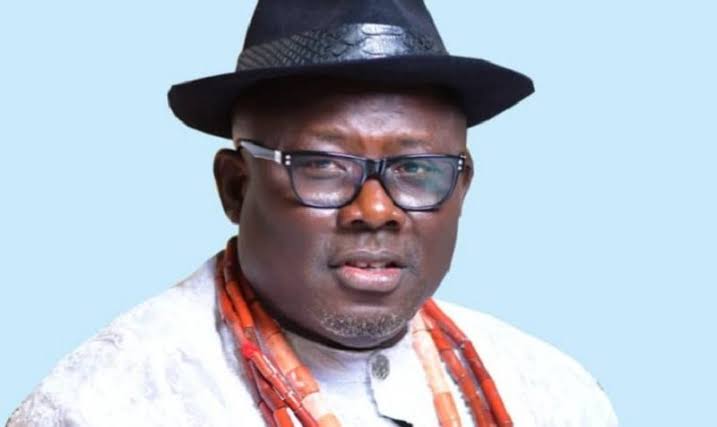
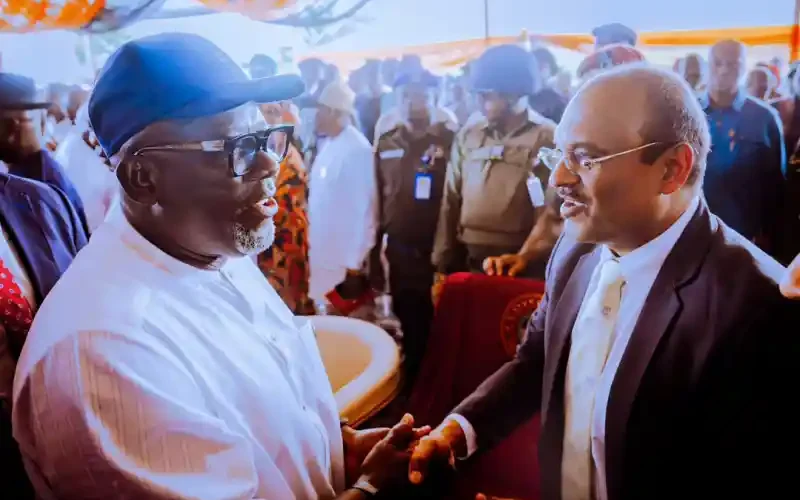
Delta State Governor Sheriff Oborevwori on Monday presented a proposed N1.23 trillion budget for 2027 to the State House of Assembly in Asaba, with 65 per cent of the spending plan devoted to capital projects.
Named the Budget of Sustained Prosperity and Enhanced Growth, the proposal sets aside N806.8 billion for capital expenditure and N430 billion for recurrent spending.
Oborevwori said the estimates would consolidate projects already under way, stimulate economic growth and improve living conditions.
Also Read :
Police Officer Resigns Over Poor Salary, Says He Had Suffered Too Much
The proposal is N493.01 billion, or 28.5 per cent, below the N1.729 trillion approved for 2026. According to the governor, the drop stemmed from a deliberate choice to work with realistic spending projections and to strengthen fiscal discipline.
He listed the administration’s priorities as finishing ongoing projects, starting new investments, consolidating achievements and widening social interventions.
Roads, bridges and revenue
On infrastructure, Oborevwori disclosed that his administration had begun 872 road projects and 20 bridges and flyovers since taking office, covering 2,348 kilometres of roads and 1,871 kilometres of drainage infrastructure across the state.
He said community consultations showed that roads, bridges and jetties topped the list of demands, especially in rural and riverine areas. The proposal therefore earmarks N320 billion for the two Ministries of Works to sustain infrastructure development and complete ongoing projects.
On internally generated revenue, the governor said collections had risen from N83 billion in 2023 to a projected N283 billion by December 2026. He attributed the improvement to technology-driven collection, a wider revenue base and efforts to eliminate leakages without imposing additional tax burdens.
Of the N463 billion legacy debt, N400 billion had been repaid, Oborevwori disclosed, leaving N63 billion outstanding. He expressed confidence that the balance would be cleared by the end of the first quarter of 2027.
Education, health and other allocations
Education received a proposed N74 billion, comprising N10 billion for primary, N12 billion for technical, N12 billion for secondary and N40 billion for higher education. The governor said the government would sustain investment in school rehabilitation, teacher development, digital learning, laboratories and the accreditation of academic programmes.
He added that N10.8 billion had been approved for the rehabilitation and renovation of primary and secondary schools.
For healthcare, the proposed N50 billion would support hospital upgrades, medical supplies, recruitment and the welfare of health personnel. Oborevwori pointed to the College of Health Technology in Ovrode, which has enrolled more than 800 pioneer students, as part of efforts to address manpower shortages in the sector.
Other provisions include N50 billion for the 25 local government areas, N20 billion for the Delta State Capital Territory Development Agency and N20 billion for the Warri-Uvwie and Environs Development Agency. Energy is allocated N12 billion, urban and physical planning N10 billion, agriculture N5 billion and social interventions N5 billion.
Investment, power, salaries and security
On economic diversification, the governor said his administration was attracting private investment into agriculture, industrialisation, entertainment and small and medium-scale enterprises. He cited the $70 million Olam Agri feed mill project at Ogwashi-Uku as one of the outcomes of the 2026 Delta State Economic and Investment Summit, saying it would create employment opportunities and provide a ready market for locally produced agricultural commodities.
He further disclosed that the state’s Gross Domestic Product rose from N14.5 trillion in 2024 to approximately N17.9 trillion in 2025, making it Nigeria’s fifth-largest state economy.
In the power sector, he said the administration had executed 2,155 energy projects, among them 90 transformers, 2,003 solar street-lighting projects and 23 power-grid extensions.
Oborevwori said he had assented to the 13th-month salary bill for public servants, commencing in December 2026, describing the initiative as recognition of workers’ contributions and an effort to ease their financial responsibilities during the festive season.
On security, he said the government was strengthening collaboration with security agencies to tackle kidnapping, cultism, pipeline vandalism and other criminal activities. Approval had been given for the construction of 25 police divisional headquarters for state police, alongside an application to recruit 1,000 forest guards, he said.
He said the 2027 budget would prioritise infrastructure, economic diversification, human capital development, peace and security, while ensuring that ordinary Deltans benefited from economic growth.
Oborevwori then presented the Appropriation Bill to the lawmakers for consideration and approval. The House Leader, Hon. Emeka Nwaobi, moved the motion, and Hon. Marilyn Okowa-Daramola seconded it.
Earlier, Speaker of the House, Rt. Hon. Emomotimi Guwor, commended Oborevwori for his administration’s achievements in infrastructure, healthcare, education, social welfare and human capital development. He particularly praised the approval of the 13th-month salary, describing it as evidence of the governor’s concern for workers’ welfare.
Guwor reaffirmed the legislature’s commitment to a cordial working relationship with the executive, saying the House would take the second reading of the bill on Tuesday, November 17, 2026. He noted that cooperation between both arms had contributed to Delta’s development and assured the governor of the Assembly’s support for the budget.
Tomorrow
Brasileirão Série A
-
Brasileirão Série A UPCOMING
-
Brasileirão Série A UPCOMING
-
Brasileirão Série A UPCOMING
-
Brasileirão Série A UPCOMING


Thursday, Nov 19, 2026
Brasileirão Série A
-
Brasileirão Série A UPCOMING


Ejes Gist News ( EGN) stands for truth, responsible journalism, editorial integrity and fearless accountability.
You May Also Like
Trending Now