
World’s ‘Most Fertile’ Mother, 36, Reportedly Stops at 44 Children”
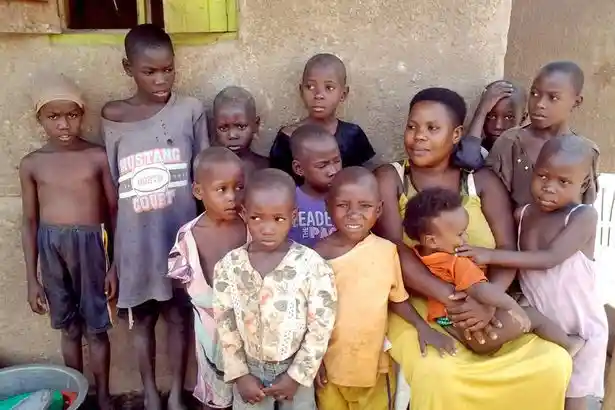
Doctors have now devised a solution to stop Mariam Nabatanzi, a 36-year-old Ugandan said to be the world’s most fertile woman, from having more children after she gave birth to 44.
The 44 include four sets of twins, five sets of triplets and five quadruplets. Nabatanzi is now a single mother and works as a tailor, hairdresser and herbalist to support the 38 children who survived.
She was reportedly sold into marriage at 12 to a man who was 40 at the time, 28 years her senior. Her first child was born a year later.
Also Read : Debbie Karema, 61, Begins Detransition After 17 Years on Testosterone and Surgery
“Generally, I have tried to educate them. My dream is that my children go to school. They can lack anything (else), but they must go to school,” she said in a recent Al Jazeera documentary.
“I can’t say they are nagging because they are my children. I can’t say I will abandon them because they are my children and I love them,” she added.
Nabatanzi recalled that a doctor warned her contraception such as the Pill could cause problems because her ovaries were unusually large. After her first set of twins, she kept having babies.
Mirror reported that at 23 she had 25 children and desperately pleaded with her doctor for help to stop having more. She was advised instead to keep getting pregnant because her ovary count was so high.
Her last pregnancy, which produced her sixth set of twins three years ago, ended in tragedy. One of the babies died while she was in labour, and her husband, who often left for weeks, then left her for good.
She said: “I have grown up in tears, my man has passed me through a lot of suffering. All my time has been spent looking after my children and working to earn some money.”
Following that pregnancy, she obtained medical assistance to prevent any further births. Nabatanzi said a doctor told her he had “cut my uterus from inside”.
Dr Charles Kiggundu, a gynecologist at Uganda’s Mulago Hospital in Kampala, said: “Her case is genetic predisposition to hyper-ovulate, which is releasing multiple eggs in one cycle, which significantly increases the chance of having multiples; it is always genetic.”
Ejes Gist News stands for truth, responsible journalism, editorial integrity and fearless accountability.
You May Also Like



Trending Now