
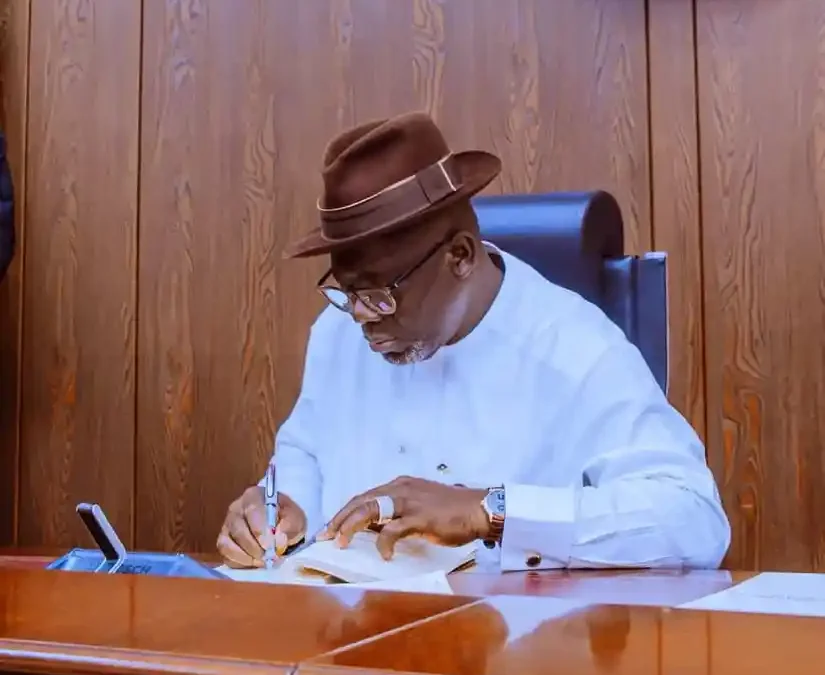
Oborevwori Signs 13th-Month Salary, Four Other Bills Into Law: 10 Things to Know
Delta State Governor, Rt. Hon. Sheriff Oborevwori, has signed five bills into law, including the Thirteenth Month Salary Law, 2026, in a move his administration says will improve workers’ welfare, strengthen the judiciary, protect property rights and reform tax administration.
The governor signed the bills at the Executive Council Chambers, Government House, Asaba, on Wednesday, describing them as part of his administration’s reform push under the MORE Agenda. He said the laws would strengthen public institutions, improve service delivery and promote economic development.
Also Read : BREAKING: Director Aminu Saira Withdraws Support for Tinubu, Backs Atiku
Here are the 10 things to know about the bills and what they change.
1. Five bills, one ceremony
Oborevwori signed all five at a single ceremony at Government House, Asaba, on Wednesday — a salary law, two judicial amendments, a property protection amendment and a revenue consolidation law.
2. The headline law: an extra month’s pay
The Thirteenth Month Salary Law, 2026, provides for a thirteenth-month salary benefit for eligible public servants. It was the centrepiece of the ceremony and the bill most directly aimed at the state’s workforce.
3. Why the governor says it matters
Oborevwori said the initiative would boost workers’ morale, reward their contributions and improve productivity across the public service.
4. High Court gets four more judges
One amendment raises the number of High Court judges in the state from 46 to 50, a change the governor said is meant to improve justice delivery.
5. Customary Court of Appeal gets three more
A related amendment increases judges of the Customary Court of Appeal from nine to 12, again framed around faster and more efficient court business.
6. New shield for property owners
The Public and Private Properties Protection Amendment Law strengthens safeguards against unlawful occupation and destruction of property, according to the governor.
7. One revenue body, fewer overlapping taxes
The Delta State Revenue Service (Consolidated) Law, 2026, is designed to harmonise tax administration, curb multiple taxation and promote investment in the state.
8. The bigger picture: MORE Agenda
Oborevwori said development goes beyond infrastructure to include policies that improve people’s lives, placing the five laws within his administration’s MORE Agenda reform programme. He urged the relevant agencies to ensure the laws are effectively implemented.
9. The Assembly’s case for the bills
Presenting the bills, Speaker of the Delta State House of Assembly, Rt. Hon. Emomotimi Guwor, said they would strengthen governance, improve justice delivery and protect investments. He said the salary law covers eligible public servants, while the judicial amendments would enhance court efficiency and the property law would safeguard public and private assets.
10. Head of Service: a boost for workers and families
The outgoing Delta Head of Service, Dr. Mininim Oseji, described the Thirteenth Month Salary Law as a boost to workers’ welfare and family wellbeing. She said the policy would stimulate business activity and thanked the governor for the initiative, calling it a welcome development for workers and Deltans.
The ceremony was witnessed by the Chief Judge of Delta State, Justice Tessy Diai, represented by Justice Briki Okolosi; the President of the Customary Court of Appeal, represented by Justice Tracy Uriah; the Deputy Speaker of the House of Assembly, Rt. Hon. Arthur Akpowowo; principal officers of the Assembly; the Attorney-General and Commissioner for Justice; the Secretary to the State Government; commissioners and other senior government officials.
Ejes Gist News stands for truth, responsible journalism, editorial integrity and fearless accountability.
You May Also Like


Trending Now