
DSS Arrests Ex-Minister Uche Nnaji at Enugu Airport, Handed to ICPC
Advertisements
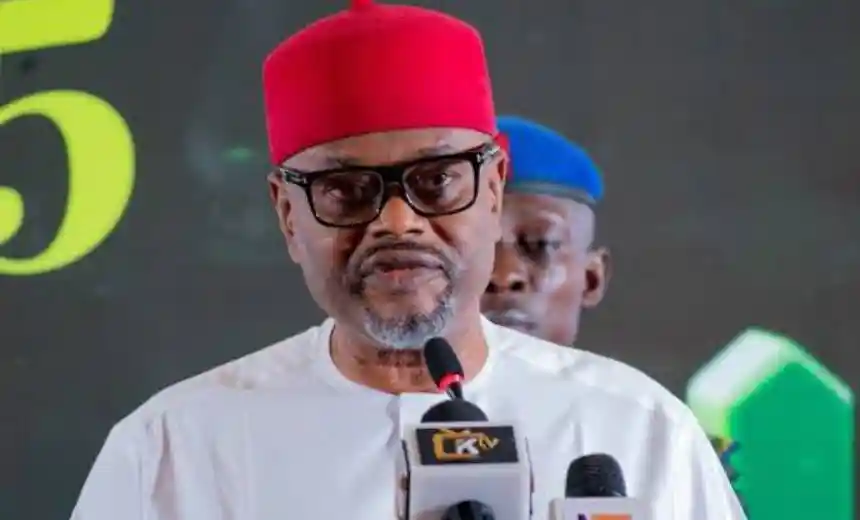
Operatives of the Department of State Services arrested former Minister of Innovation, Science and Technology, Uche Nnaji, on Wednesday morning.
The arrest took place at the Akanu Ibiam International Airport in Enugu. Mr Nnaji was about to board a private jet to Abuja at the time.
Security sources confirmed the development. He has since been handed to the Independent Corrupt Practices and Other Related Offences Commission.
Advertisements
The ICPC had extended several invitations to the former minister. He did not honour them. The commission then contacted the DSS for assistance.
The Certificate Scandal
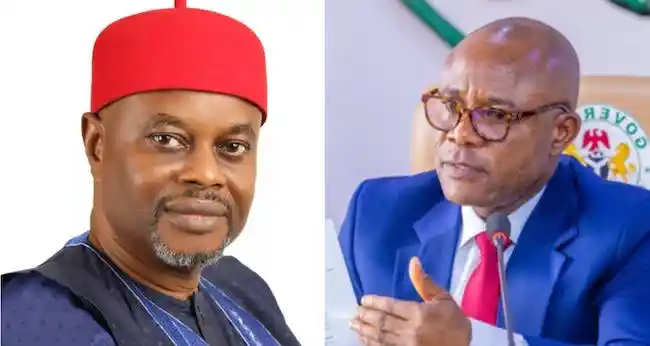
Mr Nnaji was forced to resign on 8 October 2025. His exit followed a damning newspaper investigation.
The Premium Times newspaper had conducted a two-year investigation. It claimed Mr Nnaji submitted falsified academic credentials to President Bola Tinubu. This happened during his ministerial appointment in 2023.
Advertisement
Presidential spokesperson Bayo Onanuga confirmed the resignation in a post on X. He quoted the minister as saying he had been “a target of blackmail by political opponents.”
Mr Nnaji denied the accusations. He insisted that he graduated from the University of Nigeria, Nsukka. He said he obtained a degree in Microbiology/Biochemistry.
But the university told a different story.
UNN Disowns Certificate
Premium Times reported that UNN could not verify Mr Nnaji’s credentials. A senior university official spoke to the publication.
Advertisements
The official said Mr Nnaji was admitted in 1981. But he never completed his studies. He did not receive a certificate.
The university reportedly found no records confirming that the minister graduated with a Bachelor of Science degree in 1985. That was the year he had claimed.
The forgery allegations sparked outrage among Nigerians.
NYSC Certificate Also Questioned
The National Youth Service Corps also weighed in. It said the mandatory certificate of national service Mr Nnaji presented could not be verified.
He had submitted the NYSC certificate in April 2023. It was part of his documentation for ministerial screening.
The NYSC is a compulsory one-year programme for Nigerian graduates. A valid discharge certificate is required for public office.
The failure to verify both his degree and his NYSC certificate raised serious questions. How did he pass the screening process? Who cleared him?
These questions remain unanswered.
Political Reactions
Opposition leader Atiku Abubakar called for an independent investigation. He demanded transparency.
“Nigerians deserve to know the truth about those who preside over their lives and resources,” Mr Abubakar posted on X.
He said Mr Nnaji should have been “summarily dismissed and prosecuted for deceit and falsification.”
But Mr Nnaji was not dismissed. He was allowed to resign. This drew criticism from civil society groups.
They argued that resignation allowed him to escape full accountability. They called for prosecution, not just exit.
A Rare Exit of Uche Nnaji
The suspension or removal of a minister is rare in Nigeria. Mr Nnaji is only the second to leave office since President Tinubu assumed power in May 2023.
In January 2024, Betta Edu was suspended. She was the Minister of Humanitarian Affairs and Poverty Alleviation. Her suspension followed public outrage over a corruption scandal. Dr Edu denied any wrongdoing.
President Tinubu’s predecessor, the late Muhammadu Buhari, sacked only two ministers during his eight-year tenure.
This pattern makes Mr Nnaji’s case unusual. It also makes his arrest even more significant.
Why the ICPC Is Involved
The ICPC is Nigeria’s anti-graft agency. It investigates and prosecutes corruption cases involving public officials.
The commission received several petitions after Mr Nnaji’s resignation. These petitions focused on how he managed his ministry.
Some also touched on the certificate forgery allegations. The ICPC decided he needed to answer questions directly.
Invitations were sent. They were ignored. The DSS was then called in.
What Happens Next
Mr Nnaji is now in ICPC custody. He will be questioned on multiple fronts.
The commission will examine his academic credentials. It will also review his tenure at the ministry. Procurement records, contracts, and financial disbursements will all come under scrutiny.
If sufficient evidence is found, charges could follow. The ICPC has prosecutorial powers.
Possible charges include forgery, falsification of documents, and abuse of office. Conviction carries penalties including imprisonment and forfeiture of assets.
The former minister could also face questions from the police. Forgery is a criminal offence under Nigerian law.
The Bigger Picture
Mr Nnaji’s case raises uncomfortable questions about Nigeria’s appointment process. How did a minister with allegedly forged credentials pass screening?
The Senate screens ministerial nominees. The Department of State Services also conducts background checks. Yet Mr Nnaji was cleared.
This has led to calls for stricter vetting procedures. Some have demanded that all current and former ministers be subjected to fresh credential verification.
The case also highlights the power of investigative journalism. Without the Premium Times investigation, the forgery allegations might never have come to light.
Silence from the Presidency
The presidency has not commented on Mr Nnaji’s arrest. Presidential spokespersons could not be reached.
Mr Onanuga, who confirmed the resignation last October, has not issued a fresh statement.
The silence is notable. It suggests the presidency is distancing itself from the former minister.
What Mr Nnaji Said
When he resigned, Mr Nnaji maintained his innocence. He said he was the victim of a political witch-hunt.
“I have been a target of blackmail by political opponents,” he stated.
He insisted that his certificates were genuine. He said he graduated from UNN as claimed.
But the university’s statement contradicted him. The NYSC’s position did too.
Now, with his arrest, those claims will be tested in a formal investigation.
FAQs
1. Why was Uche Nnaji arrested?
He was arrested at the request of the ICPC. The commission wants to question him over petitions on how he managed his ministry and allegations that he forged his academic credentials.
2. What did the university say about his certificate?
The University of Nigeria, Nsukka, reportedly told Premium Times that Mr Nnaji was admitted in 1981 but never completed his studies. The university said it had no records of him graduating.
3. Has he responded to the forgery allegations?
He denied the allegations when he resigned in October 2025. He said he was a victim of blackmail by political opponents.