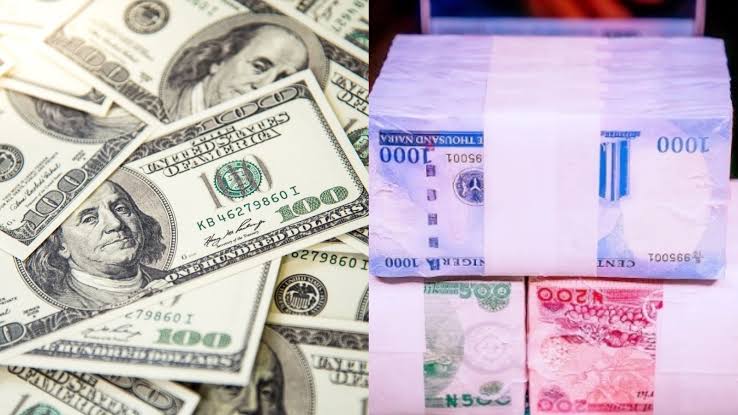
The black market dollar to naira exchange rate remains a key reference point for individuals, businesses, and informal traders across Nigeria, reflecting real-time supply and demand conditions in the foreign exchange market. On Wednesday, January 21, 2026, the parallel market continued to trade within a relatively tight but elevated range, highlighting ongoing pressure on dollar availability despite policy reforms.
The United States dollar remains Nigeria’s most sought-after foreign currency, used extensively for imports, overseas education, medical expenses, and as a hedge against inflation and currency risk. As a result, the black market—commonly referred to as the parallel market—continues to serve as an informal price discovery mechanism, even though it operates outside official regulatory structures.
Ejes Gist News reports that checks conducted across major foreign exchange hubs show that rates remained broadly stable compared with the previous trading session, with only marginal differences recorded across locations.
Black Market Dollar to Naira Rate on January 21, 2026
Findings from Bureau De Change operators and street traders in Lagos, Abuja, Port Harcourt, and Kano indicate that the US dollar exchanged within the following range:
- Buying rate: approximately ₦1,485 to ₦1,490 per $1
- Selling rate: approximately ₦1,495 to ₦1,500 per $1
The buying rate reflects the price at which dealers purchase dollars from individuals, while the selling rate represents the cost to buyers seeking dollars. Differences of ₦5 to ₦15 are common within the same day, depending on transaction size, dealer liquidity, and urgency of demand.
Jada Pollock Biography, Net Worth, Wiki, Real Name, Husband, Wizkid Manager
Market operators noted that while some early trades cleared slightly below these levels, sustained demand from importers and retail buyers supported prices closer to the upper band.
Difference Between Black Market and Official Exchange Rates
Nigeria operates an official foreign exchange framework through authorized dealers, with rates determined under the Nigerian Foreign Exchange Market system. The official rate published by the Central Bank of Nigeria remains notably lower than black market quotations.
Around this period, official rates hovered in the low ₦1,420 range per dollar, reflecting transactions conducted through banks and approved FX windows. The persistent gap between the official and parallel market rates is driven by structural factors that limit access to official foreign exchange.
Key contributors to this disparity include limited FX supply through banks, unmet demand from individuals and small businesses, import-related dollar requirements, and reduced confidence in naira-denominated savings during inflationary periods.
Regional Differences in Parallel Market Rates
Although Lagos typically sets the tone for black market pricing due to higher liquidity, rates vary slightly across different parts of the country.
Lagos remains the most active market and often records the most competitive pricing. Abuja closely mirrors Lagos trends but can experience wider spreads during periods of heightened official FX scarcity. Port Harcourt sees demand influenced by oil services, shipping, and industrial activity, while Kano’s market is shaped partly by cross-border trade dynamics.
Dealers confirm that large-volume transactions often attract better rates, while smaller retail purchases tend to be priced higher.
Key Factors Influencing the January 2026 Exchange Rate
The dollar to naira black market rate observed in January 2026 reflects a combination of monetary policy decisions, inflation trends, and structural characteristics of the Nigerian economy.
Inflation and Monetary Policy Environment
Nigeria’s inflation rate moderated in late 2025 following earlier spikes associated with fuel subsidy removal and exchange rate adjustments. While easing inflation typically reduces pressure on the local currency, the impact on foreign exchange markets tends to lag, especially when import demand remains elevated.
Tight monetary policy measures have helped curb speculative demand but have not fully resolved underlying FX supply constraints.
External Reserves and FX Liquidity
Nigeria’s external reserves improved during 2025, supported by energy exports and reform efforts aimed at attracting foreign investment. Stronger reserves enhance the central bank’s capacity to stabilize markets but do not automatically translate into widespread access to dollars for end users.
Black Market Dollar to Naira Exchange Rate Today, Friday, January 16, 2026
Market participants emphasize that sustained reserve growth, combined with transparent FX allocation processes, is necessary to significantly narrow the gap between official and black market rates.
Persistent Demand for Dollars
Nigeria’s reliance on imports for refined fuel products, machinery, pharmaceuticals, and consumer goods continues to fuel dollar demand. In addition, households seeking to preserve purchasing power often turn to foreign currency holdings, reinforcing pressure on the naira.
How the Exchange Rate Reached Current Levels
The current black market rate is the outcome of a multi-year adjustment process that began with major reforms introduced from 2023 onward. These reforms included the unification of exchange rate windows and a shift toward market-determined pricing.
While the reforms improved transparency, they initially led to sharp depreciation of the naira. By late 2025, the pace of depreciation slowed, with the currency entering a period of relative stabilization, though at much weaker levels than before the reforms.
The January 2026 trading range therefore reflects consolidation rather than abrupt volatility.
Comparison With Other Market Indicators
Beyond street trading, alternative pricing benchmarks provide context for the naira’s valuation. International mid-market rates quoted the dollar slightly below black market levels, reflecting global pricing without local scarcity premiums. Rates on peer-to-peer and digital exchange platforms broadly aligned with parallel market prices.
Official bank rates remained significantly lower, underscoring ongoing segmentation within Nigeria’s foreign exchange system.
Impact on Businesses and Households
The prevailing black market exchange rate has far-reaching implications across the economy.
Higher parallel market rates raise import costs for businesses unable to access official FX, leading to higher consumer prices. Families funding overseas education or medical treatment often rely on the parallel market, making exchange rate movements a critical budgeting factor.
Persistent depreciation also encourages dollarization, as individuals seek to protect savings from inflation. While rational at the individual level, widespread dollarization reduces confidence in the local currency and complicates monetary policy effectiveness.
Official Position on Parallel Market Trading
Authorities continue to discourage the use of the black market for foreign exchange transactions, stressing that it is not recognized for official dealings. Individuals and businesses are advised to source FX through banks and licensed dealers.
Despite these warnings, analysts acknowledge that the black market will remain active as long as official supply falls short of demand.
Outlook for the Dollar to Naira Exchange Rate
Future movements in the exchange rate will depend on the consistency of economic reforms, growth in non-oil exports, stability in global energy markets, and the ability to sustain FX inflows from investment and remittances.
While expectations differ, many analysts anticipate gradual convergence between official and parallel market rates over time, rather than a sharp appreciation of the naira.
Summary of Current Market Conditions
- The black market dollar to naira rate on January 21, 2026 traded around ₦1,485 to ₦1,500 per dollar.
- Rates showed relative stability with modest intraday fluctuations.
- A significant gap persists between official and parallel market exchange rates.
- Structural demand for dollars and limited official access continue to support black market activity.
The black market exchange rate therefore remains a critical indicator of Nigeria’s foreign exchange realities, reflecting both the progress achieved through reforms and the structural challenges that continue to shape currency dynamics.