
2027: Why Igbo Will Abandon Peter Obi, Support Tinubu to Complete Second Tenure – Agbakahi

Advertisements
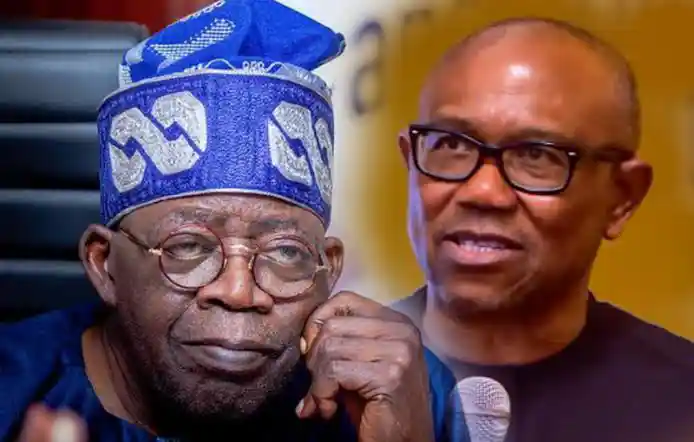
A senior chieftain of the All Progressives Congress (APC), Dr. George Agbakahi, has publicly articulated why he believes a significant segment of the Igbo electorate will shift political allegiance away from Peter Obi and instead support President Bola Ahmed Tinubu’s re-election bid. The remarks are notable because they frame the South East’s 2027 electoral calculus not as an emotional realignment, but as a strategic response to power, access, infrastructure, and long-term regional positioning within Nigeria’s federal structure.
Agbakahi’s position underscores a broader contest over how the Igbo political elite interpret lessons from the 2023 elections, how they assess the performance of the Tinubu administration in office, and how they intend to navigate Nigeria’s increasingly centralised party system. The comments also raise questions about whether endorsements by political leaders translate into mass voter behaviour in a region that overwhelmingly supported Peter Obi in 2023.
Ejes Gist News reports that Agbakahi made the comments during an interview on Arise Television’s “Newsday” programme, monitored in Abuja, where he addressed the rationale behind the South East APC’s endorsement of President Tinubu as its preferred candidate for 2027.
Advertisements
The Claim: A Strategic Realignment Ahead of 2027
Dr. Agbakahi, an APC chieftain and policy advocate within the party, asserted that the endorsement of President Tinubu by South East APC leaders resonated beyond the party’s formal membership. According to him, the adoption of Tinubu as the sole candidate of Ndigbo by APC leaders in the region reflects a growing consensus that political relevance at the centre outweighs protest voting or symbolic alignment.
He argued that the Igbo electorate, particularly political elites and stakeholders, increasingly view participation in the ruling party as a prerequisite for securing federal attention, infrastructure investment, and long-term bargaining power in national politics.
Advertisements
The claim directly challenges the political momentum generated by Peter Obi in 2023, when the former Anambra State governor won overwhelming support across the South East on the platform of the Labour Party, largely driven by youth mobilisation, protest sentiment, and dissatisfaction with the political establishment.
Context: The South East After the 2023 Elections
The 2023 presidential election represented a political watershed in the South East. Peter Obi swept the region decisively, defeating candidates of the APC and the Peoples Democratic Party (PDP) by wide margins. The outcome reinforced the perception that the Igbo electorate was prepared to reject the two dominant parties in favour of an alternative candidate perceived as credible, frugal, and reform-oriented.
However, the Labour Party’s regional dominance did not translate into control of federal power. President Tinubu emerged victorious nationally, while the APC consolidated its position as the ruling party. For South East APC leaders, the aftermath of the election prompted internal reflection about strategy, unity, and relevance.
Agbakahi maintained that the region paid a political price for fragmentation within the APC during the 2023 elections, particularly in states such as Enugu, where internal disputes weakened the party’s electoral performance.
Internal APC Divisions and Their Electoral Cost
According to Agbakahi, lack of cohesion among APC stakeholders in the South East significantly undermined the party’s vote tally in 2023. He cited factional disputes within state chapters, leadership tussles, and failure to present a unified front as key factors that contributed to poor electoral outcomes.
He specifically referenced Enugu State as an example where internal divisions translated into low voter mobilisation for the APC, with ripple effects across neighbouring states. The implication is that organisational weakness, rather than ideological rejection, accounted for much of the party’s underperformance in the region.
Agbakahi argued that these mistakes have since been acknowledged and addressed by party leaders, who are now pursuing a coordinated strategy ahead of 2027.
Consolidation of APC Leadership in the South East
A central plank of Agbakahi’s argument is the consolidation of APC leadership across the South East. He pointed to the roles of key political figures, including Imo State Governor Hope Uzodimma, who he described as the political leader of the region within the APC, alongside the governors of Ebonyi and Enugu states.
According to him, the alignment of these governors with South East members of the APC National Working Committee, including the Deputy National Chairman (South), Chief Emma Eneukwu, signals a renewed effort to present a united party structure.
This consolidation, Agbakahi said, is intended to prevent a repeat of the 2023 scenario, where internal rivalries diluted the party’s electoral strength.
Infrastructure as Political Currency
Agbakahi devoted substantial attention to infrastructure projects as evidence of the Tinubu administration’s engagement with the South East. He listed several major road projects, including:
- The reconstruction of the Enugu–Onitsha Expressway
- The Enugu–Port Harcourt Expressway
- The dualisation of the Enugu Ninth Mile–Makurdi Road
- Road links connecting Abakaliki through Nasarawa to Abuja
He also cited the establishment of the South East Development Commission (SEDC) as a major institutional intervention aimed at addressing long-standing development deficits in the region.
According to Agbakahi, these projects represent tangible benefits of being aligned with the ruling party, contrasting them with what he characterised as the South East’s marginal position in previous administrations.
The South East Development Commission and Regional Politics
The creation of the South East Development Commission occupies a central place in Agbakahi’s narrative. Modeled after similar commissions in other geopolitical zones, the SEDC is designed to coordinate development initiatives, infrastructure rehabilitation, and economic revitalisation in a region heavily affected by historical neglect and conflict-related damage.
Agbakahi argued that the commission demonstrates federal recognition of the South East’s developmental needs and provides a platform for sustained engagement with the centre. He suggested that supporting the Tinubu administration would strengthen the region’s influence over how the commission operates and allocates resources.
Mainstream Politics Versus Peripheral Influence
A recurring theme in Agbakahi’s remarks is the concept of “mainstream politics.” He argued that since 2015, the South East has largely remained on the periphery of federal power, limiting its ability to shape national policy or secure strategic appointments.
He contended that voting overwhelmingly for President Tinubu in 2027 would reposition the Igbo within Nigeria’s dominant political coalition, improving the region’s prospects when it next seeks the presidency.
This argument reflects a pragmatic, transactional view of Nigerian politics, where proximity to power is seen as more consequential than ideological alignment or protest voting.
APC’s Growing Institutional Presence in the Region
Agbakahi further argued that the APC’s institutional footprint in the South East has expanded. He stated that the party now controls three states in the region, alongside increased representation in the National Assembly and State Houses of Assembly.
According to him, this growing presence creates a foundation for sustained political engagement with the federal government and enhances the party’s capacity to deliver projects and patronage.
He suggested that the combination of federal power and regional representation makes the APC the most viable platform for advancing Igbo political interests in the near term.
National Performance Claims by the Tinubu Administration
Beyond regional considerations, Agbakahi cited national economic indicators as evidence of the Tinubu administration’s performance. He referenced:
- A decline in inflation, which he claimed stood at 14.45 per cent
- An increase in foreign reserves to approximately $47 billion
- Growth in Federation Account Allocation Committee (FAAC) disbursements, rising to about ₦2 trillion compared to ₦934 billion in 2023
These claims are central to the administration’s broader narrative of economic stabilisation and reform, though such figures remain subject to verification and independent analysis by economic institutions.
Agbakahi argued that these national trends, combined with regional infrastructure investments, justify continued support for the president.
Peter Obi and the Limits of Symbolic Politics
While Agbakahi did not directly attack Peter Obi, his remarks implicitly questioned the sustainability of the Labour Party’s appeal in the South East. He suggested that symbolic victories and moral alignment do not substitute for access to federal power, particularly in a political system where resource allocation is heavily centralised.
The argument reflects a belief among some political elites that the 2023 election demonstrated the limits of outsider candidacies in Nigeria’s presidential system, especially when not backed by established party machinery across multiple regions.
One-Party Dominance and Democratic Competition
Agbakahi also addressed concerns about Nigeria drifting toward a one-party state. He argued that while the APC is consolidating power, the situation reflects one-party dominance rather than the abolition of political competition.
To support this view, he cited historical examples from other democracies, including Sweden’s Social Democratic Party and the United Kingdom’s Labour Party, which governed for extended periods without eliminating opposition parties.
This framing positions APC dominance as a function of electoral success rather than democratic erosion, though critics argue that institutional imbalance and patronage politics complicate such comparisons.
What the Endorsement Signals for 2027
The endorsement of President Tinubu by South East APC leaders, as articulated by Agbakahi, signals an attempt to reshape the political narrative in a region that became the epicentre of opposition politics in 2023.
It raises critical questions about voter behaviour versus elite consensus, the durability of the Labour Party’s support base, and whether infrastructure delivery can override identity, sentiment, and protest politics.
The coming electoral cycle will test whether the strategic calculations outlined by Agbakahi resonate with ordinary voters or remain confined to party leadership circles.
Why the Debate Matters Nationally
The South East’s political orientation has implications beyond the region. In Nigeria’s competitive electoral system, shifts in regional voting patterns can alter national coalitions and influence policy priorities.
Agbakahi’s argument reflects a broader struggle over how regions negotiate power within Nigeria’s federal framework, balancing ideals, interests, and pragmatic considerations.
As 2027 approaches, the contest between continuity and change, mainstream inclusion and outsider challenge, is likely to define political discourse in the South East and beyond.
