
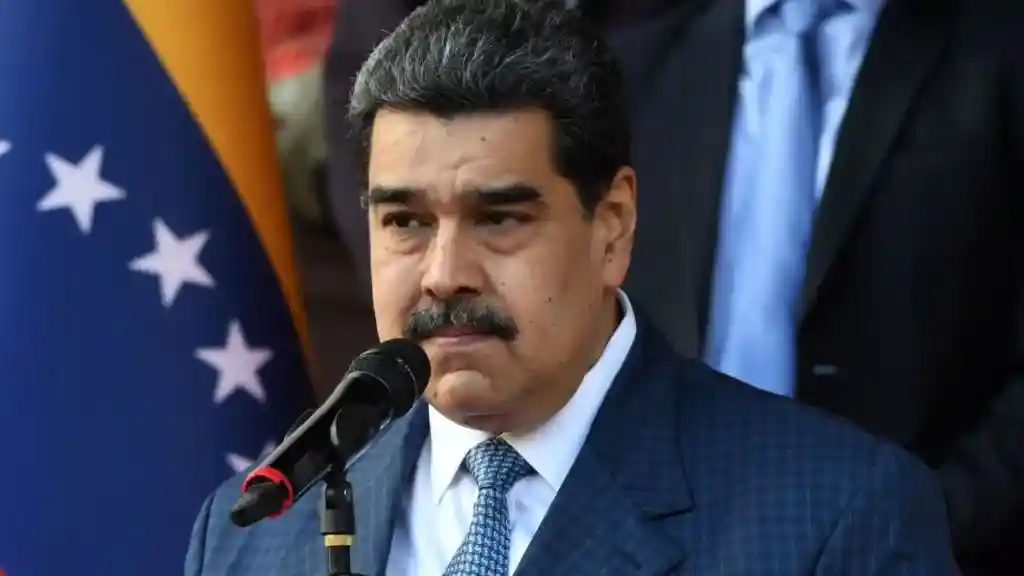
US Unveils Drug Trafficking, Terrorism Charges Against Venezuela’s President Nicolas Maduro

Advertisements
The United States government has announced drug trafficking and terrorism-related charges against Venezuela’s President, Nicolás Maduro, marking a significant escalation in Washington’s long-running confrontation with the South American leader. The announcement follows claims by former US President Donald Trump that American forces carried out a large-scale military operation in Venezuela and took Maduro into custody.
The development has triggered widespread international attention due to its geopolitical implications, the gravity of the allegations, and uncertainty surrounding the circumstances described by US political authorities. While elements of the announcement are formally documented within existing US legal frameworks, other aspects remain subject to verification and official confirmation from multiple parties.
Ejes Gist News reports that the charges were publicly referenced after statements attributed to Donald Trump, who said US forces captured President Maduro and transported him out of Venezuela during a coordinated operation involving American law enforcement agencies.
Advertisements
What the United States Announced
US authorities announced that Nicolás Maduro faces criminal charges linked to international drug trafficking networks and alleged cooperation with terrorist organizations. These charges build on earlier US indictments, which have for years accused senior Venezuelan officials of participating in narcotics smuggling operations intended to destabilize the region.
Advertisements
According to US government statements, the latest announcement reflects an expansion or reinforcement of existing legal actions against Maduro, rather than a sudden initiation of a new case. American prosecutors have previously alleged that Maduro and other officials were part of what US authorities described as a network facilitating cocaine trafficking into North America and Europe.
Background to the Charges Against Nicolás Maduro
The United States first formally indicted Nicolás Maduro in 2020, when the US Department of Justice accused him and several Venezuelan officials of narcoterrorism. The indictment alleged collaboration with Colombian rebel groups designated as terrorist organizations by Washington.
US officials claimed the alleged activities were designed to flood the United States with illegal drugs and undermine American security interests. At the time, the Venezuelan government rejected the accusations, describing them as politically motivated and part of a broader campaign to destabilize the country.
Since then, the charges have remained active within the US legal system, though Maduro continued to govern Venezuela while dismissing US jurisdiction over his office.
Claims of a US Military Operation in Venezuela
The current announcement gained additional attention after Donald Trump stated that US forces conducted a large-scale military strike within Venezuela and captured President Maduro and his wife. Trump made the statement on his Truth Social platform, asserting that the operation was executed in conjunction with US law enforcement agencies.
He further indicated that Maduro had been flown out of Venezuela following the operation. Trump also announced plans to address the issue during a scheduled press conference at his Mar-a-Lago residence in Florida.
It is important to distinguish between confirmed legal actions and claims that remain unverified. As of the time of reporting, no independent confirmation has been issued by the Pentagon, the US Department of Defense, or the Venezuelan government acknowledging the execution of such a military operation or the detention of the Venezuelan president.
Official US Institutions and Verification Status
Historically, major US military operations and foreign detentions involving heads of state are accompanied by formal briefings from the White House, the Department of Defense, or the State Department. At present, no comprehensive official statement detailing the alleged operation has been released through these institutional channels.
Security analysts note that any confirmed US military strike inside Venezuela would represent a dramatic shift in US foreign policy and could trigger immediate diplomatic and security consequences across Latin America and beyond.
As such, international observers and governments are closely monitoring for corroboration from official US agencies and responses from Caracas.
Venezuela’s Position on US Charges
The Venezuelan government has consistently rejected US indictments against Nicolás Maduro, maintaining that Washington has no legal authority over Venezuelan affairs. Venezuelan officials have previously described the charges as part of what they characterize as economic warfare and political pressure.
Caracas has argued that sanctions, indictments, and diplomatic isolation are intended to force regime change rather than enforce international law. Venezuelan authorities have also accused the United States of ignoring drug trafficking issues within its own borders while targeting political adversaries abroad.
No immediate official response was issued by the Venezuelan presidency following the latest announcement, further contributing to uncertainty surrounding the claims.
International Law and Head-of-State Immunity
Under international law, sitting heads of state generally enjoy immunity from prosecution by foreign courts. The United States has maintained that such immunity does not apply in cases involving narcoterrorism and transnational criminal activity, particularly when US citizens or national security interests are affected.
Legal scholars note that this position remains contested and depends largely on political recognition and enforcement capabilities rather than settled international consensus.
The US stance toward Maduro has been shaped in part by Washington’s recognition of opposition figures as legitimate representatives of Venezuela during periods of political crisis, a move that Caracas and several allied nations rejected.
Regional Implications for Latin America
Any confirmed detention or forced removal of Venezuela’s president would have immediate repercussions across Latin America. Regional organizations such as the Organization of American States and blocs like CELAC have historically opposed foreign military intervention in sovereign states.
Countries with close political or economic ties to Venezuela, including Cuba, Nicaragua, and Bolivia, are likely to condemn any such action if confirmed. Meanwhile, governments aligned with US policy may call for restraint, transparency, and adherence to international law.
The situation also raises concerns about regional stability, particularly given Venezuela’s ongoing economic challenges and internal political divisions.
US–Venezuela Relations Over the Years
Relations between Washington and Caracas have been strained for more than two decades. Tensions intensified during the administrations of Hugo Chávez and later Nicolás Maduro, as Venezuela pursued policies that directly challenged US influence in the region.
Sanctions imposed by the United States targeted Venezuela’s oil sector, financial institutions, and senior officials. The US government argued that these measures were intended to pressure authorities to restore democratic governance, while Venezuelan leaders blamed sanctions for worsening economic conditions.
Despite periodic diplomatic engagements, relations have remained largely adversarial.
The Role of Drug Trafficking Allegations
Drug trafficking allegations have played a central role in US policy toward Venezuela. American authorities have repeatedly accused elements within the Venezuelan state of facilitating narcotics transit routes from South America to international markets.
US agencies have cited intelligence reports, intercepted communications, and testimony from informants to support their claims. Venezuelan officials have denied state involvement and accused the United States of relying on unreliable sources.
The allegations continue to form the legal basis for US indictments and international arrest warrants issued by American courts.
Terrorism-Related Accusations Explained
The terrorism-related charges referenced by US officials are tied to alleged cooperation between Venezuelan officials and armed groups designated as terrorist organizations by Washington. These claims focus primarily on historical ties to Colombian insurgent groups.
The Venezuelan government has acknowledged diplomatic contacts with regional actors but denies providing material support to terrorist organizations. Independent verification of such claims has remained difficult due to limited access and competing political narratives.
