
U.S. Surveillance Jet Reportedly Flies Over Kwara, Ekiti as American Officials Arrive in Abuja

Advertisements
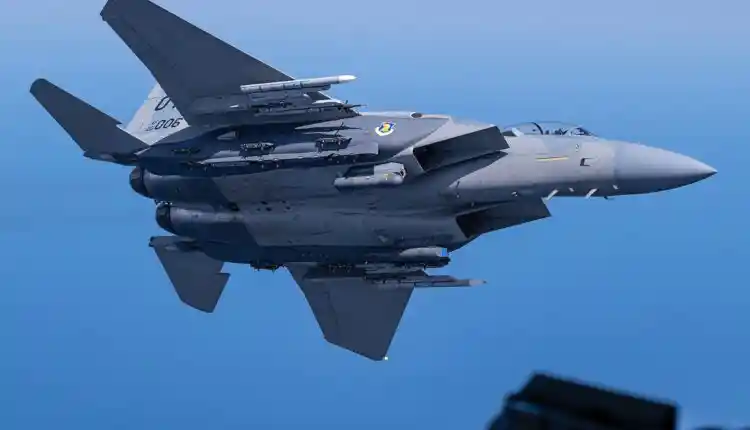
Unusual military movements in Nigeria’s airspace have sparked fresh debate within defence circles following reports that a U.S. surveillance jet conducted intelligence flights over Kwara and Ekiti States.
The operation, according to security analysts tracking the development, signals a possible expansion of U.S.–Nigeria counterterrorism cooperation amid growing threats from extremist groups.
Early field reports indicate that senior American officials arrived in Abuja shortly before the surveillance flights, prompting renewed scrutiny of an emerging security framework that neither government has formally acknowledged.
Advertisements
Ejes Gist News reports that the operations were first highlighted by an international security analyst who had previously tracked similar activities across the Sahel region.
First Known U.S. Surveillance Flights in Southwestern Nigeria
Security expert and Sahel conflict reporter, Brant Phillip, stated that the reconnaissance flights originated from a U.S. military facility believed to be in Ghana, with the aircraft entering Nigeria’s airspace to conduct extended ISR—intelligence, surveillance, and reconnaissance—operations.
Advertisements
Also Read: Military Jet Crashes in Niger Community as Two Nigerian Air Force Pilots Survive
Phillip noted that this appeared to be the first publicly known instance of U.S. surveillance flights over southwestern Nigeria, a region historically distant from the country’s main extremist hotspots.
In an update to his earlier report, he said the aircraft spent considerable time gathering intelligence over Kwara and Ekiti, two states not typically associated with heavy militant activity.
According to his account, the operation formed part of a broader surveillance grid extending across the western corridor of Nigeria, raising new questions about the underlying objective of the mission.
ISR Missions Expand Into Northern Extremist Corridors
While the flights over southwestern Nigeria drew significant attention, Phillip also reported expanded ISR activity over northern states impacted by extremist violence, including areas with Islamic State–Sahel (IS-Sahel) and Islamic State–West Africa Province (ISWAP) influence.
Among the locations mentioned were:
- Tangaza, Sokoto State
- Kainji, Niger State
- Additional routes covering IS-influenced corridors in the northwest and north-central regions
Phillip stated that U.S. surveillance aircraft reportedly maintained extended loiter times over these areas, with transponders intermittently switching on and off. Analysts describe this pattern as consistent with sensitive intelligence-gathering missions where operational discretion is required.
Reports indicated that some missions over Sokoto allegedly continued across multiple consecutive days, representing one of the most sustained U.S. ISR engagements in Nigerian airspace.
Reports Suggest U.S. Permission to Conduct UAV Airstrikes in Nigeria
Beyond surveillance activity, one of the most consequential claims linked to the recent intelligence flights involves an alleged security agreement enabling the United States to conduct UAV airstrikes on Nigerian soil.
According to Phillip—citing a source reportedly involved in the ongoing discussions—the proposed framework would allow the U.S. military to undertake drone-based precision strikes against designated terrorist targets within Nigeria. However, the reported agreement explicitly excludes manned aircraft, limiting any offensive role to unmanned aerial platforms.
If accurate, this would represent one of the most significant foreign military permissions granted within Nigeria in recent years, surpassing the scale of previous bilateral counterterrorism collaborations.
Phillip added that the arrangement appears to focus on targeted operations against extremist groups operating within northern and northwestern belts, where Nigerian security forces face persistent challenges related to intelligence gaps, mobility constraints, and limited ISR assets.
Kainji Air Base Identified as Possible U.S. Operational Hub
Kainji Air Base in Niger State has been identified as a likely candidate for hosting elements of the alleged expanded U.S. surveillance mission, though no official confirmation has been released.
Kainji is one of Nigeria’s most strategically important air installations and has historically served as a platform for military cooperation involving international partners.
Analysts suggest that if U.S. UAV or ISR operations were to be based in Nigeria, Kainji offers:
- A proximity advantage to northern extremist corridors
- Access infrastructure already used for similar missions
- An established system for classified operations involving ISR platforms
Despite the speculation, Phillip emphasised that no formal statements have been issued by Nigerian or U.S. authorities confirming the use of the base for such operations.
Background: Prior Strains in U.S.–Nigeria Defence Relations
The renewed activity follows a period of tension between Nigeria and the United States linked to human rights and religious freedom concerns.
Nigeria was previously redesignated by the U.S. administration as a “country of particular concern”, a classification tied to reports of human rights violations and the killing of Christians. The designation strained aspects of bilateral military cooperation and affected certain categories of foreign military sales.
However, ongoing instability in the Sahel and Nigeria’s northwestern region has reportedly compelled both nations to revisit collaborative frameworks tailored to counter the rising influence of Islamic State-affiliated groups.
Security analysts note that Washington views Nigeria as a key node in regional stability due to its strategic geography, population size, and economic weight.
Why ISR Matters: Intelligence Deficiencies and Regional Security Risks
ISR—intelligence, surveillance, and reconnaissance—has become central to modern counterterrorism operations. Nations facing dispersed insurgent networks often rely on foreign partners with advanced ISR capabilities to monitor:
- Militant movements
- Arms trafficking corridors
- Cross-border smuggling routes
- Training camps
- Improvised explosive device (IED) manufacturing hubs
Nigeria’s ability to generate persistent ISR coverage has faced challenges due to equipment constraints and operational losses, including past incidents involving damaged or downed reconnaissance aircraft.
Analysts argue that foreign ISR support could help fill these gaps, offering the Nigerian military broader visibility across high-risk zones.
Southwest Surveillance Raises Strategic Questions
The reported reconnaissance flights over Kwara and Ekiti have generated significant debate among defence experts because these states are not traditionally viewed as primary centres of extremist activity.
The operation may signal:
- U.S. interest in potential militant transit routes
- Mapping of logistical pathways connected to extremist cells
- Preemptive ISR efforts based on classified threat analysis
- Preparation for possible joint security operations
The lack of an official statement has further heightened speculation about the scope and intent of the missions.
Arrival of U.S. Officials in Abuja Fuels Speculation
Reports that senior American officials landed in Abuja around the same period as the ISR missions have intensified questions surrounding the extent of ongoing negotiations.
Diplomatic and defence analysts note that such high-level visits often precede:
- Updates to bilateral security frameworks
- New counterterrorism support agreements
- Discussions on UAV deployment permissions
- Intelligence-sharing arrangements
However, without public briefings from the Nigerian Ministry of Defence or the U.S. Embassy, the specific objectives of the visit remain undisclosed.
Awaiting Official Statements
As of the time of this report, there has been no official confirmation from:
- The Nigerian Air Force
- The Federal Ministry of Defence
- The U.S. Department of Defense
- The U.S. Embassy in Abuja
The absence of formal communication has allowed speculation to grow, particularly as surveillance activity reportedly continued across multiple days.
Until either government issues a clear statement, analysts expect debates over the expanding U.S.–Nigeria security relationship to intensify.
