
Turkish lawmaker Slumps After Condemning Israel’s Actions in Gaza.
A dramatic scene unfolded in the Turkish Parliament as Member of Parliament Hasan Bismet collapsed during a plenary session after passionately denouncing Israel’s actions in Gaza.
The incident occurred shortly after Bismet strongly criticized the Israeli government, predicting that it would face the “wrath of Allah.
A video posted by Visegrad 24 captured the moment Hasan Bismet slumped to the floor after expressing his condemnation of Israel’s ongoing offensive in Gaza.
The caption on the video highlighted the intensity of the situation, noting that Bismet’s collapse occurred mere seconds after his fervent remarks against Israel.
This incident is not the first time strong sentiments against Israel have been voiced in the Turkish Parliament. In November, Turkish President Recep Tayyip Erdogan labeled Israel a “terror state” while condemning its military campaign against the Palestinian group Hamas. Erdogan called for Israeli leaders to be tried for war crimes at the International Court of Justice in The Hague.
The Turkish president also reiterated his view, and Turkey’s official stance, that Hamas is not a “terrorist organization” but a political party that legitimately won the last Palestinian legislative elections in 2006.
Israel’s retaliatory actions against Hamas have faced international criticism, with concerns raised about the scale of the response to the cross-border attack on October 7. The toll on civilians has been significant, with thousands killed and wounded, according to Gaza health ministry figures.
The incident in the Turkish Parliament adds another layer of complexity to the ongoing discussions surrounding the Israel-Palestine conflict, highlighting the emotional and geopolitical dimensions of the issue.
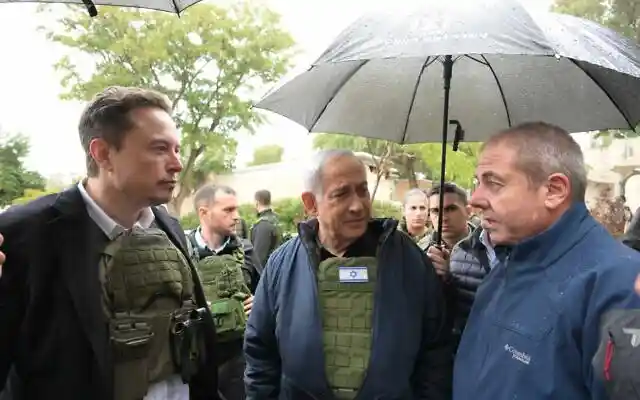
Renowned tech mogul, Elon Musk, embarked on a visit to Israel where he unequivocally declared his support for Israel’s efforts in the conflict against Hamas. The statement, “There’s no choice,” encapsulated Musk’s acknowledgment of Israel’s determination to dismantle Hamas.
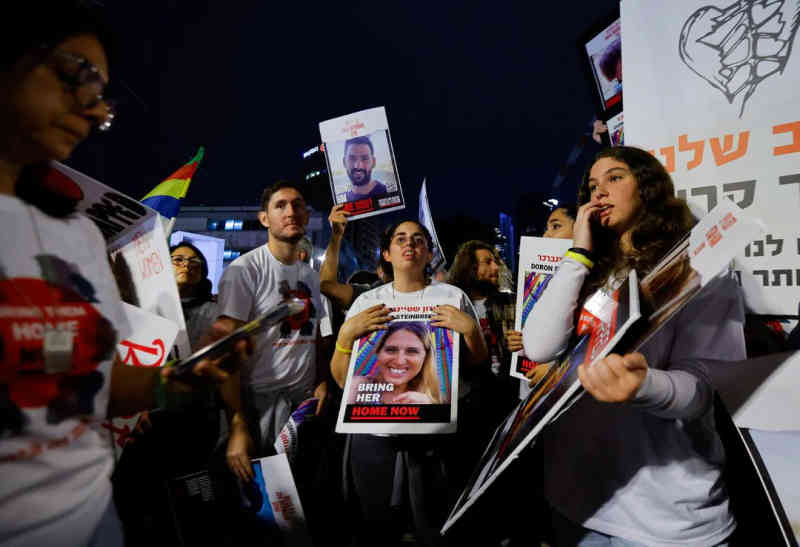
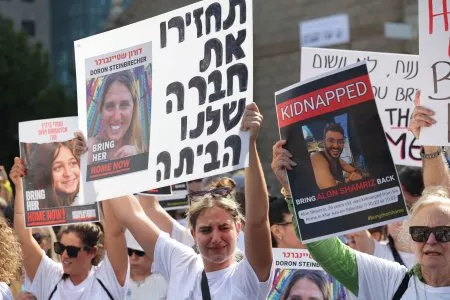
Musk made these remarks during a crucial meeting held on Monday with Israeli Prime Minister Benjamin Netanyahu, alongside other key stakeholders. The meeting took place in Kfar Aza, Israel, where discussions delved into the aftermath of the October 7 Hamas attack. Musk also interacted with victims and the families of hostages affected by the incident.
The billionaire’s visit to Israel unfolded less than two weeks after he endorsed an antisemitic conspiracy theory on his social media platform, X. This endorsement triggered a significant backlash, leading to prominent companies pulling their advertisements from Musk’s microblogging site.
Despite the controversy surrounding Musk’s recent actions, his visit to Israel provided an opportunity for direct engagement with Israeli leaders and a firsthand understanding of the challenges posed by the conflict. The meeting addressed critical issues, and Musk’s support for Israel’s stance against Hamas was a focal point of the discussions.
This visit holds particular significance given the recent antisemitism controversy linked to Musk’s online platform. It underscores the complexities and sensitivities surrounding the Israeli-Palestinian conflict and the need for responsible communication on influential platforms.
Benjamin Netanyahu and Elon Musk watch footage from Hamas atrocities on October 7, during a meeting on November 27, 2023. Photo Credit: Amos Ben Gershom/GPO)
Accompanied by Netanyahu, Musk initiated his visit with a tour of towns in southern Israel severely impacted by the Hamas’ October 7 assault.
While visiting Kfar Aza, Musk witnessed the aftermath of the Hamas attack, where terrorists infiltrated the community and approximately 20 others.
Musk described the experience as “jarring” and expressed his observation of what seemed to be “joy” on the part of the terrorists in the video footage.
Addressing the common counterargument that Israel has also caused civilian casualties in Gaza, Musk emphasized a crucial distinction. He stated that Israel actively strives to avoid civilian casualties, contrasting it with what he perceived as a lack of remorse or joy expressed by those involved.
Musk asserted that there is no alternative for Israel but to dismantle Hamas. However, he emphasised the need for Israel to assist the civilian population that remains, drawing a parallel to the post-World War II US occupation of Germany and Japan.
Netanyahu conveyed the necessity of eliminating Hamas for the security, peace, and betterment of life for Gazans. He likened the situation to the eradication of poisonous regimes in Germany and Japan after World War II. Musk concurred, stating, “There’s no choice,” and underscored the importance of a dual approach involving firmness against terrorists alongside aid for the civilian population, mirroring the post-war efforts in Germany and Japan.
Elon Musk with Israeli President, Isaac Herzog and representatives of families of hostages held in Gaza during his visit to Israel, November 27, 2023. Photo Credit: Haim Zach/GPO
“Discussing the matter further, he pointed out the historical tendency for victors to penalize the defeated, citing the post-World War II rehabilitation of Germany and Japan by the allies as instances where reconstruction efforts after a decisive victory contributed to prolonged peace.
However, Herzog expressed serious concerns about the alleged presence of antisemitism on Musk’s X platform and called on the tech mogul to take immediate action to address it. He underscored the global impact of antisemitism on human behavior and urged a collaborative effort to combat this issue.
In his remarks, Herzog specifically mentioned that Musk’s X platform seemed to exhibit signs of antisemitism. He emphasized the urgency for Musk to address this concern promptly.
Herzog stated, ‘Unfortunately, we are inundated by antisemitism, which is Jew hate, and Jew hate impacts the entire notion of behavior of human beings in so many places around the world. And you have a huge role to play, and I think we need to fight it together, because under the platforms you lead, unfortunately, there is a harboring of a lot of old hate which is Jew hate, which is antisemitism.’”
“Responding to Herzog’s remarks, Musk acknowledged the issue of antisemitism but attributed it to the impact of propaganda on individuals since childhood. He pointed out that individuals have been exposed to propaganda from a young age, leading them to hold harmful beliefs, including supporting violence against innocent people.
Since he took over the company last year, Musk has faced criticism for what some critics argue is a proliferation of hate speech in general on the platform.
What is anti-Semitism?
Anti-Semitism refers to prejudice, discrimination, or hostility directed against Jewish people. It can manifest in various forms, including verbal or physical attacks, stereotypes, and discriminatory practices. Anti-Semitism has a long history and has taken different shapes over the centuries, from religious persecution to racial and ethnic prejudice.
Efforts to combat anti-Semitism involve promoting awareness, education, and fostering tolerance. Governments, organizations, and communities around the world work to address and eliminate instances of anti-Semitism to ensure the safety and equal treatment of Jewish individuals. It is essential to recognize and challenge anti-Semitic attitudes to build a more inclusive and tolerant society.
In the latest developments in the ongoing conflict, the armed wing of Hamas has announced a delay in the scheduled second round of hostage releases, demanding that Israel fulfills certain conditions.
One of the key conditions is the commitment to allowing aid trucks into northern Gaza. The announcement has disrupted efforts to maintain a four-day truce, leading to mediation efforts by various parties.
Israel has responded by deploying 50 trucks into northern Gaza, carrying essential supplies such as food, water, shelter equipment, and medical supplies. This marks the first significant aid delivery to northern Gaza since the conflict began.
Mediators, including Qatar and Egypt, are actively engaged in talks with both Israel and Hamas to resolve the delay in hostage releases. Qatar is reportedly in ongoing discussions to expedite the resolution, while Egypt is also working towards finding a solution to the impasse.
Despite the delay, Israel asserts that it is honouring the truce, emphasizing its commitment to the cessation of hostilities. The armed wing of Hamas, known as the al-Qassam Brigades, contends that Israel is not adhering to the agreed terms of the Palestinian prisoner release, a crucial element of the hostage deal.
The release of 13 Israeli women and children by Hamas on Friday had initially raised hopes for a smooth continuation of hostage and prisoner releases. However, the recent statement by the al-Qassam Brigades has cast uncertainty on the process.
Qadura Fares, the Palestinian commissioner for prisoners, highlighted that Israel had not released detainees according to seniority, as expected under the truce accord mediated by Qatar.
Israeli army spokesperson Olivier Rafowicz, speaking to French television, affirmed that Israel is strictly honouring the terms of the truce. He clarified that the military had not conducted any attacks or offensive operations in Gaza on Saturday.
As the situation unfolds, there are indications that talks are ongoing regarding a possible truce extension. Egypt, controlling the Rafah border crossing, has reported receiving “positive signals” from all parties. Discussions are underway to explore the release of more detainees in Gaza and Palestinian prisoners in Israeli jails.
Israel has conveyed that the ceasefire could be extended if Hamas continues to release hostages at a rate of at least 10 per day. A Palestinian source has suggested that up to 100 hostages could be released in the ongoing exchange.
The complexities of the conflict persist, with diplomatic efforts focused on navigating the challenges and uncertainties surrounding the truce and hostage release negotiations.
Delegates from Hamas in Moscow have disclosed a set of demands necessary for the release of Israeli hostages held in the Gaza Strip.
During their visit to Moscow, a Hamas delegation conveyed to the Russian state-controlled news outlet Kommersant that the group is steadfast in its demand for a ceasefire agreement with Israel before they release the hostages.
Abu Hamid, a member of the delegation, emphasized that there is still work to be done in locating all the hostages taken to Gaza.
Hamid stated, “Hundreds of citizens and dozens of militants from various Palestinian factions entered the territories occupied in 1948. After the fall of the Israeli Gaza Division, they captured dozens of people, most of them civilians. We need time to find them in the Gaza Strip and subsequently release them.”
He also raised concerns about Israeli bombings, alleging that they have resulted in the deaths of 50 Hamas prisoners. Hamid stressed the importance of creating a “calm environment” for negotiating any hostage releases. According to Reuters, Hamas is believed to have kidnapped 224 people from Israel and has, so far, released four hostages.
During their visit to Moscow, led by Mousa Abu Marzook, a founder and political leader of Hamas, the delegation explained the reasons behind the surprise attack on southern Israel that occurred on October 7.
Hamid emphasized the positive relationship between the Palestinian people and the Russian Federation, stating, “The Russian Federation is a friendly country for the Palestinian people and maintains relations with all representatives of the Palestinian people. We are always ready to consult with [it] on various issues,” as reported by Kommersant.
Hamas meeting with Russia
Israel viewed the meeting with Russia as an “undignified step” and called for the expulsion of the Hamas officials. Russia, however, maintained that the focus of the meeting was on hostage release and exploring avenues for humanitarian aid to enter Gaza.
Russia has a long history of supporting Palestinians, having been one of the first countries to recognize a Palestinian state in 1988.
Previously, Russian President Vladimir Putin warned of “consequences” if Israel were to proceed with a ground offensive in Gaza, expressing concerns about the potential for the crisis to escalate and its far-reaching consequences.
He also accused the West of exacerbating the conflict, alleging that their aim is to “launch a real wave of chaos and mutual hatred not only in the Middle East but also far beyond its borders, playing on the national and religious feelings of millions of people.”
The United States and Arab countries have also urged Israel to postpone any invasion of Gaza, citing concerns about civilian casualties and the potential for an expanded conflict.
Journalists Pay the Price in Israel-Hamas Conflict.
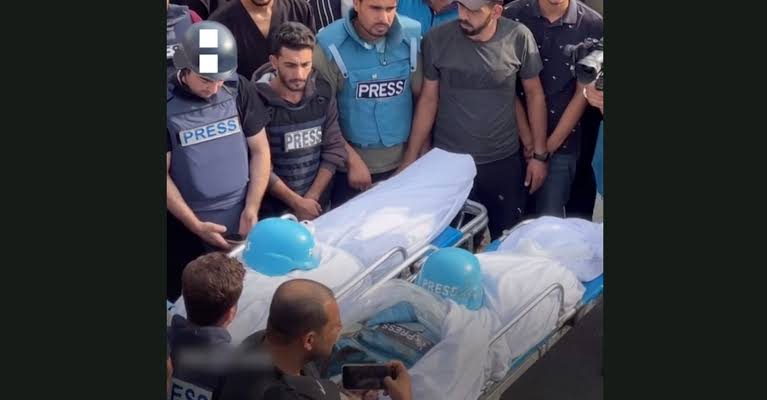
As the Israel-Hamas conflict continues to unfold, the toll on journalists covering the war has been staggering, with at least a dozen reporters losing their lives and numerous others sustaining injuries or facing harassment. This grim reality is highlighted in a report by the Voice of America (VOA), which sheds light on the risks faced by members of the press.
Among the casualties are journalists from prominent media outlets, including Reuters, Al Jazeera, and Agence France-Presse (AFP), organizations that have been committed to delivering news from the front lines.
One tragic incident involved video journalist Issam Abdallah from Reuters, who lost his life while reporting live near the border in southern Lebanon. His death stands as a stark reminder of the perilous conditions under which many journalists operate, striving to bring the world a firsthand account of the conflict.
The situation is increasingly worrisome, with a United Nations spokesperson acknowledging that if conditions deteriorate further, more tragic incidents like this are likely to occur.
The Israel-Hamas conflict, which began with Hamas militants launching an onslaught in Israel on October 7, has taken a devastating toll on all sides. The death toll has climbed to over 4,000 people, underscoring the gravity of the situation.
At least 12 journalists killed in Israel-Hamas war.
The Committee to Protect Journalists (CPJ) has reported that among the casualties, at least 12 were reporters who were covering the ongoing attack and counteroffensive. These journalists put their lives on the line to provide the world with a glimpse into the realities of the conflict, and their sacrifices serve as a poignant reminder of the risks faced by those dedicated to upholding the principles of a free press in the midst of crisis.
The Israel-Hamas war is not only a conflict with profound geopolitical implications but also a human tragedy, affecting journalists and civilians alike. As the situation continues to evolve, the protection of journalists and the fundamental principles of press freedom remain crucial to shedding light on the realities of war and its consequences.