

Advertisements
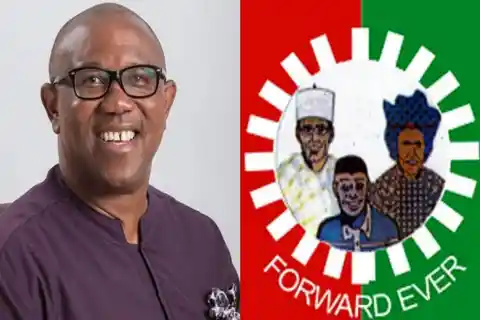
Former Anambra State Governor, Peter Obi, has explained the circumstances that led to his departure from the Labour Party, the platform under which he contested the 2023 presidential election.
Speaking at the OBIDIENT Conference and Official Declaration for the African Democratic Congress in Uyo, Akwa Ibom State, Obi said he left the Labour Party after being informed that the Independent National Electoral Commission would not recognise the party’s leadership if he remained.
Ejes Gist News reports that the event was themed “Activating the PO Effect in ADC.”
Advertisements
Obi stated that he was told the Federal Government did not want him on the ballot paper, a development he said influenced his decision to exit the party. He maintained that democratic principles must be upheld and insisted that he would contest the next general election regardless of the circumstances.
“I left the Labour Party when I was informed that, as long as I remained in the party, INEC would not recognize its leadership, and that the federal government did not want me on the ballot paper,” Obi said. “But I want to assure you that I will contest the coming election—even if it is held in their bedroom—and if they refuse to transmit results, we will transmit them ourselves.”
Advertisements
Peter Obi and the 2027 Election
Obi used the platform to signal his intention to participate in the 2027 general election, stressing that electoral transparency must remain central to Nigeria’s democratic process.
He reiterated his long-standing position that election results should be transmitted electronically and in real time. According to him, any failure to transmit results electronically would undermine public confidence in the electoral system.
“Election results must be transmitted online in real time. Whoever fails to transmit results will have them transmitted for them,” he said.
His remarks come amid ongoing national debates about the implementation of electronic transmission of results and the role of INEC in ensuring credible elections.
“Operation Rescue Nigeria”
Describing his political mission as “Operation Rescue Nigeria,” Obi framed his 2027 ambition as a national project rather than a personal pursuit. He called for unity across political, ethnic, and religious lines to address what he described as decades of misgovernance.
He appealed to Nigerians to put aside differences and work collectively toward national renewal in the next election cycle. According to him, leadership must focus on long-term national development anchored on human capital investment.
Focus on Education and Health
Obi pledged that, if elected, his administration would prioritise heavy investment in education and healthcare. He argued that countries that achieve sustainable growth do so by deliberately investing in human capital.
He cited his tenure as governor of Anambra State between 2006 and 2014 as evidence of his governance philosophy. According to him:
- He discouraged the institutionalisation of the Office of the First Lady during his administration.
- He approved over 100 Certificates of Occupancy for government lands.
- He did not allocate any government land to himself or members of his family.
“When I became governor of Anambra State, I advised my wife to forget about the office of the first lady. I approved over 100 Certificates of Occupancy of government lands, but none for myself or my family. If you find any, petition me to the appropriate authority,” he said.
Anti-Corruption Commitment
On corruption, Obi promised to reduce the menace by 60 percent if elected president. He stressed that political leaders and their families must remain untainted by corrupt practices.
He argued that transparent governance and strict adherence to accountability standards would form the backbone of his administration.
OBIDIENT Movement Mobilisation
Dr. Tanko Yunusa, identified as the global coordinator of the OBIDIENT movement, also addressed participants at the Uyo event. He called on supporters to mobilise nationwide in preparation for the 2027 general election.
Yunusa reaffirmed the movement’s commitment to a participatory and transparent electoral process, urging members to intensify grassroots engagement and voter education efforts ahead of the polls.
The conference marked a significant moment in Obi’s political trajectory following his departure from the Labour Party, as he aligns with the African Democratic Congress and positions himself for the next electoral cycle.
