
El-Rufai Demands Answers Over Alleged Import of Highly Toxic Chemical by Tinubu’s NSA


Advertisements
Fresh controversy has emerged over allegations that the Office of the National Security Adviser (ONSA) procured a significant quantity of thallium sulphate, a highly toxic chemical compound, prompting former Kaduna State governor, Nasir Ahmad El-Rufai, to formally request clarification from the Federal Government.
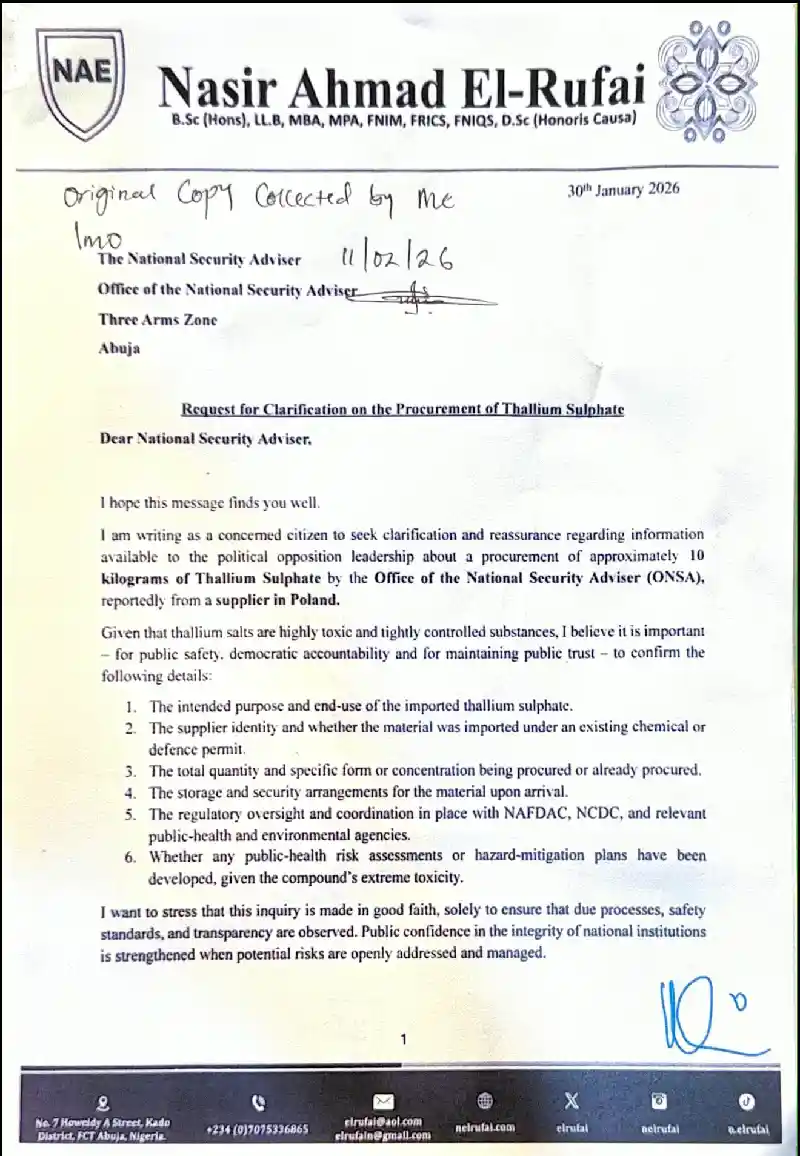
In a dated letter addressed to the National Security Adviser and seen by Ejes Gist News, El-Rufai sought official clarification regarding the reported procurement of approximately 10 kilograms of thallium sulphate by ONSA from a supplier in Poland. The letter, dated January 30, 2026, was copied to key regulatory and public health agencies.
What the Letter Alleges
The correspondence, titled “Request for Clarification on the Procurement of Thallium Sulphate,” raised concerns over the intended purpose, regulatory approvals, and safety protocols surrounding the alleged importation.
Advertisements
Also Read: Pastor, Wife Burned to Death as Islamic Jihadist Terrorists Torch Church in Nigeria
El-Rufai described thallium salts as “highly toxic and tightly controlled substances,” and requested details on:
Advertisements
- The intended purpose and end-use of the imported thallium sulphate.
- The identity of the supplier and whether the material was imported under an existing chemical or defence permit.
- The total quantity and specific concentration procured.
- Storage and security arrangements upon arrival.
- Regulatory coordination with the National Agency for Food and Drug Administration and Control (NAFDAC) and the Nigeria Centre for Disease Control (NCDC).
- Public health risk assessments or hazard-mitigation plans developed in connection with the compound.
The former governor stated that his inquiry was made in good faith, citing the need for transparency, public safety, and democratic accountability.
Why Thallium Sulphate Is Controversial
Thallium sulphate is historically known for its use as a rodenticide and insecticide. However, due to its extreme toxicity to humans and animals, many countries have restricted or banned its general use. Exposure can lead to severe poisoning, organ failure, and long-term neurological damage, according to toxicology data from international health authorities.
Because of its hazardous profile, the importation and handling of thallium compounds typically require strict regulatory oversight and specialized storage protocols. In Nigeria, hazardous chemical imports are subject to oversight by agencies such as NAFDAC and the NCDC, as well as customs and security authorities where applicable.
Political Context and Allegations
El-Rufai’s letter referenced concerns within the political opposition, seeking reassurance “for those of us that are Nigerian citizens in opposition.” However, the document did not provide independent evidence that the chemical was intended for use against political opponents.
As of press time, there has been no publicly available confirmation from ONSA regarding the alleged procurement, nor has the presidency issued a formal statement addressing the claims.
The Office of the National Security Adviser operates under the authority of President Bola Ahmed Tinubu and plays a central role in coordinating national security and defence-related matters. Procurement of certain controlled substances for legitimate security, forensic, or research purposes may fall within specialized government operations, subject to regulatory compliance.
Regulatory Oversight Questions
The letter’s inclusion of NAFDAC and NCDC in its carbon copy list underscores the public health dimension of the controversy. Both agencies are statutorily responsible for regulating hazardous substances and safeguarding public health.
Key regulatory questions raised include:
- Whether import permits were duly obtained.
- Whether the substance was declared under appropriate customs classifications.
- Whether storage and transport protocols meet international safety standards.
Legal experts note that procurement of restricted chemicals by government security agencies, if undertaken, would typically require layered authorization, including environmental and health compliance assessments.
What Remains Unanswered
At the time of filing this report, there is no independent verification of the alleged 10-kilogram importation beyond the concerns expressed in El-Rufai’s letter. No evidence has been presented to substantiate claims that the substance was intended for unlawful use.
Security analysts state that toxic substances can have legitimate applications in controlled laboratory, forensic, or research environments, but stress that transparency is essential when dealing with materials known for high lethality.
The development has intensified scrutiny around chemical procurement protocols and inter-agency coordination within Nigeria’s national security framework. Public clarification from the Office of the National Security Adviser is expected to determine whether the reported procurement occurred and, if so, under what statutory and safety framework.
