
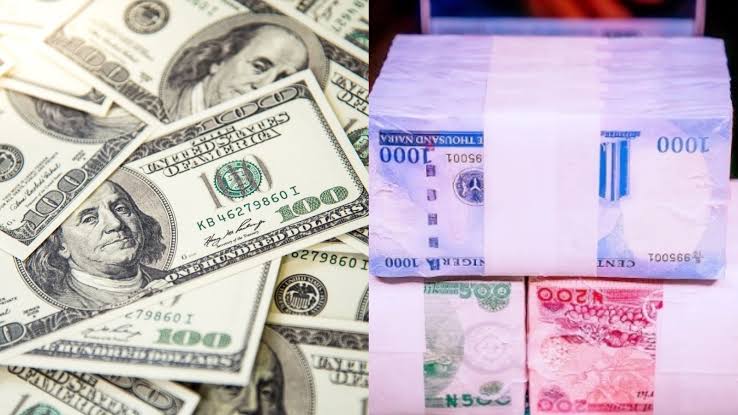
Dollar to Naira Today Thursday January 2, 2026: Exchange Rates Show Relative Stability Across Markets

Advertisements
Lagos — The Dollar to Naira exchange rate opened trading on Thursday, January 2, 2026, with both official and parallel currency markets in Nigeria showing relative stability amid ongoing foreign exchange reforms and macroeconomic shifts.
Ejes Gist News reports that market watchers are closely monitoring these early 2026 movements as sentiment stabilises following the holiday period.
Foreign exchange rates in Nigeria continue to be influenced by Central Bank of Nigeria (CBN) policies, liquidity conditions, and broader economic indicators including inflation and external reserves. These factors shape how the Naira trades against the United States dollar across official and informal channels.
Advertisements
Official Exchange Rate: Steady Start to 2026
On Thursday morning, the official Naira to USD exchange rate remained firm at approximately ₦1,446.62 per US dollar in the Nigerian Foreign Exchange Market (NFEM). This rate reflects the price at which banks and authorised market participants trade foreign currency through official mechanisms.
Advertisements
Analysts note that this level follows recent gains by the Naira, which has appreciated modestly over recent months due in part to improved foreign exchange liquidity and policy measures aimed at narrowing the gap between official and parallel markets.
Parallel (Black Market) Exchange Rate: Slight Premium Persists
Despite the official stability, the parallel market — often referred to as the black market or Aboki FX — continues to command a higher rate for the US dollar. As of January 2, 2026, dollar selling rates in the parallel market were around ₦1,480 per dollar, with buying rates slightly below that figure.
Parallel market rates remain significant because many individuals and small businesses continue to rely on these informal channels for immediate access to foreign currency, especially where official supply is limited or subject to allocation frameworks. The parallel rate’s persistence above the official rate underscores continuing supply–demand tensions even as markets remain calmer in early 2026.
Also Read: Dollar to Naira Today January 1, 2026: NGN Ends 2025 Stronger After Gradual Recovery
What Drives the Dollar–Naira Exchange Rate
1. Central Bank Policy and Liquidity Management
The CBN’s ongoing reforms, including efforts to promote price discovery and harmonise exchange rates across market segments, have played a role in reducing volatility. Policy interventions to improve liquidity through authorised channels have helped sustain the official exchange rate level.
2. External Reserves and Macro Indicators
Nigeria’s external reserves have seen growth in recent months, which supports foreign exchange stability. Data from late December 2025 showed that reserves rose by more than 11 percent year‑on‑year, a development that analysts say helps defend the Naira and support measured market confidence.
3. Market Demand and Supply Dynamics
Demand for dollars for trade, school fees, travel, and import payments typically rises at the start of each year. These seasonal pressures can influence parallel market rates more sharply than official ones, where supply allocation mechanisms may temper short‑term demand surges.
Comparison With Recent Trends
The exchange rate movement in early January 2026 reflects a continuation of patterns observed in late 2025, when the Naira showed signs of firming after periods of depreciation. Over the course of 2025, the Naira gained roughly 7.4 percent against the dollar on the official window compared with the same period in the previous year.
Previous months saw the spread between official and parallel rates narrow, a trend policymakers have sought through active FX market reforms. While the spread remains, it is not as wide as historical peaks, suggesting incremental progress amid a still challenging FX landscape.
What This Means for Nigerians
The current exchange rates carry several implications for households, businesses, and the broader economy:
- Import Costs: A relatively stable official rate can help businesses better plan for import expenses and budgeting.
- Remittances: Nigerians receiving remittances may benefit when informal rates are higher than official rates, though these gains are tempered by risks of parallel market transactions.
- Inflation and Prices: Exchange rate levels influence prices of imported goods, which in turn affect inflation dynamics. Continued stability helps limit abrupt price shocks.
- Policy Confidence: Stability early in the year can bolster market confidence in CBN strategies aimed at unifying segments of the FX market.
Jada Pollock Biography, Net Worth, Wiki, Real Name, Husband, Wizkid Manager
Outlook for the Near Term
Economists and market participants remain attentive to how government policy, oil prices, global capital flows, and domestic demand for dollars will shape the Naira’s performance throughout 2026. Analysts emphasise that while current rates indicate stability, exchange rates can shift quickly in response to changes in Nigeria’s macroeconomic environment, commodity markets, and global financial conditions.
For individuals and businesses, staying informed through reputable financial platforms, official CBN communications, and authorised market indicators will be crucial in navigating FX exposures in the months ahead.
Key Exchange Rates on January 2, 2026:
- Official market: ~₦1,446.62 per US dollar
- Parallel (black) market: ~₦1,480 per US dollar
